




India is a land of abundant sunshine. From the scorching plains of Rajasthan to the humid coastal gardens of Bengal and Kerala, the Indian climate is naturally wired to support a rich variety of sun-loving plants.
While many gardeners worry about the summer heat damaging their plants, the truth is quite the opposite — the right outdoor plants don’t just survive the Indian sun, they absolutely flourish in it.
Whether you have a sprawling garden, a compact balcony, or a sun-facing terrace, growing heat-tolerant plants in India is one of the most rewarding experiences a plant lover can have. These plants reward you with vibrant blooms, lush green foliage, and in many cases, fresh fruits and medicinal benefits — all with minimal fuss.
India receives an average of 2,500 to 3,200 hours of sunshine per year, making it one of the most sun-rich countries in the world. This natural advantage means that outdoor plants adapted to full sun and heat don’t just grow here — they thrive with energy and vitality that you simply won’t see in shadier climates.
But not every plant is built for the Indian outdoor environment. Choosing the wrong variety can lead to wilting, root stress, and disappointing results. That’s why understanding which plants genuinely love full sun and heat is the first and most important step toward building a beautiful, low-maintenance outdoor garden.
At Plantaeroot, founded in 2014 by Basudev Saha with a mission to bring nature into every home, we have spent over a decade helping Indian gardeners discover the joy of growing the right plants in the right conditions. Our carefully curated collection of outdoor plants is handpicked keeping India’s diverse climate zones in mind — so every plant you bring home is already prepared for the sunshine it will receive.
In this guide, we’ll walk you through the best outdoor plants that love full sun and heat in India — from stunning flowering plants and productive fruit trees to powerful medicinal herbs and easy-care climbers. Whether you’re a first-time gardener or a seasoned plant parent, this is your complete go-to resource for building a garden that celebrates the Indian sun rather than shying away from it.
Understanding Full Sun Conditions in India
What Does" Full Sun" Really Mean for Indian Gardens?
Before picking plants for your outdoor space, it helps to understand what gardeners and horticulturists actually mean when they say a plant needs “full sun.” In simple terms, a full sun plant requires a minimum of 6 to 8 hours of direct, unfiltered sunlight every day to grow, bloom, and stay healthy.
In most Western gardening guides, full sun is treated as a moderate condition. In India, however, full sun often comes bundled with high temperatures, intense UV radiation, and prolonged dry spells — especially between March and June. This means that a plant labeled “full sun” must also be reasonably heat-tolerant to survive and thrive in Indian outdoor conditions.
It is important to distinguish between:
- Full sun — 6 to 8+ hours of direct sunlight daily
- Partial sun — 3 to 6 hours of sunlight with some afternoon shade
- Full shade — less than 3 hours of direct light
For outdoor gardens across most of India, you are almost always working with full sun conditions, particularly during summer months.
How India's Climate Shapes Outdoor Gardening
India’s geographical diversity means that “heat and sun” can look very different depending on where you live. The country broadly experiences three major seasons that directly impact outdoor plant growth:
Summer (March to June) is the most intense period, with temperatures soaring between 35°C to 48°C in many regions. Plants during this season need strong heat tolerance and deep root systems to access moisture.
Monsoon (July to September) brings relief from the heat but introduces high humidity, waterlogging risks, and reduced direct sunlight in many areas. Sun-loving plants need well-draining soil during this period.
Winter (October to February) is the most pleasant growing season across most of India. Temperatures are mild, sunlight is consistent, and many flowering plants reach their peak bloom during these months.
Regional Sun Intensity Across India
India’s sun exposure varies meaningfully by region, and this directly influences which outdoor plants perform best in your area:
Northern Plains (Delhi, UP, Rajasthan, Punjab) experience extreme summer heat with very high sun intensity. Plants here need exceptional drought tolerance alongside full sun adaptability.
Eastern India (West Bengal, Odisha, Assam) receives generous sunshine combined with high humidity, particularly during and after the monsoon season. This region supports a wide variety of tropical sun-loving plants beautifully.
Western India (Maharashtra, Gujarat) sees a long dry summer followed by a heavy monsoon. Plants suited here must handle both heat and seasonal flooding.
Southern India (Tamil Nadu, Karnataka, Kerala, Andhra Pradesh) enjoys sunshine almost year-round. The tropical climate here is ideal for a vast range of heat-loving flowering and fruit-bearing plants.
Central India (Madhya Pradesh, Chhattisgarh) experiences some of the hottest temperatures in the country, making drought-hardy, deep-rooted plants the most practical choice.
Why Heat Tolerance Matters as Much as Sun Tolerance
A common mistake many gardeners make is assuming that any plant that loves sunlight will automatically handle Indian summer heat. In reality, sun tolerance and heat tolerance are two related but distinct qualities.
A plant may love bright light but struggle when soil temperatures cross 40°C. This is why selecting plants that are both sun-loving and heat-hardy is essential for outdoor Indian gardens. The good news is that India’s native and naturalised plant species have evolved over centuries to handle exactly these conditions — making them some of the most resilient and rewarding choices for any outdoor gardener.
Understanding your local climate zone, the orientation of your garden or terrace, and the intensity of afternoon sun in your specific area will help you make smarter planting decisions — and build an outdoor garden that stays vibrant across every season.
Top Flowering Plants for Full Sun and Heat in India
The Best Blooms That Celebrate the Indian Sun
Flowering plants that thrive in full sun and heat are among the most rewarding choices for any Indian outdoor garden. They bring colour, fragrance, and life to terraces, garden beds, boundary walls, and open courtyards — often with surprisingly little maintenance. Below is a detailed look at the most popular and reliable sun-loving flowering plants suited to India’s warm climate.
1. Bougainvillea
Few plants embody the spirit of the Indian sun quite like Bougainvillea. This vigorous, drought-tolerant plant is a staple in gardens across the country — from the streets of Mumbai to the courtyards of Jaipur. Its brilliant papery bracts come in shades of magenta, orange, red, white, and yellow, creating stunning visual impact for months at a stretch.
Bougainvillea thrives in well-draining soil and actually blooms more prolifically when slightly stressed by heat and dry conditions. It requires minimal watering once established and grows vigorously in full sun. Whether trained as a climber along a wall or grown as a bushy shrub, it is one of the most versatile heat-loving plants available to Indian gardeners.
Best for: Boundary walls, trellises, open terraces, large garden spaces
Blooming season: Almost year-round, peaks in winter and spring
2. Hibiscus (Gurhal)
The Hibiscus, locally known as Gurhal, is deeply rooted in Indian culture — used in religious offerings, traditional medicine, and hair care for centuries. As a garden plant, it is equally impressive. Large, trumpet-shaped flowers in red, pink, yellow, and white bloom generously through the warmer months.
Hibiscus is a sun-hungry plant that performs best with at least 6 hours of direct sunlight daily. It grows well in tropical and subtropical regions and can handle India’s intense summer heat when watered consistently. Regular pruning encourages bushier growth and more abundant flowering.
Best for: Garden borders, standalone shrubs, pots on sunny balconies
Blooming season: Spring through autumn, often year-round in warmer regions
3. Aparajita (Butterfly Pea)
The Aparajita, or Butterfly Pea plant, is a fast-growing climber that produces striking deep blue or white flowers throughout the warmer months. It is a hardy, low-maintenance plant that loves full sun and handles heat and humidity with ease — making it particularly well-suited to eastern and southern India.
Beyond its visual appeal, Aparajita has traditional medicinal value and is increasingly popular for making herbal blue tea. It grows quickly, covers fences and trellises beautifully, and attracts pollinators to the garden naturally.
Best for: Fences, trellises, garden boundaries, ground cover
Blooming season: Summer and monsoon months
4. Rose
While roses have a reputation for being delicate, many Indian varieties are surprisingly resilient in full sun conditions. Roses grown in India — particularly hybrid tea roses and country roses — can handle strong sunlight provided they receive deep, consistent watering and well-nourished soil.
In cooler months between October and February, roses deliver their most spectacular blooms. During summer, they benefit from morning sun with some protection from the harshest afternoon rays. Choosing heat-adapted varieties makes a significant difference in how well roses perform in warmer Indian climates.
Best for: Garden beds, decorative pots, garden borders
Blooming season: October to March is peak; some varieties bloom intermittently through the year
5. Plumeria (Champa)
Plumeria, known in India as Champa, is one of the most beloved flowering trees in the country. Its waxy, fragrant blossoms in white, yellow, and pink are instantly recognisable and deeply associated with tropical warmth. Champa is highly drought-tolerant, thrives in full sun, and requires very little care once it establishes itself.
It stores water in its thick stems, which allows it to survive dry spells without much intervention. Plumeria grows beautifully in open gardens and large pots and is particularly popular in coastal and southern Indian gardens.
Best for: Open gardens, large containers, courtyards
Blooming season: Summer and early monsoon
6. Ixora (Rangan)
Ixora, commonly called Rangan in Bengal and across eastern India, is a compact evergreen shrub that produces dense clusters of small, vivid flowers in red, orange, pink, and yellow. It is one of the most reliable sun-loving flowering shrubs for Indian gardens, performing consistently well across tropical and subtropical regions.
Ixora prefers slightly acidic, well-draining soil and rewards regular feeding with near-continuous blooming. Its dense, bushy form makes it an excellent choice for garden hedges, borders, and decorative landscaping in full sun conditions.
Best for: Garden hedges, borders, decorative pots, landscaping
Blooming season: Spring through summer, often blooms year-round in warm climates
Choosing the Right Flowering Plant for Your Space
Each of these flowering plants brings something unique to an outdoor garden. When selecting the right one for your space, consider the following:
- Available space — climbers like Aparajita need support structures, while shrubs like Ixora and Hibiscus work well in contained spaces
- Watering capacity — drought-tolerant plants like Bougainvillea and Champa are ideal if you have irregular watering schedules
- Purpose — whether you want fragrance, colour, privacy screening, or pollinator attraction will guide your final choice
- Local climate zone — coastal, plains, or hill station conditions each favour slightly different varieties
Combining two or three of these sun-loving flowering plants in a single garden bed or terrace arrangement creates a layered, visually rich outdoor space that stays colourful across multiple seasons.
Climbing & Creeper Plants That Thrive in Direct Sunlight in India
Why Climbers and Creepers Are Perfect for Sun-Exposed Spaces
Indian outdoor gardens. They make excellent use of vertical space — covering bare walls, boundary fences, pergolas, and trellises with lush greenery and vibrant blooms. For gardeners working with limited ground space, climbers offer a smart solution to maximise garden beauty without needing a large plot of land.
Climbing and creeper plants are among the most practical and visually striking choices for What makes them especially valuable in the Indian context is their natural adaptability. Many climbing plants native to or naturalised in India have evolved to handle intense sunlight, high temperatures, and seasonal dry spells with remarkable resilience. Once established, most sun-loving climbers are vigorous growers that require relatively little attention.
1. Bougainvillea (As a Climber)
Already celebrated as a flowering shrub, Bougainvillea truly comes into its own when trained as a climbing plant. Given a sturdy support structure, it can scale walls and pergolas dramatically, creating cascading curtains of colour that are genuinely breathtaking during peak bloom.
As a climber, Bougainvillea is practically unmatched in its tolerance for heat and drought. It anchors itself using thorny stems and grows vigorously in full sun. In Indian summers, when many other plants struggle, Bougainvillea continues to push out fresh bracts of colour with minimal watering.
Best for: Boundary walls, pergolas, arches, trellises
Growth rate: Fast — can cover a large wall within a single growing season
Sunlight requirement: Full sun, 6 to 8+ hours daily
2. Madhumalati (Combretum indicum)
Madhumalati is one of India’s most cherished flowering climbers. Known for its clusters of small flowers that transition from white to pink to deep red on the same plant simultaneously, it creates a remarkably colourful and fragrant display. The name itself — meaning “sweet creeper” — captures its gentle, romantic appeal perfectly.
This climber is highly adaptable to Indian heat and grows vigorously in full sun conditions. It is a seasonal bloomer that comes alive during summer and early monsoon, covering fences and trellises with dense foliage and multi-toned blooms. Madhumalati is a fast grower and can provide excellent privacy screening along garden boundaries.
Best for: Fences, garden boundaries, pergolas, compound walls
Blooming season: April through July
Sunlight requirement: Full sun to partial sun
3. Morning Glory (Ipomoea)
Morning Glory is a delightfully cheerful climber that opens its trumpet-shaped flowers each morning in shades of blue, purple, pink, and white — and gently closes them by afternoon. This daily rhythm makes it a uniquely engaging plant to grow in an outdoor garden.
Despite its delicate appearance, Morning Glory is a surprisingly tough plant that thrives in full sun and warm temperatures. It grows quickly from seed, making it an excellent choice for gardeners who want fast coverage on a fence or trellis. It performs especially well during the monsoon and post-monsoon season across most of India.
Best for: Light trellises, fences, pots with support stakes, balcony railings
Blooming season: Monsoon and autumn months
Sunlight requirement: Full sun, at least 6 hours daily
4. Allamanda
Allamanda is a tropical climbing shrub that produces large, cheerful yellow trumpet-shaped flowers throughout the warmer months. It is a plant that genuinely loves heat — the more sun it receives, the more generously it blooms. Originally from South America, Allamanda has naturalised beautifully across tropical India and is a common sight in gardens across Kerala, Tamil Nadu, West Bengal, and coastal Maharashtra.
It can be grown as a sprawling shrub or trained against a wall or trellis as a climber. Allamanda responds well to regular pruning, which encourages bushier growth and more prolific flowering. It prefers moist, well-draining soil and benefits from occasional feeding during the growing season.
Best for: Garden walls, trellises, standalone shrub borders, large containers
Blooming season: Summer through early winter
Sunlight requirement: Full sun, 6 to 8 hours daily
5. Aparajita (Butterfly Pea as a Climber)
Already introduced in the flowering plants section, Aparajita deserves a mention here as well for its outstanding performance as a climbing plant. It is one of the fastest-growing climbers for full sun conditions in India, readily covering fences and boundary walls with its fine, delicate foliage and striking indigo-blue flowers.
Its ability to fix nitrogen in the soil makes it a particularly valuable plant in mixed garden settings — it actively improves the soil around it while beautifying the space above ground. Aparajita is an excellent choice for gardeners looking for a fast-growing, ecologically beneficial climber that handles Indian heat and humidity with ease.
Best for: Light fences, trellises, ground cover, garden boundaries
Blooming season: Summer and monsoon
Sunlight requirement: Full sun to partial sun
6. Jasmine — Jui and Mogra (Arabian Jasmine)
While jasmine varieties are often thought of simply as fragrant flowering plants, both Jui and Mogra are naturally climbing or sprawling plants that respond beautifully to training on support structures. Their intensely sweet fragrance makes them among the most beloved garden plants across India.
Mogra (Arabian Jasmine) and Jui both thrive in warm, sunny conditions and bloom most generously during summer evenings — filling outdoor spaces with a fragrance that is deeply connected to Indian culture and daily life. They grow well along low fences, garden railings, and lightweight trellises.
Best for: Low fences, garden railings, decorative trellises, courtyard boundaries
Blooming season: Summer, with Mogra often blooming into early monsoon
Sunlight requirement: Full sun to partial sun, minimum 5 to 6 hours daily
7. Kunda Flower Plant
Kunda is a traditional Indian flowering climber with clusters of small, pure white blooms that carry a light, pleasant fragrance. It is a robust grower in warm, sunny conditions and has long been valued in Indian home gardens for both its ornamental beauty and its cultural significance.
Kunda grows well along walls and fences and is relatively low maintenance once established. It is a good choice for gardeners seeking a traditional, fragrant climber that performs reliably in the Indian climate without demanding constant attention.
Best for: Garden walls, boundary fences, traditional courtyard gardens
Blooming season: Spring and summer
Sunlight requirement: Full sun
Tips for Growing Climbers Successfully in Indian Heat
Getting the best from your climbing plants in full sun conditions comes down to a few key practices:
Provide a strong support structure early. Most climbers establish their climbing habit in the first few growing weeks. Installing a trellis, fence wire, or bamboo framework before the plant starts spreading saves considerable effort later.
Water deeply but less frequently. In summer heat, it is more effective to water thoroughly every two to three days rather than giving light daily watering. Deep watering encourages roots to grow downward, making plants more drought-resilient.
Mulch around the base. Applying a layer of organic mulch around the root zone significantly reduces soil moisture loss in hot weather and keeps root temperatures manageable during peak summer.
Prune after the blooming season. Most sun-loving climbers benefit from a good pruning once their main flowering period ends. This encourages vigorous new growth and more abundant blooming in the following season.
Choose the right wall orientation. South and west-facing walls receive the most intense sunlight in India. Most sun-loving climbers perform best on these orientations, while slightly more delicate varieties may appreciate an east-facing position for gentler morning sun.
Fruit & Spice Plants That Love the Indian Sun
Growing Your Own Harvest Under the Indian Sky
One of the most fulfilling aspects of outdoor gardening in India is the opportunity to grow your own fruit and spice plants. India’s generous sunshine and warm temperatures create near-perfect conditions for a wide variety of productive plants that not only beautify your outdoor space but also reward you with fresh, homegrown harvests throughout the year.
Unlike purely ornamental plants, fruit and spice plants offer a dual benefit — they contribute to the visual appeal of your garden while providing fresh produce that is free from chemicals and full of natural flavour. The best part is that many of these plants are remarkably well-suited to full sun and heat, making them ideal candidates for Indian outdoor gardens, kitchen gardens, and even large sunny terraces.
1. Mango (Mangifera indica)
No fruit is more deeply woven into the Indian identity than the mango. Known as the “King of Fruits,” the mango tree is a magnificent full-sun plant that thrives across most of India’s tropical and subtropical regions. It is highly drought-tolerant once mature and actually requires a period of dry, sunny weather to trigger its spectacular flowering and fruiting cycle.
Mango trees grow best in deep, well-draining soil with plenty of open space and unobstructed sunlight. Dwarf and grafted varieties are now widely available, making it possible to grow productive mango plants even in relatively compact garden spaces or large containers on a sunny terrace.
Best for: Open gardens, large outdoor spaces, spacious terraces
Fruiting season: Summer — April to July depending on variety and region
Sunlight requirement: Full sun, 8+ hours daily
2. Guava (Psidium guajava)
Guava is one of the most reliable and low-maintenance fruit plants for Indian outdoor gardens. It is extraordinarily adaptable — growing well across a wide range of soil types and handling both intense heat and seasonal dry spells with minimal stress. A mature guava tree requires very little care yet produces generous quantities of fruit year after year.
Rich in Vitamin C and dietary fibre, homegrown guava is both nutritious and delicious. The plant responds well to pruning, which helps maintain a manageable size and encourages more prolific fruiting. It grows happily in full sun and is one of the best choices for gardeners who want a productive, nearly self-sufficient fruit plant.
Best for: Open gardens, large pots, kitchen gardens
Fruiting season: Two crops annually — typically winter and summer
Sunlight requirement: Full sun, 6 to 8 hours daily
3. Pomegranate (Punica granatum)
Pomegranate is one of the most heat-tolerant and drought-resistant fruit plants available to Indian gardeners. It thrives in hot, dry conditions and actually produces its best fruit when exposed to long periods of intense sunshine. This makes it particularly well-suited to gardens in western and northern India, where summers are long and harsh.
Beyond its practical value as a fruit plant, pomegranate is visually striking — producing beautiful orange-red flowers before setting its distinctive jewel-like fruits. It grows well as both a tree and a large shrub and can be maintained at a manageable size through regular pruning.
Best for: Open gardens, large containers, dry and semi-arid garden settings
Fruiting season: August to February depending on variety
Sunlight requirement: Full sun, 6 to 8+ hours daily
4. Lemon (Citrus limon)
The lemon plant is an essential fixture in Indian kitchen gardens. Hardy, productive, and wonderfully fragrant when in bloom, lemon plants thrive in warm, sunny conditions and reward consistent care with near-continuous fruiting throughout the year. In India, lemon plants perform particularly well in tropical and subtropical regions with well-draining, slightly acidic soil.
Container-grown lemon plants are increasingly popular on sunny terraces and balconies across Indian cities. With adequate pot size, regular feeding, and plenty of direct sunlight, a single lemon plant can produce a steady and satisfying supply of fresh fruit for a household.
Best for: Open gardens, large containers, sunny terraces and balconies
Fruiting season: Near year-round with proper care; peaks in summer and winter
Sunlight requirement: Full sun, minimum 6 to 8 hours daily
5. Papaya (Carica papaya)
Papaya is one of the fastest-growing and most productive fruit plants suited to the Indian climate. It grows rapidly from seed or seedling, begins fruiting within just 10 to 12 months, and produces abundantly in full sun and warm temperatures. Papaya is a tropical plant that genuinely loves heat and struggles in cold or shaded conditions.
It is an excellent choice for gardeners who want quick results from their outdoor garden. Papaya plants are relatively compact in width, making them suitable even for smaller garden plots as long as they receive generous daily sunlight and are protected from strong winds.
Best for: Open gardens, kitchen gardens, warm sunny spaces
Fruiting season: Near year-round in warm tropical regions
Sunlight requirement: Full sun, 6 to 8 hours daily
6. Amla (Indian Gooseberry — Phyllanthus emblica)
Amla, or Indian Gooseberry, is one of the most nutritionally rich fruits in the world and holds a revered place in both Ayurvedic medicine and Indian culinary tradition. As a garden plant, it is impressively hardy — tolerating heat, drought, and a wide range of soil conditions without significant stress.
Amla trees grow well across most of India and thrive in full sun exposure. They are relatively slow-growing but extremely long-lived, making them a worthwhile long-term investment for any outdoor garden. The tart, vitamin-rich fruits are harvested in winter and can be used fresh, dried, pickled, or processed into juice and health supplements.
Best for: Open gardens, large outdoor spaces, traditional home gardens
Fruiting season: October to February
Sunlight requirement: Full sun, 6 to 8 hours daily
7. Curry Leaves (Murraya koenigii)
No Indian kitchen garden is truly complete without a curry leaf plant. This small, aromatic tree is an absolute staple of South Indian cooking and is increasingly grown in gardens and pots across the country. Curry leaf plants thrive in warm, sunny conditions and grow vigorously when placed in a spot that receives generous daily sunlight.
They are relatively compact, making them suitable for both open garden beds and large containers on a sunny terrace. Regular harvesting of leaves actually encourages the plant to produce fresh, tender new growth more quickly — making it both practical and productive.
Best for: Kitchen gardens, large containers, sunny terraces
Harvesting: Year-round; most vigorous growth during warm months
Sunlight requirement: Full sun to partial sun, minimum 5 to 6 hours daily
8. Mint (Mentha)
While mint is widely thought of as a shade-preferring herb, many varieties grown in India adapt surprisingly well to full sun conditions — provided they receive consistent moisture and well-draining soil. Mint is one of the fastest-spreading plants in any garden, making it ideal for dedicated pots or contained garden beds where its vigorous growth can be managed.
Fresh homegrown mint is a versatile kitchen ingredient used in chutneys, beverages, salads, and traditional remedies. It grows quickly, recovers fast after harvesting, and rewards even novice gardeners with generous, fragrant yields.
Best for: Containers, kitchen garden beds, shaded corners with morning sun
Harvesting: Year-round; most productive in cooler months
Sunlight requirement: Partial to full sun with consistent watering
Building a Productive Sun-Loving Garden in India
Creating a kitchen or fruit garden in an Indian outdoor space is more achievable than most people realise. A few guiding principles make the process significantly smoother:
Start with soil preparation. Productive fruit and spice plants demand well-draining, nutrient-rich soil. Mixing compost or well-rotted organic matter into your garden bed before planting makes a considerable difference to long-term plant health and productivity.
Water deeply and consistently. Fruit-bearing plants have higher water requirements than purely ornamental ones, particularly during flowering and fruiting periods. Deep, infrequent watering is more effective than light daily sprinkling, encouraging roots to grow deeper and access moisture more efficiently.
Feed regularly during the growing season. A balanced organic fertiliser applied once a month during the active growing season supports healthy foliage, robust flowering, and improved fruit quality.
Combine plants thoughtfully. Planting curry leaves near lemon or using mint as ground cover beneath taller fruit plants creates a layered, productive garden that makes efficient use of available sunlight and space.
Be patient with slow starters. Plants like Amla and Mango take time to establish and begin fruiting. The wait, however, is entirely worthwhile — these are long-lived plants that will continue rewarding you with harvests for decades.
Medicinal & Aromatic Plants for Sun-Drenched Indian Gardens
The Ancient Tradition of Growing Healing Plants at Home
India has one of the oldest and richest traditions of medicinal plant cultivation in the world. For thousands of years, Indian households have maintained small collections of healing herbs and aromatic plants in their courtyards, kitchen gardens, and outdoor spaces — drawing on the principles of Ayurveda, Unani, and folk medicine to support everyday health and wellbeing.
What makes this tradition especially practical for modern Indian gardeners is that the majority of these medicinal and aromatic plants are naturally adapted to full sun and warm temperatures. They evolved in India’s climate, which means they don’t just tolerate the heat — they depend on it to develop their most potent aromatic compounds, essential oils, and therapeutic properties.
Growing medicinal plants at home is one of the most rewarding forms of outdoor gardening. Beyond their health benefits, these plants are generally hardy, low-maintenance, and highly fragrant — adding layers of sensory richness to any outdoor garden space.
1. Tulsi (Holy Basil — Ocimum tenuiflorum)
Tulsi is perhaps the most iconic medicinal plant in all of India. Found in the courtyard of nearly every traditional Indian home, it holds deep spiritual significance across Hindu culture while simultaneously being one of the most well-researched medicinal herbs in Ayurveda.
As a garden plant, Tulsi is remarkably easy to grow. It thrives in full sun and warm temperatures, growing vigorously through spring and summer and rewarding gardeners with fragrant, medicinal leaves throughout the growing season. Both Green Tulsi and Black Tulsi varieties perform well in outdoor Indian gardens.
Tulsi is known for its adaptogenic, antimicrobial, and immune-supporting properties. Fresh leaves can be used in herbal teas, home remedies, and traditional preparations. It grows well in garden beds, terracotta pots, and dedicated herb gardens.
Best for: Courtyards, kitchen gardens, outdoor pots, herb garden beds
Harvesting: Year-round; most productive during warm months
Sunlight requirement: Full sun, minimum 6 hours daily
2. Aloe Vera
Aloe Vera is one of the most universally recognised medicinal plants in the world, and it is also one of the most forgiving plants to grow in an Indian outdoor garden. A true sun-lover, Aloe Vera stores water in its thick, fleshy leaves — allowing it to survive extended dry spells and intense heat with virtually no intervention.
The gel contained within its leaves has well-documented benefits for skin care, minor burns, digestive health, and hair care. A single established Aloe Vera plant produces numerous offsets or “pups” over time, allowing gardeners to expand their collection or share plants with others easily.
Aloe Vera grows best in sandy, well-draining soil and should never be left in waterlogged conditions. It is an excellent low-maintenance addition to any sun-exposed garden, terrace, or balcony.
Best for: Rock gardens, sunny terraces, outdoor pots, garden borders
Harvesting: Year-round; harvest outer leaves as needed
Sunlight requirement: Full sun, 6 to 8 hours daily
3. Ashwagandha (Withania somnifera)
Ashwagandha is one of Ayurveda’s most celebrated adaptogenic herbs, widely used to support stress resilience, energy levels, and overall vitality. As a garden plant, it is a surprisingly robust and heat-tolerant shrub that grows well in dry, sunny conditions across most of India.
It prefers well-draining, slightly sandy soil and thrives in regions with hot summers and low humidity — making it particularly well-suited to gardens in central, western, and northern India. Ashwagandha is a relatively low-maintenance plant that requires minimal watering once established and produces both medicinal roots and berries.
Growing Ashwagandha at home gives gardeners access to fresh roots and leaves that can be dried and used in traditional preparations. It is a meaningful addition to any dedicated medicinal herb garden.
Best for: Dry garden beds, open outdoor spaces, herb gardens in hot climates
Harvesting: Roots harvested after 150 to 180 days; leaves year-round
Sunlight requirement: Full sun, 6 to 8 hours daily
4. Rosemary (Salvia rosmarinus)
Rosemary is a fragrant, evergreen herb that has found a comfortable home in Indian gardens, particularly in regions with a dry, warm climate. Originally from the Mediterranean, it adapts well to full sun and well-draining soil conditions that are common across much of India.
Its needle-like leaves carry a distinctive, resinous aroma and are widely used in cooking, aromatherapy, and hair care. Rosemary is a slow but steady grower that becomes increasingly drought-tolerant as it matures. In Indian outdoor gardens, it performs best in elevated or sloped garden beds where water drains away freely and roots are never left sitting in moisture.
Beyond its culinary uses, Rosemary is an attractive ornamental plant — producing delicate blue-purple flowers during cooler months and maintaining its silvery-green foliage year-round.
Best for: Raised garden beds, herb gardens, sunny terraces, decorative pots
Harvesting: Year-round; snip fresh sprigs as needed
Sunlight requirement: Full sun, minimum 6 hours daily
5. Turmeric (Curcuma longa)
Turmeric is one of India’s most iconic spices and a cornerstone of both traditional medicine and everyday cooking. As a garden plant, it is a beautiful, tropical-looking herb with broad, lush leaves and occasional pale yellow flowers. It grows from rhizomes and thrives in warm, humid conditions with generous sunlight.
Turmeric grows best in loose, well-draining soil enriched with organic matter. It is a seasonal plant that goes dormant during winter and resurfaces with vigorous growth as temperatures rise in spring. The rhizomes are harvested in winter after the foliage begins to die back, typically yielding a generous supply of fresh turmeric root from a single plant.
Growing turmeric at home is a deeply satisfying experience — the fresh roots have a far more vibrant colour and complex flavour than anything available commercially.
Best for: Kitchen gardens, outdoor garden beds, large containers
Harvesting: November to January
Sunlight requirement: Full sun to partial sun, minimum 5 to 6 hours daily
6. Peppermint (Mentha piperita)
Peppermint is a vigorous, fast-spreading aromatic herb with a sharp, cooling fragrance that makes it one of the most versatile medicinal plants in any home garden. It is widely used in herbal teas, digestive remedies, skin care preparations, and natural insect-repellent applications.
While peppermint appreciates some afternoon shade during the harshest summer months, it grows productively in full morning sun across most Indian climate zones. It spreads quickly through underground runners, so growing it in dedicated containers is generally the most practical approach for maintaining a tidy garden.
Fresh peppermint leaves can be harvested continuously throughout the growing season, and the plant recovers quickly after each harvest — making it one of the most reliably productive herbs in a home garden.
Best for: Containers, herb garden beds, kitchen gardens with morning sun
Harvesting: Year-round; most productive in cooler months
Sunlight requirement: Full to partial sun, consistent moisture essential
7. Brahmi (Bacopa monnieri)
Bhringraj, sometimes called the “King of Herbs” in Ayurvedic tradition, is a fast-growing medicinal plant best known for its remarkable benefits for hair health. It is widely used in traditional hair oils and scalp treatments across India and has a long history of use in liver-supportive preparations as well.
As a garden plant, Bhringraj is easy to grow and highly adaptable. It thrives in warm, sunny conditions and grows vigorously during the monsoon and post-monsoon season. It produces small white daisy-like flowers and grows well in both garden beds and large outdoor pots.
Best for: Open garden beds, kitchen herb gardens, outdoor containers
Harvesting: Leaves and stems harvested throughout the growing season
Sunlight requirement: Full sun, 5 to 6 hours daily
9. Bay Leaf (Tej Patta — Laurus nobilis / Cinnamomum tamala)
The Bay Leaf plant, known in Indian cooking as Tej Patta, is a slow-growing but ultimately rewarding addition to any outdoor garden. The aromatic dried leaves are an essential ingredient in Indian curries, biryanis, and spiced preparations. As a living plant, it is an attractive, evergreen shrub or small tree that grows steadily in full sun and well-draining soil.
Bay Leaf plants are relatively drought-tolerant once established and respond well to light pruning, which keeps them at a manageable size and encourages fresh leaf production. In warmer parts of India, they can grow into substantial trees over many years — providing both culinary harvests and generous garden shade.
Best for: Open gardens, large containers, herb gardens, kitchen garden borders
Harvesting: Year-round; harvest mature leaves and dry for culinary use
Sunlight requirement: Full sun to partial sun, minimum 5 hours daily
Creating a Dedicated Medicinal Garden at Home
Bringing together a collection of medicinal and aromatic plants in a dedicated outdoor space is one of the most purposeful and satisfying garden projects an Indian gardener can undertake. A few thoughtful approaches make the experience more rewarding:
Group plants by water requirements. Drought-tolerant plants like Aloe Vera, Ashwagandha, and Rosemary grow well together in a sunny, well-draining bed. Moisture-loving plants like Brahmi, Turmeric, and Peppermint benefit from being grouped in a separately managed area with consistent irrigation.
Use raised beds or tiered planters. Medicinal herbs grown in raised beds benefit from improved drainage, better soil control, and easier harvesting. Tiered arrangements on a sunny terrace or balcony can accommodate a surprisingly large variety of plants in a compact footprint.
Label your plants clearly. When growing multiple medicinal herbs together, clear labelling helps avoid confusion — particularly for plants that look similar in their early growth stages.
Harvest regularly and mindfully. Most medicinal herbs respond positively to regular, moderate harvesting. Removing no more than one-third of the plant at a time allows it to recover quickly and maintain productive growth throughout the season.
Avoid chemical pesticides. Since medicinal plants are often consumed or applied directly to the skin, maintaining them organically — using neem oil, compost tea, or natural pest deterrents — ensures that their therapeutic value remains intact.
Low-Maintenance Sun-Loving Plants for Busy Gardeners in India
Beautiful Gardens Don't Always Demand Constant Attention
One of the most common reasons people hesitate to start an outdoor garden in India is the assumption that plants need daily, time-intensive care — particularly during the intense summer months. The reality, however, is quite different. A well-chosen selection of low-maintenance, sun-loving plants can thrive in Indian heat with surprisingly minimal intervention, rewarding even the busiest gardeners with a consistently beautiful outdoor space.
The key lies in selecting plants that are naturally adapted to Indian climatic conditions — plants that have evolved to handle heat, drought, and seasonal variation without requiring constant monitoring, frequent watering, or elaborate feeding schedules. These plants are forgiving of occasional neglect, recover quickly from stress, and continue growing and blooming reliably through the year.
Whether you manage a large garden, a compact terrace, or a sunny balcony, the plants listed in this section are among the most dependable choices for low-effort, high-reward outdoor gardening in India.
1. Snake Plant (Sansevieria)
The Snake Plant is widely celebrated as one of the most indestructible plants in existence — and for good reason. While it is commonly grown indoors, Snake Plants adapt remarkably well to outdoor full sun conditions in India, particularly in gardens that receive strong morning light with some afternoon shade in peak summer.
It stores water efficiently in its thick, upright leaves and can go for extended periods without watering — making it an ideal choice for gardeners who travel frequently or have irregular care schedules. Snake Plants grow slowly but steadily, require minimal feeding, and are virtually pest-resistant in outdoor conditions.
Best for: Outdoor garden borders, shaded courtyards with morning sun, large outdoor pots
Watering frequency: Once every 10 to 14 days in summer; less in winter
Sunlight requirement: Full sun to partial sun, tolerates a wide range
2. Aloe Vera
Already covered in detail in the medicinal plants section, Aloe Vera deserves a prominent mention here for its outstanding low-maintenance credentials. It is one of the most self-sufficient plants in any Indian garden — requiring watering only once every one to two weeks, tolerating neglect gracefully, and actually performing better in dry, sunny conditions than in frequently watered garden beds.
Once established in well-draining soil, an Aloe Vera plant essentially takes care of itself. It produces offsets naturally, gradually expanding into a productive cluster without any intervention. For gardeners who want a useful, attractive, virtually effort-free outdoor plant, Aloe Vera is an outstanding choice.
Best for: Rock gardens, sunny terraces, outdoor pots, garden border
Watering frequency: Every 10 to 14 days; reduce significantly in winter
Sunlight requirement: Full sun, 6 to 8 hours daily
3. Jade Plant (Crassula ovata)
The Jade Plant is a succulent that has earned its reputation as one of the most resilient and long-lived plants in Indian home gardens. Its thick, glossy, oval leaves store water efficiently, allowing it to handle extended dry periods without stress. In outdoor conditions with full sun exposure, Jade Plants develop a beautiful reddish tinge along the edges of their leaves — a sign of healthy sun exposure.
Jade Plants grow slowly and maintain a compact, attractive form without requiring frequent pruning or shaping. They are remarkably drought-tolerant, need feeding only two to three times a year, and are generally resistant to common garden pests. A well-established Jade Plant can live for decades with minimal care.
Best for: Outdoor pots, sunny garden borders, rock gardens, terrace gardens
Watering frequency: Every 10 to 14 days in summer; once a month in winter
Sunlight requirement: Full sun to partial sun, minimum 4 to 6 hours daily
4. Bougainvillea
Bougainvillea has appeared in earlier sections of this guide, and it keeps returning for good reason — it is simply one of the most rewarding low-maintenance plants for Indian outdoor gardens. Once established, it requires very little watering, no special feeding, and minimal pruning to produce spectacular displays of colour for months at a stretch.
In fact, Bougainvillea blooms most prolifically when it experiences mild drought stress — meaning that occasional neglect actually works in its favour rather than against it. For busy gardeners who want maximum visual impact with minimum effort, few plants can match what Bougainvillea delivers consistently across Indian climate zones.
Best for: Boundary walls, garden trellises, open outdoor spaces
Watering frequency: Once every 7 to 10 days; reduce in cooler months
Sunlight requirement: Full sun, 6 to 8+ hours daily
5. Cactus — Ball Cactus and Elongated Cactus
Cacti are the ultimate low-maintenance outdoor plants for sunny Indian gardens. Requiring watering only once every two to three weeks in summer and even less during winter, they are practically self-sufficient once established in the right soil conditions. Ball Cactus and Elongated Cactus varieties are particularly well-suited to Indian outdoor settings, thriving in full sun, sandy or rocky soil, and high temperatures.
Beyond their ease of care, cacti bring a distinctive architectural quality to outdoor garden arrangements. Their sculptural forms and varied textures create visual interest that complements flowering plants beautifully. They are excellent companions for other drought-tolerant plants in rock gardens or sunny terrace arrangements.
Best for: Rock gardens, sunny terraces, outdoor pots, desert-themed garden arrangements
Watering frequency: Every 14 to 21 days in summer; once a month or less in winter
Sunlight requirement: Full sun, 6 to 8+ hours daily
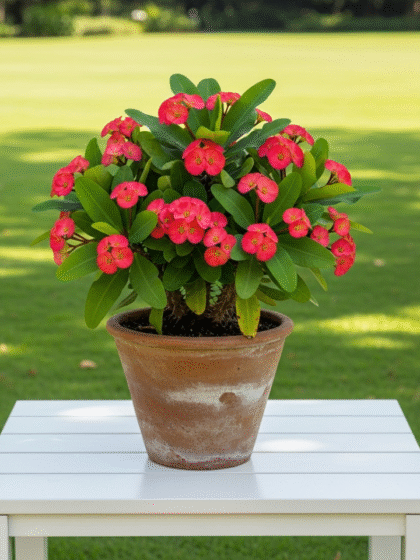
6. Euphorbia
Euphorbia is a large and diverse family of plants that includes some of the most drought-tolerant and sun-hardy specimens available to Indian gardeners. Many Euphorbia varieties resemble cacti in appearance and share their remarkable ability to store water and withstand prolonged heat and dry conditions.
Euphorbia plants are fast-growing, require minimal watering, and are largely pest-resistant. They make excellent structural plants in outdoor garden arrangements, providing bold form and texture without demanding regular attention. It is worth noting that Euphorbia sap can be a skin irritant, so handling with gloves is advisable during any pruning or repotting.
Best for: Outdoor garden borders, rock gardens, sunny terraces, structural garden arrangements
Watering frequency: Every 14 to 21 days; minimal in winter
Sunlight requirement: Full sun, 6 to 8 hours daily
7. Haworthia
While Haworthia is most commonly associated with indoor gardening, certain varieties adapt well to bright outdoor conditions in India — particularly in spaces that receive strong morning sun with protection from the most intense afternoon rays. It is one of the most forgiving succulents available, tolerating irregular watering and occasional neglect without visible stress.
Haworthia grows slowly, maintains a compact rosette form, and produces offsets naturally over time. It requires feeding only two to three times a year and is virtually pest-free in outdoor conditions. For gardeners who want a neat, attractive, low-effort succulent for a partially sunny outdoor space, Haworthia is an excellent choice.
Best for: Partially sunny outdoor spaces, shaded terraces, outdoor windowsills, garden borders with morning sun
Watering frequency: Every 10 to 14 days; reduce significantly in winter
Sunlight requirement: Bright indirect to partial sun outdoors; avoid harsh afternoon sun
8. Ixora (Rangan)
Ixora is one of India’s most reliably low-maintenance flowering shrubs for full sun conditions. Once established in well-draining soil, it requires only moderate watering and occasional feeding to produce its characteristic dense clusters of vivid flowers continuously through the warmer months.
It is a particularly good choice for gardeners who want consistent colour and structure in their outdoor space without committing to high-maintenance care routines. Ixora is slow to establish initially but becomes increasingly self-sufficient as it matures, eventually requiring little more than occasional pruning and light feeding to stay healthy and productive.
Best for: Garden borders, hedges, outdoor pots, decorative landscaping
Watering frequency: Every 5 to 7 days in summer; reduce in winter
Sunlight requirement: Full sun, 6 to 8 hours daily
9. Money Plant (Outdoor Varieties)
While Money Plant is most commonly grown indoors or in hanging arrangements, certain varieties — particularly the Golden and Variegated types — adapt well to outdoor conditions with bright, indirect or partial sun exposure. In outdoor settings, Money Plants grow more vigorously than their indoor counterparts, producing larger leaves and more robust trailing stems.
They require moderate watering and are highly forgiving of irregular care schedules. Their rapid growth and attractive foliage make them one of the most satisfying low-effort plants for sunny outdoor garden arrangements or shaded courtyard spaces.
Best for: Outdoor pots, shaded courtyard walls, garden trellises with indirect light
Watering frequency: Every 5 to 7 days; allow soil to dry slightly between waterings
Sunlight requirement: Bright indirect to partial sun; avoid harsh direct afternoon sun
10. Spider Plant (Chlorophytum comosum)
The Spider Plant is one of the most adaptable and easy-going plants available to Indian gardeners. While it prefers bright indirect light, it handles outdoor partial sun conditions across most Indian climate zones with ease. It is a fast grower that produces attractive arching green and white striped leaves along with cascading “spiderettes” — small offset plants that dangle elegantly from the mother plant.
Spider Plants are excellent choices for hanging baskets on covered outdoor spaces, shaded terraces, and garden areas that receive bright morning sun. They require only moderate watering, recover quickly from stress, and are highly resistant to most common garden pests.
Best for: Hanging baskets, shaded outdoor terraces, garden borders with morning sun
Watering frequency: Every 5 to 7 days; allow soil surface to dry between waterings
Sunlight requirement: Bright indirect to partial outdoor sun
Practical Tips for Low-Maintenance Outdoor Gardening in Indian Heat
Building a garden that largely takes care of itself in Indian heat is entirely achievable with the right approach from the beginning. A few foundational practices make a significant difference:
Invest in good soil preparation upfront. Well-draining soil enriched with coarse sand and organic compost reduces the need for frequent watering and feeding throughout the growing season. Time spent preparing the soil before planting pays dividends for years.
Group plants by water needs. Placing drought-tolerant plants like cacti, Euphorbia, and Jade Plant together in one section of the garden — and moisture-loving plants in another — allows you to water efficiently without either overwatering succulents or underwatering thirstier plants.
Use mulch generously. A 5 to 7 centimetre layer of organic mulch around the base of outdoor plants dramatically reduces soil moisture evaporation in summer heat, cutting watering frequency significantly.
Choose self-cleaning plants where possible. Plants that drop spent blooms naturally — like Bougainvillea and Ixora — require less deadheading and tidying, reducing the overall maintenance burden on a busy gardener.
Install drip irrigation for larger gardens. A simple drip irrigation system connected to a timer is one of the most effective investments a gardener can make for reducing daily maintenance requirements while ensuring plants receive consistent, appropriate hydration.
Start with established plants rather than seeds. For busy gardeners, starting with healthy, established young plants rather than growing from seed reduces the intensive early care period and allows the garden to reach a self-sufficient state more quickly.
Tips to Care for Outdoor Plants in Indian Heat
Keeping Your Garden Thriving Through Every Season
Growing outdoor plants in India is a genuinely rewarding experience — but it also comes with its own set of challenges. The intensity of Indian summers, the sudden onset of monsoon rains, and the relatively brief but occasionally harsh winters all demand that gardeners adapt their care routines thoughtfully across the year.
The good news is that once you understand a few core principles of plant care in the Indian climate, maintaining a healthy, vibrant outdoor garden becomes far less complicated than it might initially seem. The plants do most of the work — your role is simply to support them with the right conditions at the right time.
This section covers the most important practical care strategies for outdoor plants in India, organised around the three pillars of successful gardening in a hot climate — watering, soil management, and seasonal care.
Watering: The Most Critical Factor in Indian Heat
Water management is the single most important aspect of outdoor plant care in India, particularly during the summer months when temperatures regularly exceed 35°C to 40°C across most regions.
Water Deeply, Not Frequently
The most common watering mistake Indian gardeners make is watering little and often — sprinkling the surface of the soil daily without allowing water to penetrate deeply into the root zone. This approach encourages shallow root development, making plants more vulnerable to heat stress and drought.
A far more effective approach is deep, infrequent watering — applying enough water each time to penetrate 15 to 20 centimetres into the soil, then allowing the surface to dry slightly before watering again. This encourages roots to grow downward in search of moisture, developing a deeper, more resilient root system that is naturally better equipped to handle heat and dry spells.
Water at the Right Time of Day
The timing of watering makes a significant difference to plant health in hot Indian conditions. Early morning watering — ideally between 6 and 9 AM — is the most effective approach for most outdoor plants. Watering in the morning allows moisture to reach the root zone before the heat of the day increases evaporation rates, while also ensuring that foliage has time to dry before evening, reducing the risk of fungal disease.
Evening watering is a reasonable alternative when morning watering is not practical, but it carries a slightly higher risk of encouraging fungal problems due to moisture sitting on leaves and soil overnight. Avoid watering during the hottest part of the day — midday watering leads to rapid evaporation, mineral deposits on leaves from water droplets acting as magnifying lenses, and inefficient use of water overall.
Adjust Watering Frequency Across Seasons
Outdoor plants in India have very different water requirements across the three main seasons:
Summer (March to June): Most outdoor plants need watering every 2 to 3 days during peak summer. Container plants may need watering daily during extreme heat waves, as pots dry out significantly faster than garden beds.
Monsoon (July to September): Natural rainfall typically reduces or eliminates the need for supplemental watering. However, plants in covered outdoor spaces or under roof overhangs may still need occasional watering. Focus during this season on ensuring adequate drainage to prevent waterlogging.
Winter (October to February): Most outdoor plants require significantly less water during cooler months. Reduce watering frequency to once every 5 to 10 days for most plants, and once every 2 to 3 weeks for succulents and drought-tolerant varieties.
Signs of Overwatering and Underwatering
Learning to read your plants is one of the most valuable skills an outdoor gardener can develop:
Signs of underwatering include wilting or drooping leaves, dry and crumbly soil pulling away from pot edges, yellowing of lower leaves, and leaf edges turning brown and crispy.
Signs of overwatering include yellowing leaves with a soft, mushy texture, soggy soil that remains wet for extended periods, mould or algae growth on soil surface, and roots that appear brown and waterlogged rather than white and firm.
Soil Management: The Foundation of a Healthy Garden
Healthy soil is the foundation upon which every successful outdoor garden is built. In India’s hot climate, soil quality and structure play a crucial role in determining how well plants handle heat, drought, and seasonal variation.
Understanding Soil Types in Indian Gardens
Indian garden soils vary considerably by region:
Red laterite soil — common across southern and eastern India — is naturally well-draining but can be low in organic nutrients. It benefits from regular additions of compost and organic matter.
Black cotton soil — prevalent across Maharashtra, Gujarat, and parts of central India — retains moisture well but can become extremely hard and cracked in dry conditions and waterlogged during monsoon. Improving drainage with coarse sand and organic matter is essential.
Sandy soil — common in coastal and arid regions — drains very quickly and loses nutrients rapidly. Regular organic amendments and mulching help retain both moisture and fertility.
Alluvial soil — found across the Indo-Gangetic plains — is generally fertile and well-balanced, making it among the most naturally productive soil types for outdoor gardening in India.
Improving Soil for Outdoor Plants
Regardless of your natural soil type, a few amendments make a significant difference to how well outdoor plants perform in Indian heat:
Add organic compost. Incorporating well-rotted compost into garden beds before planting improves soil structure, nutrient content, water retention, and microbial activity simultaneously. Apply a fresh layer of compost as a top dressing once or twice a year to maintain soil health over time.
Use coarse river sand for drainage. For plants that prefer well-draining conditions — succulents, cacti, Bougainvillea, Rosemary — mixing coarse river sand into the planting area significantly reduces the risk of root rot and waterlogging during monsoon.
Maintain slightly acidic to neutral pH. Most outdoor plants in India perform best in soil with a pH between 6.0 and 7.0. If your soil is too alkaline, incorporating organic matter and sulphur-based amendments gradually brings the pH to a more plant-friendly range.
The Importance of Mulching in Indian Heat
Mulching is one of the most effective and underutilised practices in Indian outdoor gardening. Applying a 5 to 8 centimetre layer of organic mulch — such as dried leaves, straw, wood chips, or coconut coir — around the base of outdoor plants delivers multiple benefits simultaneously:
- Reduces soil moisture evaporation by up to 70 percent during hot summer months
- Keeps root zone temperatures significantly cooler during peak heat
- Suppresses weed growth naturally without chemical intervention
- Gradually breaks down to improve soil organic matter and fertility over time
- Prevents soil surface crusting after heavy monsoon rains
Mulching is particularly valuable for fruit trees, flowering shrubs, and medicinal herb gardens during the Indian summer — dramatically reducing watering frequency and protecting roots from heat stress.
Fertilising Outdoor Plants in the Indian Climate
Feeding outdoor plants appropriately through the year supports healthy growth, robust flowering, and improved resilience to heat and seasonal stress.
General Fertilising Principles
Feed during active growth periods. Most outdoor plants in India are in active growth between February and October. This is the most productive time to apply fertiliser, as plants can absorb and utilise nutrients efficiently during warm, active growing conditions.
Reduce or stop feeding in winter. During cooler months, most plants slow their growth naturally. Applying fertiliser during dormant or slow-growth periods can lead to nutrient buildup in the soil without corresponding plant uptake — potentially causing root burn or soil imbalance.
Use organic fertilisers where possible. Compost, vermicompost, neem cake, and seaweed-based fertilisers release nutrients slowly and steadily, improving soil health over time rather than delivering a sharp nutrient spike that quickly dissipates. They are particularly well-suited to the Indian climate, where high temperatures can accelerate the breakdown of chemical fertilisers.
Fertilising by Plant Type
Different categories of outdoor plants have different nutritional requirements:
Flowering plants benefit from a fertiliser with higher phosphorus content during their budding and blooming period — phosphorus supports flower development and overall bloom quality.
Fruit and spice plants require a balanced fertiliser with nitrogen, phosphorus, and potassium during their active growing season, with an emphasis on potassium during the fruiting period to improve fruit size, flavour, and quality.
Succulents and cacti need very light feeding — once every two to three months during the growing season is sufficient. Overfeeding succulents leads to excessive, weak growth that is more vulnerable to pest attack.
Medicinal and aromatic herbs generally perform well with light organic feeding. Heavy chemical fertilisation can actually reduce the concentration of essential oils and aromatic compounds in many herbs — making organic feeding the preferred approach for medicinal plant gardens.
Seasonal Care Guide for Indian Outdoor Gardens
Adapting your garden care routine to India’s three main seasons is one of the most effective strategies for maintaining healthy, productive outdoor plants year-round.
Summer Care (March to June)
Summer is the most demanding season for outdoor plants and gardeners alike. The focus during this period should be on protection, hydration, and stress reduction:
- Increase watering frequency for most plants; water deeply every 2 to 3 days
- Apply a fresh layer of mulch around all garden beds and container plants
- Avoid fertilising during the peak heat of April and May — wait until temperatures moderate slightly
- Provide temporary shade cloth for more sensitive plants during extreme heat waves
- Move container plants away from west-facing walls that absorb and radiate intense afternoon heat
- Check soil moisture daily for container plants, which dry out significantly faster than garden beds
Monsoon Care (July to September)
The monsoon season brings welcome relief from summer heat but introduces its own set of challenges — primarily excess moisture, reduced sunlight, and increased pest and fungal activity:
- Ensure all garden beds and containers have adequate drainage before the monsoon arrives
- Reduce or eliminate supplemental watering as rainfall takes over
- Watch for signs of fungal disease — powdery mildew, leaf spot, and root rot are most common during high-humidity monsoon conditions
- Apply neem oil spray as a preventive measure against fungal and pest issues
- Remove standing water promptly from pot saucers and low-lying garden areas
- This is an excellent season to transplant, propagate, and establish new plants — the combination of warmth and moisture supports rapid root development
Winter Care (October to February)
Winter is the most pleasant and productive gardening season across most of India. Plants that may have struggled through the summer heat now enter their most vigorous and rewarding growth phase:
- Reduce watering frequency significantly across all plant categories
- This is the ideal time to apply a balanced organic fertiliser to support the winter growing and flowering season
- Many flowering plants — roses, Ixora, Bougainvillea — reach their peak bloom during these months; enjoy the display
- Prune woody shrubs and climbers after their main flowering period to encourage strong new growth in spring
- For gardens in northern India where winter temperatures drop significantly, protect frost-sensitive tropical plants with temporary covering or move container plants to a sheltered position
Pest and Disease Management in Indian Outdoor Gardens
Indian outdoor gardens face a range of common pests and diseases, particularly during the transition seasons of spring and post-monsoon. A few proactive practices keep most problems manageable:
Inspect plants regularly. Catching pest infestations early — before they spread to neighbouring plants — is far easier than managing a large-scale outbreak. Check the undersides of leaves, stem joints, and new growth regularly for early signs of aphids, mealybugs, spider mites, and scale insects.
Use neem oil as a first response. Neem oil is one of the most effective, environmentally safe pest and disease management tools available to Indian gardeners. A diluted neem oil spray applied every 10 to 14 days during active growing seasons prevents most common pest problems without harming beneficial insects significantly.
Maintain good air circulation. Crowding plants too closely together reduces air circulation and creates humid microenvironments that favour fungal disease. Spacing plants appropriately and pruning dense foliage periodically keeps air moving freely and reduces disease pressure.
Remove affected plant material promptly. Diseased leaves, stems, and fallen fruit should be removed and disposed of away from the garden rather than left to decompose in place, where they can harbour and spread pathogens to healthy plants.
Conclusion — Build Your Sun-Loving Garden Today
Embrace the Indian Sun — Let Your Garden Celebrate It
Throughout this guide, we have journeyed through the rich and rewarding world of outdoor plants that love full sun and heat in India. From the brilliant cascading blooms of Bougainvillea to the healing presence of Tulsi in a courtyard corner, from the productive abundance of a homegrown Mango tree to the quiet resilience of an Aloe Vera plant in a sunny terrace pot — India’s sun-loving plant world is extraordinarily diverse, deeply meaningful, and remarkably accessible to every gardener.
The central message of this guide is simple but powerful: India’s climate is not a gardening challenge to be overcome — it is a gardening advantage to be embraced. The same sunshine and warmth that make Indian summers feel intense are the very conditions that allow an extraordinary range of beautiful, productive, and meaningful plants to thrive with energy and vitality that cooler climates simply cannot replicate.
What We Have Learned
Across the ten sections of this guide, several important insights have emerged that are worth bringing together as a final summary:
Understanding your climate is the foundation of good gardening. Knowing whether your garden receives true full sun or partial sun, understanding your regional climate zone, and recognising how India’s three main seasons affect plant growth allows you to make smarter, more confident planting decisions from the very beginning.
Flowering plants transform outdoor spaces with colour and fragrance. Sun-loving flowering plants like Hibiscus, Aparajita, Plumeria, Ixora, and Bougainvillea are among the most rewarding choices for Indian outdoor gardens — delivering vibrant, long-lasting displays with relatively modest care requirements.
Climbers and creepers maximise vertical space beautifully. For gardeners working with limited ground area, sun-loving climbers like Madhumalati, Morning Glory, Allamanda, and Jasmine varieties offer a practical and visually striking solution — transforming bare walls and fences into living, flowering screens.
Fruit and spice plants combine beauty with productivity. Growing your own Mango, Guava, Pomegranate, Lemon, Papaya, or Curry Leaf plant delivers fresh, homegrown produce while simultaneously enriching the visual appeal of your outdoor space — making every corner of the garden purposeful and rewarding.
Medicinal and aromatic plants connect the garden to everyday life. Tulsi, Aloe Vera, Ashwagandha, Rosemary, Turmeric, and Brahmi bring the ancient wisdom of Indian herbal tradition into the modern home garden — combining therapeutic value with sensory richness and cultural depth.
Low-maintenance plants make gardening accessible to everyone. Sun-hardy succulents, drought-tolerant shrubs, and self-sufficient climbers ensure that even the busiest gardener can maintain a beautiful, thriving outdoor space without dedicating hours of daily attention to its upkeep.
Smart care practices amplify plant health and garden beauty. Deep watering, appropriate soil preparation, seasonal mulching, organic feeding, and proactive pest management are the foundational practices that transform a collection of individual plants into a coherent, flourishing outdoor garden.
Sun-hardy plants deliver lasting value across every dimension. From ecological and cultural contributions to economic returns and long-term aesthetic appeal, plants genuinely suited to India’s sunny, warm climate represent the most rewarding and sustainable long-term investment any Indian gardener can make.
Your Garden — Wherever You Are in India
One of the most encouraging realities revealed throughout this guide is that meaningful, beautiful outdoor gardening is possible across every region of India — from the humid warmth of coastal Bengal and Kerala to the dry intensity of Rajasthan and Gujarat, from the tropical abundance of Tamil Nadu and Karnataka to the seasonal contrasts of Delhi and Punjab.
The specific plants that perform best will vary by region, local microclimate, and available space — but the fundamental principle remains constant everywhere: choose plants that are naturally aligned with your conditions, care for them with intelligence and consistency, and they will reward you generously with beauty, productivity, and vitality across every season.
Whether you are starting with a single sunny balcony pot or planning a comprehensive outdoor garden, the journey begins with one plant — chosen thoughtfully, planted with care, and given the sunshine it deserves.
Practical Next Steps for Starting Your Sun-Loving Garden
If this guide has inspired you to begin or expand your outdoor garden, here are some practical first steps to move forward with confidence:
Assess your space honestly. Spend a day observing how sunlight moves across your garden, terrace, or balcony. Note which areas receive full sun for 6 or more hours, which receive partial sun, and which are predominantly shaded. This simple observation exercise will guide every planting decision that follows.
Start with three to five plants. Beginning with a small, manageable selection allows you to build confidence, learn your specific growing conditions, and avoid the overwhelm that sometimes accompanies an overly ambitious first garden. Choose one flowering plant, one productive plant, and one low-maintenance plant as a starting framework.
Prepare your soil before planting. Regardless of whether you are planting in garden beds or containers, investing time in proper soil preparation — adding compost, ensuring drainage, checking pH — dramatically improves the long-term success of every plant you grow.
Connect with the gardening community. India has a wonderfully active and generous community of home gardeners — both online and in local nurseries and gardening groups. Sharing experiences, exchanging cuttings, and learning from fellow gardeners accelerates the learning curve and makes the entire journey more enjoyable.
Be patient and observant. Gardens develop over time, and the most rewarding outdoor spaces are built gradually — season by season, plant by plant. Developing the habit of observing your plants closely, noticing how they respond to different conditions, and adjusting your care accordingly is the most valuable skill any gardener can cultivate.
Celebrate every stage of growth. From the first unfurling leaf of a newly planted sapling to the first bloom on a flowering shrub, from the first fruit on a homegrown Lemon plant to the spreading canopy of a mature Mango tree — every stage of a plant’s growth is worth appreciating and celebrating. Gardening is not just about the destination; the journey itself is deeply nourishing.
A Final Thought — Gardening as a Return to Nature
In a world that moves increasingly fast, where screens dominate attention and concrete dominates landscapes, a garden — even a small one — offers something genuinely precious. It offers slowness, presence, and connection to the natural rhythms that have sustained life on this planet for millions of years.
The Indian tradition of living closely with plants — of having Tulsi in the courtyard, fruit trees in the garden, and herbs within arm’s reach of the kitchen — is not simply an aesthetic preference. It is a deeply wise way of living that acknowledges the human need for connection with the natural world.
Every sun-loving plant you grow in your outdoor space is a small but meaningful step toward reclaiming that connection. It is a living reminder that despite the pace and complexity of modern life, the simple joys of watching something grow, bloom, and bear fruit remain as nourishing and as accessible as they have always been.
India’s sun is generous. Its soil is rich with potential. And its gardening tradition is among the most vibrant and diverse in the world.