The heart hoya is Hoya kerrii, a climbing vine in the dogbane family, Apocynaceae. In the wild it scrambles over trees and rocks in the warm, humid forests of Thailand, Laos, Cambodia, Vietnam, Peninsular Malaysia and Java. It was named after Arthur Kerr, the Irish doctor and botanist who collected it in Thailand in the early 1900s.
What makes it stand out:
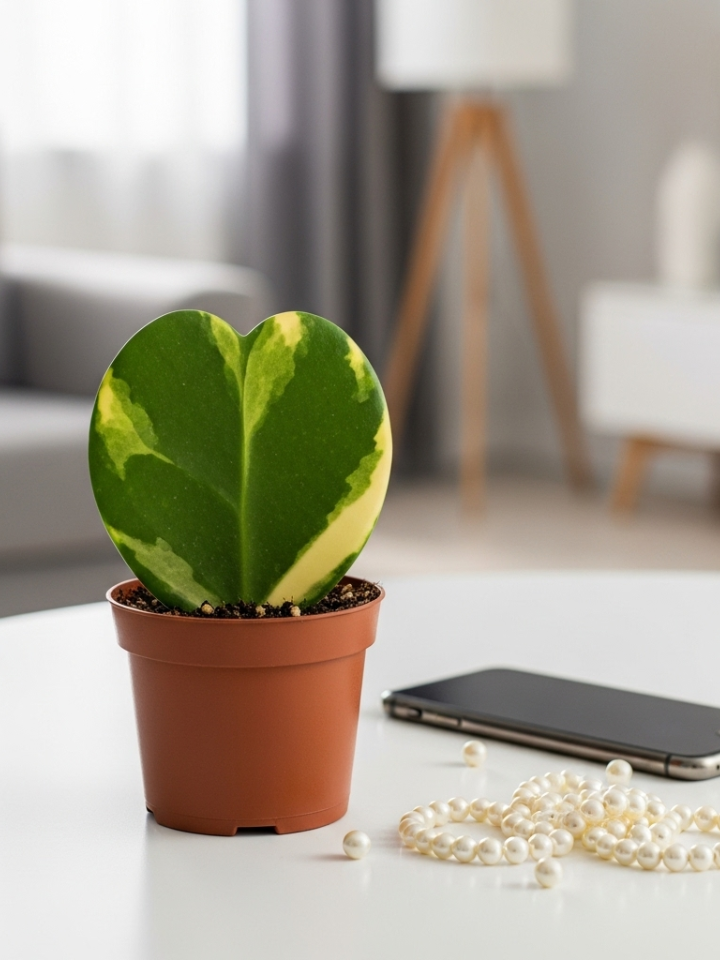
- Leaves. Thick, rubbery and shaped like a perfect heart, usually 5–12 cm long. They are a deep, glossy green and feel almost leathery. Variegated forms with cream edges or centres also exist.
- Stems. Woody vines that trail or twine around a support. Growth is slow at first, then speeds up once the plant settles in.
- Flowers. Rounded clusters of small, star-shaped flowers with a waxy, porcelain look, cream to soft pink with a reddish-maroon centre. They usually appear only on plants a few years old, often in the warmer months.
- Sap. Like other hoyas, broken stems and leaves leak a milky latex.
Because it holds water in its leaves, this hoya behaves much like a succulent. It sits comfortably among succulent-leaved houseplants that store their own water while growing like a vine.
Where should you keep a sweetheart hoya at home?
Choose a bright spot out of harsh afternoon sun. An east-facing window, a bright north window, or a few feet back from a south or west window all work well.
- Windowsills and shelves. A young plant sits neatly on a sill or bookshelf, where its hearts catch the light.
- Bedside tables and desks. It stays compact for a long time, which makes it one of the bedside plants that stay small for years, provided the room gets good daylight.
- Hanging baskets. As the vines lengthen, a hoya looks lovely spilling from one of the hanging basket plants for a bright window or a macramé hanger.
- On a hoop or small trellis. Train the stems around a bamboo or wire hoop to create a living heart-shaped frame.
- Bright, covered balconies. It enjoys warm, humid air outdoors, as long as it is shaded from direct midday sun and heavy rain.
Avoid dark corners, air-conditioner vents and spots where water can pool around the pot.
Product Specifications
- Plant name: Heart Hoya Plant / Sweetheart Hoya / Valentine Hoya / Lucky Heart Plant
- Botanical name: Hoya kerrii Craib
- Plant family: Apocynaceae (dogbane family; formerly placed in Asclepiadaceae)
- Native range: Thailand, Laos, Cambodia, Vietnam, Peninsular Malaysia and Java
- Plant type: Evergreen, succulent-leaved tropical vine (climbing or trailing)
- Form supplied: Young rooted plant
- Foliage: Thick, glossy, heart-shaped leaves, usually 5–12 cm long
- Growing medium supplied: Nutrient-rich potting mix
- Growth habit: Trailing or climbing vine; can be trained on a hoop or trellis
- Growth rate: Slow, especially when young
- Mature size indoors: Vines of about 1–2 m over several years; longer in ideal conditions
- Flowers: Clusters of small, waxy, star-shaped flowers, cream to pale pink with a reddish centre; usually on plants two to three years old or more
- Suitable placement: Bright windowsills, shelves, desks, bedside tables, hanging baskets, bright covered balconies
- Not suitable for: Dark corners, harsh afternoon sun, waterlogged pots, cold drafts
- Light requirement: Bright, indirect light; gentle morning sun is fine
- Water requirement: Low; water only when the mix is almost fully dry
- Soil requirement: Chunky, fast-draining mix of cocopeat or potting soil, perlite and orchid bark or coco chips
- Temperature: 18–32 °C ideal; protect from nights below about 10 °C
- Humidity: Moderate to high preferred; tolerates average indoor humidity
- Fertiliser: Diluted liquid fertiliser monthly, March to September
- Common pests and problems: Mealybugs, aphids on new shoots, root rot from overwatering
- Maintenance: Low
- Difficulty level: Easy
- Suitable environment: Indoors across India; warm, humid regions also suit bright covered balconies
- Pet safety: Genus-level only. The ASPCA lists the wax plant (Hoya carnosa) as non-toxic to dogs and cats; Hoya kerrii is not listed by name.
- Sap: Milky latex; may irritate sensitive skin
How do you care for a Hoya kerrii?
Most hoyas are lost to kindness, mainly too much water. Keep things simple:
- Light. Bright, indirect light for most of the day. Too little light means no new growth and no flowers. Too much direct sun can scorch the leaves or turn them reddish-yellow.
- Watering. Water thoroughly, then wait until the mix is dry nearly all the way down. In a 4-inch pot that is often every 7–10 days in summer and every two to three weeks in winter. Slightly soft, wrinkled leaves mean it is thirsty.
- Potting mix. It needs a chunky, airy mix. A good blend is equal parts cocopeat or potting soil, perlite and orchid bark or coco chips. Heavy garden soil holds too much water.
- Pot. Always use a pot with a drainage hole. Hoyas like being slightly snug, so move up only one size, and only when roots fill the pot.
- Temperature. Happiest between 18 °C and 32 °C. Keep it indoors, away from cold windows, if nights fall below about 10 °C.
- Humidity. It enjoys humid air, which most of eastern and coastal India provides. In dry northern winters, group it with other plants.
- Feeding. A diluted liquid houseplant fertiliser once a month from March to September is enough. Skip feeding in winter.
- Handling. Wear gloves or wash your hands after pruning, as the milky sap can irritate sensitive skin.
Its forgiving nature puts it among the easy-care plants that ask for water only now and then, and it suits houseplants for someone buying their very first plant.
Will a heart hoya flower?
Yes, once it is mature and happy, though patience is part of the deal. Plants usually bloom after two or three years, sometimes longer, when given plenty of bright light and allowed to grow a little root-bound.
The flowers grow from short stalks called peduncles. Never cut these spurs off after flowering, because the same spurs bloom again year after year. The blooms produce sticky drops of nectar, so keep the plant away from polished furniture while it is flowering.
Does a heart hoya grow from a single leaf?
Usually not. A lone heart-shaped leaf without a piece of stem and a node can root and stay green for years, but it rarely produces a vine. That is why single-leaf hearts are often called "zombie leaves".
A rooted cutting with stem and nodes, which is what we aim to send [CONFIRM], will put out new vines and new leaves over time. If you want to grow more, take a stem cutting with at least one or two nodes and root it in water or moist perlite in warm weather.
Is the heart hoya a good gift?
Few plants make a sweeter present. Its heart-shaped leaves make it a favourite for Valentine's Day, anniversaries, weddings and "thinking of you" moments, and unlike cut flowers it can last for decades. That is why it belongs among indoor plant gifts for Valentine's Day and anniversaries.
Pet owners can also take some comfort: the ASPCA lists the wax plant, Hoya carnosa, as non-toxic to dogs and cats, and Hoya kerrii belongs to the same genus. It is not listed by name, so keep it out of reach of animals that like to chew, as with any plant. If you are building a collection around animals, browse plants picked with cats and dogs at home in mind.
Does a heart hoya purify the air?
Not in any way you would notice. Like all plants it takes in some carbon dioxide, but research reviewing decades of studies found that a few houseplants cannot measurably clean the air in a normal room. Ventilation does far more. If you want the detail, read what studies really show about plants and room air. The real reasons to grow this hoya are its charm and its easy care.
Heart hoya through the Bengal year
These timings suit the Kolkata climate where our plants grow, and most of the eastern and southern plains.
March to June: active growth and heat. New leaves and vines appear. Water when the mix is dry, feed monthly, and shade it from the harsh afternoon sun of April and May.
July to September: monsoon. Humidity is ideal, but cloudy days slow drying. Check the mix before watering and keep the pot out of the rain.
October to November: the best time to repot. Mild weather and steady light. Move up one pot size only if roots are crowding.
December to February: rest. Growth slows. Water every two to three weeks, stop feeding, and keep it away from cold drafts.
What problems affect a heart hoya?
- Yellow, soft or mushy leaves. Overwatering or poor drainage. Let the mix dry out and check the roots for rot.
- Wrinkled, thin leaves. Underwatering, or roots damaged by earlier rot. Water deeply and check the roots.
- No new growth for months. Not enough light, a single leaf with no node, or winter rest.
- Reddish or bleached patches. Too much direct sun. Move it into bright shade.
- White cottony clusters. Mealybugs, often in leaf joints. Wipe off with cotton dipped in rubbing alcohol, then spray diluted neem oil weekly.
- Sticky leaves with no pests. Nectar from the flower spurs. It is harmless; just wipe it away.
Plants that pair well with a heart hoya
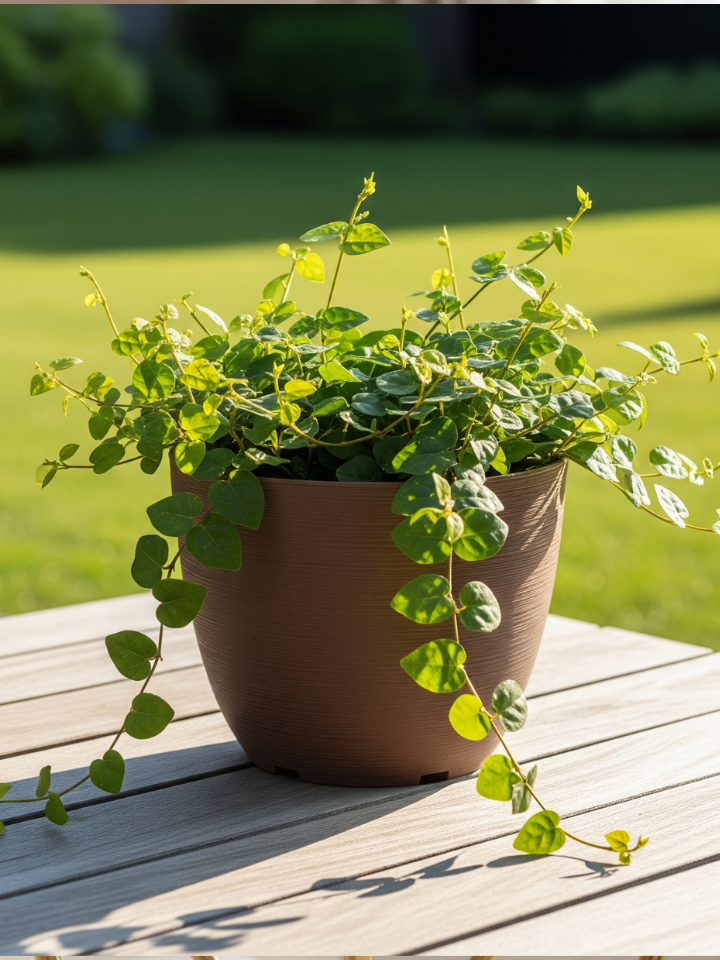
For more hearts on a smaller scale, add the cupid peperomia with its tiny trailing hearts. For a bright windowsill trio, combine it with a haworthia with translucent leaf windows and a small-leaved jade that likes the same dry spells.
A heart that keeps on growing
Every plant is checked and packed by hand by an online plant nursery that ships rooted hoyas across India. Give your heart hoya bright light and a light hand with the watering can, and it will reward you with new hearts year after year.




































There are no reviews yet.