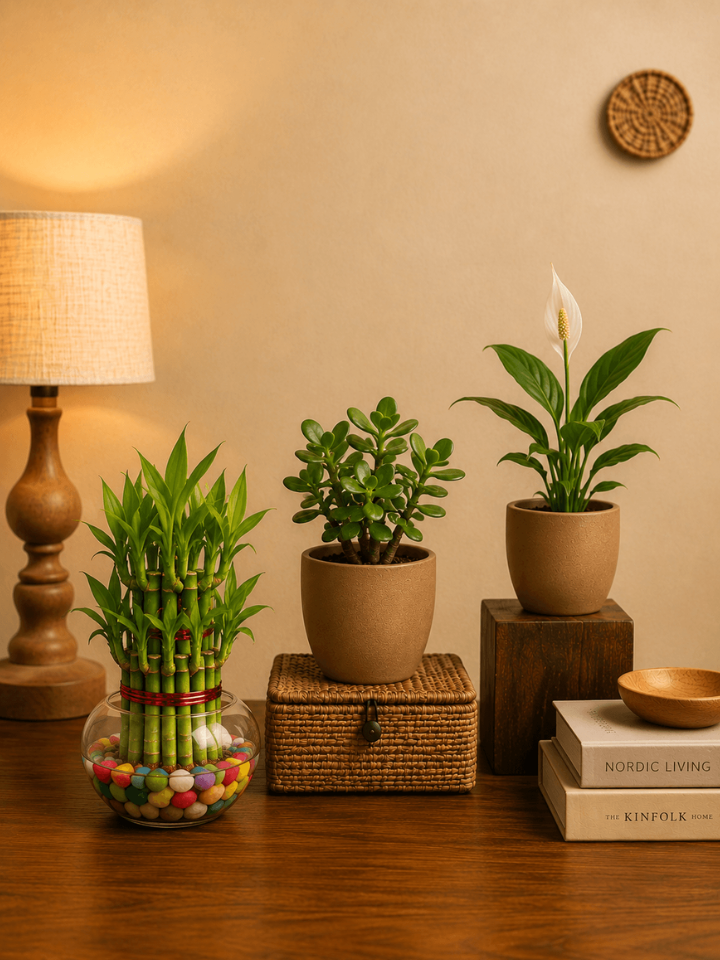
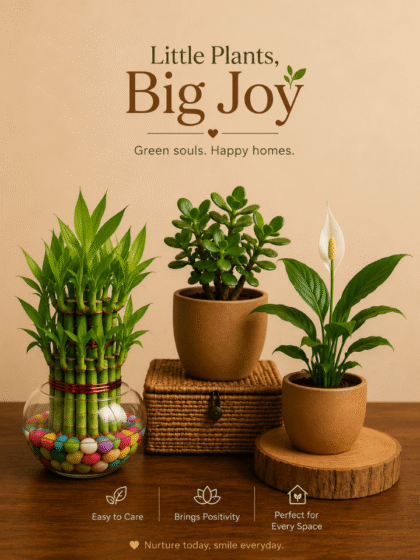
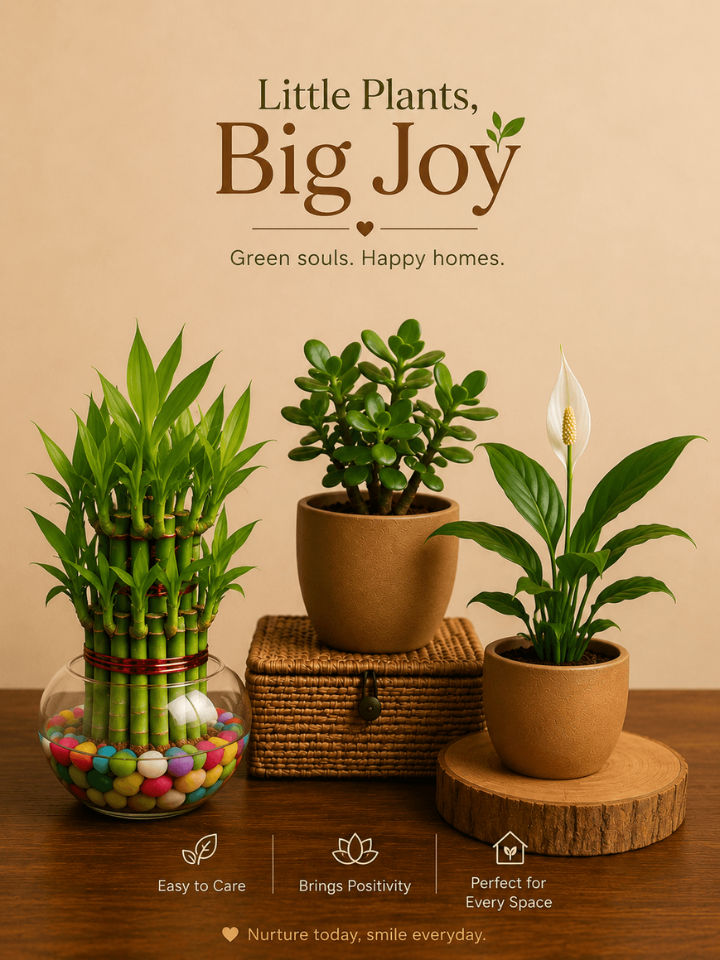
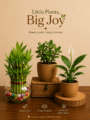
A handful of well-chosen indoor plants can change the entire feel of a room – and few combinations do it as gracefully as this Set of 3 Vastu Plants from Plantaeroot. Inside, you'll find a flowering peace lily plant, an upright Lucky Bamboo, and a compact Jade Plant: three of the most widely recommended indoor plants for anyone who wants their home or workspace to feel calmer, greener, and a little more auspicious.
In Indian households, plants have never been just decoration. Vastu Shastra has guided which greenery belongs near the entrance, which corner welcomes prosperity, and which plant is best kept on a work desk, for generations. This combo pack takes that tradition and makes it effortless to follow: three time-tested Vastu plants, bundled into a single order, each one individually potted and accompanied by a dedicated care guide.
Whether you're furnishing a new apartment, adding life to a cabin, or searching for small indoor plants that double as a thoughtful gift, this trio is built around a simple idea – beautiful, low maintenance plant choices that also carry real symbolic weight. Below, you'll find exactly what's included, how to care for each plant, where Vastu recommends placing them, and answers to the questions most people ask before they buy.
Every plant is handpicked before dispatch and packed to survive its journey across India, whether it's headed to a metro apartment, a suburban bungalow, or a small-town balcony. Plantaeroot has been growing and shipping healthy plants since 2014, and this Vastu combo reflects the same philosophy that built that reputation – fewer, better plants, chosen with real thought behind each one.
Why This Vastu Plant Combo Belongs in Every Indian Home
Buying three plants separately usually means three different care sheets, three different pot styles, and a fair bit of guesswork about which corner suits which plant. This combo removes that friction. Each of the three indoor plants included here was chosen specifically because it complements the other two – in appearance, in care needs, and in the kind of energy each is believed to invite into a space.
For first-time plant parents, that matters more than it might seem. Peace Lily, Lucky Bamboo, and Jade Plant are all genuinely low maintenance plant choices, meaning none of the three demands daily attention, specialised fertiliser, or a green thumb honed over years. They tolerate the kind of inconsistent watering schedule that's realistic for a busy household, and all three adapt comfortably to typical Indian indoor lighting – bright but indirect, the kind most homes and offices already have near a window or a well-lit corner.
There's also a practical, spatial logic to the set. A living room can hold the Peace Lily as a flowering centrepiece, the study or office desk can host the Lucky Bamboo, and an entryway table or kitchen counter is a natural spot for the Jade Plant – three distinct zones of the home, covered by a single order. Many customers start with this exact combo before expanding into a larger collection of indoor plants once they're comfortable with the basics.
And then there's the symbolism, which is really the heart of why these three are grouped together in the first place. Vastu Shastra and the closely related tradition of Feng Shui both treat green, living plants as carriers of energy – plants that, depending on their shape, growth habit, and placement, are believed to encourage calm, invite prosperity, or support harmony in relationships. Peace Lily, Lucky Bamboo, and Jade Plant each represent a different one of these themes, which is exactly why they're so often gifted and displayed together rather than alone.
Even the number itself carries meaning. In numerology-linked traditions that inform much of Vastu practice, three is often read as a number of balance – mind, body, and spirit; or creation, preservation, and renewal. A set of three plants, each with its own symbolic role, is a small but deliberate way of bringing that balance into a home.
Meet Your Three Green Companions
Here's a closer look at each plant in the set – what makes it special, how to keep it thriving, and what Vastu Shastra says about where it belongs.
Peace Lily (Spathiphyllum) – The Plant of Calm and Purity
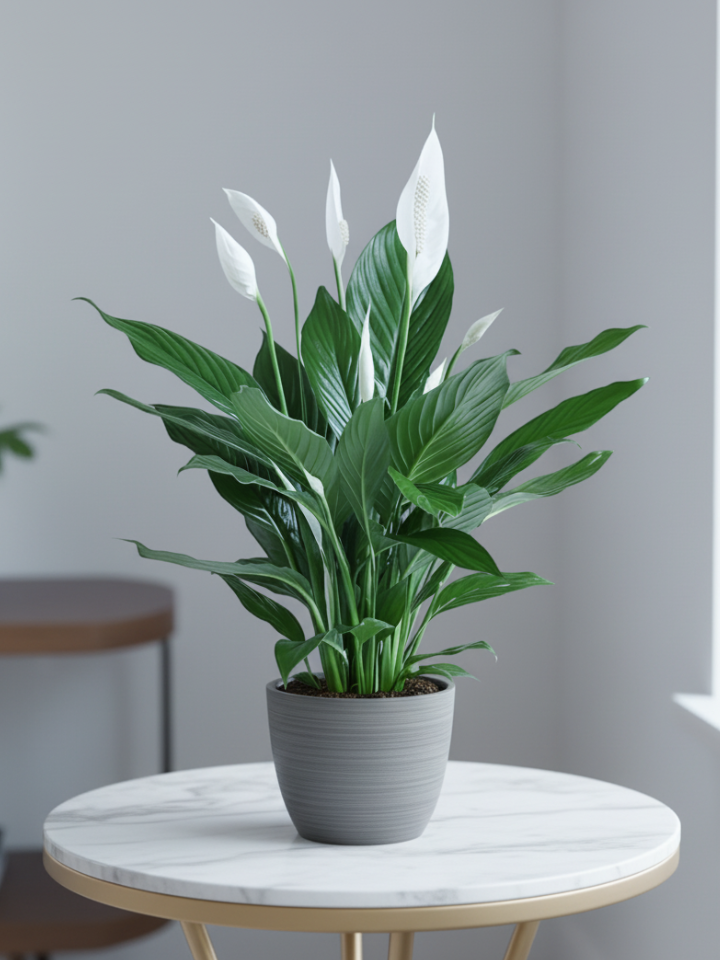
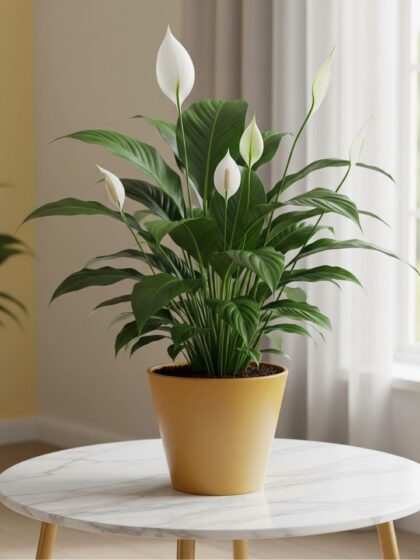
The peace lily plant is the most visually striking member of this trio. Its glossy, deep-green leaves arch gracefully from the base, and under the right conditions, it sends up elegant white spathes – often mistaken for flowers – that seem to glow against the dark foliage. Botanically, Spathiphyllum isn't a true lily at all; it belongs to the Araceae family. But the name has stuck for good reason: few indoor plants communicate serenity quite as effectively.
Symbolically, the Peace Lily lives up to its name. It's widely associated with peace, purity, and calm energy, which is why it's such a popular choice for living rooms, meditation corners, and spaces meant for rest rather than activity. Many people also lean on its reputation from NASA's well-known Clean Air Study, which listed Peace Lily among the houseplants tested for their ability to filter certain indoor air pollutants – a detail that's made it a long-standing favourite for bedrooms and home offices alike, even though real-world air quality benefits depend heavily on the number of plants and the size of the room.
Caring for a Peace Lily is refreshingly simple. It prefers medium, indirect light – a spot a few feet from a window works well – and actually tolerates lower light better than most flowering plants, though it blooms more reliably with a bit more brightness. Direct, harsh sun is the one thing to avoid, since it scorches the leaves. Water when the top inch of soil feels dry, or simply watch the leaves: a slightly drooping Peace Lily is asking for a drink, and it perks back up within hours of being watered. It also appreciates a bit of humidity, so an occasional misting or a spot in a naturally humid, well-lit room works nicely.
If this flowering favourite becomes a firm favourite in your home, you can always buy peace lily plant online in additional sizes directly from Plantaeroot to expand your collection.
One detail worth knowing upfront: Peace Lily is not considered pet-safe. Like several other popular flowering houseplants, its leaves contain compounds that can irritate the mouth and stomach if chewed by cats or dogs. It's a wonderful plant for most homes, but if you share yours with a curious pet, keep it somewhere out of paw's reach – more on this in the safety note further down this page.
Lucky Bamboo (Dracaena sanderiana) – The Emblem of Fortune
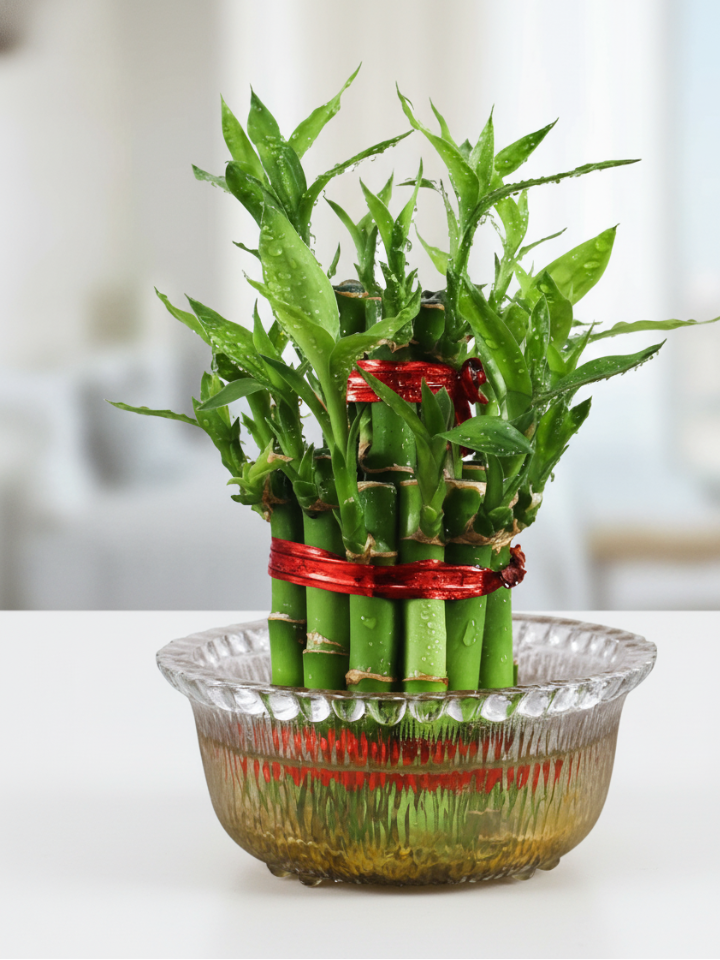
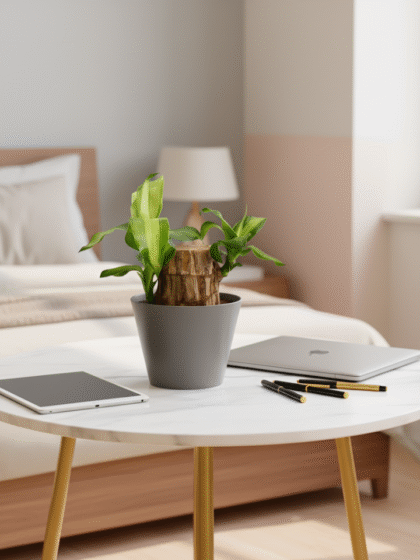
Despite the name, Lucky Bamboo isn't bamboo at all – it's a member of the Dracaena family, prized for its slender, upright stalks and the ease with which it can be trained into spirals, layers, or simple straight canes. What it shares with true bamboo is really just the look: smooth green segments stacked one above another, topped with a tuft of narrow leaves.
Few plants carry as much symbolic weight in as small a footprint. In both Feng Shui and Vastu Shastra, Lucky Bamboo is treated as one of the most reliable carriers of positive energy, and the number of stalks in an arrangement is said to change exactly what kind of fortune it invites: three stalks are linked to happiness, five to health, seven to love, and eight to wealth, with each additional stalk layering on its own meaning. It's this stalk-counting tradition that's made Lucky Bamboo such a popular housewarming and business-opening gift across India.
You can grow it two ways, and both are genuinely low-effort. In soil, it develops a sturdier root system and holds up well over the long term; in a simple vase of water, it looks elegant on a desk or shelf and needs almost nothing beyond a water change every seven to ten days. If you'd like to explore more arrangements and layer counts, you can buy lucky bamboo plant options directly from Plantaeroot's dedicated collection.
Light-wise, Lucky Bamboo prefers bright, indirect conditions – a spot near a window but out of the direct afternoon sun, which can yellow or scorch its stalks. If you're growing it in water, use filtered or room-temperature tap water left to stand overnight, since chlorine and fluoride can cause the leaf tips to brown over time. According to Feng Shui tradition, the east or southeast direction of a home or office is considered the most favourable spot for Lucky Bamboo, aligning with the wood element associated with growth and new beginnings.
It's also one of the most forgiving plants for offices and study tables, tolerating the fluorescent lighting and irregular watering schedules that come with a busy work life. A small arrangement on a founder's desk or a reception counter is a common sight in Indian offices for exactly this reason – equal parts décor and quiet good-luck charm.
Jade Plant (Crassula ovata) – The Symbol of Prosperity
The Jade Plant is the quiet overachiever of this trio. Its thick, glossy, coin-shaped leaves grow in neat opposite pairs along sturdy branching stems, giving the whole plant a sculpted, almost bonsai-like structure without any of the training a real bonsai needs. Left to its own devices, a well-cared-for Jade Plant can live for decades, slowly thickening at the base into a miniature tree.
Its nickname, the "Money Plant" or "Money Tree" in several cultures (not to be confused with India's own Money Plant, Epipremnum aureum), comes directly from its coin-like leaves and its long-standing association with financial growth and prosperity in both Feng Shui and Vastu Shastra. It's a common sight on shop counters, office reception desks, and near the entrances of Indian homes for precisely this reason – a small, steady plant meant to encourage steady, compounding good fortune.
As a succulent, Jade Plant care runs in the opposite direction from most tropical houseplants: it wants more light, not less, and far less water. Bright light – a few hours of gentle direct sun or all-day bright indirect light near a window – keeps the leaves compact and can even bring out a subtle red blush along the edges. Water only once the soil has dried out completely; this is one of the rare houseplants where underwatering is much safer than overwatering, since soggy soil quickly leads to root rot in succulents like this one.
Its compact size and low fuss-factor make it one of the most gifted small indoor plants in India – a jade plant gift is a common choice for Diwali, housewarmings, and work anniversaries, precisely because it needs so little upkeep while carrying so much symbolic goodwill.
In Vastu terms, the southeast corner of a home or office – the direction traditionally linked to wealth and financial energy – is considered the ideal spot for a Jade Plant, though it does equally well as a desk companion or a windowsill plant in any bright room.
Where These Three Traditions Come From
Long before "Vastu plants" became a neat category on a nursery website, each member of this trio followed its own, quite different path into Indian homes.
Lucky Bamboo's story actually begins in Chinese Feng Shui rather than Vastu Shastra. It's widely believed to have travelled into Indian households alongside the broader wave of interest in Feng Shui décor, water fountains, and wind chimes that grew popular in Indian retail from the 1990s onward. Its adoption into Vastu-conscious homes happened more gradually and more recently, as the two systems increasingly borrow from one another in modern Indian interior design and gifting culture, to the point where most people today simply think of it as a "lucky plant" without drawing a sharp line between the two traditions.
Jade Plant followed a broadly similar route. Native to South Africa, it picked up its enduring "money tree" reputation largely through Chinese trading and immigrant communities across Southeast Asia, before becoming a familiar fixture on Indian shop counters, office reception desks, and eventually home entryways over the past few decades, prized as much for its resilience as for its symbolism.
Peace Lily's journey is a little different again. Native to the tropical rainforests of the Americas, it entered Indian homes primarily as a decorative flowering houseplant, and its association with peace and calm grew largely out of its name and its gentle, undemanding presence rather than a centuries-old ritual origin. Its water-loving nature has, over time, led many Vastu practitioners to connect it with the water element, folding a relatively recent introduction into a much older framework.
None of this makes any of the three less meaningful in a home today. If anything, it's a reminder that living traditions like Vastu Shastra have always adapted to include new plants and new ideas rather than staying frozen at a single historical moment, which is really what makes a modern combo like this one feel so at home on an Indian windowsill.
Vastu Shastra & This Green Trio: Why the Three Work So Well Together
Vastu Shastra, the traditional Indian system of architecture and spatial design, treats a home as a living system where energy – often referred to as prana – flows through directions, corners, and the objects placed within them. Living plants are considered especially powerful within this system, precisely because they're alive: growing and constantly exchanging energy with their surroundings in a way that furniture or décor simply can't.
What makes this particular trio effective, according to Vastu practitioners, isn't just that each plant is individually auspicious – it's that the three cover complementary ground. Peace Lily is generally associated with calm, purity, and the water element, softening a space emotionally. Lucky Bamboo channels the wood element, tied to growth, resilience, and new beginnings. Jade Plant leans into the earth element and its long association with wealth and steady accumulation. Together, the set is often described as touching three of the five classical elements at once – a small, curated way of balancing a room rather than relying on a single plant to do everything.
This is also why combo packs built around lucky vastu plants for home use tend to work so well as a starting point – not because any one plant is more powerful than another, but because a considered mix simply covers more bases: more corners of the home, more occasions worth marking, and more of the traditional elements Vastu asks a well-balanced space to include.
It's worth saying plainly: Vastu Shastra is a belief system rooted in centuries of tradition rather than a scientifically tested practice, and people approach it with varying degrees of literalness. Some follow directional placement precisely; others simply enjoy the cultural continuity of keeping plants that their parents and grandparents also kept for the same reasons. Either way, all three plants in this set are also genuinely attractive, easy-care indoor plants in their own right, so the décor benefits hold regardless of how strictly you follow the directional guidance below.
Where to Place Your Vastu Plants for Maximum Benefit
If you do want to follow traditional placement guidance, here's a simple, room-by-room way to think about it.
- Main entrance or living room: A Lucky Bamboo arrangement or Jade Plant near the front door is traditionally believed to welcome positive energy as soon as it enters the home – a small, deliberate gesture that also happens to make a strong first impression on guests.
- Southeast corner: Considered the wealth corner in Vastu Shastra, this is the classic spot for the Jade Plant, and a secondary option for Lucky Bamboo if you're arranging multiple green corners around the home.
- East or northeast corner: Associated with growth and health, and a favoured direction for Lucky Bamboo specifically.
- Living room or family space: The Peace Lily's calming, purifying reputation makes it a natural fit here, ideally in a spot with bright, filtered light rather than a dark corner.
- Study table or home office desk: Lucky Bamboo is the traditional favourite here, believed to support focus and steady progress, though a small Jade Plant works just as well if you'd prefer its bonsai-like structure close at hand.
- Kitchen counter or dining area: Jade Plant's association with abundance makes it a popular, low-fuss choice for kitchens, provided it gets enough bright light near a window.
None of these placements are strict rules – think of them as a starting point rather than a requirement. The single most important factor for any of these three plants, regardless of which direction they end up in, is light. A "perfect" Vastu corner that's genuinely dark will do a plant far less good than a slightly-less-traditional spot that actually gets bright, indirect light for most of the day.
A Gift That Grows: Why This Combo Is Perfect for Gifting
Cut flowers wilt within a week. This combo, cared for even moderately well, is still growing a year later – which is exactly why plant combo packs like this one have become such a popular alternative to bouquets for Indian gifting occasions.
Housewarmings are the most obvious fit. Gifting a new homeowner a set that includes Lucky Bamboo and Jade Plant taps directly into the tradition of wishing a household prosperity and good fortune from day one, and the included care guide means the recipient doesn't need any prior plant experience to keep it thriving. It's an equally natural fit for Diwali, when gifting green, living symbols of prosperity has become increasingly popular alongside traditional gift boxes and sweets.
It also works well in a corporate context. Office openings, promotions, retirements, and milestone work anniversaries all lend themselves to a gift that's thoughtful without being overly personal – three easy-care indoor plants, symbolically tied to calm, growth, and prosperity, make a safe and genuinely appreciated choice for a coworker or a business contact.
And because all three plants are genuinely low maintenance, this combo works even for recipients who've never kept a houseplant alive before. There's no elaborate setup, no special fertiliser to track down, and no risk of overwhelming a first-time plant parent – just three pots, one care guide, and results within the first few weeks.
Perfect for Living Rooms, Office Desks & Low-Light Corners
One of the most practical advantages of this combo is how well it adapts to the actual rooms most Indian homes and workplaces have to offer.
In the living room, the Peace Lily's height and flowering habit make it a natural centrepiece – on a console table, beside a sofa, or in a well-lit corner where its white spathes can be appreciated. Interior stylists frequently recommend flowering plants for drawing room settings specifically because they add colour and softness to what can otherwise be a fairly static arrangement of furniture and fabric.
The Lucky Bamboo and Jade Plant, meanwhile, are more compact and far more forgiving of imperfect conditions, which makes them especially suited to office environments. Fluorescent lighting, air-conditioned air, and a schedule that doesn't always allow for daily plant care are the realities of most Indian workplaces, and both of these plants were essentially built for exactly that kind of environment.
If you're specifically furnishing a workstation, this set doubles nicely as one of the best plants for office desk setups: the Lucky Bamboo brings height and movement without demanding a large footprint, while the Jade Plant's compact, structured shape sits neatly beside a keyboard or monitor without getting in the way.
All three plants also handle low-light zones better than most flowering or fruiting varieties, though "low light" should still mean a room with some natural daylight rather than a windowless space. A north-facing room, a corner a few feet back from a window, or a well-lit hallway are all realistic low-light settings where this trio will hold up – hours of direct, harsh sun is really the only lighting condition all three plants would rather avoid, and even then, the Jade Plant tolerates a few hours of gentle morning sun without complaint.
Low-Maintenance Care Made Simple
If you've hesitated to buy live plants before because you're worried about keeping them alive, this combo was practically designed to ease that worry. All three are genuinely easy going, but a little shared logic makes caring for them even simpler.
Watering is where most new plant owners go wrong, almost always by doing too much of it rather than too little. Peace Lily wants its soil kept lightly moist, watered once the top inch dries out. Lucky Bamboo, grown in water, just needs a fresh change every week to ten days; grown in soil, it wants the same "let it dry a bit first" approach as the Peace Lily. Jade Plant is the outlier and the easiest of the three – let the soil dry out completely between waterings, and when in doubt, wait a few more days rather than watering early.
Light matters more than most people expect from plants labelled best low maintenance plants for indoors. None of these three want to sit in true darkness – they'll survive for a while, but they won't thrive. A spot that gets bright, indirect natural light for most of the day, even a few feet back from an actual window, is enough for all three.
A few habits will keep all three looking their best: wipe dust off broad leaves, the Peace Lily especially, every couple of weeks with a damp cloth; rotate pots occasionally so growth stays even rather than leaning toward the light source; and resist the urge to fertilise heavily – a light, balanced feed every four to six weeks during the warmer months is plenty for this set.
Common mistakes to avoid: overwatering the Jade Plant, by far the most frequent cause of problems with succulents like this one; using hard tap water straight from the tap for Lucky Bamboo grown in water; and placing the Peace Lily in direct afternoon sun, which scorches its leaves faster than almost any other issue.
Common Problems & Quick Fixes
Even genuinely easy-care plants run into the occasional hiccup, and knowing what a warning sign actually means saves a lot of unnecessary worry. Here's how to read the most common issues on each of the three.
Peace Lily
- Drooping leaves: almost always thirst rather than a serious problem. A thorough watering typically has the plant looking upright again within a few hours.
- Brown leaf tips: usually low humidity or mineral buildup from hard tap water. Switching to filtered water and adding an occasional misting resolves most cases.
- Yellowing leaves: more often a sign of overwatering than underwatering. Check that the pot drains properly and let the soil dry out further between waterings.
- No white spathes appearing: generally means the plant would benefit from slightly brighter, indirect light.
Lucky Bamboo
- Yellowing stalks: most often caused by direct sunlight or chlorinated tap water. Move it out of direct sun and switch to filtered or overnight-rested water.
- Browning leaf tips: a common chemical sensitivity to tap water; the same filtered-water fix usually shows improvement within a couple of water changes.
- Cloudy water or a slippery film on the roots: change the water more frequently and rinse the container and stones thoroughly to prevent bacterial buildup.
Jade Plant
- Wrinkled or shrivelled leaves: a thirsty plant. A deep watering, followed by a return to the usual dry-out-between-waterings routine, fixes this quickly.
- Soft, mushy, or blackened stems: a strong sign of overwatering and possible root rot. Let the plant dry out completely, and in more advanced cases, trim away the affected stems.
- Leggy, stretched-out growth with wide gaps between leaves: usually means the plant needs more light. Moving it closer to a bright window over a few weeks typically corrects the growth pattern.
None of these issues tend to be serious if caught early, and all three plants are forgiving enough to recover from an occasional missed watering, an overly sunny windowsill, or a stretch of neglect during a busy week.
Caring for Your Vastu Plants Through India's Seasons
India's climate shifts dramatically across the year, and a watering routine that works perfectly in December can quietly stress a plant by June. Adjusting slightly with the seasons keeps all three looking their best year-round.
Summer (March to June): Peace Lily and Lucky Bamboo both typically need slightly more frequent watering as temperatures climb, since soil and vase water dry out faster in the heat. Keep both away from harsh midday sun through south- or west-facing windows, which can scorch leaves even through glass. Jade Plant, being a succulent, handles heat more naturally, though it still benefits from being pulled back a little if a windowsill turns into a genuine hotspot by afternoon.
Monsoon (June to September): Ambient humidity does a good part of the watering's job during the monsoon, so it's worth checking actual soil moisture rather than watering on a fixed schedule – this matters most for the Jade Plant, which is the most vulnerable of the three to root rot in prolonged damp conditions. Good airflow becomes more important than usual; a spot with gentle cross-ventilation, kept away from direct rain if placed near a balcony or open window, helps prevent fungal spotting on the Peace Lily's broad leaves.
Winter (November to February): Growth naturally slows for all three plants during India's cooler months, which means watering less often across the board. Lucky Bamboo grown in water may only need a change every ten to fourteen days rather than weekly. Keep all three away from cold draughts near frequently opened doors or windows, and away from direct blasts from room heaters, which dry out leaves far faster than the season's cooler temperatures alone would suggest.
Small Indoor Plants, Big Impact: Styling Ideas for Every Space
Part of what makes this trio so popular is how easily it fits into existing décor, regardless of style. Because all three are relatively compact, they work as accent pieces rather than statement plants that need to dominate a room, which also makes them some of the most versatile small indoor plants for apartments, rented flats, and offices where a giant floor plant simply isn't practical.
For a cohesive look, consider grouping all three on a single shelf, console table, or windowsill rather than scattering them across different rooms. The visual variety of the Peace Lily's broad leaves, the Lucky Bamboo's vertical stalks, and the Jade Plant's dense, rounded form actually plays well together when displayed as a set, almost like a miniature indoor garden.
Pot choice matters more than people expect. Terracotta and matte ceramic pots in white, terracotta, or sage tones tend to suit all three plants' natural, earthy character, while a single glass vase for the Lucky Bamboo, if you're growing it in water, adds a clean, modern touch that pairs nicely against a wooden desk or bookshelf.
If you'd like to build out a broader green corner beyond this starter combo, Plantaeroot's full range of house plants indoor makes it easy to add complementary varieties – taller floor plants, trailing vines, or additional flowering options – once you're ready to expand.
A final styling note: resist the temptation to overcrowd. Part of what makes Vastu-conscious plant placement effective, even from a purely visual standpoint, is restraint – a few well-placed plants read as intentional and calming, while too many crammed into one corner starts to feel cluttered rather than lush.
How Long Do These Plants Live? Growth & Repotting Over Time
One advantage of choosing living plants over cut flowers or artificial décor is genuine longevity, and this trio tends to deliver more of it than people expect walking in. With reasonable care, a Jade Plant can live for decades, gradually thickening into a small, tree-like form that only gains character with age; it's not unusual for one to be passed down between generations of the same family. Peace Lily typically thrives indoors for several years and can be divided and repotted every couple of years to keep it vigorous, effectively giving you additional plants from the original over time. Lucky Bamboo, especially when grown in soil rather than water, can also last for years, continuing to grow taller until it's trimmed back or reaches the natural limits of its space.
Repotting is rarely urgent with any of the three, and it's easy to over-think. As a general rule: repot the Jade Plant once it visibly outgrows its container or starts to look top-heavy, typically every two to three years; repot the Peace Lily when roots begin circling tightly at the base or growth slows despite otherwise good care, usually every one to two years; and largely leave Lucky Bamboo alone unless you're deliberately transitioning it from water to soil, since it genuinely does best left undisturbed for long stretches at a time.
Quick Comparison: Peace Lily vs Lucky Bamboo vs Jade Plant
For a fast reference once your plants arrive, here's how the three compare at a glance:
| Plant | Light Needs | Watering | Ideal Direction (Vastu) | Symbolism |
| Peace Lily (Spathiphyllum) | Medium, indirect light | When top inch of soil is dry | Living room / calm corners | Peace, purity, calm |
| Lucky Bamboo (Dracaena sanderiana) | Bright, indirect light | Change water every 7–10 days | East / Southeast | Fortune, growth, harmony |
| Jade Plant (Crassula ovata) | Bright light, some direct sun | Only when soil is fully dry | Southeast | Prosperity, wealth |
Keep this table handy for the first few weeks – after that, each plant's own leaves will start telling you what it needs.
A Quick Safety Note for Pet Owners and Parents
One thing worth knowing before you decide where to place this set: Peace Lily, Lucky Bamboo, and Jade Plant are all best kept out of reach of pets and small children. Like many popular ornamental houseplants, their leaves aren't meant to be eaten, and chewing on any of the three can cause mouth or stomach irritation in cats and dogs, or minor stomach upset if a curious toddler decides to investigate.
This isn't a reason to avoid the set – it's simply the same sensible precaution that applies to a large share of houseplants, ornamental or otherwise. A high shelf, a hanging arrangement, or a room pets don't have regular access to solves the problem entirely. If pet safety is a priority in your home, our support team is always happy to suggest pet-friendly alternatives from Plantaeroot's wider collection.













There are no reviews yet.