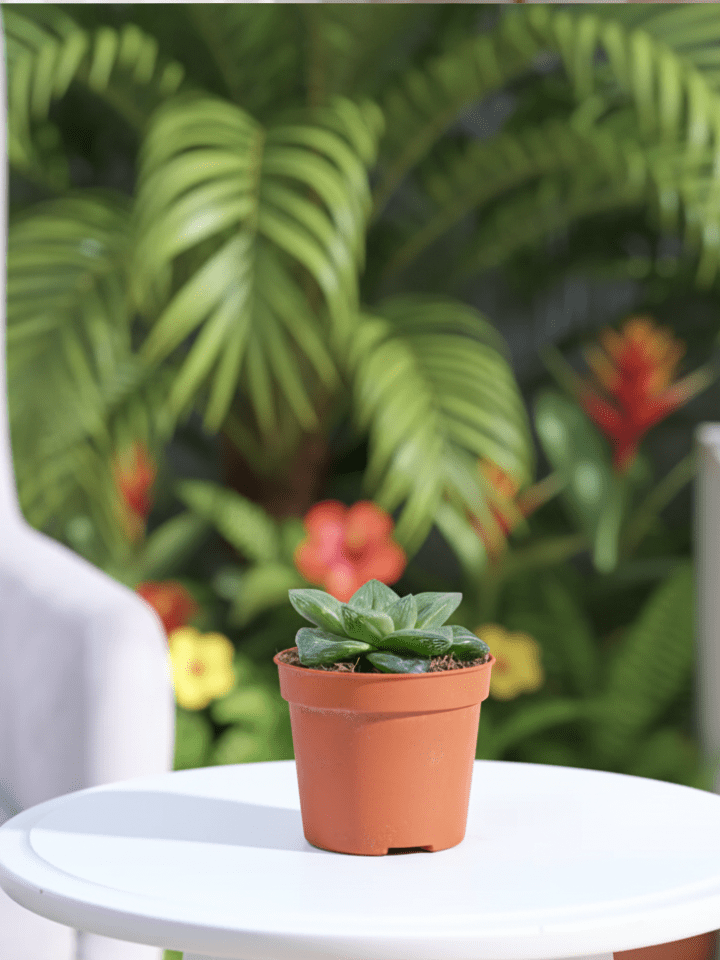
Haworthia cymbiformis, sold as cathedral window haworthia and sometimes called cushion aloe, forms a neat rosette of fleshy, soft-tipped green leaves that curve gently inward like cupped hands. The tips are the feature. Each one ends in a pale, translucent window crossed by fine lines, and when daylight passes through, the whole plant takes on a soft, glassy glow. It is a small detail that makes an ordinary shelf look considered.
Those windows do real work. The plant comes from the hillsides of South Africa's Eastern Cape, where it grows partly tucked among rocks and low scrub, and the clear tips let light reach the inside of the leaf while the rest of the plant stays sheltered from heat. Indoors, that habit translates into a succulent that copes with the gentler light of a room far better than most, which tend to stretch and sulk away from a sunny sill. The leaves are soft rather than spiny, so it is easy to handle and safe to keep at arm's reach.
Growth is slow and steady. A single rosette generally stays around 5 to 10 cm across, then sends out small offsets from the base until it becomes a tidy clump. Those offsets can be separated later to make new plants, which makes it a quietly generous plant to own. Now and then an established plant throws up a thin, wiry stem of tiny whitish flowers. They are pleasant, but they are not the reason to buy it.
Where it fits in your home
This is a plant for close quarters: a study table, a bookshelf, a bedside table, a kitchen windowsill set back from the glass, or a shallow dish beside two or three other succulents. It holds its shape for years, which is why it earns a place among small table plants and suits bedroom plant decor for the same reason. On a bright sill it is also one of the kitchen window plants that forgives a missed weekend of watering.
It does need daylight, so a windowless room will not do. If your rooms lean towards shade, it is one of the gentler choices among shade loving indoor plants, provided there is a bright window somewhere in the room. For a first-time buyer, it is an easy, forgiving pick among beginner friendly plants, and our guide to starter plants for first-time growers shows where it sits alongside the other easy options.
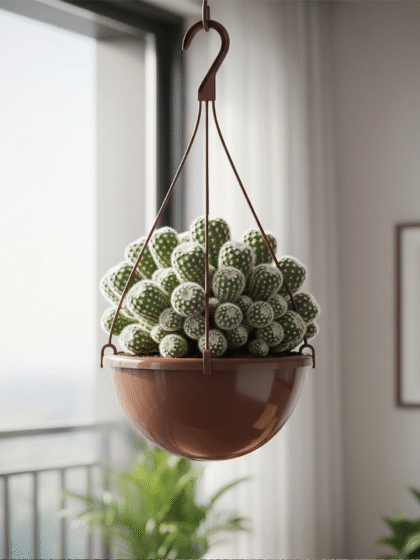
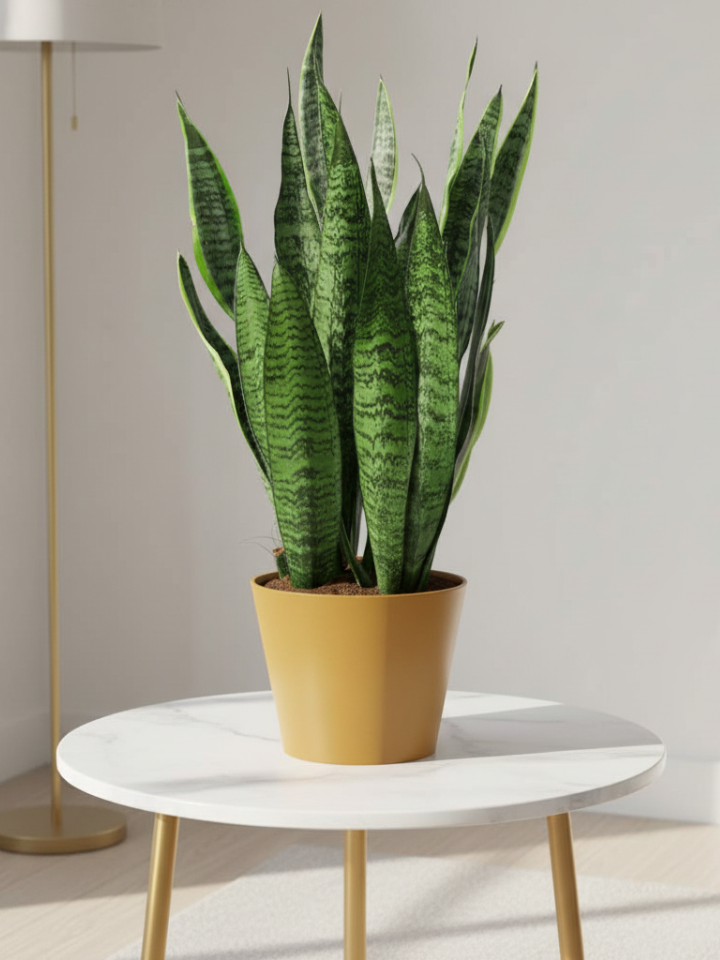
It pairs well with other slow, low-water plants: a ball cactus for contrast in form, a lucky jade plant for glossier round leaves, or a gold-edged dwarf snake plant for height at the back of a shelf. Anyone building a small collection can buy succulents online from the same range.
Product Specifications
- Plant name: Haworthia Cymbiformis Plant
- Botanical name: Haworthia cymbiformis
- Also known as: Cathedral window haworthia, cushion aloe
- Plant family: Asphodelaceae
- Plant type: Evergreen, stemless succulent forming a compact rosette
- Origin: Eastern Cape, South Africa
- Suitable placement: Study table, work desk, bookshelf, bedside table, bright kitchen windowsill, shallow succulent dish, gifting
- Light requirement: Bright indirect light. Tolerates gentle morning sun. Avoid strong afternoon sun through glass
- Water requirement: Low. Water only when the mix is completely dry: about every 10–14 days in cooler months, every 2–3 weeks in hot or humid weather
- Soil requirement: Gritty, fast-draining succulent mix. Supplied in a nursery potting mix [CONFIRM]
- Growth habit: Compact rosette that slowly forms offsets at the base and spreads into a clump
- Growth rate: Slow
- Foliage: Fleshy, soft-tipped green leaves with translucent, finely lined windows at the tips
- Flowering: Occasional thin flower stalks with small whitish flowers on established plants. Ornamental value is minor
- Difficulty level: Easy, suitable for beginners
- Suitable environment: Bright indoor spaces with good air movement. Dislikes prolonged damp and standing water
- Pet safety: ASPCA lists Haworthia as non-toxic to cats and dogs
- Propagation: Separate offsets with roots attached, or divide the clump when repotting
Lifespan: Long-lived in a pot with sensible watering
Care in brief
- Light: A bright spot with indirect light, such as a metre from an east or north window. Gentle morning sun is fine. Strong afternoon sun through glass scorches the leaves and leaves permanent brown marks.
- Water: Soak the mix thoroughly, let it dry out completely, then wait a little longer. Roughly every 10 to 14 days in the cooler months, every two to three weeks in hot or humid weather. Check with a finger rather than a calendar.
- Soil: A gritty, fast-draining mix, ideally at least half coarse sand, perlite or grit. A pot with a drainage hole matter more than anything else on this list.
- Feeding: A diluted cactus or succulent feed once or twice a year, in the cooler growing months. It does not need more.
- Repotting: Every two to three years, only one size up, in a shallow pot. Small roots do better in a snug home than in a large pot of wet soil.
Keeping it healthy through the Bengal year
Monsoon, June to September. This is the season that decides whether the plant thrives. Air stays humid for weeks, a small pot dries slowly, and the fleshy roots rot from below while the rosette still looks fine on top. Water only when the mix is completely dry, which in a wet month can mean waiting three weeks or more. Keep it out of the rain and in a spot with moving air, not a still, closed corner. Our guide to keeping houseplants healthy through a Kolkata rainy season covers the wider routine.
Summer, March to May. Heat slows the plant down. Keep it a metre back from any west-facing window, where afternoon sun through glass can bleach or redden the leaf tips within days. A little colour change is the plant reacting to stress, not a sign of health.
Winter, late November to February. Cooler, drier air is when it grows best. Water every couple of weeks and give it the brightest spot you have. If you are wondering where to buy plants in Kolkata that arrive settled rather than stressed, the nursery-direct approach is explained there.
Is it safe for pets?
Yes. The ASPCA lists Haworthia as non-toxic to both dogs and cats. Its entry covers the genus rather than a single named species, so treat that as a reassurance rather than an invitation: a curious cat that chews a lot of any plant can still have an upset stomach, and a knocked-over pot is a mess whatever the species. If pets are a priority in your home, the range of pet friendly indoor plants is a good place to keep browsing.

















There are no reviews yet.