Home » Shop » Air Purifying Indoor Plants Combo
Description

What’s in the Box

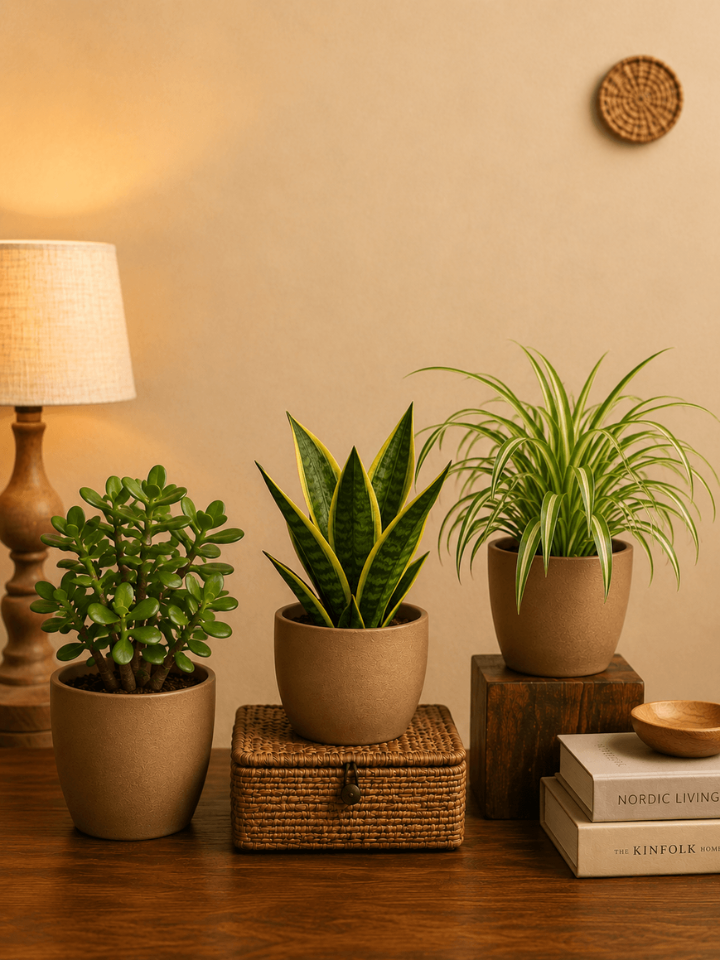
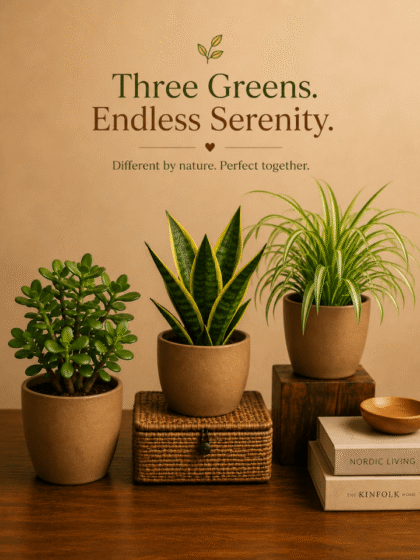
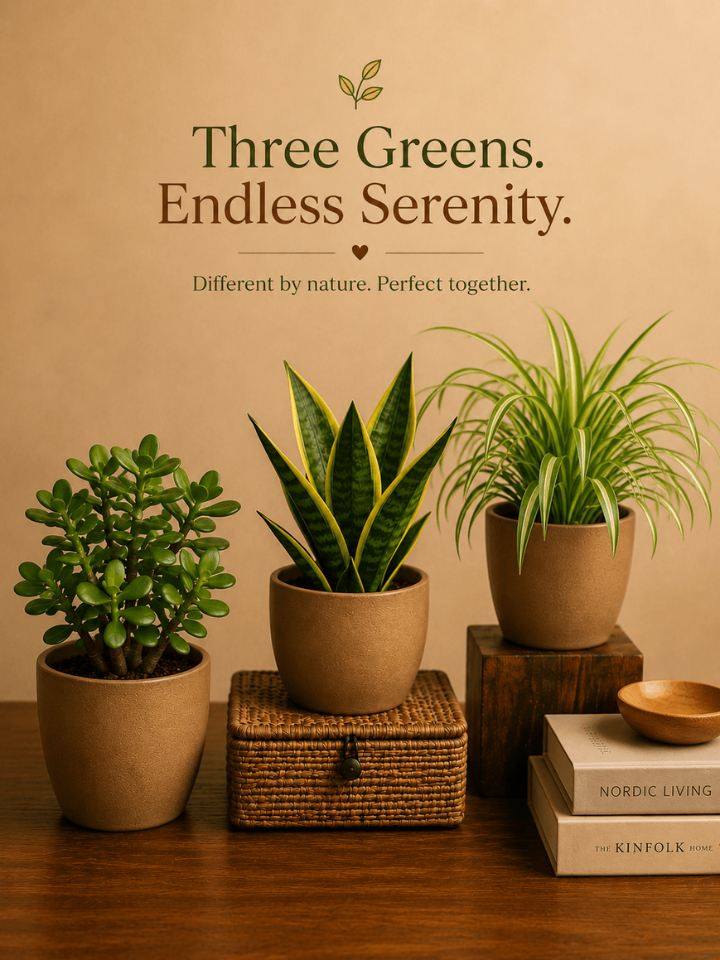
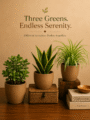
  • 1 Healthy Snake Plant (Sansevieria trifasciata) — upright, architectural foliage known for filtering indoor toxins and thriving in low light
  • 1 Healthy Spider Plant (Chlorophytum comosum) — lush, arching leaves ideal for shelves or hanging display, a proven air-cleansing companion
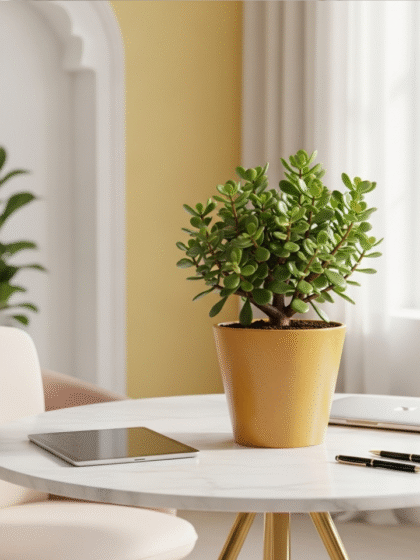
  • 1 Healthy Jade Plant (Crassula ovata) — compact, succulent foliage with long-lived, low-maintenance growth suited for desks and windowsills
  • 3 Pots, each with a nutrient-rich, well-draining soil mix tailored to each plant’s needs
  • Care instruction card with individual light, water, and placement tips for all three varieties
  • Thank-you note from Plantaeroot
  • Secure, eco-safe packaging designed to protect each plant individually during transit

Note: Images shown are for reference only. Actual plant size, leaf spread, and shape may vary slightly depending on season and growth stage.

Plantaeroot gallery

Frequently Asked Questions

The following answers address the most common queries received from new owners of this trio. They are presented in direct question-and-answer format for ease of reference and to support readers who prefer to scan rather than read in sequence.

Yes, although the effect is cumulative rather than instant. NASA's Clean Air Study, and follow-up research by independent universities, has shown each of these species removes measurable quantities of specific airborne pollutants. The effect is most noticeable in smaller, enclosed rooms and builds gradually over weeks. For a typical bedroom, study, or compact living room, this trio provides a meaningful contribution to overall air quality, particularly when combined with regular ventilation.

Each plant has its own rhythm, but as a working rule: spider plant approximately once a week, snake plant every ten to fourteen days, and jade plant every two to three weeks. Adjust based on the season — more often in summer, less often in winter — and always check the soil with a finger or moisture meter before watering. The single most damaging mistake is watering on a fixed schedule regardless of soil condition.

Absolutely. The snake plant and jade plant are both nocturnal photosynthesisers, exchanging gases at night, which makes them well-suited to sleeping spaces. The spider plant adds moisture to the air through transpiration. The combination is widely recommended for bedrooms by horticulturalists and wellness publications alike. The only consideration is to position the pots out of accidental knocking distance of the bed itself.

The spider plant is classified as non-toxic by the ASPCA. The snake plant is mildly toxic and can cause nausea and vomiting if chewed. The jade plant is more seriously toxic and can cause vomiting and lethargy in pets. Households with curious pets should place the snake and jade plants out of reach, on high shelves, on closed-door balconies, or in rooms the pets do not enter. The spider plant can be safely placed anywhere.

All three are content with bright indirect light, which is the kind of light you find within a few feet of a window in a typical Indian apartment. The jade plant appreciates a few hours of direct morning or late-afternoon sun if possible. The snake plant tolerates the lowest light of the three and can survive in surprisingly dim conditions. The spider plant prefers filtered light and develops the strongest variegation in bright indirect positions.

Any pot with a functional drainage hole at the base is suitable. Terracotta is particularly recommended for the snake plant and jade plant because the porous walls allow excess moisture to evaporate, reducing the risk of root rot. The spider plant accepts plastic, ceramic, or terracotta equally well. Decorative cachepots without drainage can be used as outer covers, with the actual plant kept in a properly drained inner pot.

A balanced liquid houseplant fertiliser, diluted to half the strength recommended on the label, applied once a month from March to September, is more than sufficient. No fertiliser is needed during the cooler months from October to February when growth slows. Avoid overfeeding — these species evolved on nutrient-poor soils and react badly to excess nutrients in the root zone.

The earliest warning sign is yellowing of the lower leaves, often accompanied by softness at the base of the leaves or stems. Soggy soil that does not dry between waterings, a sour or musty smell from the pot, and the appearance of small flies around the soil surface are all later indicators. The remedy is to stop watering immediately, allow the soil to dry completely, inspect the roots for rot, and trim any damaged tissue before resuming a more conservative watering routine.

Yes — all three propagate easily. The spider plant produces ready-made baby plantlets that can be snipped off and rooted in soil or water. The snake plant can be propagated by leaf cuttings inserted into damp potting mix, or by dividing the rhizome at repotting time. The jade plant propagates beautifully from leaf or stem cuttings allowed to callous over for a day before being settled into dry succulent mix. Spring and early summer are the best propagation seasons.

With reasonable care, all three are remarkably long-lived. Spider plants commonly thrive for ten to fifteen years and longer. Snake plants routinely live twenty to twenty-five years and have been documented surviving over forty. Jade plants are the longevity champions — well-kept specimens often live seventy to one hundred years and are frequently passed from one generation to the next as treasured family heirlooms.

All three are happiest between eighteen and twenty-eight degrees Celsius. They tolerate higher summer temperatures well as long as they are not in direct harsh afternoon sun. They begin to suffer when temperatures drop below ten degrees Celsius — particularly the jade plant. During colder winter nights in northern India, keep the pots away from windows that may chill significantly and away from air conditioner or heater vents that produce sudden temperature changes.

Very likely yes. Water all three thoroughly the day before departure, move them away from direct sun to slow evaporation, and they will be fine for two weeks in most cases — sometimes longer. The snake plant and jade plant can comfortably go three to four weeks without water, particularly in cooler months. The spider plant may droop slightly after two weeks but recovers quickly once watered. This forgiveness is precisely why the set is popular with frequent travellers.

It can be done aesthetically but is not ideal horticulturally. The three species have slightly different watering preferences, and combining them in one container forces a compromise that suits none of them perfectly. The visual benefits of a shared planter are real, but most experienced gardeners recommend keeping each in its own pot and arranging the pots together in a tray or on a shelf for the grouping effect.

Fading colour usually indicates insufficient light. Move the pot gradually — over a week or two — into a brighter position, taking care not to expose it to harsh direct midday sun all at once. Recovery shows up first in the newest leaves, which will emerge with stronger colour and clearer variegation. Existing faded leaves do not usually recover their colour but will photosynthesise normally.

Outstanding for beginners. This trio is among the most forgiving combinations of houseplants on the market. They survive missed waterings, recover from short-term neglect, tolerate a wide range of light conditions, rarely succumb to pests in average indoor conditions, and signal their needs clearly through visible foliage cues that new plant parents quickly learn to read.

Generally no. The snake plant and jade plant prefer dry air and do not benefit from misting. The spider plant enjoys a slightly more humid microclimate but receives most of what it needs through normal indoor humidity and the moisture it transpires through its own leaves. If indoor air is exceptionally dry during winter heating, an occasional light mist on the spider plant alone is fine, but it is not necessary.

Use a soft, slightly damp cloth and gently wipe each leaf, supporting the back of the leaf with your other hand. For the spider plant, whose narrow leaves do not lend themselves to wiping, an occasional gentle shake or a quick rinse under a lukewarm tap is sufficient. Avoid commercial leaf-shine products, which can clog stomata and harm the plant's air-cleaning function.

Occasionally, yes. Mature snake plants in very bright light can produce tall, fragrant cream-white flower spikes once they are well-established and slightly root-bound. Mature jade plants produce small star-shaped white or pink blooms in winter when grown in good light and exposed to cooler night temperatures. The spider plant produces small white flowers on its plantlet stolons during active growing months. None of the three flowers reliably indoors, and growth and foliage are the main features to enjoy.

The snake plant can manage a windowless bathroom, particularly if the room has decent artificial lighting that is used regularly. The spider plant tolerates it for shorter periods but should be rotated out to a brighter spot for a week or two every month. The jade plant struggles in low-light bathrooms and is not the ideal choice for such positions; consider a different placement for that member of the set.

Housewarmings, weddings, business openings, milestone birthdays, Diwali, Akshaya Tritiya, work anniversaries, retirement celebrations, and as a gesture of friendship or recovery wishes are all genuinely appropriate occasions. The combined symbolism — protection from the snake plant, abundance from the spider plant, prosperity from the jade plant — covers nearly every well-wishing context across Indian and global cultures.

Reviews (0)
0
(0 Ratings)
5
0
4
0
3
0
2
0
1
0
Be the first to review “Air Purifying Indoor Plants Combo”

Your email address will not be published. Required fields are marked *

There are no reviews yet.

About The Trio

Three living, breathing air filters arrive together in one thoughtfully composed bundle — a healthy Snake Plant (Sansevieria trifasciata), a vibrant Spider Plant (Chlorophytum comosum), and a sturdy Jade Plant (Crassula ovata). Each species has earned, on independent merit, a reputation as a quiet workhorse for cleaner interior environments. When grouped together they create a layered, biologically active microclimate that no single specimen can replicate on its own.

This particular grouping answers a question that countless urban residents find themselves asking: how do you bring meaningful greenery into a flat, a studio apartment, a cubicle, or a sun-deprived corner without committing to demanding horticultural routines? The answer lies in selecting species that quietly pull double duty — filtering invisible household pollutants while asking for almost nothing in return. Each of the three plants in this set has been chosen precisely because it tolerates inconsistency, adapts to a wide range of light conditions, and visually complements the others.

What separates this set from a random collection is the deliberate diversity of growth habits, leaf textures, and care rhythms. Sansevieria contributes vertical, architectural foliage. Chlorophytum cascades softly with arching ribbons of cream-edged green. Crassula offers compact, sculptural symmetry through its plump, jade-toned succulent leaves. Together they form a complete sensory composition while functioning as Air Purifier Plants that quietly remove formaldehyde, benzene, xylene, toluene and other invisible pollutants from the rooms they share with you.

Beyond their botanical credentials, this is a set that genuinely thrives on neglect. Travel for a fortnight, forget the occasional watering, move the pot from one shelf to another — and the plants forgive. That kind of forgiveness is what makes thoughtfully assembled Plant Combo Packs so widely welcomed in modern households, on office desks, in rented apartments, and on gift tables. The trio works as quietly behind the scenes as a humidifier or a dehumidifier might — except it requires no electricity, makes no sound, and rewards you with visible growth over the seasons.

Why Indoor Air Needs Help in the First Place

According to research conducted by environmental health agencies including the United States Environmental Protection Agency, the air inside the average modern home or workplace can contain two to five times more pollutants than the outdoor air immediately beyond the window. In tightly sealed apartments, climate-controlled offices, and ventilation-restricted bedrooms, volatile organic compounds quietly accumulate from a long list of everyday sources: freshly painted walls, polished furniture, synthetic carpets, particle-board cabinetry, adhesives, printers and photocopiers, plastic packaging, cleaning sprays, scented candles, cooking fumes, dry-cleaning residues, and aerosol products.

The chemicals released by these objects — formaldehyde, benzene, trichloroethylene, xylene, toluene, ammonia, acetone — do not announce themselves with a strong odour. Yet over weeks and months of low-level exposure they have been associated with headaches, daytime fatigue, dry or itchy eyes, throat irritation, allergic flare-ups, sinus discomfort, and over longer time frames more serious respiratory concerns. The phenomenon is sometimes called Sick Building Syndrome, and it disproportionately affects people who spend the majority of their waking hours indoors — which today describes nearly everyone living and working in metropolitan India.

Mechanical air filters and HEPA units handle part of the load. But there is a quieter, more elegant solution that has been working in homes for centuries: living foliage. NASA's landmark 1989 Clean Air Study, conducted in collaboration with the Associated Landscape Contractors of America, identified a select list of common Indoor Plants that effectively absorb specific gaseous toxins through their leaves and root systems. The study has since been refined and re-examined by independent researchers, but its central finding has held: certain houseplants metabolise what their environment offers them, and in doing so they pull airborne contaminants down into the soil-microbe interface where helpful bacteria break those compounds down further.

This biological filtration is gentle, continuous, and silent. It happens regardless of whether anyone is in the room. It does not require power, replacement filters, or maintenance contracts. It happens twenty-four hours a day, every day, for as long as the plant lives — and these particular species, kept in reasonable conditions, can live for decades. Each of the three companions in this set appeared either in the original NASA list or in the peer-reviewed follow-ups that built on it. Together, they cover a meaningfully broader spectrum of pollutants than any one of them could address alone.

There is also a subtler dimension. Beyond their measurable contribution to air chemistry, plants quietly raise local humidity, soften acoustics by absorbing ambient noise, regulate the visual rhythm of a room, and — research now suggests — measurably lower cortisol levels in the people who share space with them. The three plants in this set deliver these benefits without asking much in return.

Meet the Trio at a Glance

Before exploring each plant in depth, a brief introduction to all three companions helps explain why the combination is more than the sum of its parts. The set is built around three complementary personalities — each one a champion in its own right, and each contributing something the others cannot.

The Sentinel — Snake Plant

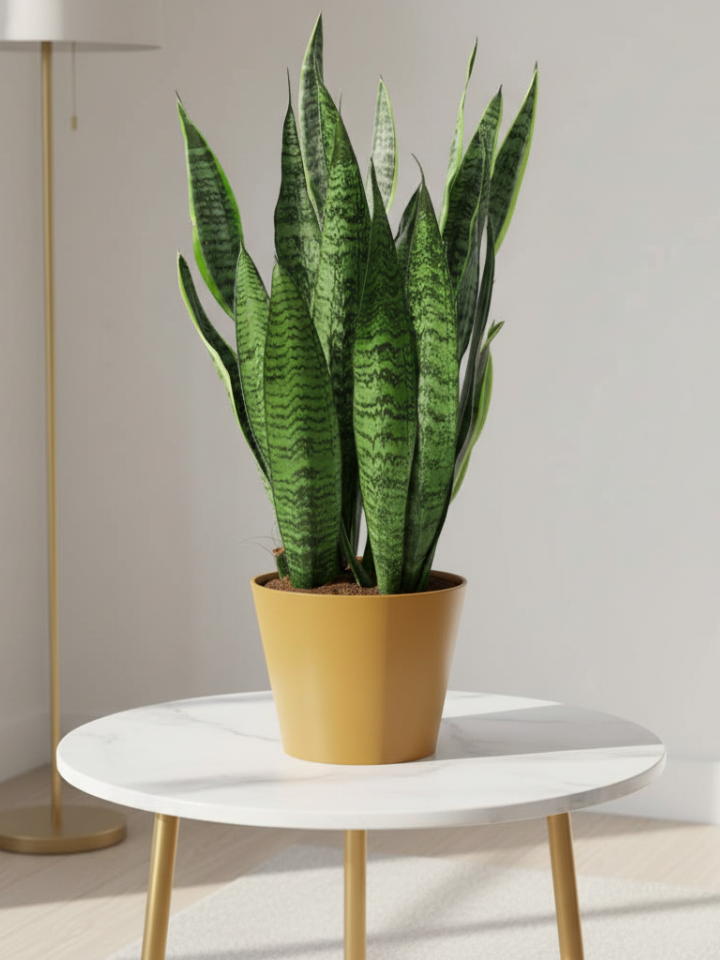
Upright, sword-shaped leaves rise vertically in a dense rosette. This is a CAM-photosynthesis specialist, meaning it absorbs carbon dioxide and releases oxygen primarily at night — a rare and useful trick that makes it the bedroom plant of choice. Native to the dry, rocky outcrops of West Africa, it is genetically adapted to drought, low light, and inconsistent care.

The Storyteller — Spider Plant

Arching, ribbon-like foliage in alternating stripes of green and creamy white. Mature specimens send out delicate stems carrying miniature plantlets — the "babies" that gave the species its common name. Originally from the dappled understorey of South African forests, it is famously efficient at scrubbing formaldehyde, carbon monoxide and xylene from indoor air.

The Treasure-Keeper — Jade Plant

Compact, succulent foliage with thick, glossy oval leaves arranged on woody stems that thicken into miniature tree trunks over the years. Native to the arid scrublands of South Africa and Mozambique, this is a slow-growing, exceptionally long-lived succulent celebrated across cultures as a symbol of prosperity, friendship and steady accumulation of good fortune.

Three habits. Three textures. Three subtly different stories. The visual interplay between vertical, cascading, and compact forms is what gives a curated grouping of this kind its photographic appeal on shelves, console tables, study desks and balcony ledges. The functional interplay — different leaf surface areas, different photosynthetic rhythms, different soil-microbe communities — is what makes the air-cleaning effect compounding rather than redundant.

Deep Dive: The Snake Plant

Botanical Identity and Origins

The plant most gardeners still call Sansevieria trifasciata was reclassified by molecular taxonomists in 2017 as Dracaena trifasciata. The original common name — snake plant — comes from the wavy banding on the upright leaves, which evokes the patterning on certain reptile skins. The less polite Victorian moniker, "mother-in-law's tongue", references the sharp, pointed tips of those same leaves. Despite all this rebranding by botanists,

most nursery catalogues, online plant retailers, and gardening communities still refer to it by the older name out of convention and clarity. Native to the rocky savannahs of tropical West Africa — countries such as Nigeria, the Democratic Republic of the Congo, and parts of central Africa — it evolved to survive in conditions of low rainfall, high temperatures, sandy substrates and bright filtered sunlight. To explore the broader Sansevieria family along with related cultivars, the Snake Plant category page provides a useful reference point.

Why It Stands Apart Among Air-Purifying Greenery

Most plants perform photosynthesis during daylight hours: their stomata — the microscopic pores on the underside of each leaf — open in sunlight to absorb carbon dioxide, and close at night. Sansevieria belongs to a small group of plants that use Crassulacean Acid Metabolism, or CAM photosynthesis, which is essentially the reverse rhythm. To minimise water loss in arid environments, the stomata of CAM plants stay closed during the heat of the day and open at night, when the surrounding air is cooler and more humid.

For a homeowner, this nocturnal habit has a remarkable consequence. While most houseplants slip into a quiet, low-activity phase in the dark, this species is actively absorbing carbon dioxide and releasing fresh oxygen throughout the sleeping hours. That single trait is the reason gardeners worldwide recommend it as a bedroom companion — it modestly improves the quality of the air during the very hours when the human body is at rest and most sensitive to indoor air composition.
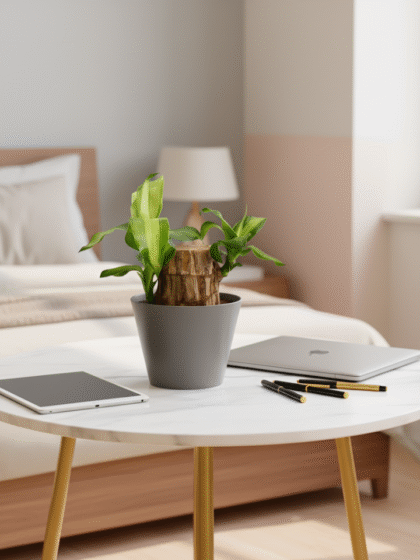
In NASA's 1989 study and subsequent independent research, Sansevieria has been documented removing significant quantities of formaldehyde, benzene, xylene, toluene, and trichloroethylene from sealed test chambers. The leaves are leathery and pore-rich, and the dense root mass forms an active partnership with soil microbes that complete the breakdown of absorbed compounds. The plant is, in effect, a small biological scrubber tower in a pot.

Light, Water and Soil Preferences

Few houseplants are as forgiving on light. This species genuinely thrives across a remarkable range — from a sun-bathed western windowsill where its variegation deepens, to a dim corridor where it grows more slowly but remains visibly healthy. The leaves are largely a survival reservoir; the plant can coast on stored energy for months. That said, sustained darkness will eventually stunt growth and dull leaf colour, so a position with at least some indirect daylight is ideal.

Watering is where most owners go wrong. The plant prefers to dry out completely between drinks. As a working guide, water deeply once every fortnight in warm months and stretch the gap to three or four weeks during cooler weather. The soil should feel bone-dry several inches down before the next watering. Standing water in the saucer is the single most common cause of decline, leading to soft, mushy basal rot at the leaf joints. The root system is rhizomatous and shallow — drainage matters more than depth.

A well-draining cactus and succulent mix, or a houseplant compost blended with coarse sand or perlite at roughly a 3:1 ratio, suits the plant perfectly. The pot must have at least one functional drainage hole; terracotta is preferred over glazed ceramic because the porous walls allow excess moisture to evaporate. Repotting is rarely needed — these plants actually appreciate being root-bound and will sometimes refuse to flower until the rhizomes are tightly packed against the pot wall.

Notable Varieties to Recognise

  • Laurentii — the classic form, with yellow margins running the length of each green-banded leaf.
  • Hahnii (Bird's Nest) — a compact, rosette-forming dwarf cultivar that stays close to the pot rim.
  • Moonshine — silvery-pale, almost frosted leaves that catch artificial light beautifully.
  • Black Coral — deep, near-black foliage with subtle horizontal banding.
  • Cylindrica — tubular, spear-like leaves rather than the typical flat form.

The Hahnii is particularly popular for desk and shelf placements, while Laurentii remains the variety most often pictured in interior design publications. All varieties share the same care requirements and the same air-purifying credentials.


Deep Dive: The Spider Plant

Botanical Identity and Origins

Chlorophytum comosum — the spider plant — is native to the tropical and southern regions of Africa, where it grows as an understorey species beneath taller trees and shrubs. The genus name comes from the Greek chloros (green) and phyton (plant); the species name comosum translates loosely as "tufted" and refers to the distinctive arching habit. The common name is a literal description: mature plants produce slender, wiry stems that arch outward and bear miniature plantlets at their tips, giving the silhouette of a many-legged spider suspended in mid-air.

This is one of the most widely cultivated houseplants on the planet, and its history as an indoor companion stretches back to Victorian-era England, when the variegated form was treasured in conservatories and parlours. The plant's tolerance for low light, irregular watering, and confined root systems made it an early favourite in compact urban homes — long before the term "low-maintenance houseplant" entered design vocabulary.

Why It Excels at Air Purification

In NASA's Clean Air Study, Chlorophytum was singled out as one of the most efficient plants for removing formaldehyde — a particularly common indoor pollutant released by furniture finishes, plywood, particle board, foam insulation, and a wide range of paper products. Subsequent research has confirmed and extended these findings, with the species also showing strong activity against carbon monoxide, xylene and toluene.

The mechanism is partly explained by the geometry of the foliage. Each plant produces a high density of long, narrow, arching leaves with substantial total surface area relative to its compact pot footprint. More leaf surface means more stomata, more gas exchange, and more pollutant capture per square metre of room. The thickened, fleshy roots also store water and act as a microbial habitat, hosting the soil bacteria that complete the breakdown of pollutants drawn down by the plant's respiration.
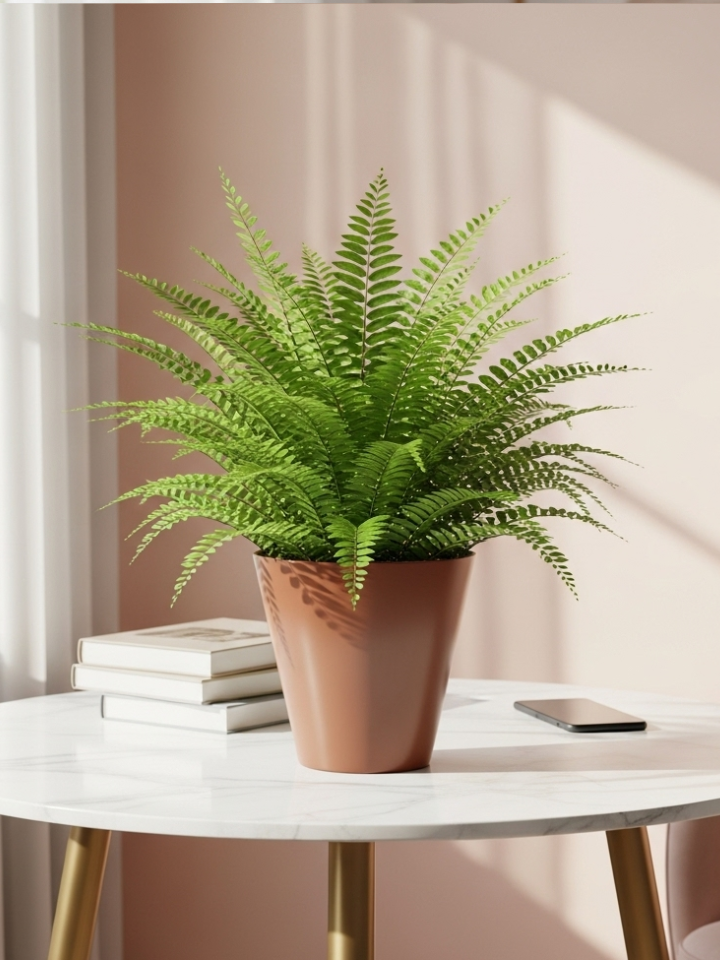
A second, underappreciated benefit is humidity. Spider plants transpire generously, releasing moisture into the air through their leaves. In the dry months of an Indian winter — when heaters run and humidity drops sharply — a healthy specimen contributes a small but noticeable amount of moisture to the surrounding microclimate, helping to ease dry skin, parched sinuses, and static-prone hair.

Light, Water and Soil Preferences

Bright, indirect light brings out the strongest variegation in the leaves. A position close to an east-facing window, where morning sun is filtered through a sheer curtain, suits the plant beautifully. Harsh midday sun, particularly through south-facing glass during Indian summer months, scorches the leaf tips and dulls the variegation. At the other extreme, the species tolerates moderate shade with surprising grace — growth simply slows, and the cream stripes may fade slightly.
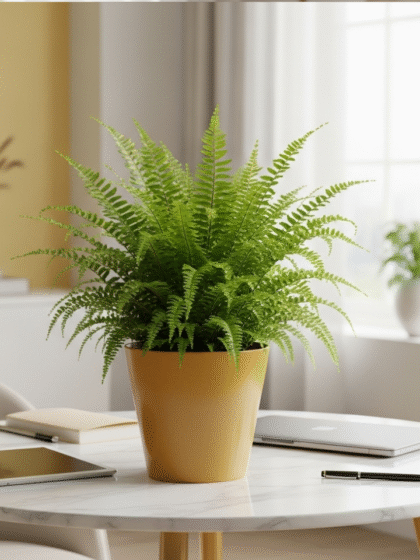
Watering should keep the soil consistently lightly moist during active growth — spring and the early monsoon — and slightly drier through the cooler months. The top inch of soil should feel dry to the touch before watering again. This species is more sensitive to fluoride and chlorine than most houseplants; brown leaf tips are usually a sign that tap water is leaving mineral deposits in the soil. Using rainwater, filtered water, or tap water that has been left standing uncovered for twenty-four hours dramatically reduces tip-browning over time.

A standard houseplant potting mix, perhaps loosened slightly with a handful of coco-peat or perlite, provides the right balance of moisture retention and aeration. The roots are vigorous and tuberous — over time they will fill a pot to bursting. Repot every two years into a container only one size larger; an over-large pot holds too much damp soil and invites rot.
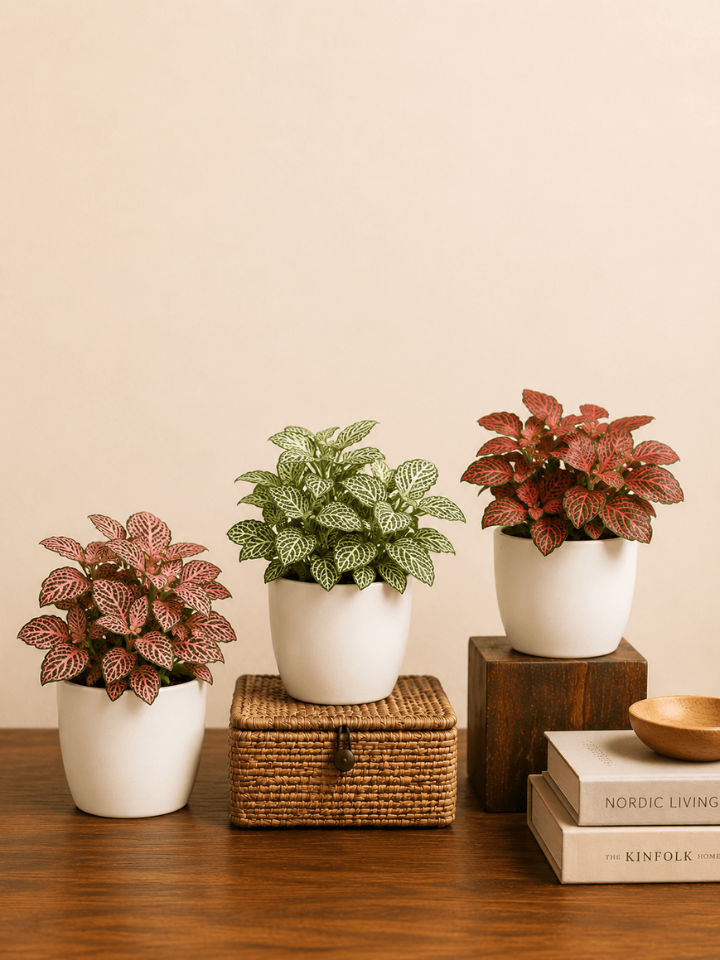
The Pups — A Self-Multiplying Treasure

One of the most charming features of this species is its tendency to send out long, wiry stolons bearing baby plants — the "pups" or "spiderettes" that hang from the parent like dancers on tightropes. These pups develop tiny aerial roots even before they touch soil, which makes propagation almost effortless. Snip a mature pup from its stolon, settle it into a small pot of moist potting mix, and within weeks it will be establishing itself as an independent plant.

Over a year or two, a single specimen can give rise to half a dozen new pots — perfect for gifting to friends, populating other corners of the home, or refreshing the original plant when it begins to look tired. Few houseplants offer this kind of generative generosity, and the experience of watching a pup root and grow is genuinely delightful for first-time plant parents.

Pet-Safe Credentials

A particular advantage of this species, especially for households with cats and dogs, is that it is classified as non-toxic by the ASPCA. Curious pets that occasionally chew on a leaf will come to no serious harm, although the mild "spider plant high" reported in some cats — caused by trace compounds in the foliage — may encourage repeat nibbling. Place the pot somewhere visually pleasing but not directly accessible to determined feline jaws, and both plant and pet remain happy.

Deep Dive: The Jade Plant

Botanical Identity and Origins

Crassula ovata is a succulent shrub native to the eastern coastal regions of South Africa and Mozambique, where it grows on rocky hillsides and dry slopes. The genus name comes from the Latin crassus, meaning thick or fleshy — an apt description of the plump, oval leaves that store water against the long dry seasons of its native climate. Across cultures, it goes by many names: jade plant, money plant of the East, friendship tree, lucky plant, dollar plant, and in many traditional Chinese homes simply "the money tree" (not to be confused with Pachira aquatica, which shares the same nickname).

Unlike many succulents that grow flat and rosette-like, this species develops a woody, branching trunk as it matures. Over years and decades, the trunk thickens and the silhouette evolves into a miniature tree — which is why mature specimens are popular subjects for bonsai cultivation. The plant is remarkably long-lived; well-tended specimens have been documented surviving for seventy years and longer, often passing down through generations within a family.
A Quiet Contributor to Cleaner Air

While not on the original NASA Clean Air Study shortlist, the jade plant has been examined in subsequent indoor-air research and demonstrates measurable removal of volatile organic compounds, particularly toluene and acetone. As a CAM photosynthesis specialist — like the snake plant — it exchanges gases primarily at night, making it a useful supplement to its companion in the bedroom and study.

The succulent's contribution to indoor air chemistry is modest compared with the larger leaf surface of the spider plant or the dense leaf mass of mature Sansevieria. What it adds instead is consistency and longevity. This is a plant that holds its position quietly for decades, slowly compounding its small daily contribution into a substantial cumulative effect on the rooms it inhabits.

Symbolism and Cultural Significance

Across Feng Shui tradition, the jade plant is considered an exceptionally auspicious houseplant. The thick, coin-shaped leaves are symbolically associated with steady accumulation of wealth — each leaf, in folk interpretation, representing a small piece of stored fortune. Placement is significant: practitioners traditionally position the pot in the south-east corner of the home or business, the sector associated with wealth and abundance, or alternatively beside the entrance to invite prosperity inward.

In Indian Vastu Shastra, the plant occupies a similar position of esteem. It is regarded as a generator of positive energy, particularly when placed in the east or south-east. Gifting a jade plant is a traditional gesture of well-wishing — particularly at housewarmings, weddings, business openings and start-of-year celebrations. The plant is believed to carry the giver's blessings into the recipient's space and to maintain those blessings for as long as it lives.

Light, Water and Soil Preferences

This is a sun-loving species. The strongest, healthiest specimens grow on bright window sills with several hours of direct morning or late-afternoon sunlight. In strong sun the leaves develop characteristic red or burgundy edges — a sign of healthy stress, not damage — and the plant takes on a stocky, compact silhouette. In lower light the stems stretch and the leaves grow further apart, producing a leggy, less attractive form. If the only available position is shaded, a small grow light supplement makes a noticeable difference.

Watering follows the classic succulent rhythm — generously, but rarely. Soak the soil thoroughly when the top two inches feel completely dry, then let the pot drain freely and do not water again until the soil dries out once more. Overwatering is by far the most common cause of decline. The leaves themselves serve as an excellent moisture gauge: plump, firm leaves indicate adequate hydration, while slightly soft or wrinkled leaves signal it is time to water. Truly dry, shrivelled leaves are a sign of prolonged drought.

Use a fast-draining cactus and succulent compost, or amend ordinary potting soil with at least one-third coarse sand, perlite, or fine grit. Drainage is non-negotiable; a saturated root zone will rot the trunk from the base upward, often without warning. Choose a pot with generous drainage holes and an unglazed surface where possible. Repot only every three or four years, and only when the plant has clearly outgrown its container.

Pruning, Shaping and the Patient Art of Growth

A jade plant rewards patient attention with sculptural beauty. Light pruning of young stems encourages branching and produces a fuller, more tree-like silhouette over time. Pinch out the tip of a young shoot and within weeks two new shoots will emerge from the cut point. Done thoughtfully across several seasons, this technique produces a beautifully balanced, dome-shaped crown — the same principle used in formal bonsai shaping.

Mature specimens occasionally flower, producing clusters of small, star-shaped white or pale pink blooms in winter or early spring. Flowering is a sign of a happy, well-established plant; it typically appears only in specimens several years old, kept in bright light, with the cooler night temperatures of winter encouraging bud formation.

Why This Particular Trio Works So Well Together

A combination is only as good as the chemistry between its members. The reason this set has been thoughtfully assembled — rather than picked at random from the catalogue — is that the three species share a compatible care philosophy while contributing genuinely different things to the rooms they inhabit. Understanding the complementarity is part of what makes living with the set so satisfying over time.

Compatible Care, Different Rhythms

All three plants are drought-forgiving. None of them tolerates standing water at the roots. None of them is fussy about feeding. All three accept the same general light range — bright indirect to moderately shaded — even though each has its own preferred sweet spot within that range. This means a single watering routine, a single fertilising rhythm, and a single seasonal care calendar can keep the entire grouping happy. There is no need to remember a dozen separate sets of instructions.

At the same time, the three plants drink on slightly different schedules. The succulent jade goes the longest between waterings. The snake plant is similarly thirst-resistant but is a touch less drought-tolerant than the jade. The spider plant prefers the most moisture of the three, and signals its thirst earlier. Once an owner has learned to read the visual cues — the slight wrinkling of jade leaves, the lighter colour of dry Sansevieria, the slight droop of spider plant fronds — keeping the trio in balance becomes intuitive.

Complementary Visual Composition

Designed as a group, the three plants create a deliberate visual story. The vertical lines of the Sansevieria draw the eye upward. The cascading, arched lines of the Chlorophytum soften that vertical thrust with movement and rhythm. The compact, sculptural mass of the Crassula anchors the composition at the centre or front, grounding the lighter elements above and behind it. Place all three in a row on a console, a window ledge or a study shelf, and the result reads as a deliberate piece of interior design rather than a casual collection.

Colour-wise the trio is equally well balanced. Snake plant offers deep green with gold or silver banding. Spider plant brings creamy variegation that lightens the visual weight. Jade contributes the soft jade-green hue from which it takes its name, often touched with burgundy edges when grown in good light. None of the three competes for attention; each provides a different note in a quiet, layered chord.

A Broader Spectrum of Air Filtration

No single houseplant excels equally at removing all common indoor pollutants. Different species concentrate on different compounds, and different leaf and root architectures pull pollutants out of the air at different rates. By placing three complementary species in a single room — or distributing them across two or three adjacent rooms — a household effectively widens its botanical coverage. Snake plant tackles formaldehyde, benzene, and trichloroethylene particularly well. Spider plant is exceptional against formaldehyde and carbon monoxide. Jade contributes against toluene and acetone. The combined effect of Air Purifier Plants working together is meaningfully greater than any single specimen could deliver, while remaining within reach of the most modest plant-keeping budget. Among the broader universe of Indoor Plants available to urban gardeners today, this kind of multi-species pairing remains one of the most effective approaches to whole-room air quality.

Health and Wellness Benefits Beyond the Air

The conversation about houseplants and air quality is well established. Less widely discussed, but no less important, is the growing body of research linking indoor greenery to measurable psychological and physiological wellbeing. The benefits of sharing a room with plants extend well beyond the chemistry of the air.

A Quiet Effect on Stress and Mood

Multiple peer-reviewed studies — including controlled experiments at Japanese and Norwegian universities — have demonstrated that the simple presence of indoor foliage is associated with lower cortisol levels, reduced blood pressure, slower heart rate variability, and self-reported improvements in mood. The effect is subtle but consistent across age groups and cultural settings. One widely cited study found that participants who spent time in a room with plants reported significantly lower psychological and physiological stress markers than those in an identical, plant-free room.

The proposed mechanism is biophilic — the idea, advanced by biologist E. O. Wilson, that humans carry an evolved affinity for living, growing things and that exposure to nature, even in small doses, restores cognitive and emotional balance. A trio of houseplants will not replace a walk in the woods, but for the typical urban resident who spends ninety per cent of waking hours indoors, even modest greenery delivers a measurable nudge toward calm.

Better Focus, Sharper Productivity

Workplace studies — most notably the long-running research programme led by Sir Cary Cooper at the University of Exeter — have repeatedly shown that the addition of plants to office environments correlates with increases in concentration, memory retention, and self-reported productivity. The most dramatic effects appeared in workspaces that moved from being entirely plant-free to lightly planted; further additions produced smaller but still positive incremental gains. Translating these findings to a home office or study corner, even a small grouping of greenery can shift the cognitive atmosphere of a space.

Improvements to Sleep Quality

The snake plant's nocturnal photosynthesis, combined with the jade plant's similar CAM-based gas exchange, creates a small but real benefit for sleeping environments. While neither plant produces enough oxygen to noticeably alter the chemistry of a closed bedroom on its own, the cumulative effect of having such species in a sleeping space — paired with their absorption of low-level overnight pollutants — contributes to the broader quality of the breathing environment during rest. Many users also report that the simple presence of a plant beside the bed creates a sense of stillness and presence that supports the wind-down ritual before sleep.

Subtle Humidity Regulation

The spider plant in particular transpires generously, releasing water vapour through its foliage into the surrounding air. In dry months — especially the air-conditioned summer and the heated winter periods common across northern India — this passive humidification helps ease parched skin, dry sinuses, and respiratory irritation. The effect is most noticeable in smaller rooms and is amplified when several plants share the same enclosed space. The other two members of the trio contribute more modestly to the same effect, with the cumulative impact making a perceptible difference over time.

Reduced Acoustic Stress

Leaves, stems, and the soil-pot system act as small acoustic absorbers — softening high-frequency reflections in a room and gently muting the hard echoes that bare walls and minimalist furniture produce. The effect is too small to compete with proper acoustic treatment, but in apartments and offices it contributes to a subtly calmer auditory environment. Larger plant groupings — and clusters that include the dense leaf mass of mature Sansevieria — provide more of this effect than single specimens.

Where to Place Each Plant in Your Home or Workspace

Half the joy of a curated plant set lies in finding the right spot for each species. The three plants in this group are each genuinely well-suited to one or two specific room types — and matching the plant to the room produces visibly healthier growth, more attractive variegation, and more enjoyable cohabitation.

In the Bedroom — A Sanctuary for Sleep

The snake plant is the standout candidate for sleeping spaces. Its CAM photosynthesis means it remains biologically active overnight, exchanging gases through the hours when most other plants are dormant. Placed on a bedside table, a low chest of drawers, or in a corner near the window, it contributes to the air composition of the room throughout the night without requiring any light beyond the moonlight or ambient glow of a streetlamp. The jade plant works equally well in the bedroom for the same reason, and adds an element of symbolic prosperity that many traditional households appreciate. Searching for plants for bedroom typically surfaces both of these species in the top recommendations from indoor gardeners, designers and wellness publications alike.

Practical placement tips for sleeping spaces: keep the pots away from direct contact with bedding, avoid positioning above the head of the bed where soil could spill if disturbed, and use a saucer to catch any drainage. A small grouping on a window ledge — particularly an east-facing one — gives both plants the modest morning light they appreciate without disturbing sleep. As a category, Plants for Bedroom selections benefit enormously from this kind of low-maintenance compatibility, since few people want to remember elaborate care routines just before bed.

In the Living Room — A Visual Anchor

The living room is the natural showcase for the trio as a whole. Place all three together on a console table, a mid-height shelf, or a sideboard, and they form the centrepiece arrangement described earlier — vertical, cascading, and compact in a single composition. Alternatively, distribute them across the room: snake plant beside the television unit, spider plant cascading from a wall shelf or a hanging planter, jade plant catching morning light on a side table. Selections from a thoughtful list of Plants for Living Room placement work beautifully in social spaces where they will be admired by guests as well as residents.

For drawing rooms and family rooms with limited natural light, this trio is particularly well chosen. Many flowering or tropical houseplants struggle in the diffuse light typical of indoor social spaces; these three accept those conditions gracefully and continue to grow, season after season, without complaint. Among the most reliable Plants for Living Room placement, the combination earns its position by holding visual interest year-round without requiring fussy intervention.

On the Office Desk — Quiet Companions to Concentration

Workplace greenery has been shown to support focus, mood and visible workspace appeal. The compact form of a Hahnii Sansevieria, a smaller spider plant in a hanging or wall-mounted container, or a young jade specimen in a small pot are all ideal candidates for desktop, shelf or windowsill positioning in office and study environments. The three are reliably forgiving of weekend neglect, missed waterings during deadline weeks, and the indirect light typical of cubicles and corner offices. As Plants For Office use, the entire set provides exactly the qualities — durability, low fuss, visual interest — that make plants viable colleagues in busy professional spaces.

A small practical detail worth noting for shared offices: snake plant and jade plant occasionally trigger curiosity in colleagues who may want to touch the leaves. Both species tolerate this gracefully, although the sharp tip of a Sansevieria leaf is worth noting if children visit the office occasionally. The spider plant is more inviting to handle and is sometimes the first plant a colleague tries to propagate from a desk-side pup. The category of Plants For Office use is dominated by exactly these kinds of hardy, low-fuss species for good reason — they survive the realities of professional life rather than fighting them.

In Low-Light Corners — Bringing Life to the Dim

Many homes have at least one space that frustrates plant lovers: an interior corridor, a windowless bathroom, a corner of the dining area that catches barely an hour of indirect light each day. This trio is among the best-equipped to live in such conditions, though performance varies between members. Snake plant is the absolute champion for low-light positions, growing measurably even in genuinely dim corners. Spider plant tolerates moderate shade but appreciates being rotated occasionally toward a brighter window for a few weeks at a time. Jade plant struggles the most in shade and benefits from a periodic stint in better light. Within any thoughtful selection of plants for low light zone use, this combination provides genuinely viable options for spaces that defeat most houseplants.

In the Balcony or Sunlit Foyer

If a covered balcony or bright entrance hall is available, the jade plant especially will thrive there, developing the dense, compact, ruby-edged form that brings out its best appearance. Snake plant equally enjoys the brighter conditions of a sheltered outdoor position during cooler months, although it should be brought back indoors when temperatures drop below ten degrees Celsius. Spider plant is the most weather-resistant of the three but prefers filtered light and protection from harsh midday sun, particularly during Indian summer months. Owners who switch from researching Plants for Low Light Zone use to seeking out brighter-window varieties often choose exactly this trio precisely because the same set adapts gracefully to either context.

A Combined Care Guide for the Trio

Caring for three plants together becomes second nature within a few weeks of cohabitation. Each member has its own subtle signals, but the broad routine is straightforward and remarkably similar across the three. The framework below covers everything an attentive new owner needs to know, and confirms why every member of this set qualifies, by any reasonable measure, as a genuine Low maintenance plant suited to busy modern lives.

Watering Without Worry

The cardinal rule for this set is simple: under-watering is recoverable; over-watering is often fatal. Each plant prefers its soil to dry meaningfully between drinks, and the consequences of soggy roots are far worse than the consequences of momentary thirst. As an approximate routine in typical Indian indoor conditions:

  • Snake plant — water once every 10 to 14 days in summer; stretch to 18 to 25 days in winter. Allow the top three inches of soil to dry fully between waterings.
  • Spider plant — water every 5 to 8 days in summer; every 10 to 14 days in winter. Keep the soil lightly moist but never waterlogged.
  • Jade plant — water every 14 to 20 days in summer; every 25 to 35 days in winter. Wait until the leaves feel slightly less plump before watering deeply.

When in doubt, push a finger an inch or two into the soil. If it comes back dry, water. If it comes back damp, wait. Over a few months, hand-feel develops into reliable judgement. A simple moisture meter — the inexpensive analog kind, available at most garden centres — speeds up the learning curve considerably for new plant parents.

Light Strategy for the Group

Place the trio so that each member receives the light that suits it best. Spider plant prefers bright indirect light, jade plant prefers bright direct or near-direct light, and snake plant is happy in anything from bright to moderate. A common layout that works well is a window-side cluster — jade closest to the glass, spider plant a foot or two back where the light is filtered, and snake plant either alongside or in a slightly darker corner of the same room. Rotate each pot by ninety degrees every two to three weeks to encourage even growth on all sides.

Soil and Repotting Rhythm

A free-draining mix is the foundation of healthy roots for all three members. Combine a quality houseplant compost with coarse sand or perlite at roughly a 3:1 ratio for the spider plant, and a 2:1 ratio for the snake and jade. Drainage holes are non-negotiable; a saucer beneath each pot is essential to protect surfaces but must be emptied within thirty minutes of watering to prevent the pot from sitting in standing moisture. Repot the spider plant approximately every twenty months as it grows quickly; repot the snake plant only when roots clearly fill the pot, typically every three years; repot the jade plant every three to four years, choosing only a marginally larger container each time.

Feeding the Set Through the Growing Year

None of the three plants is a heavy feeder. A balanced, water-soluble houseplant fertiliser — diluted to half the strength recommended on the label — applied once a month during the active growth months from March to September provides ample nourishment. Skip feeding during the cooler period from October to February when growth slows naturally. Over-fertilising produces weak, leggy growth and can scorch the roots; under-fertilising simply slows growth. Err on the side of restraint.

Cleaning, Pruning and Grooming

Wipe the broad leaves of the snake and jade plants every few weeks with a soft damp cloth to remove the dust that accumulates indoors. Dust on leaf surfaces blocks light and clogs stomata, reducing both photosynthesis and air-cleaning capacity. For the spider plant, occasionally turn the pot upside down over a basin and gently shake the foliage to dislodge dust; the leaves are too narrow for cloth-wiping. Snip browning leaf tips with clean, sharp scissors at the natural angle of the original tip, removing only the discoloured portion. Remove fully yellowed or shrivelled leaves at their base to redirect the plant's energy into healthy growth.

Seasonal Care Across the Indian Year

India's climate cycles through distinct seasons that affect how plants grow, drink and breathe. Adapting the care routine to the rhythm of the year produces consistently healthier specimens than a single static schedule applied month after month.

Summer — March to June

Heat accelerates evaporation, draws moisture out of leaves, and pushes all three plants into their most active growth phase. Increase watering frequency, but always check soil moisture before each drink rather than watering on a calendar alone. Move pots away from windows where direct afternoon sun could scorch foliage — particularly the variegated leaves of the spider plant, which sunburn more easily than uniform green leaves. This is also the best month to repot, fertilise more regularly within the recommended limits, and clean foliage thoroughly to prepare the plants for vigorous growth.

Monsoon — July to September

High humidity and reduced direct sunlight slow water loss from the leaves and soil. Watering frequency drops noticeably. Be particularly vigilant for fungal issues during this period — increased humidity, lower light, and warmer nights together create perfect conditions for mildew, leaf spot, and root-zone fungi. Ensure pots remain well drained, avoid letting saucers sit full of water, and increase the spacing between pots to encourage air circulation. The spider plant grows most vigorously during the monsoon and may need pinching back to keep its form tidy.

Post-Monsoon and Autumn — October to November

A bridging season of moderate temperatures, lower humidity, and gradually shortening daylight. Growth begins to slow. Reduce watering frequency progressively. Stop heavy feeding by mid-October. This is also a useful period to inspect each plant carefully for pests that may have established themselves during the warm monsoon weeks — mealybugs and spider mites in particular like to take advantage of weakening plant defences as the growing season winds down.

Winter — December to February

The slowest period of the year. Growth nearly halts. Watering frequency drops to its lowest. Heating in northern Indian homes can produce extremely dry air, which can stress the spider plant; counter this by placing a shallow tray of pebbles and water beside the pot, or by grouping plants closer together to share their collective humidity. Protect the jade plant especially from cold draughts and sudden temperature drops; bring it indoors if it has been on a balcony, and position it away from windows that may chill on cold nights.

Pre-Summer Transition — Late February to Early March

As the days lengthen and temperatures rise, growth begins to wake. Begin watering slightly more often. Resume monthly feeding around early March. Repot any plant that has clearly outgrown its container before active summer growth begins. Wipe leaves clean of winter dust to allow the returning sunlight to do its work efficiently.

Symbolism, Vastu and Feng Shui Significance

Across centuries and cultures, certain houseplants have acquired layered meanings that extend well beyond their botanical traits. The three species in this set occupy meaningful positions in Indian Vastu Shastra and Chinese Feng Shui alike, and many households place them as much for their symbolic resonance as for their air-purifying capacity.

Snake Plant — The Protective Sentinel

In Feng Shui tradition, the upright, sharp-leaved silhouette of the Sansevieria is associated with protective energy. The vertical leaves are thought to deflect negative chi and form a quiet shield around the spaces they occupy. Practitioners traditionally place the plant near entryways, on staircases, or in spaces where stagnant energy is suspected to gather. The strong, angular form is considered yang in character — active, defensive, alert.

In Vastu, the snake plant is similarly regarded as a protective and purifying presence. It is recommended for the south-east or south-west corners of homes, near study areas, and in rooms where electronic equipment generates ambient stress. Many traditional households keep one in the prayer room or pooja corner.

Spider Plant — The Generous Generator

The spider plant's habit of producing baby plantlets has earned it a folkloric reputation as a generator of abundance and renewal. Each pup is seen as a small symbolic gift sent into the world by the parent, and many households interpret a generously pupping spider plant as a sign of incoming good fortune. The cascading, dynamic form is associated with movement and flow — qualities that Feng Shui practitioners traditionally place near corners where energy might otherwise stagnate.

Jade Plant — The Wealth-Keeper

Of the three, the jade plant carries the deepest symbolic weight. Across Chinese tradition, the rounded leaves are interpreted as coins, with each leaf representing a small piece of stored wealth or accumulated good fortune. The plant is a near-universal gift at business openings, housewarmings and start-of-year celebrations, given specifically as a wish for steady financial growth and stability. Placement matters: traditional guidance positions the pot in the south-east corner of the home or office (the wealth sector in Feng Shui mapping), or alternatively just inside the main entrance to invite prosperity in as visitors arrive.

Within Indian Vastu, the same plant is considered an auspicious indoor companion. Many Indian households place it in the east or south-east sector, particularly during festivals associated with wealth — Akshaya Tritiya, Dhanteras, and the days leading up to Diwali. Whether one engages with these traditions literally or simply enjoys the gentle aesthetic ritual of placing a meaningful plant in a chosen corner, the symbolic dimension adds another layer of pleasure to ownership.

Why This Trio Makes an Exceptional Gift

There are countless options when choosing a present for a housewarming, a wedding, a corporate occasion or a festival. Few of those options offer the combination of beauty, meaningful symbolism, long life, and active utility that a curated living set delivers. The three species in this bundle are particularly well-suited to the gifting context, for reasons worth unpacking. Among contemporary Plants for gifting, this combination has steadily climbed in popularity precisely because each member contributes a distinct strand of meaning while the trio as a whole reads as one considered, thoughtful gesture.

A Gift That Outlives the Occasion

A bouquet of cut flowers fades within a week. A box of sweets is consumed within days. A scented candle burns through and is forgotten. A thoughtfully chosen living set, by contrast, continues to grow and develop for years — and in the case of the jade plant, potentially for decades. The recipient is reminded of the giver every time they water, every time they notice a new leaf, every time a visitor comments on the trio sitting elegantly on a shelf or console.

Symbolic Layers Built In

Each member of the set carries its own meaning. Snake plant offers protection and clean air. Spider plant offers fertility, abundance and the literal generosity of self-propagation. Jade plant offers prosperity, friendship, and longevity. Presented together, the three form a complete blessing — protection, abundance, and prosperity in one composition. For housewarmings, weddings, business openings, milestone birthdays, or festivals associated with wealth and renewal, this combined symbolism is genuinely appropriate and culturally resonant.

Forgiving for First-Time Plant Parents

A common worry with plant gifts is that the recipient may not know how to care for them and feel guilty when something goes wrong. The species in this set are deliberately chosen to be among the most forgiving houseplants available. A new plant parent can miss waterings, place the pots imperfectly, or struggle through a learning curve, and the plants will almost certainly survive. This makes the set a safe choice even for recipients who explicitly identify as having "killed every plant they've ever owned" — the trio is statistically very likely to break that pattern.

Suitable Across Occasions

The set is appropriate as a corporate gesture, a personal present, an interfaith gift, an apology gift, or a celebration gift. There is no religious, regional or generational sensitivity that excludes the trio. It works equally well for a young professional moving into a first apartment, for a senior couple settling into retirement, for a friend opening a small business, or for a colleague celebrating a promotion. Few gift options carry that breadth of social fluency, which is part of why thoughtfully composed Plant Combo Packs have steadily replaced more conventional housewarming and corporate presents in many cultural contexts across India and beyond.

Common Mistakes and How to Avoid Them

Even though this set is among the most forgiving on the market, certain recurring errors trip up new owners. Recognising these in advance saves both plants and confidence. The set genuinely qualifies as a Low maintenance plant grouping — meaning the bar for success is low, but a few avoidable missteps account for the majority of struggles new plant parents encounter.

Watering Too Often

By a wide margin the most common cause of decline in all three species is excessive watering. The instinct to nurture often translates into the watering can being used more frequently than the plants need. Each species has evolved to handle dry spells; none has evolved to handle constantly damp roots. If only one rule is followed from this entire guide, let it be this: when in doubt, wait. A thirsty plant recovers within hours of a deep drink. A waterlogged plant may not recover at all.

Pots Without Adequate Drainage

Decorative ceramic and metal cachepots without drainage holes are visually appealing but functionally hazardous if used as the actual planting container. The safest approach is to plant in an inner pot with proper drainage holes and place that inner pot inside the decorative cover. Water in the sink or on a balcony, allow excess to drain fully, and only then return the pot to its decorative housing. Never let the inner pot sit in standing water trapped inside the cachepot.

Harsh Direct Midday Sun for Variegated Foliage

The variegated stripes on a spider plant are areas of reduced chlorophyll. They are visually beautiful but more vulnerable to sunburn than uniform green tissue. A spider plant placed in direct afternoon sun, particularly through south-facing glass during Indian summer months, will quickly develop bleached patches and brown tips. Filter the light through a sheer curtain, or pull the pot a foot or two back from the glass.

Cold Draughts on the Jade Plant

The jade plant's succulent leaves are remarkably hardy but do not appreciate sudden temperature drops or cold draughts. A pot positioned next to a frequently opened winter window, beside an air conditioner vent, or on a balcony exposed to early-morning chill can suffer leaf drop within days. Place it where the temperature stays steady and the air movement is gentle.

Repotting Too Often

A new plant parent who has invested in pretty pots may be tempted to repot frequently. All three species in this set actually prefer to be slightly root-bound. A snake plant repotted into too large a container will channel its energy into root expansion rather than visible growth, and the larger volume of soil holds excess moisture that invites rot. Repot only when the plant has clearly outgrown its current home — visible roots pushing out of drainage holes or cracking the pot itself is the clearest signal.

Ignoring Early Signs of Pests

Mealybugs, scale insects, fungus gnats and spider mites are the most common indoor pests for this trio. Each is easy to manage when caught early and frustrating to eradicate when established. Inspect the undersides of leaves, the leaf-stem junctions, and the soil surface every two to three weeks. Wipe down any suspicious cottony deposits with a cotton swab dipped in diluted neem oil, or treat with an insecticidal soap from a local nursery.

A Note on Pet Safety

Households with curious cats and dogs need to think carefully about which plants they bring inside. Each member of this set has a different safety profile worth understanding before placement decisions are made.

Snake Plant — Mildly Toxic

The leaves of Sansevieria contain saponins, which are mildly toxic if chewed or swallowed by cats and dogs. Reactions are typically limited to nausea, drooling, and occasional vomiting; serious toxicity is rare. Place the pot somewhere visually pleasing but not within determined feline jumping range, particularly if your cat is one of the species' rare enthusiasts.

Spider Plant — Non-Toxic

The American Society for the Prevention of Cruelty to Animals classifies the spider plant as non-toxic to both cats and dogs. Light nibbling by curious pets causes no harm, although the foliage contains trace compounds that some cats find mildly euphoric and may encourage repeat sampling. The plant generally recovers from such attentions and continues to grow.

Jade Plant — Toxic

The jade plant is classified as toxic to both cats and dogs by the ASPCA, and reactions can include vomiting, depression, incoordination, and slowed heart rate. Households with pets that habitually chew houseplants should place this specimen on a high shelf well out of reach, behind a closed door, or in a balcony or window position that the pet cannot access. If a pet appears to have eaten any portion of the plant, contact a veterinarian.

Troubleshooting Common Issues

Every plant parent eventually faces a yellow leaf, a brown tip, or an unwelcome insect. The diagnostic guide below covers the most common issues new owners encounter with this trio and the most reliable corrective actions.

Yellowing Leaves

Yellow leaves usually indicate over-watering. Check the soil moisture immediately — if it is soggy or smells sour, withhold water entirely until the soil dries out completely, and inspect the roots. Healthy roots are firm and white or pale tan; rotting roots are soft, brown or black, and may detach when gently tugged. Trim away any rotten root tissue with clean scissors, repot in fresh dry soil, and resume watering only sparingly until new growth indicates recovery.

Brown Leaf Tips

On the spider plant, brown tips are usually caused by mineral buildup from tap water — particularly fluoride and chlorine. Switch to filtered, rainwater, or tap water that has been left standing uncovered for twenty-four hours before use. On all three plants, brown tips can also indicate excessively dry indoor air during winter heating or summer air-conditioning; consider grouping plants closer together to share humidity, or place a small water-filled pebble tray nearby.

Drooping or Wilting Foliage

Drooping in the snake plant or jade plant nearly always means root rot from excess water — counterintuitively, a thirsty plant in these species would simply look slightly less full rather than droop. The spider plant, in contrast, may genuinely droop when actually thirsty, with leaves losing their characteristic arching firmness. Check the soil before responding: dry soil means water; wet soil means stop watering immediately and inspect the roots.

Stretched, Leggy Jade Stems

Long, thin stems with widely spaced leaves on the jade plant are a clear sign of insufficient light. Move the pot to a brighter position immediately — direct morning sun is ideal — and over weeks of better light the new growth will return to the compact, sturdy form characteristic of healthy specimens. Existing leggy growth will not retract, but it can be pruned back to encourage denser new branches from below the cut.

White Cottony Deposits

Mealybugs appear as small white cottony patches in leaf joints and at the base of the plant. Wipe them off with a cotton bud dipped in isopropyl alcohol or diluted neem oil. Repeat treatment every five days for three weeks to catch newly hatched generations. Severe infestations may need a systemic insecticide from a local nursery.

Tiny Flies Around the Pot

Fungus gnats are a sign of consistently moist soil. The flies themselves are mostly a nuisance, but their larvae feed on roots and can damage young plants. Allow the soil to dry out more thoroughly between waterings, top-dress the soil with a centimetre of fine sand or decorative gravel to disrupt their breeding cycle, and use sticky yellow traps to capture adult flies.


Shipping

We Deliver Across India

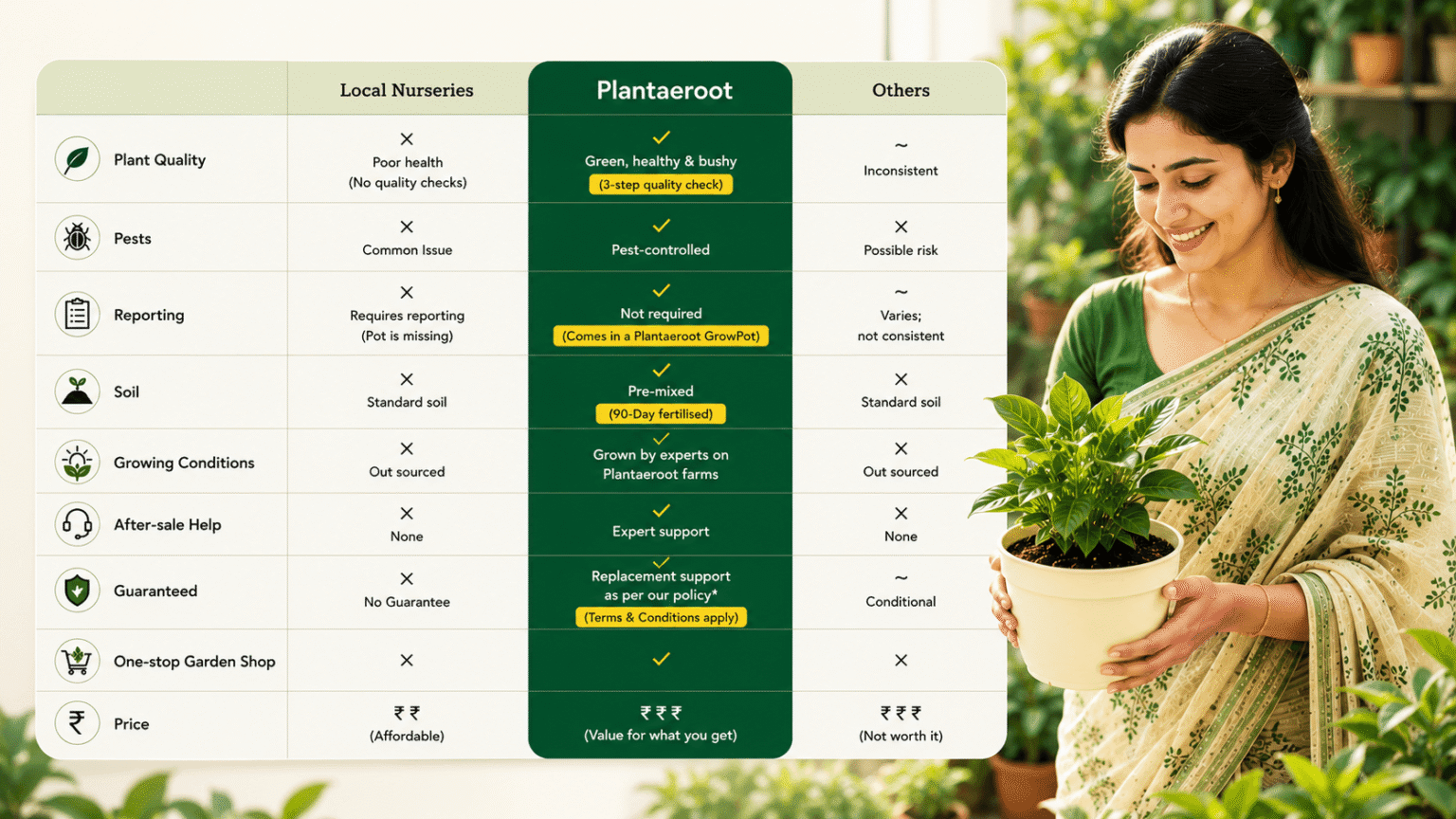
From metro cities to small towns, Plantaeroot delivers greenery to every corner of India. No hidden costs, no worries—just pure plant happiness at your doorstep.

Enjoy Free Shipping on all orders above ₹999!

No Extra Duties or Hidden Fees

What you see is what you pay. All prices are inclusive of GST and taxes. Simple, transparent, and worry-free shopping.

Quick & Reliable Delivery

Your plants are dispatched within 2–3 working days and usually arrive in 2–7 business days depending on your location.

Packed with love, delivered with care.

Return

Returns & Replacements

We make shopping worry-free. If your plant or product doesn’t arrive in perfect condition, we’ll happily arrange a replacement or solution.

Learn more about Returns & Refunds

Terms & Conditions apply

Scroll To Top
Categories
Close

Recently Viewed Products

-33%
Air Purifying Indoor Plants ComboAir Purifying Indoor Plants Combo
Hot Sale 33% off.
Hot Sale 33% off.
Hot Sale 33% off.
Hot Sale 33% off.
Hot Sale 33% off.
Hot Sale 33% off.
Hot Sale 33% off.
Hot Sale 33% off.
Hot Sale 33% off.
Hot Sale 33% off.

Air Purifying Indoor Plants Combo

799.00
-33%
Set of 3 Vastu Plants
Hot Sale 33% off.
Hot Sale 33% off.
Hot Sale 33% off.
Hot Sale 33% off.
Hot Sale 33% off.
Hot Sale 33% off.
Hot Sale 33% off.
Hot Sale 33% off.
Hot Sale 33% off.
Hot Sale 33% off.

Set of 3 Vastu Plants

799.00
-30%
Combo of 3 Minimalist Plant SetCombo of 3 Minimalist Plant Set
Hot Sale 30% off.
Hot Sale 30% off.
Hot Sale 30% off.
Hot Sale 30% off.
Hot Sale 30% off.
Hot Sale 30% off.
Hot Sale 30% off.
Hot Sale 30% off.
Hot Sale 30% off.
Hot Sale 30% off.

Combo of 3 Minimalist Plant Set

699.00
-10%
Set of 3 Indoor Plant Combo - FittoniaSet of 3 Indoor Plant Combo - Fittonia
Hot Sale 10% off.
Hot Sale 10% off.
Hot Sale 10% off.
Hot Sale 10% off.
Hot Sale 10% off.
Hot Sale 10% off.
Hot Sale 10% off.
Hot Sale 10% off.
Hot Sale 10% off.
Hot Sale 10% off.
Shop
Category
0 Cart

Login

Shopping Cart

Close

Your cart is empty.

Start Shopping

Close
Air Purifying Indoor Plants Combo
799.00

Ask a Question

    Select the fields to be shown. Others will be hidden. Drag and drop to rearrange the order.
    • Image
    • SKU
    • Rating
    • Price
    • Stock
    • Availability
    • Add to cart
    • Description
    • Content
    • Weight
    • Dimensions
    • Additional information
    Click outside to hide the comparison bar
    Compare