Piper betle belongs to Piperaceae, the pepper family, which makes it a close cousin of the black pepper vine. It is native to South and Southeast Asia, from India and Sri Lanka to Malaysia and Indonesia, and has been grown across India for centuries for one purpose: its leaves. In Hindi and Bengali it is simply paan; in Tamil it is vetrilai, in Telugu tamalapaku.
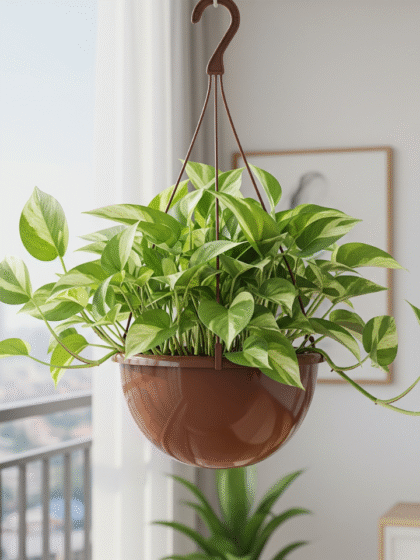
The leaf is the reason to own it. Each one is a clean, pointed heart in mid to deep green, with a waxy gloss and five to seven veins fanning out from the stalk. On a mature vine a leaf can reach 12–16 cm; young potted plants start smaller and size up as they settle. Crush one and you get the familiar paan scent: warm, peppery and faintly clove-like.
Growth is easy to read. The stems are jointed, and at each node the vine puts out short aerial roots that grip a stick, moss pole or rough wall, much as a money plant does. Given something to climb, it grows upward with larger leaves; left without support, it trails over the pot edge. It grows quickly in warm, humid months and slows almost to a stop in winter.
Flowers are rarely part of the picture. Male and female flowers grow on separate plants and appear as small, pale, catkin-like spikes, and a potted vine seldom produces them. You are growing this plant for foliage, and regular picking actually encourages fresh growth.
Betel leaf is not betel nut
This is the most common mix-up in searches. Betel nut, or supari, is the seed of the areca palm (Areca catechu), a tall plantation tree. The two meet only when a paan is prepared. The cancer warnings you may have read about paan concern areca nut and quids made with it, which the World Health Organization’s cancer agency classifies as carcinogenic to humans. What you receive here is the leaf vine alone.
Traditional uses and significance
Few plants are woven into Indian life as closely. Betel leaves are placed on the kalash and offered during puja, exchanged at weddings, and served as paan to welcome guests, and in Bengal a home-grown vine on the balcony is a familiar sight. Ayurveda and folk practice have long used the leaf after meals. These are traditional uses rather than proven treatments, and we make no medical claim for the plant.
Where it looks and grows best
The ideal spot copies the conditions betel farmers create: plenty of light without direct midday sun, shelter from drying wind, and humid air. A covered balcony, a verandah, or a bright east- or north-facing window all suit it, which is why it sits naturally among our plants for the balcony. A kitchen window works well too, since the air there is often more humid. Give it a bamboo stick, a coir pole or a small trellis and it becomes one of the more rewarding climber plants for a flat; without support, its stems spill softly from a shelf or basket, like other hanging plants.
Want a climber that copes with a dimmer room? The Money Plant (Golden) tolerates much lower light, though it offers no usable leaves. For a pepper-family cousin that stays small on a desk, the Peperomia Green Creeper Plant has similar heart-shaped leaves on a far more compact trailing vine.
Product Specifications
| Specification | Detail |
| Plant name | Betel Leaf Plant (Paan Plant) |
| Botanical name | Piper betle |
| Plant family | Piperaceae (pepper family) |
| Also known as | Paan, betel vine · paan (Hindi, Bengali) · vetrilai (Tamil) · tamalapaku (Telugu) · vettila (Malayalam) |
| Variety | Not stated on the listing (for example Bangla, Meetha, Kapoori or Desawari) |
| Origin | South and Southeast Asia |
| Plant type | Evergreen perennial climbing vine |
| Foliage | Glossy, heart-shaped, mid to deep green leaves; peppery, clove-like aroma when crushed |
| Growth habit | Climbs with aerial roots at the nodes; trails when grown without support |
| Growth rate | Moderate to fast in warm, humid months; slow in winter |
| Suitable placement | Covered balcony, verandah, bright east- or north-facing window, kitchen window, shaded terrace corner, trellis or hanging basket |
| Light requirement | Bright shade or filtered light; soft morning sun only. Not suited to dim, low-light corners |
| Water requirement | Moderate to high. Keep evenly moist, never waterlogged |
| Soil requirement | Loamy, well-draining, rich in organic matter. Supplied in nutrient-rich soil mix |
| Humidity | High preferred |
| Temperature | Most comfortable at 15–30 °C; copes with roughly 10–40 °C given shade and water. Protect from cold wind; not frost-hardy |
| Flowers | Small, pale, catkin-like spikes on separate male and female plants; rare in pots |
| Difficulty level | Easy to moderate |
| Suitable environment | Bright indoor spot or semi-outdoor space sheltered from harsh sun, strong wind and heavy rain |
| Pet safety | Not listed by the ASPCA as toxic or non-toxic. Keep out of reach of pets |
| Grows in water | Cuttings root in water; long-term growth is better in soil |
| Propagation | Stem cuttings with 2–3 nodes; roots in about 3–4 weeks |
Care guide
| Care | What to do |
| Light | Bright, indirect or filtered light for most of the day. Soft morning sun helps; afternoon sun through glass or on an open terrace burns the leaf edges. In deep shade the leaves shrink and pale |
| Water | Keep the mix evenly moist. Water when the top 2 cm feels dry, and let excess drain away. It dislikes drying out completely and dislikes waterlogged roots even more. Empty the saucer every time |
| Soil | Loose, loamy and well-draining, rich in organic matter. Potting soil with cocopeat, a little sand and compost works well. Heavy clay or garden soil that stays wet invites root rot |
| Humidity | The higher the better. Group it with other plants in dry spells or stand the pot on a tray of wet pebbles. Mist on dry summer mornings, but not in the monsoon |
| Support | Tie the vine loosely to a stick, coir pole or trellis. The aerial roots grip on their own once they touch a rough surface |
| Feeding | Organic feeds suit it best: vermicompost or well-rotted cow manure every one to two months from March to September, or a balanced liquid feed at half strength once a month. Nothing in winter |
| Harvesting | Once the vine is growing steadily, pick mature leaves with a short stalk from the lower and middle stems. Leave the growing tip, and never strip more than a third of the leaves at once |
| Pruning | Pinch the tips to make it bushier. Cut back bare, straggly stems in early spring and use them as cuttings |
| Repotting | Every one to two years, one size up, in spring or early monsoon. A pot of 8–10 inches suits a mature vine |
| Propagation | Stem cuttings with two or three nodes root in moist mix or a jar of water in about three to four weeks. Keep them warm and shaded |
Growing it through the Bengal year
Monsoon (June to September). Growth is at its best, and so is the risk of foot rot, a water-mould disease that thrives in soggy soil. The first sign is a dark, soft stem at the soil line, followed by the whole vine wilting even though the soil is wet. Water only when the surface is dry, raise the pot on feet so it drains freely, and bring it in from an open balcony during long spells of rain. Pick off leaves with dark spots as soon as you see them.
Summer (March to May). The danger now is dry heat. The pot can dry out in a day in April and May, and hot pre-monsoon winds crisp the leaf edges. Check the soil daily, water in the morning, and move the vine out of any west- or south-facing sun by April. Grouping it with other plants helps it hold humidity.
Winter (late November to February). Growth slows sharply, and a few older leaves may yellow and drop on cold nights. That is normal. Cut watering to once or twice a week, stop feeding until March, and keep the pot away from cold north winds on an open balcony. Our seasonal guide for Kolkata homes covers the wider year.
Common problems and quick fixes
| Symptom | Likely cause | What to do |
| Stem black and soft at the soil line; vine wilts | Foot rot from waterlogged soil, worst in the monsoon | Stop watering. Root healthy tips as cuttings and repot them in fresh, free-draining mix. Discard the old soil |
| Yellow leaves at the base | Overwatering, cold nights or natural ageing | Let the top of the mix dry before watering. A few in winter are normal |
| Brown, crisp leaf edges | Dry air, hot sun or the pot drying out | Move it into shade, water more consistently and raise humidity |
| Small, pale leaves with long gaps between them | Too little light or no feeding | Move it somewhere brighter and feed monthly in the growing season |
| Dark spots with a yellow ring | Bacterial or fungal leaf spot | Remove affected leaves, keep foliage dry and improve air flow |
| White powdery coating | Powdery mildew | Cut off the worst-affected foliage, improve air flow and spray diluted neem oil |
| Sticky leaves, white cottony clusters or tiny bumps | Mealybugs, scale or aphids | Wipe them off, then spray diluted neem oil weekly for three weeks |
| Drooping or a few dropped leaves after delivery | Transit stress | Normal. Keep it in bright shade, water lightly and let it settle for two to three weeks |
Is the betel plant safe for pets?
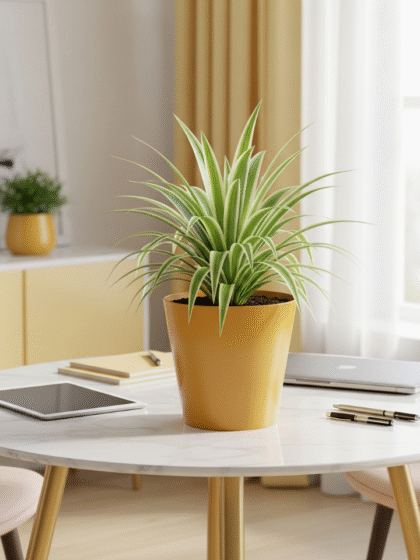
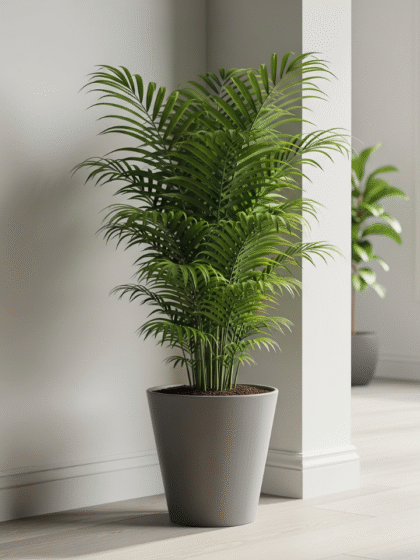
There is no published answer either way. The ASPCA’s toxic and non-toxic plant database does not list Piper betle, so we cannot call it pet-safe. The leaves are pungent and strongly aromatic, and the sensible course is to keep the vine where cats and dogs cannot chew it. If you want plants that are confirmed non-toxic to cats and dogs, the Spider Plant and Areca Palm are both on the ASPCA’s safe list.
Betel leaf and Vastu
Many households keep a betel vine for its place in ritual, and Vastu guides usually suggest the north, east or north-east of the home. The leaf’s role in Hindu worship is long-standing; plant-specific directions, though, are modern convention rather than classical text. If Vastu matters to you, pick one of those directions that also offers bright shade, since a healthy vine is the point. Our Vastu plant guide covers placement room by room.
A straight answer on air purification
You may see this plant sold as an air purifier. It is not one in any practical sense. Research by Cummings and Waring (2019) found that a room would need somewhere between 10 and 1,000 plants per square metre to match the air exchange that ordinary ventilation already provides. Grow it for its leaves and its beauty. Our guide to which indoor plants actually purify the air explains the evidence.
























There are no reviews yet.