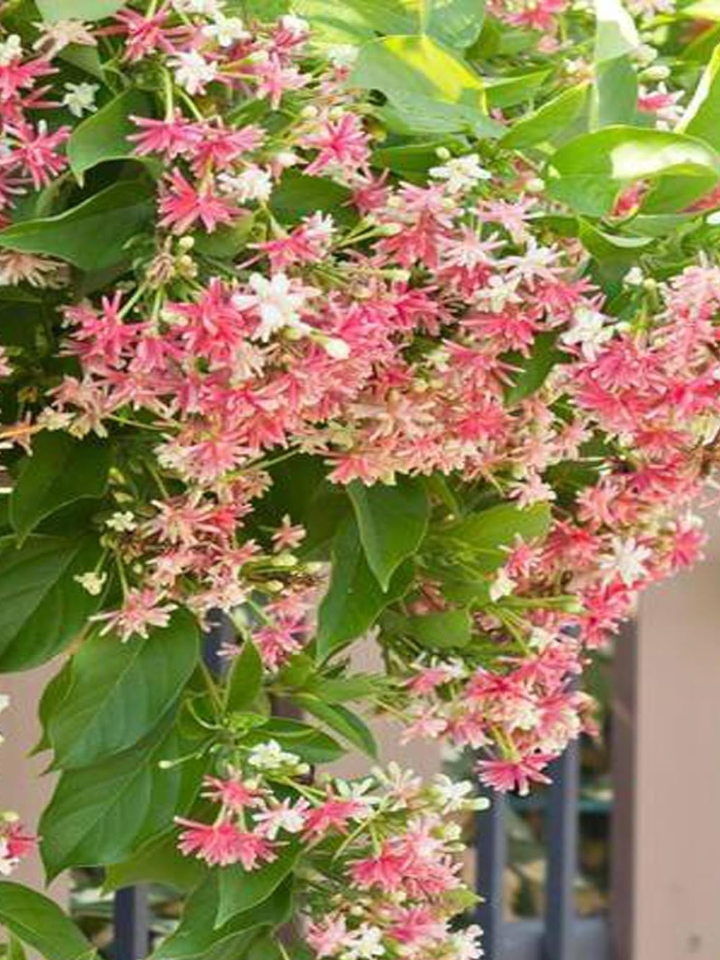
"Wall creeper" is a broad name for any climbing plant used to green a wall. This one is Jacquemontia, an evergreen, perennial vine from tropical America and a member of the morning glory family, Convolvulaceae. It is now grown widely in gardens across India's warm plains and coast, on gates, fences and boundary walls, because it covers ground quickly and stays tidy. Its flowers are smaller than a morning glory's but come in generous clusters, and the vine is far less rampant.
What you will notice as it grows:
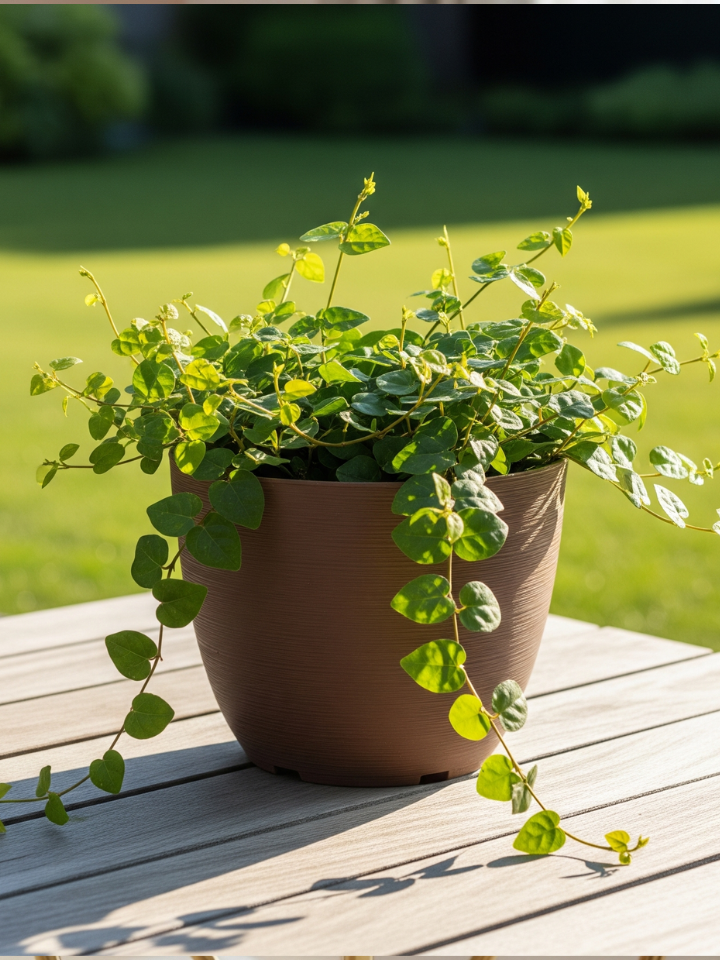
- Leaves. Small, smooth, heart-shaped and pointed, set alternately along thin, wiry stems. They stay green all year in frost-free areas.
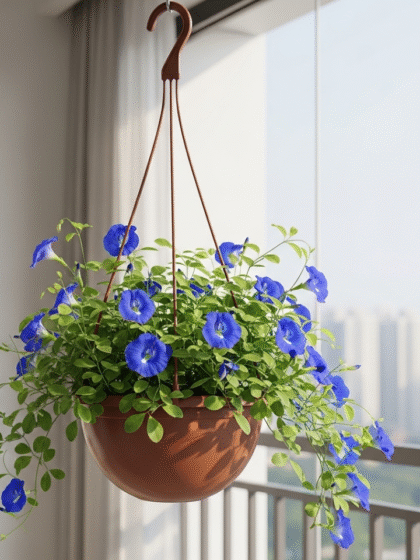
- Flowers. Bell-shaped, about 2–2.5 cm across, in sky-blue to violet-blue with a white eye. They are held in clusters of several blooms on long stalks.
- Daily rhythm. Each flower opens in the morning and usually closes by afternoon, but new buds keep opening for weeks at a time.
- Stems. Slender and flexible. They twine around anything thin enough to grip, reaching about 2–4 m.
- Visitors. The flowers draw bees and butterflies to a balcony or garden.
Can a wall creeper grow on a plain wall?
Not by itself. This creeper climbs by twining its stems around thin supports; it has no aerial roots or suction pads to grip a bare surface. To cover a wall, fix plastic-coated wire, a garden net or a wooden trellis about 5–10 cm out from the plaster, then guide the stems up it for the first few weeks. Once they find the support, the vine climbs on its own.
The gap behind the support matters. It lets air move behind the leaves, keeps the wall dry and makes painting or repairs easier later.
Where should you grow it?
Choose a spot that gets direct sun for most of the morning or afternoon. Good places include:
- A compound wall, gate or boundary fence. It is one of the flowering creepers for compound walls and boundary fences that soften concrete without the weight of a woody climber.
- A sunny balcony grille or railing. Grow it in a deep pot and let it weave through the bars to make a light privacy screen.
- A terrace trellis or pergola post. It fits well among terrace railing plants that flower in the cool months, when the terrace is pleasant to sit on.
- A hanging basket or low wall top. Without support, the stems spill downwards and make a loose, trailing mat.
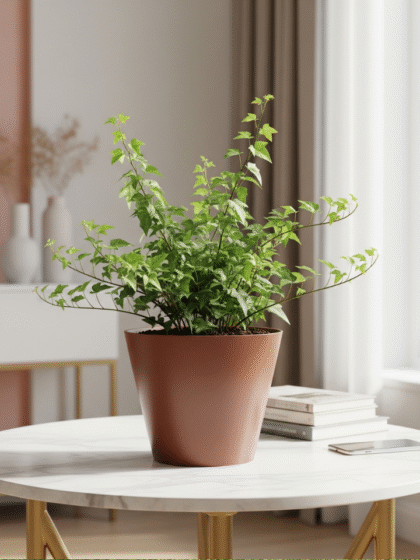
It is not suited to indoor rooms or deep shade. For a creeper inside the house, try English ivy for shaded indoor walls, which prefers cooler, dimmer conditions.
Will it damage my wall?
No, as long as it grows on a support. Because it has no clinging roots, it does not dig into plaster, crack paint or leave marks when removed, unlike ivy or creeping fig. Keep the vine on a frame set slightly away from the wall, and do not let it trap water against old, damp brickwork. Trim stems that reach gutters, window hinges or electric lines.
Will this creeper grow well in my climate?
It suits warm, frost-free regions: the eastern plains, the coast, the Deccan and the south. It tolerates heat, humidity and salty sea air, and an established plant copes with short dry spells. In north India it keeps growing through summer and the monsoon, but young plants need shelter from cold winter winds; growth slows below about 10 °C. In the hills it is best treated as a pot plant kept in a warm, sunny corner.
Product Specifications
- Plant name: Wall Creeper Plant
- Botanical name: Jacquemontia violacea (accepted name Jacquemontia pentanthos)
- Common names: Blue jacquemontia, skyblue clustervine, blue cluster vine
- Plant family: Convolvulaceae (morning glory family)
- Native range: Tropical America; widely grown in Indian gardens
- Plant type: Evergreen, perennial flowering climber
- Climbing method: Twining stems; needs wire, mesh, a grille or a trellis
- Leaves: Small, smooth, heart-shaped, pointed tips
- Flowers: Sky-blue to violet-blue with a white centre, about 2–2.5 cm, in clusters; open in the morning
- Flowering season: Heaviest from about October to March; lighter flushes in warm months
- Growth habit: Fast-growing twining vine; trails if left unsupported
- Growth rate: Fast
- Mature length: About 2–4 m on a support
- Suitable placement: Compound walls, gates, fences, balcony grilles, terrace trellises, pergola posts; outdoors only
- Not suitable for: Indoor rooms, deep shade, bare walls without a support
- Light requirement: Full sun, at least five to six hours a day
- Water requirement: Moderate; water when the top 3–4 cm of soil is dry
- Soil requirement: Light, well-drained soil with compost; avoid waterlogging
- Climate: Warm, frost-free regions; tolerates heat, humidity and salt air; slows below about 10 °C
- Fertiliser: Compost or vermicompost monthly during active growth
- Pruning: Firm trim in late spring after the main flowering
- Propagation: Stem cuttings during the monsoon
- Common pests and problems: Aphids, whitefly, root rot in waterlogged soil
- Maintenance: Low
- Difficulty level: Easy
- Suitable environment: Sunny outdoor spaces across India's plains, coast and warm south
- Wall safety: No aerial roots; does not cling to or mark plaster when grown on a support
- Pet safety: Not listed by the ASPCA; a relative, morning glory, is toxic to pets; keep out of reach
How do you care for a wall creeper plant?
- Planting. Plant during the monsoon or early winter. In the ground, dig a hole about 30 cm deep and mix in compost. For a pot, choose one at least 30 cm (12 inches) across with drainage holes.
- Soil. Any light, well-drained mix works. Use garden soil, compost and coarse sand or cocopeat in roughly equal parts. It dislikes soggy, compacted soil.
- Watering. Water every two or three days in summer and about once a week in winter, always when the topsoil is dry. Never let the pot stand in water during the rains.
- Feeding. Add a handful of compost or vermicompost once a month during active growth. Too much nitrogen gives leaves but few flowers.
- Training. Wind young stems gently around the support in the same direction they already twist. Pinch the tips when they reach the top to make the vine bushier.
- Pruning. Give it a firm trim in late spring, after the main flowering. Avoid heavy pruning from late monsoon onwards, as it removes the shoots that carry winter flowers.
- Propagation. Semi-hard stem cuttings root easily in moist soil during the rains.
It is one of those plants that need little looking after once they settle in, as long as it gets sun and a steady supply of water.
Wall creeper through the year in Bengal
These timings come from growing the vine in the humid Kolkata climate and suit most of the eastern plains.
October to March: the flowering season. Clusters of blue flowers cover the vine through the dry, sunny months, making it one of the flowers that brighten a Bengal winter garden. Water when the soil is dry and feed lightly.
April to June: summer growth. It grows fast and keeps a few flowers. Water more often and trim it into shape after the main bloom.
July to September: the monsoon. It puts on long new stems. Check drainage, tie in loose growth and watch for leaf spots in long wet spells.
Common problems and simple fixes
- Few or no flowers. Too little sun or too much nitrogen. Move the pot into direct sun and switch to compost.
- Yellow leaves in the rains. Waterlogged soil. Improve drainage and let the topsoil dry between waterings.
- Bare stems at the base. Normal in older vines. Cut a few old stems low down to encourage new shoots from below.
- Aphids or whitefly on new tips. Spray with neem oil every seven to ten days until clear.
Is it safe around children and pets?
We could not find Jacquemontia on the ASPCA lists of toxic or non-toxic plants, and its close relative, morning glory, is listed as toxic to dogs and cats. So we do not describe this creeper as pet-safe. Grow it where pets and small children cannot chew the leaves or seeds.
What to grow with a wall creeper
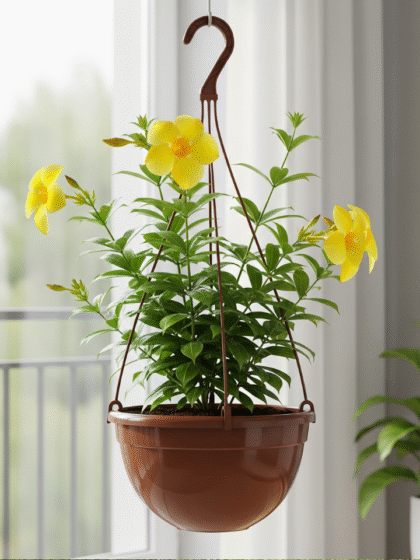
Blue flowers look striking next to warm colours. Add an allamanda whose yellow trumpets fill the summer gap when the jacquemontia rests, or madhabi lata for scented spring flowers on the gate beside it. For a larger blue display in the rainy season, choose morning glory, its bigger-flowered cousin for a summer fence. For more ideas, explore hardy outdoor plants for an Indian front yard or read our guide to plants that welcome visitors at the front gate.
Turn a bare wall into a blue-flowered screen
Every plant is raised, rooted and packed by a family-run online nursery that grows its own climbers. Give it sun, something to twine around and regular water, and it will green your wall within a season.
























There are no reviews yet.