A petunia is a flowering plant of the nightshade family, Solanaceae, the same family as tomato and brinjal. The garden petunia (Petunia × atkinsiana, often sold as Petunia hybrida) is a hybrid of wild species from South America, mainly Argentina, Brazil and Uruguay. It is a short-lived perennial in its native range, but in India it is grown as a winter annual.
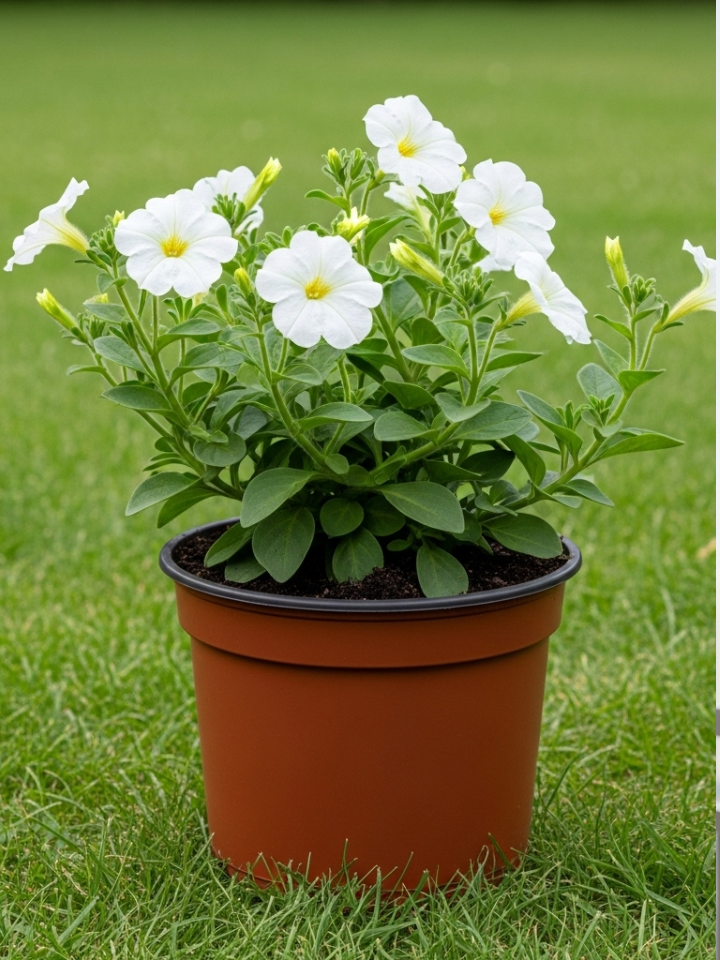
The plant forms a low, bushy mound of soft, oval, mid-green leaves. Both the leaves and stems are covered in fine glandular hairs, so they feel slightly sticky to the touch. That is normal and not a sign of pests. The flowers are wide, funnel-shaped trumpets, 5–10 cm across depending on the type, in solid colours, veined patterns, picotee edges and bold stripes. Some white and purple forms carry a light, sweet scent in the evening.
Nurseries grow a few broad types. Grandiflora petunias have the largest single flowers. Multiflora types carry more, smaller blooms and cope better with wind and a stray shower. Double petunias have ruffled, carnation-like flowers, and trailing or spreading types are bred to spill over the edge of a basket or railing planter.
Where should you place a petunia?
In the sunniest spot you have. A petunia is an outdoor plant, and light decides how well it flowers.
- Balconies and window boxes. A south, east or west-facing balcony that gets at least six hours of direct sun is ideal. It is one of the most reliable small flowering plants for balcony railings and ledges, because it stays low and flowers from top to bottom.
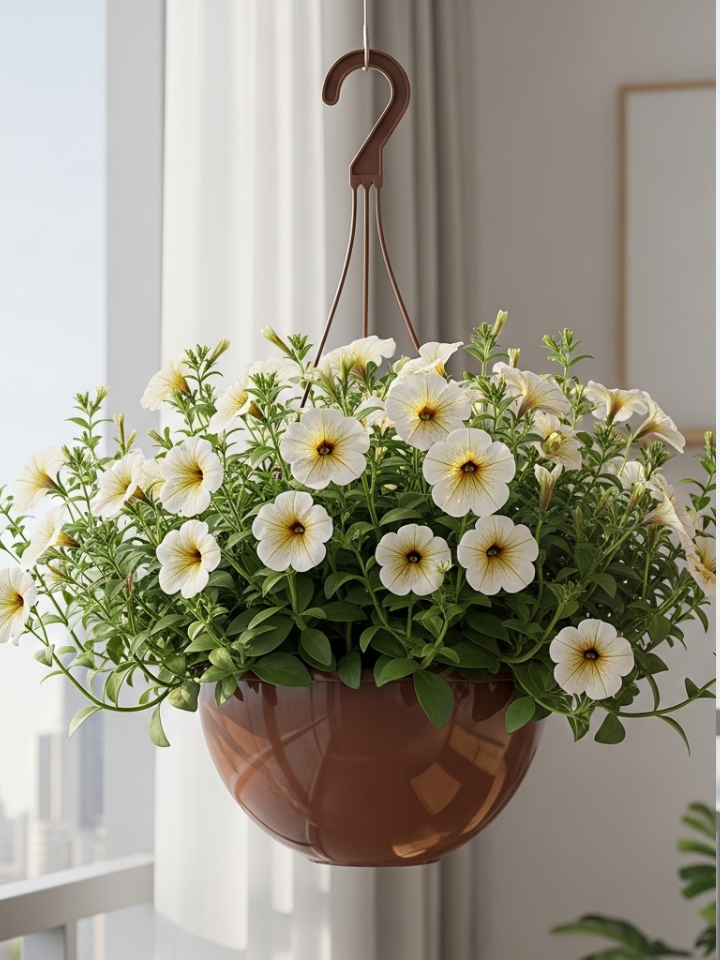
- Hanging baskets. Trailing and multiflora types are classic hanging basket flowers. Three plants in a 25–30 cm basket make a full ball of colour by January.
- Terraces, borders and garden beds. Plant it in groups along a path or at the front of a sunny bed, where it pairs well with taller winter flowers. For more ideas, see these outdoor flowers in pots that suit the same sunny spots.
Petunias are not indoor plants. On a windowsill or inside a room they stretch, stop flowering and drop buds within two or three weeks. A shaded balcony that gets only morning light for an hour or two will also disappoint.
- Plant name: Petunia Plant
- Botanical name: Petunia × atkinsiana (syn. Petunia hybrida), garden petunia
- Common names: Petunia, garden petunia
- Plant family: Solanaceae (nightshade family)
- Origin: Hybrid of wild species from South America (Argentina, Brazil, Uruguay)
- Plant type: Flowering annual in India (tender perennial in its native range)
- Foliage: Soft, oval, mid-green leaves with fine sticky hairs
- Flower colour: Available in purple, pink, red, white, violet, bicolour and veined forms
- Flower size: About 5–10 cm across, depending on type
- Fragrance: Light evening scent in some white and purple forms
- Flowering season in India: December to March on the plains
- Growth habit: Low, bushy and mounding; trailing types spread and spill
- Suitable placement: Sunny balcony, window box, hanging basket, terrace, garden bed or border
- Light requirement: Full sun, six hours or more of direct light
- Water requirement: Moderate; water when the top 2–3 cm dries; avoid waterlogging
- Soil requirement: Light, free-draining mix with compost; slightly acidic to neutral (pH 6–7)
- Temperature: Best between 10 °C and 30 °C; declines above about 32–35 °C
- Fertiliser: Phosphorus- and potassium-rich liquid feed every 10–14 days while flowering
- Maintenance: Deadhead every few days; trim leggy stems by a third
- Lifespan: One season (about three to four months of bloom) on the plains
- Difficulty level: Easy in full sun
- Suitable environment: Cool, sunny winters on the Indian plains; spring to autumn in hill stations. Not suited to indoor rooms or the monsoon.
- Pet safety: Non-toxic to dogs, cats and horses (ASPCA)
How do you care for a petunia plant?
- Sunlight. Six hours or more of direct sun a day. Fewer hours mean long, floppy stems and few flowers.
- Watering. Water thoroughly when the top 2–3 cm of soil is dry, then let the pot drain. In winter that is usually every two or three days for a pot on a sunny balcony, and daily for a hanging basket by March. Water at the base in the morning; wet petals spot and rot.
- Soil. A light, free-draining mix: two parts garden soil, one part compost or vermicompost, and one part cocopeat or coarse sand. Petunias prefer soil that is slightly acidic to neutral, around pH 6 to 7.
- Feeding. Petunias are hungry plants. Once buds form, give a liquid fertiliser with more phosphorus and potassium than nitrogen every 10–14 days. A handful of vermicompost each month helps too.
- Deadheading. Pinch off faded flowers, including the small green seed pod behind them, every few days. This keeps the plant producing new buds instead of setting seed.
- Trimming. If stems grow long and bare by February, cut them back by about a third. New shoots and flowers follow in two to three weeks.
- Pot size. One plant fills a 15–20 cm pot. For a fuller display, plant three in a 30 cm pot or basket.
When do petunias flower in India?
On the plains, petunias flower from about December to March, with the best display in January and February. Young plants set out in October or November start blooming within four to six weeks.
The season ends with the heat. Once days pass about 32–35 °C in April, flowering slows and the plants turn leggy and pale. Heavy rain also flattens the soft flowers and invites rot, which is why petunias are not a monsoon plant on the plains. In hill stations with cool summers, they flower from spring into autumn instead.
A season with petunias in Bengal
These notes come from raising the petunia trays at our Kolkata nursery each winter.
October to November: planting. The rains are over and nights begin to cool. This is the right time to pot up young plants. Keep them in full sun from day one, and water carefully while the weather is still humid.
December to February: peak bloom. Mild days and cool nights suit petunias perfectly. Feed every two weeks and deadhead often. A cold spell in north India rarely harms them, but bring baskets in from open terraces on frosty nights.
March: the last flush. Flowering is still strong, but pots dry out faster. Water daily and trim tired stems.
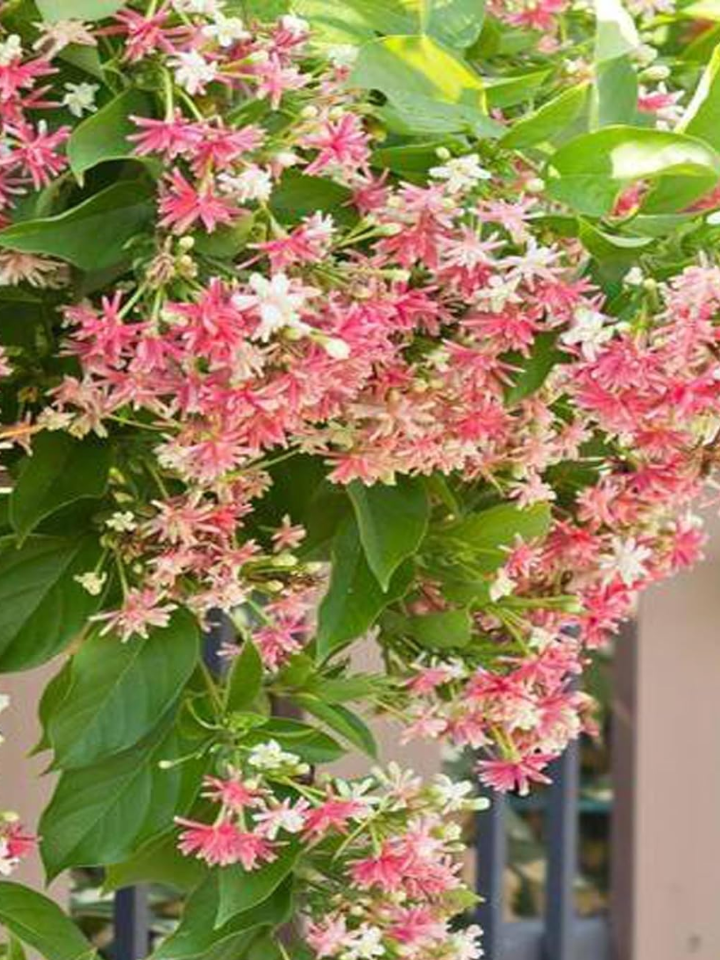
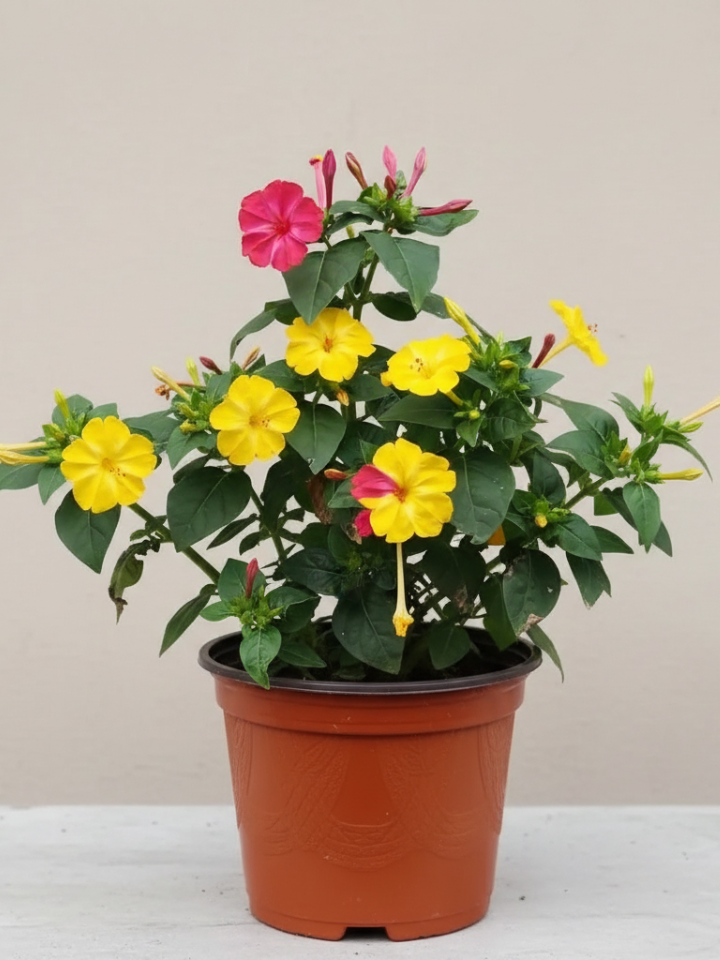
April onwards: the end of the season. In Bengal the heat and humidity finish most petunias by late April. Enjoy the last flowers, then compost the plants and replant the pot with summer-flowering nayantara to take over when summer arrives .
Why is my petunia not flowering? Common problems and fixes
- Few flowers, long stems. Not enough sun. Move it to the brightest spot you have and trim the stems by a third.
- Flowering slows mid-season. Seed pods forming or hunger. Deadhead every few days and feed every two weeks.
- Yellowing lower leaves. Usually overwatering or poor drainage. Let the top of the soil dry, and check the drainage hole. Yellowing between green veins on new leaves points to alkaline soil; add compost and use a feed that contains iron.
- Sticky leaves with tiny insects. Aphids or whitefly. Spray neem oil every five to seven days for three weeks. (Mild stickiness with no insects is normal.)
- Holes in buds and flowers. Caterpillars. Check under leaves in the evening and remove them by hand.
- Grey, mushy flowers. Grey mould after damp weather. Remove affected flowers and stop wetting the petals.
- Plant collapses in April or May. Heat, not your care. Petunia is a winter annual in most of India.
Is a petunia safe for cats and dogs?
Yes. The ASPCA lists petunia as non-toxic to dogs, cats and horses. That makes it one of the easiest flowering plants to keep on a balcony that a cat or dog also uses.
Any pet that eats a lot of any plant may still vomit, so avoid letting them graze on it. Also check your fertiliser and pesticide labels, which can be harmful even when the plant is not. If you want a second flowering plant with the same clean bill of health, a red rose that shares the same sunny bed is also listed by the ASPCA as non-toxic.
What to grow with petunias
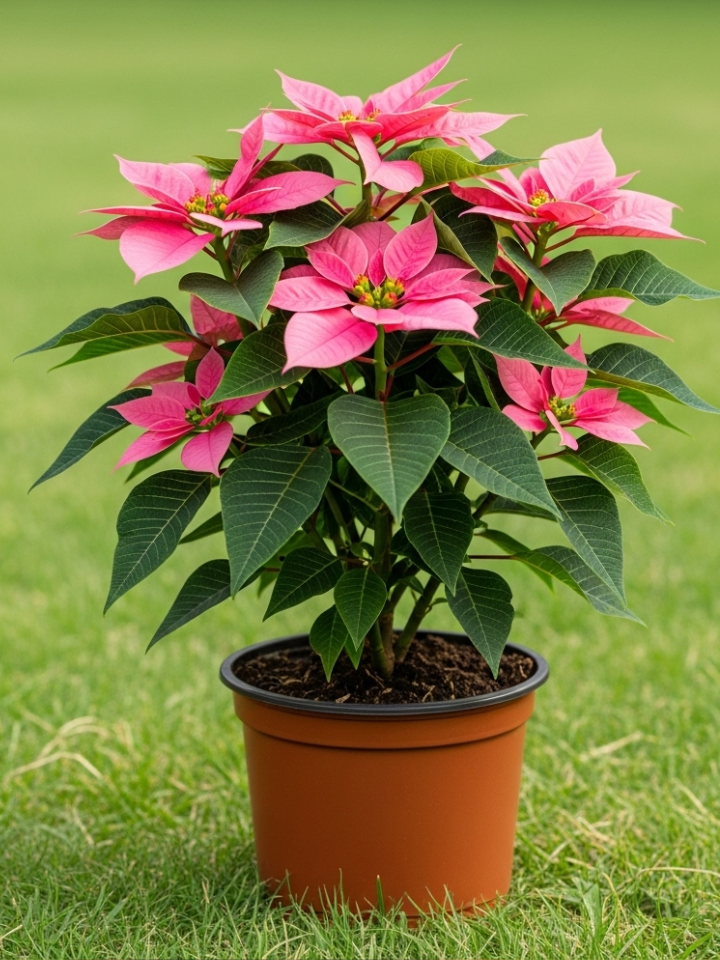
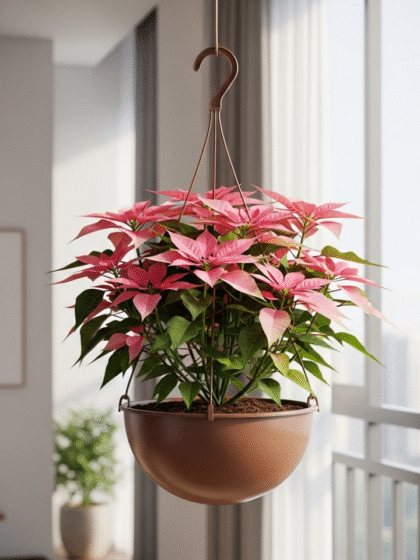
Petunias fill the front of a winter display, so pair them with plants that add height or a different shape. A poinsettia for festive winter colour makes a bright centrepiece behind a pot of pink or white petunias. Kunda jasmine that scents the cool evenings climbs a railing behind them. For more cool-season colour in one place, browse our winter flowering plants for pots, or read this guide to home garden plants with names, for Indian growers.
Plan your winter colour now
Order your Petunia Plant in October or November and it will be settled and flowering well before the new year. We raise and pack every plant at our own nursery and ship it through an online plant nursery in India that grows what it sells to the places we deliver live plants to. Looking for more cheerful colour for pots? Explore our small flowering plants for pots.
































There are no reviews yet.