The plant sold in India as vinca is the Madagascar periwinkle, Catharanthus roseus, a member of the dogbane family, Apocynaceae. It was long classified as Vinca rosea, which is why the old name has stuck with gardeners. Native to Madagascar, it has naturalised across tropical India and goes by many local names: nayantara in Bengali, sadabahar ("ever-blooming") in Hindi, nithyakalyani in Tamil and billa ganneru in Telugu.
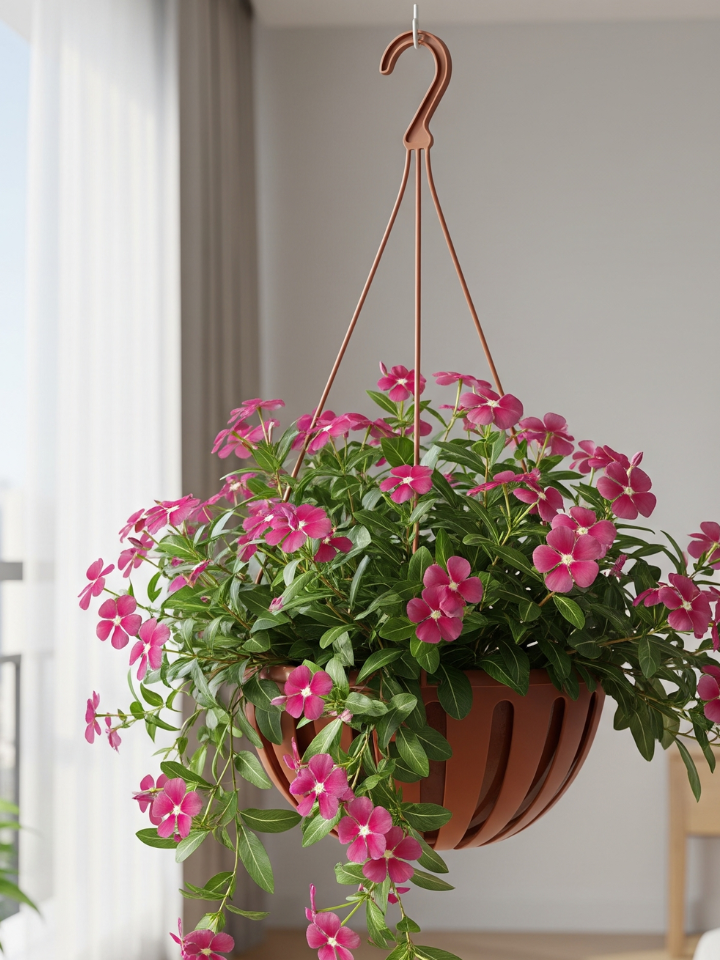
It grows as a small, upright, bushy subshrub with glossy, oval, deep green leaves, each marked with a pale central vein. The flowers are flat and round, about 3–5 cm across, with five overlapping petals around a small central eye. Colours include rose-pink, pure white, white with a red eye, lavender, blush and deep red. Newer nursery varieties have larger flowers and a tighter, more rounded habit.
Its real strength is stamina. Few flowers keep going through a north Indian May or a humid Bengal summer, and this is one of them. That is why it is one of the true 12 months flowering plants for Indian homes. Spent flowers drop by themselves, so the plant stays tidy without deadheading.
Where should you place a vinca?
In the sunniest, driest spot you have. Vinca is an outdoor plant, and more sun means more flowers.
- Balconies and ledges. A south, east or west-facing balcony with five hours or more of direct sun suits it well. Its low, even shape makes it one of the neatest plants for balcony railings and window boxes.
- Borders, beds and roadsides. Plant it 20–25 cm apart along a path or at the front of a bed for a low, colourful edge. It is a natural choice among the best outdoor plants low maintenance gardeners rely on, because it needs little beyond sun.
- Pots and terraces. One plant fills a 15–20 cm pot. Group three colours in a wide bowl for a fuller display on a hot roof, where many other flowers wilt.
Vinca is not an indoor plant. Indoors, or in a spot with less than four hours of sun, it grows thin stems, drops buds and stops flowering. Because it is toxic if eaten, place it out of reach of pets and small children.
Product Specifications
- Plant name: Vinca (Nayantara) Plant
- Botanical name: Catharanthus roseus (syn. Vinca rosea)
- Common names: Vinca, nayantara (Bengali), sadabahar (Hindi), Madagascar periwinkle, rose periwinkle, nithyakalyani (Tamil)
- Plant family: Apocynaceae (dogbane family)
- Origin: Madagascar; naturalised across tropical India
- Plant type: Flowering subshrub, grown as a perennial in warm regions and as an annual bedding plant
- Foliage: Glossy, oval, deep green leaves with a pale central vein
- Flower colour: available in pink, white, white with red eye, lavender and red
- Flower size: About 3–5 cm across
- Flowering season in India: Most of the year; heaviest from March to October, slower in winter
- Growth habit: Upright, bushy and compact
- Suitable placement: Sunny balcony, window box, terrace, garden bed, border or pot
- Light requirement: Full sun, five to six hours or more of direct light
- Water requirement: Low to moderate; water when the top 3–4 cm of soil dries; avoid waterlogging
- Soil requirement: Light, fast-draining mix with sand and compost; pH about 5.5–7
- Temperature: Thrives from 20 °C to above 35 °C; slows below about 15 °C; not frost-hardy
- Fertiliser: Light monthly feeding with compost or a half-strength balanced feed
- Maintenance: Low; self-cleaning flowers, occasional pinching and trimming
- Difficulty level: Very easy in sun and good drainage
- Suitable environment: Hot, sunny Indian plains and coastal regions; needs protection from waterlogging in the monsoon. Not suited to indoor rooms or shade.
- Pet safety: Toxic to dogs, cats and horses (ASPCA); poisonous to people if eaten
How do you care for a vinca plant?
- Sunlight. Five to six hours or more of direct sun a day. It handles heat well above 35 °C.
- Watering. Water deeply, then wait until the top 3–4 cm of soil is dry before watering again. In summer that is usually every two or three days for a pot; in winter, once or twice a week. Water the soil, not the leaves, and never leave the pot standing in water.
- Soil. A light, fast-draining mix: two parts garden soil, one part coarse sand and one part compost or vermicompost. A slightly acidic to neutral soil, around pH 5.5 to 7, suits it best.
- Feeding. Go easy. A handful of vermicompost every month, or a balanced liquid feed at half strength every three to four weeks, is enough. Too much nitrogen gives leaves instead of flowers.
- Pinching. Pinch out the tips of young plants once or twice to make them branch. Trim leggy stems by a third in late winter to refresh the plant.
- Repotting. Move it to a pot one size bigger when roots appear from the drainage hole. Use a pot with a large drainage hole; terracotta helps the soil dry out faster.
When does vinca flower in India?
For most of the year on the plains. Flowering is heaviest from March to October, when days are long and hot. In the cooler months, from December to February, it slows down and may pause in north India when nights fall below about 15 °C, then picks up again in spring.
In frost-free coastal and southern regions it can flower all year round. The plant often self-seeds, so small new seedlings may appear in nearby pots or beds.
A year with vinca in Bengal
These notes come from growing it at a Bengal nursery where vinca self-sows in every bed.
March to May: full bloom. The heat arrives and vinca comes into its own. Water every two or three days and give it the sunniest spot you have. It is one of the few summer flowers in West Bengal that looks as fresh in May as it did in March.
June to September: the risky season. Vinca still flowers in the rains, but constant wet soil is its main enemy. Root rot and stem blight can collapse a plant within days. Raise pots on bricks, add extra sand to the mix, stop watering on rainy days and move pots under a shade or eave during long downpours. Plant rain lilies that flower after every shower in the open bed instead, and keep vinca in well-drained pots.
October to November: the second flush. As the rains clear, plants recover and flower heavily again. This is a good time to trim, feed and pot up new plants.
December to February: the slow months. Flowering eases in the cool weather. Water less, stop feeding, and pair vinca with winter annuals. In spring, it takes over again when the winter flowers fade.
Why is my vinca dying? Common problems and fixes
- Sudden wilting, black stems at the base. Root rot or stem blight from wet soil. Remove affected plants, let the soil dry and improve drainage. This is the most common cause of loss, especially in the monsoon.
- Yellowing leaves. Usually overwatering or cold. Let the soil dry and cut back on water in winter.
- Few flowers, long thin stems. Not enough sun. Move it to a brighter spot and pinch the tips.
- White fluffy clusters on stems. Mealybugs. Dab them with cotton dipped in rubbing alcohol, then spray neem oil weekly for three weeks.
- Curled or speckled leaves. Aphids or spider mites, common in dry heat. Spray the undersides with water and neem oil.
- Leaves but no flowers. Too much nitrogen fertiliser. Switch to compost or a flowering feed and give it more sun.
Is vinca safe for pets and children?
No. The ASPCA lists periwinkle as toxic to dogs, cats and horses. It contains vinca alkaloids that can cause vomiting, diarrhoea, low blood pressure, depression, tremors and, in large amounts, seizures. All parts of the plant are poisonous to people if eaten.
Some of these alkaloids were developed into the cancer drugs vincristine and vinblastine, but that does not make the plant safe to use at home. Do not eat the leaves or flowers or use them in home remedies. Wear gloves when trimming if you have sensitive skin and wash your hands afterwards. If a pet or child eats any part of the plant, call a vet or doctor at once.
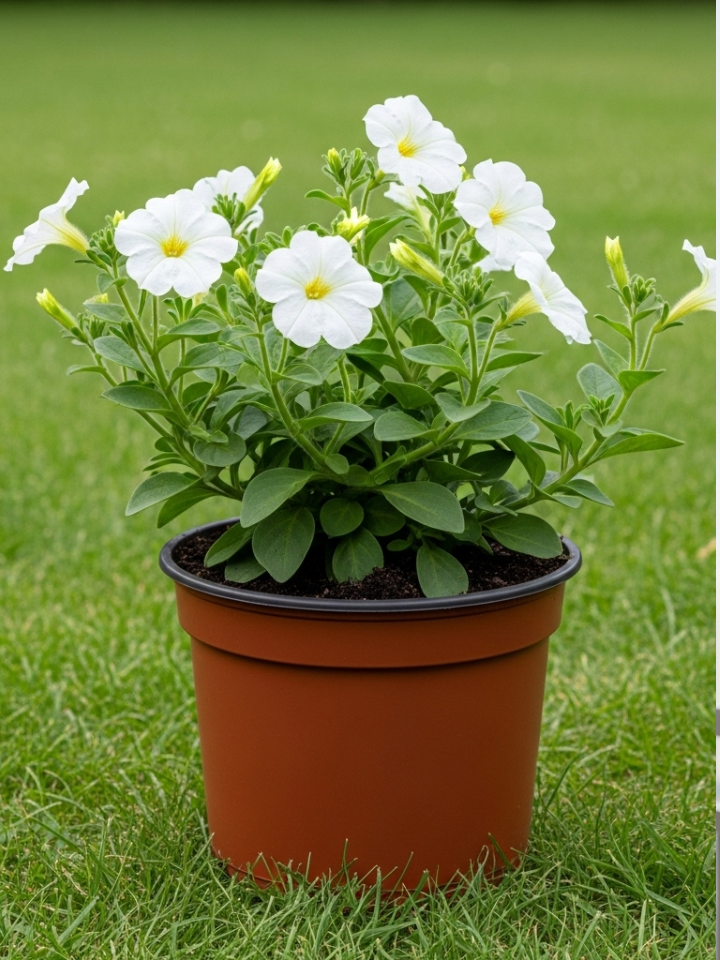
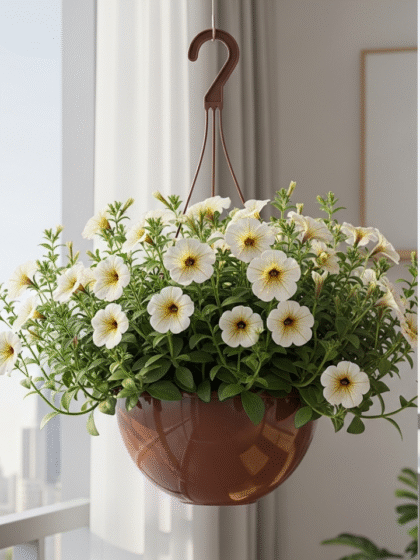
If a cat or dog shares your balcony, grow vinca only where they cannot reach it. For the cooler months, a petunia, which the ASPCA lists as safe for cats and dogs , gives balcony colour without that risk.
What to grow with vinca
Vinca fills the front of a sunny bed, so pair it with plants that add height or bloom in the season it rests. A rangan hedge behind the vinca gives a rich red backdrop that flowers in the same heat. For more ideas, read our guide to outdoor plants even a first-time gardener can grow.
Colour for every sunny spot
Order your Vinca (Nayantara) Plant now and it will settle in before the next flush of flowers. We raise every plant at our own nursery and pack it to arrive upright and ready for the sun. Looking for more easy colour? Browse our collection of small flowering plants in India for pots, beds and balconies.






























There are no reviews yet.