Guava is Psidium guajava, a small tropical fruit tree of the myrtle family, Myrtaceae, which also includes jamun, jamrul and clove. It is native to tropical America and reached India centuries ago, where it became one of the country's most widely grown fruits. Hindi speakers call it amrud, Bengali homes call it peyara, and in the south it is known as koyya, jama or perakka.
What you will notice first:
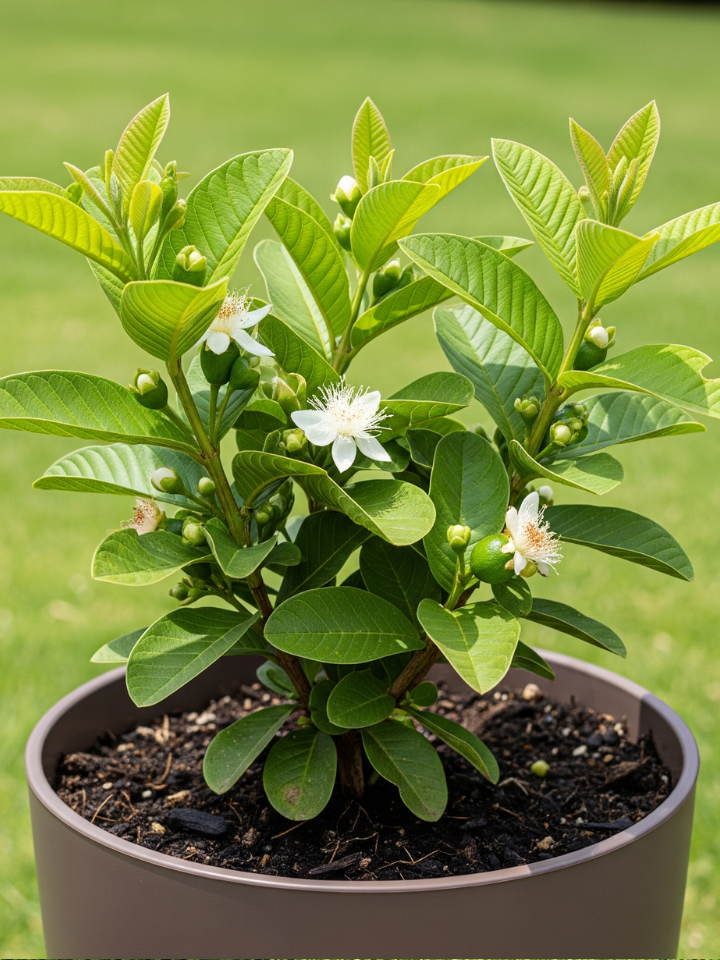
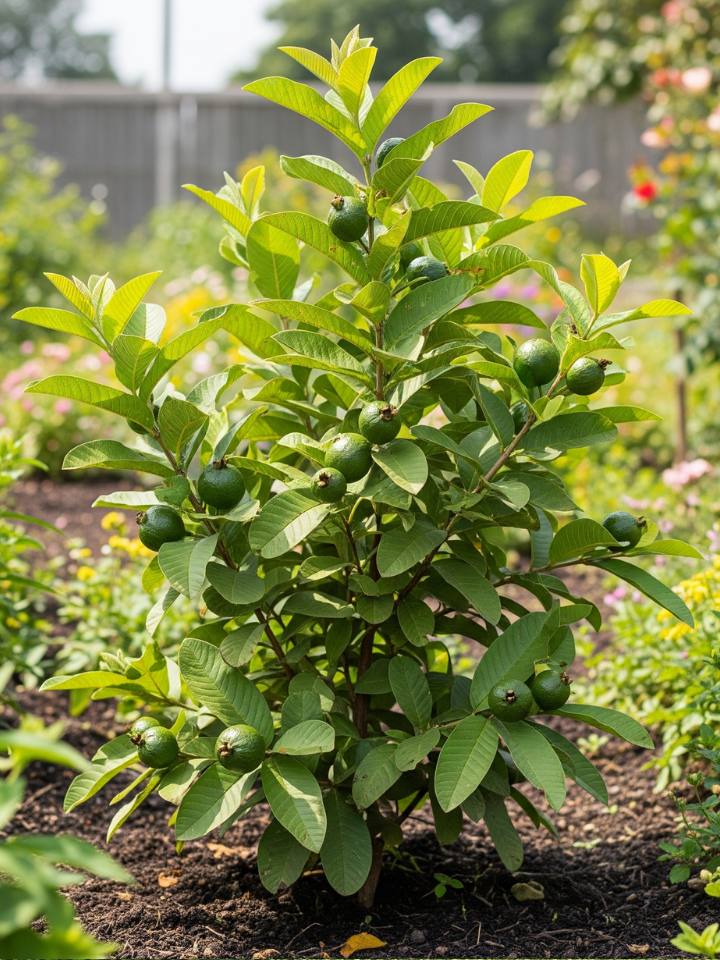
- Leaves. Oval, 7–15 cm long, with deep, parallel veins and a soft, slightly leathery feel. Crushed leaves release a clean, fruity scent.
- Bark. Smooth, copper-brown bark that peels away in thin flakes to show green-grey wood beneath. It gives even a young tree a handsome, sculpted look.
- Flowers. White, about 2.5 cm across, with four or five petals and a brush of long white stamens. They open singly or in small groups on new shoots.
- Fruit. Round to pear-shaped, 4–10 cm long, green ripening to pale yellow. The flesh is white or pink depending on the variety soft and sweet with small hard seeds, and the ripe fruit fills a room with its fragrance.
Why grow amrud at home?
- Fruit you can trust. A home tree gives fruit picked at full ripeness and grown without unknown sprays.
- Packed with vitamin C. Raw guava carries about 228 mg of vitamin C per 100 g (USDA), roughly four times as much as an orange, along with plenty of dietary fibre.
- Early and generous. A grafted plant often crops within its first two years, and a healthy tree fruits for decades.
- Two harvests a year. On the plains, most trees give a rainy-season crop and a sweeter winter crop.
- Tough and forgiving. It copes with heat, a range of soils and the odd missed watering better than most fruit trees, which makes it a favourite first fruit tree for new gardeners.
Where should you plant a guava tree?
This tree needs sun, air and drainage above everything else. It suits:
- A garden, courtyard or kitchen plot. The ground is its best home. Allow about 4–5 m from walls and other trees. Guava is one of the most dependable plants for garden in India, happy in red, black or alluvial soil as long as water drains away after rain.
- A sunny rooftop, in a half-drum or large pot. A grafted sapling fruits well in a container, which puts it among the best plants for terrace garden in India. Set the drum on bricks or a stand so water drains freely, and check that the roof can carry the weight of wet soil.
- A sunny balcony, in a big container. Few large plants for balcony corners pay you back in fruit the way a pruned guava does .It needs at least six hours of direct sun, so choose a south- or west-facing balcony.
- Not indoors. In shade the plant grows leggy, drops flowers and rarely fruits.
Product Specifications
- Plant name: Guava Plant (Amrud / Peyara)
- Botanical name: Psidium guajava
- Common names: Amrud (Hindi), peyara (Bengali), jama or jamphal (Marathi), koyya (Telugu), perakka (Malayalam), guava
- Variety and flesh colour: [CONFIRM: e.g. Allahabad Safeda (white), Lalit or Taiwan pink (pink), or local variety]
- Plant family: Myrtaceae (myrtle family)
- Origin: Tropical America
- Plant type: Evergreen tropical and subtropical fruit tree
- Foliage: Oval leaves, 7–15 cm, with deep parallel veins; aromatic when crushed
- Bark: Smooth copper-brown bark that peels in thin flakes
- Flowers: White, about 2.5 cm, with many long stamens, borne on new shoots
- Flowering season in India: Up to three flushes: February–March, June–July and October
- Fruiting season in India: About July–September (rainy crop) and November–January (winter crop); a smaller February–April crop in some areas
- Years to first fruit: Often one to two years for grafted or air-layered plants
- Fruit: Round to pear-shaped, 4–10 cm, green to pale yellow skin; white or pink flesh with small hard seeds; strongly fragrant when ripe
- Growth habit: Small, spreading tree with a low, open canopy
- Growth rate: Moderate to fast in warm weather
- Mature size: About 1.5–2.5 m in a large container with pruning; 3–6 m in the ground
- Suitable placement: Garden, courtyard, kitchen plot, sunny terrace in a drum, sunny balcony in a large pot; outdoors only
- Light requirement: Full sun, at least six hours of direct sun a day
- Water requirement: Moderate; water when the top 3–5 cm dries; avoid waterlogging
- Soil requirement: Well-drained loam enriched with compost; tolerates a wide range of soils if drainage is good
- Temperature: Grows best between about 20 °C and 35 °C; young plants are damaged by frost
- Fertiliser: Compost or cow dung manure at the start of the rains and after the winter harvest; balanced feed every six to eight weeks for container plants
- Common pests and problems: Fruit fly, mealybug, anthracnose, guava wilt in waterlogged soil
- Maintenance: Low; yearly pruning, seasonal feeding and fruit bagging
- Difficulty level: Easy
- Suitable environment: Tropical and subtropical plains and mild hills across India; frost-free areas
- Safety: Thornless; not listed by the ASPCA; not classed as pet-safe
Can you grow a guava plant in a pot?
Yes. Guava is one of the easiest fruit trees to keep in a container, and a well-fed potted plant can crop every year.
- Container. Start in a 14–16 inch pot, then move up within a year to an 18–20 inch pot, a 20–24 inch grow bag or a half-drum at least 45 cm deep. Drainage holes are essential.
- Soil. Mix two parts garden soil, one part well-rotted cow dung manure or compost and one part coarse sand or cocopeat, with a handful of bone meal. The mix should drain within a minute after watering.
- Watering. In April and May a potted plant may need water every day. In the rains, water only when the soil dries.
- Pruning. Pinch the tip at about 45–60 cm so the sapling forms three or four main branches, and keep the tree to 1.5–2.5 m.
- Repotting. Every two to three years, trim the outer roots lightly and replace a third of the soil.
How do you care for an amrud plant?
- Sunlight. Full sun gives the most flowers, the sweetest fruit and the fewest disease problems.
- Watering. Water deeply, then let the top 3–5 cm dry before the next watering. Guava tolerates short dry spells, but soggy soil is its biggest enemy and invites root rot and wilt.
- Feeding. Add compost or cow dung manure at the start of the rains and again after the winter harvest. For container plants, a balanced organic feed every six to eight weeks from February to October keeps growth steady.
- Pruning. Guava flowers on new season's shoots, so light pruning after each harvest brings more fruit. Shorten long branches by a third, keep the centre open to light, and remove shoots that sprout from below the graft joint.
- Thinning. When branches carry heavy clusters, remove a few small fruits so the rest grow larger and sweeter.
- Protection. Fruit flies lay eggs in ripening fruit. Cover young fruit with paper or mesh bags when they reach the size of a marble, hang fruit fly traps, and clear fallen fruit every day.
When does a guava tree flower and fruit in India?
Guava can flower in three flushes a year, known to growers as bahars. Spring flowers (ambe bahar) give the rainy-season crop from about July to September. Flowers that open in June and July (mrig bahar) give the winter crop from about November to January, which is the sweetest and least troubled by pests. A third, smaller flush in October (hasta bahar) ripens from February to April. Most home trees in eastern India bear a rainy and a winter crop. A grafted or air-layered sapling often flowers in its first or second year; let it carry only a few fruits until the third year, when the tree is strong enough for a full harvest.
A year with peyara in Bengal
Our saplings grow in the same humid Hooghly climate described here, so these timings hold for most of the eastern plains. For the wider picture, a season-by-season guide to outdoor planting in India covers what to sow and plant in each part of the year.
June to September: planting and the rainy crop. The monsoon is the best time to plant. Warm, moist soil helps a new sapling root quickly. Older trees ripen their rainy-season fruit now; bag it against fruit flies and pick promptly, since rain-season guavas spoil fast.
October to January: the winter crop. Cooler nights bring the best fruit of the year: firm, sweet and fragrant. Water steadily while fruit is swelling and harvest when the skin turns from dark green to pale green or yellow.
February to March: pruning and feeding. After the winter harvest, prune lightly, feed with compost and watch the fresh shoots, which carry the next flowers.
April to May: summer care. Heat is no problem for guava, but potted plants dry out fast. Water daily if needed and mulch with dry leaves or straw to keep roots cool.
Why is my guava fruit getting worms or dropping?
- Worms inside ripe fruit. Fruit fly larvae. Bag young fruit, hang traps and remove fallen fruit every day.
- Flowers or small fruits falling. Some drop is natural. Heavy drop points to dry soil, waterlogging or hungry roots.
- Dark sunken spots on fruit in the rains. Anthracnose, a fungal disease. Pick off affected fruit, improve airflow by pruning, and spray a copper-based fungicide if it spreads.
- Sticky leaves or white fluff on stems. Mealybugs. Wipe them off and spray neem oil every seven to ten days until clear.
- Leaves turning red, bronze or yellow. Often a sign of cold nights, hunger or poor drainage. Feed well and check the pot drains freely.
- Sudden wilting of a whole branch or tree. Guava wilt, which spreads in waterlogged soil. Improve drainage at once and remove badly affected wood.
Is the guava plant safe around children and pets?
The tree has no thorns and its fruit is eaten across India, which makes it a good family tree. Supervise small children, since the hard seeds can be a choking risk. Psidium guajava is not listed by the ASPCA either as toxic or as non-toxic to dogs and cats, so we do not class guava as a pet-safe plant. Keep pets from chewing leaves, seeds and fallen fruit.
What to plant with a guava tree
Guava crops in the rains and the cool months, so pair it with trees that fill the gaps. A grafted mango for the summer harvest keeps fruit coming in April and May . Jamrul, its crisp and watery cousin in the myrtle family ripens at the start of summer and likes a damper corner. An anar plant that enjoys the same dry, sunny spot suits the terrace drum next to it. To build a full home orchard, browse more fruit plants online for gardens and terraces.
Plant your own guava this season
Order during the rains and your sapling has time to settle in before its first winter crop. Every plant is raised and packed at our own nursery in West Bengal, which turns online tree shopping into a sapling that arrives ready to plant. Give it your sunniest spot and a pot that drains, and within a year or two you will be picking fragrant guavas from your own tree.
































There are no reviews yet.