Chiku, also called sapota, chikoo or sapodilla, is Manilkara zapota, an evergreen tree of the family Sapotaceae. Older books list it as Achras zapota. It comes from southern Mexico and Central America and has been grown in India for well over a century, from the orchards of Gujarat, Maharashtra and Karnataka to backyard trees across Bengal, where it is known as sofeda.
What you will notice:
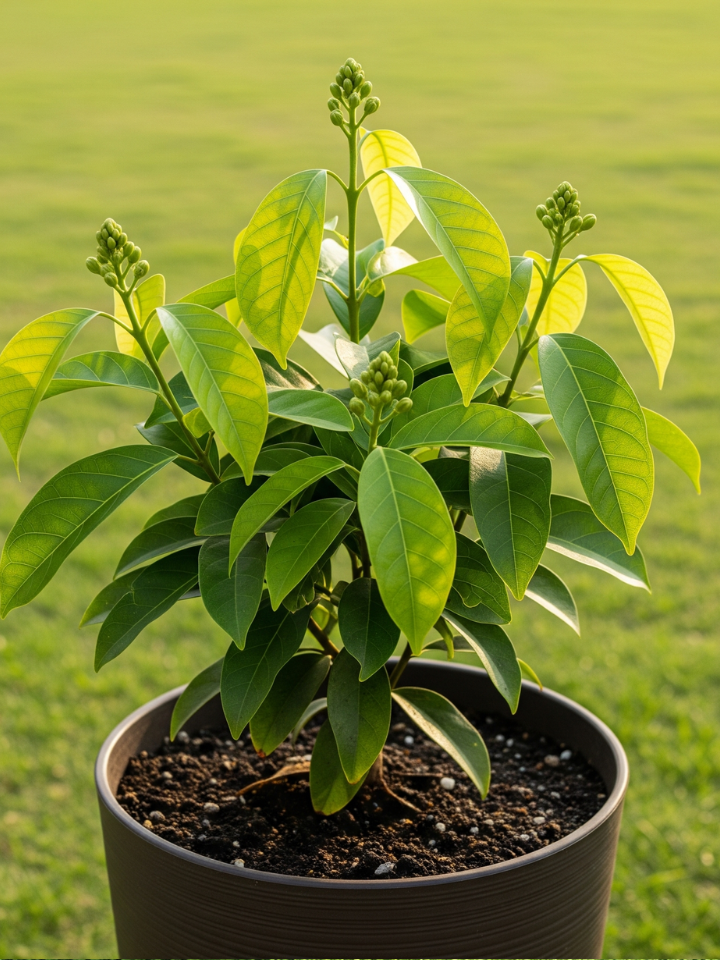
- Leaves. Shiny, leathery and dark green, 7–15 cm long, clustered at the tips of the branches. The tree stays green all year.
- Flowers. Small, bell-shaped and creamy white, hidden among the leaves. A healthy tree often carries flowers, young fruit and ripe fruit at the same time.
- Fruit. Round or oval, with thin, sandy-brown skin. Inside is soft, honey-brown, grainy flesh and a few shiny black seeds.
- Sap. Branches and unripe fruit bleed a white, sticky latex. In Central America this latex, chicle, was the original base of chewing gum.
Why choose the Large Size?
- A head start of a season or more. A bigger, older graft has more roots and branches, so it establishes quickly and reaches flowering size sooner than a small sapling.
- A stronger plant for the open garden. A thicker stem stands up to wind, heavy rain and the odd knock far better than a pencil-thin graft.
- Instant presence. It already looks like a young tree, which suits a new garden, a farmhouse boundary or a large pot beside a gate.
- The same long life. A grafted sapota tree keeps bearing for decades, and a single healthy tree can give hundreds of fruit a year once it matures.
Where should you plant a chikoo tree?
Sapota wants sun, warmth and good drainage. The best spots are:
- A garden bed, courtyard or farmhouse plot. In the ground it has room to become a proper tree. Plant it 6–8 m from walls, buildings and other trees, or about 4–5 m apart if you will prune it compact.
- A large drum or grow bag on the ground or roof. It is one of the few long-lived large garden pot plants that still fruits in a container. Use a half-drum or a 24-inch grow bag at least 60 cm deep, and prune it to 2–3 m. On a roof, check that the slab can take the weight, and browse other big fruit trees that can live in a terrace drum if space allows more than one.
- A sunny corner near the coast. Chiku tolerates salty breezes and slightly saline soil better than most fruit trees.
- Not indoors or on a shaded balcony. Without full sun it grows slowly and rarely flowers.
Will sapota grow in my climate?
It suits most of India's plains and coast and the warmer hills up to about 1,000 m. ICAR-CCARI puts the ideal range at about 15–38 °C with fairly high humidity. In warm, humid places such as Bengal, Odisha, Kerala and the Konkan coast, it flowers and fruits almost all year. In the drier north, it tends to give one main crop from spring flowering. Frost and long spells below about 10 °C damage young leaves, so in north India shelter young trees for their first two or three winters. It copes with a dry spell once established; standing water is the bigger danger.
Product Specifications
- Plant name: Chiku (Sapota) Plant – Large Size
- Botanical name: Manilkara zapota (syn. Achras zapota)
- Common names: Chiku, chikoo (Hindi, Gujarati, Marathi), sapota (south India), sofeda (Bengali), sapodilla
- Plant family: Sapotaceae
- Origin: Southern Mexico and Central America
- Plant type: Evergreen fruit tree
- Propagation of supplied plant: Grafted, usually on khirni (Manilkara hexandra) rootstock
- Size option: Large Size, a well-grown sapling, older and fuller than the standard size
- Leaves: Glossy, leathery, dark green, 7–15 cm long, clustered at branch tips
- Flowers: Small, bell-shaped, creamy white
- Fruit: Round to oval, brown-skinned, with sweet, grainy, honey-brown flesh and a few black seeds
- Time to first fruit: Grafted trees usually bear from the third or fourth year after planting; a Large Size plant may flower in its first or second year with you
- Fruiting season: Two main harvests, about February–June and September–October; almost year-round in humid regions
- Fruit ripening after picking: About 4–7 days at room temperature
- Growth habit: Upright, dense, rounded evergreen tree
- Growth rate: Slow to moderate
- Mature size: Up to about 8–15 m in open ground over many years; usually kept to 4–6 m in a home garden and 2–3 m in a large drum with pruning
- Suitable placement: Garden bed, courtyard, farmhouse, orchard, coastal garden; a sunny roof or yard in a large drum; outdoors only
- Light requirement: Full sun, at least six hours a day
- Water requirement: Moderate; water deeply when the top 5 cm is dry; no waterlogging
- Soil requirement: Deep, well-drained loam with organic matter; tolerates sandy, laterite and slightly saline soils
- Climate: Tropical and warm subtropical; about 15–38 °C; up to about 1,000 m; harmed by frost and prolonged cold
- Fertiliser: Compost or well-rotted manure twice a year; balanced NPK in split doses for bearing trees
- Common pests and problems: Leaf webber, hairy caterpillars, bud worm, mealybug, scale, fruit fly, sooty mould, Loranthus, fruit drop
- Maintenance: Low; light pruning, seasonal feeding, mulching
- Difficulty level: Easy to grow; patient to bring into full crop
- Suitable environment: Frost-free plains, coast and warm hills across India
- Safety: Not listed by the ASPCA; seeds are hard and hooked and should not be swallowed; unripe fruit contains latex
How do you plant and care for it?
- Planting time. June to September suits most of India, and TNAU recommends June to December in the south. In Bengal, plant at the start of the rains on raised ground, or in February–March if you can water through the summer.
- Planting. Dig a pit about 60 cm each way and fill it with garden soil, well-rotted manure or compost, and a handful of neem cake. Keep the graft union, the slight bulge low on the stem, at least 15 cm above the soil and never bury it. Stake the plant for the first year.
- Soil. Deep, well-drained loam is ideal, but sapota grows in most soils from sandy to red laterite, as long as water drains away. In a drum, use garden soil, compost and coarse sand in roughly equal parts, with plenty of holes in the base.
- Watering. Water well after planting and every few days until new leaves appear. After that, water deeply once or twice a week in dry weather and much less in the rains. Mulch the base to keep the roots cool.
- Feeding. Add compost or well-rotted manure at the start and end of the monsoon, increasing the amount each year. A balanced NPK fertiliser, split into two doses, helps a bearing tree hold its fruit.
- Pruning. Chiku needs little pruning. Remove branches below about 1 m, any shoots that sprout from below the graft, and upright water shoots. In a pot, pinch the tips to keep the tree low and bushy.
How many years does a chiku plant take to give fruit?
A grafted sapota tree usually begins to bear in the third or fourth year after planting, according to ICAR-CCARI. Because this Large Size plant is older, it may flower in its first or second year with you, but allow it a full season to settle before expecting a real crop. A seedling tree can take six years or more. Yields build steadily: ICAR-CCARI records about 700 fruit a year from a seven-year-old tree and over 1,000 from a ten-year-old one.
When is sapota in season?
In most of India there are two main harvests: about February to June and September to October. In humid regions, including coastal Bengal, a tree often carries a few ripe fruit in other months too. Fruit takes several months to mature from flower, so do not worry if you see flowers and hard green fruit on the same branch.
How do you know when chiku is ready to pick?
Sapota does not change colour much, so look for these signs:
- The skin turns from green-brown to a dull, sandy brown, and the scurfy brown coating rubs off easily.
- A gentle scratch with a fingernail shows yellowish-brown underneath, not green.
- The dried tip at the base of the fruit falls off at a touch, and the stalk bleeds little or no latex when cut.
Pick mature fruit with a short stalk and keep it at room temperature. It softens and sweetens in about four to seven days. Fruit eaten before it softens is astringent and sticky with latex.
A year with a sapota tree in Bengal
Our grafted saplings grow in the warm, humid Kolkata climate, and these timings suit most of the eastern plains.
February to April: flowers and the spring crop. The main spring harvest ripens. Water deeply every few days as the heat builds, and mulch the base.
May to June: fruit and heat. Keep picking. Feed after harvest. Young trees appreciate a little afternoon shade in their first summer.
July to September: planting season and new growth. The best months to plant, as long as the ground drains well. Flush of new leaves; watch for leaf webber and caterpillars.
September to October: the second harvest. The monsoon crop ripens. Clear fallen leaves and fruit to keep fruit fly down.
November to January: a quieter season. Growth slows. Water less often, and shelter young plants from cold winds in the north.
Why is my chiku plant dropping fruit, yellowing or not flowering?
- Young fruit dropping. Irregular watering, heat stress or hunger. Water deeply and regularly, mulch, and feed after each harvest.
- Yellow lower leaves. Waterlogging or a shortage of nutrients. Improve drainage and add compost.
- No flowers. Too much shade, a plant still settling in, or heavy nitrogen feeding. Give full sun and patience.
- Webbed, chewed leaves and shoots. Leaf webber or hairy caterpillars. Cut off webbed shoots and spray neem oil every seven to ten days.
- Black film on leaves. Sooty mould growing on the honeydew of mealybugs or scale. Treat the insects with neem oil and wash the leaves.
- Maggots in ripe fruit. Fruit fly. Pick fruit on time, clear fallen fruit and use pheromone traps.
- Leafy parasite growing on branches. Loranthus (mistletoe). Cut it out below the point of attachment.
Is the sapota tree safe around children and pets?
Sapodilla has no entry on the ASPCA lists of toxic or non-toxic plants. The ripe fruit is widely eaten, but the seeds are hard and hooked at one end and should never be swallowed, and unripe fruit is full of sticky latex. Keep fallen fruit and seeds away from young children and pets.
What to plant with chiku
Chikoo shares its love of sun and deep, well-drained soil with several other fruit trees. Add a lichi tree for the early-summer harvest, batabi lebu for the sunny end of the garden, and a lemon tree that crops in a pot near the kitchen door. For a home orchard that fruits through the year, browse our evergreen fruit trees that crop twice a year , and read which saplings to plant as the rains set in.
Plant a head start sapota tree this season
Order now and your plant can root in during the rains, well ahead of its first flowering. Every Large Size chiku is grafted, grown on and packed at our own nursery in West Bengal. Choose your sunniest spot, give it room and good drainage, and it will reward you with sweet, home-grown fruit for many years.



































There are no reviews yet.