Pomelo is Citrus maxima (older name Citrus grandis), a member of the citrus family, Rutaceae. It is native to South-East Asia and has long been grown across eastern India and Bangladesh. It is also one of the ancestral citrus species: grapefruit arose as a cross between pomelo and sweet orange. In English it is also called pummelo or shaddock. In Bengali it is batabi lebu (বাতাবি লেবু), or jambura in Bangladesh; in Hindi chakotra; in Marathi papnas, which gives this listing its name; in Malayalam kambili naranga; and in Telugu pampara panasa.
What you will notice first:
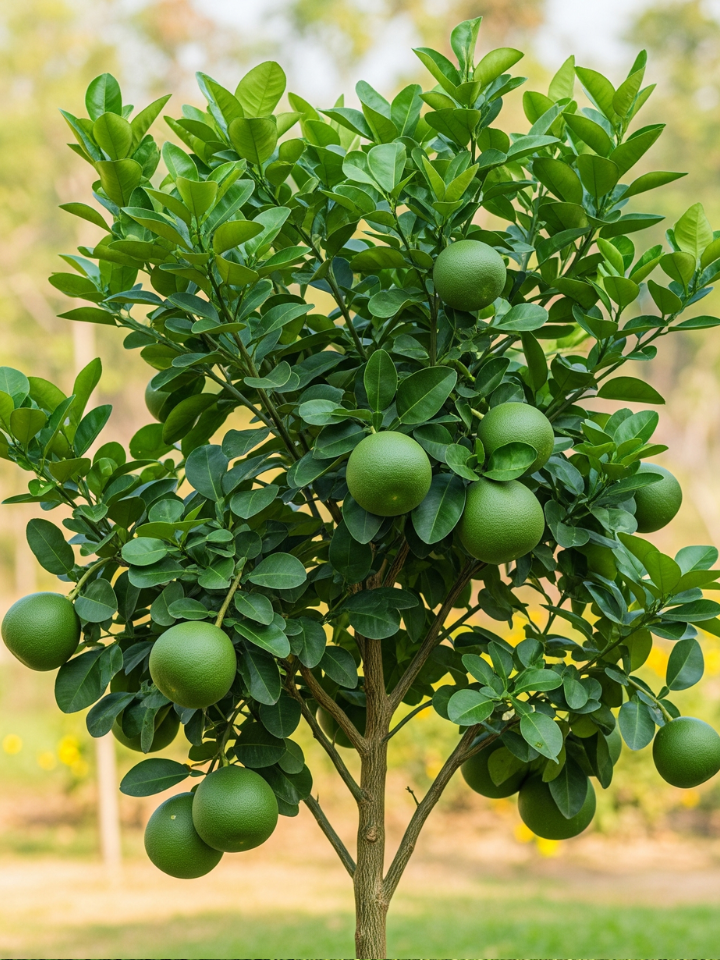
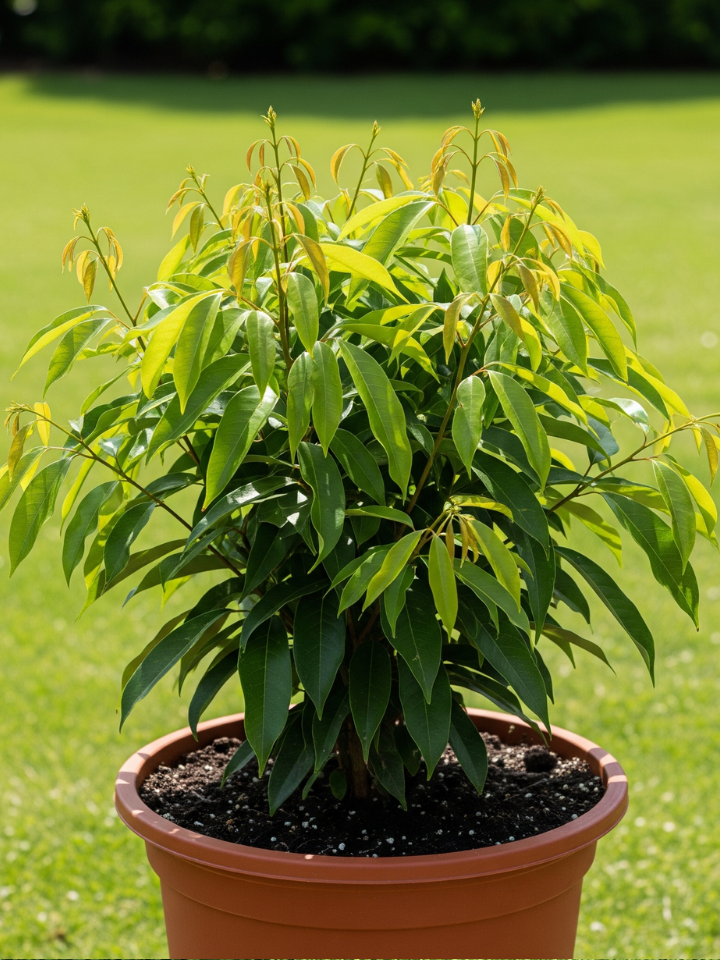
- Leaves. Large, glossy, leathery and dark green, with a broad "wing" on the leaf stalk that makes each leaf look doubled. Crush one and it smells of fresh citrus.
- Branches. A rounded, spreading crown. Young shoots may carry short thorns, especially on seedlings.
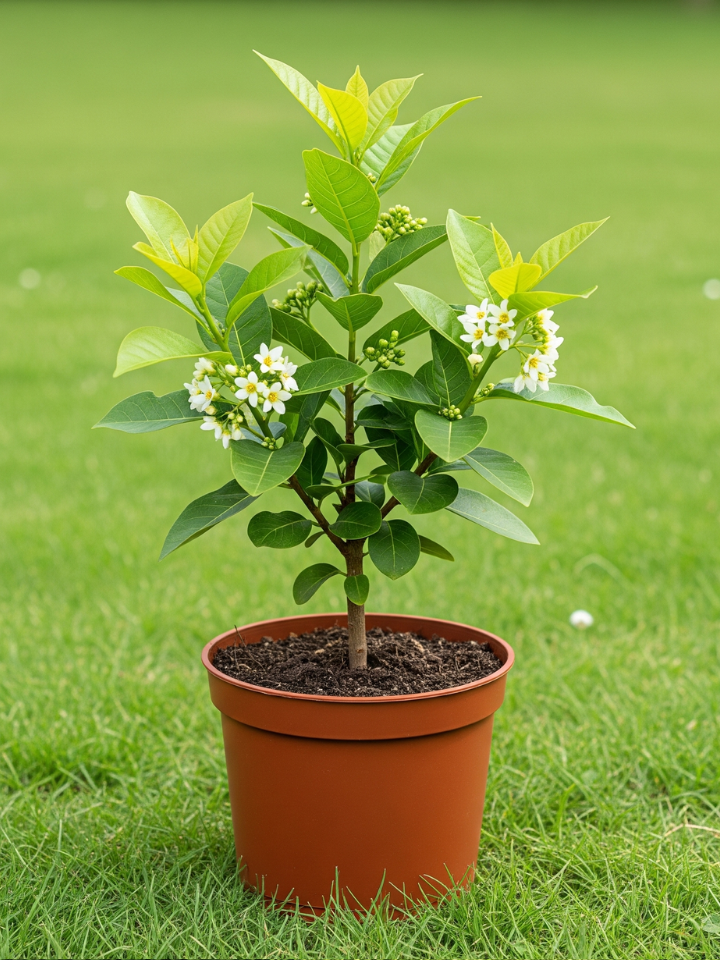
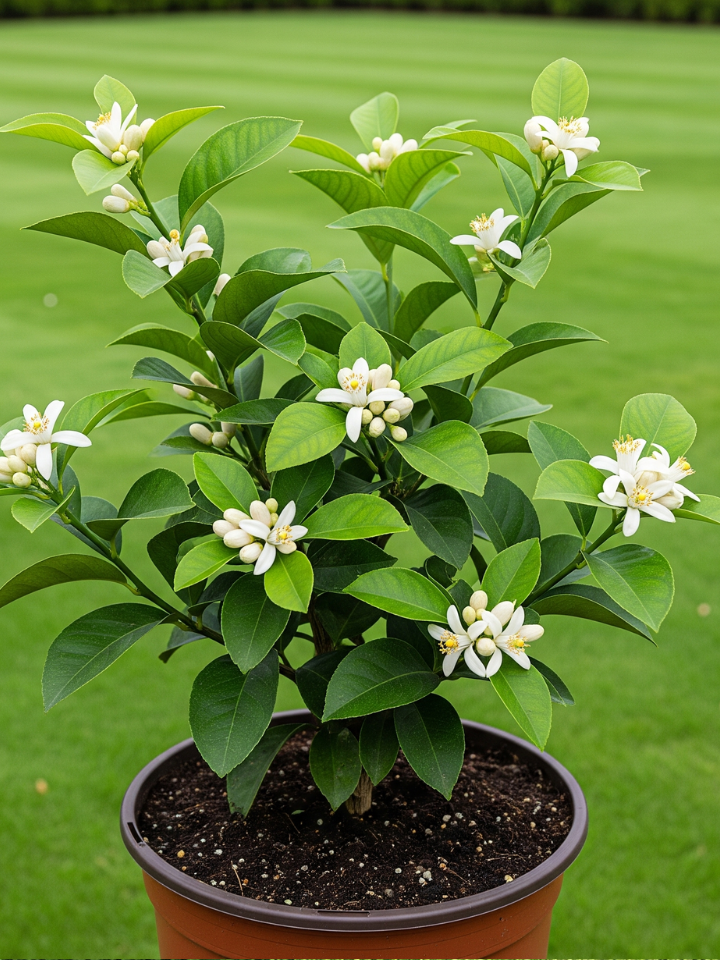
- Flowers. Big, waxy white flowers in small clusters, with a heady, sweet scent that carries across the garden on a still evening.
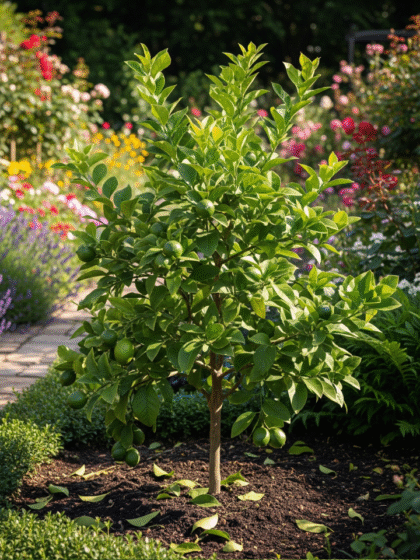
- Fruit. Round to pear-shaped and pale green to yellow, often 15–25 cm across and 1–2 kg in weight. Under a thick, spongy white pith lie large segments of juicy flesh, white, pale yellow or pink depending on the variety, with a mild sweet-tart flavour and none of grapefruit's sharp bitterness.
Why grow a batabi lebu tree at home?
- Fruit that feeds the whole family. One large pomelo is enough for a bowl of batabi lebu makha for four, and a healthy tree gives a steady crop every year.
- Spring fragrance. The flower flush in February and March scents the whole garden, and bees and butterflies come with it.
- Handsome all year. Glossy evergreen leaves make it an attractive tree even when it is not in fruit.
- Fairly compact for a fruit tree. Much smaller than a mango or jackfruit, so it suits a medium garden or a large terrace drum.
- Part of Bengal's autumn. Batabi arrives in the market as the rains end, and a tree of your own brings that season home.
Where should you plant a pomelo tree?
Sun, drainage and shelter from strong wind matter most. A batabi tree suits:
- A sunny garden, courtyard or farmhouse. The ground is where it grows best and bears most. Leave 5–6 m from the house and from other trees so the crown gets sun on all sides. Among the best garden plants for a family that enjoys fresh fruit, it is one of the easiest citrus trees to live with.
- A sunny terrace, in a half-drum. A grafted sapling fruits well in a large container if it gets full sun and regular water. Pomelo belongs on any list of plants for terrace gardens where there is room for a half-drum at least 45–60 cm deep; stand it on bricks and check that the roof can carry the weight of wet soil and fruit.
- Not on a balcony or indoors. It needs direct sun and open air to flower and set fruit.
Product Specifications
- Plant name: Papnus Fruit Plant (Batabi) / Pomelo Plant
- Botanical name: Citrus maxima (syn. Citrus grandis)
- Common names: Pomelo, pummelo, shaddock, batabi lebu and jambura (Bengali), chakotra (Hindi), papnas (Marathi), kambili naranga (Malayalam), pampara panasa (Telugu)
- Plant family: Rutaceae (citrus family)
- Origin: South-East Asia; long grown in eastern India and Bangladesh
- Plant type: Evergreen citrus fruit tree
- Foliage: Large, glossy, leathery dark green leaves with a broadly winged leaf stalk; citrus-scented when crushed
- Flowers: Large, waxy, white and strongly fragrant, in small clusters
- Flowering season in India: Main flush about February to April on the eastern plains; sometimes a smaller later flush
- Fruiting season in India: Ripe fruit about August to November; fruit matures in about five to six months from set
- Years to first fruit: About three to four years for grafted or air-layered plants; six to eight years for seedlings
- Fruit: The largest citrus fruit; round to pear-shaped, pale green to yellow skin, thick white pith, often 15–25 cm across and 1–2 kg; white, pale yellow or pink flesh
- Growth habit: Small to medium tree with a rounded, spreading crown
- Growth rate: Moderate
- Mature size: About 2–3 m in a half-drum with pruning; about 4–5 m in the ground with pruning; larger if left unpruned
- Suitable placement: Garden, courtyard, farmhouse, large sunny terrace in a half-drum; outdoors only
- Light requirement: Full sun, at least six hours of direct sun a day
- Water requirement: Moderate and regular; water deeply when the top 3–5 cm dries; does not tolerate waterlogging
- Soil requirement: Deep, fertile, well-drained loam or sandy loam, slightly acidic (about pH 5.5–6.5)
- Temperature: Thrives at about 25–32 °C; young plants are damaged by frost
- Fertiliser: Compost or cow dung manure with a balanced fertiliser in three split doses (about February, June and September); citrus micronutrient mix if leaves yellow between the veins
- Common pests and problems: Citrus leaf miner, lemon butterfly caterpillar, scale, aphids, mealybug, citrus canker, fruit drop, root rot from waterlogging
- Maintenance: Low to moderate; seasonal feeding, steady watering, yearly light pruning
- Difficulty level: Easy in the ground; moderate in a container
- Suitable environment: Warm, humid tropical and subtropical plains across India; frost-free areas
- Special features: Largest citrus fruit; fragrant spring flowers; attracts bees and butterflies
- Safety: May carry thorns on young shoots; close citrus relatives are listed by the ASPCA as toxic to dogs, cats and horses; not classed as pet-safe
Can you grow a pomelo plant in a pot?
Yes. Pomelo is one of the better citrus trees for a large container, as long as the container is big enough.
- Container. Start in a 16–18 inch pot for the first year, then move it to a half-drum or a 24-inch grow bag with plenty of drainage holes.
- Soil. Mix two parts garden loam, one part well-rotted compost or cow dung manure and one part coarse sand. Pomelo prefers slightly acidic soil (around pH 5.5–6.5) and hates heavy, sticky clay that stays wet.
- Watering. Keep the soil evenly moist but never soggy. In April and May a container tree may need water every day; in the rains, water only when the top soil dries.
- Pruning. When the sapling is about 60–75 cm tall, pinch the tip so it forms three or four main branches. Keep the tree to about 2–3 m in a drum.
- Fruit load. On a young potted tree, keep only two or three fruits for the first crop and remove the rest while they are the size of a marble.
How do you care for a batabi lebu plant?
- Sunlight. Full sun all day gives the best flowering and the sweetest fruit.
- Watering. Regular, deep watering is the secret with citrus. Letting the soil swing between bone-dry and waterlogged causes leaf drop, fruit drop and split fruit.
- Feeding. Give compost or cow dung manure with a balanced fertiliser in three split doses: about February before flowering, June at the start of the rains, and September as the fruit swells. Yellow leaves with green veins usually point to a shortage of zinc or iron; a citrus micronutrient mix corrects it.
- Pruning. Prune lightly after harvest. Remove dead, crossing and inward-growing branches, and cut off any shoots from below the graft joint, since these come from the rootstock and will not bear good fruit.
- Mulch. A layer of dry leaves or straw keeps the roots cool and saves water, but keep it a hand's width away from the trunk.
When does a pomelo tree flower and fruit in India?
On the plains of eastern India, the main flower flush comes from about February to April, and some trees flower again in a smaller flush later in the year. Fruit takes roughly five to six months to mature after it sets, so ripe batabi is ready from about August to November. A ripe pomelo feels heavy for its size, its skin turns from deep green to pale green or yellow, and it gives off a clear citrus scent at the stalk end. A grafted or air-layered sapling usually bears in about three to four years, while a seedling can take six to eight.
A year with batabi lebu in Bengal
Our saplings are raised in the same humid Kolkata climate described here, and you can see the batabi saplings we raise in Kolkata gardens before ordering.
June to August: planting. The monsoon is the best time to plant. Warm, moist soil helps the roots settle quickly; plant on a slight mound if your garden holds water after heavy rain.
August to November: harvest. Batabi ripens as the rains ease. In Bengali homes the first fruit becomes batabi lebu makha, the pink or white segments tossed with mustard oil, green chilli, salt and a pinch of sugar.
December to January: rest. Growth slows in the cool months. Water less and give the tree a light clean-up after the last fruit is picked.
February to April: flowering. Clusters of white flowers open and the garden smells of citrus blossom. Keep watering steady, because a dry spell now makes the young fruit drop.
April to July: fruit growth. Small green fruits swell quickly through the hot months. Feed at the start of the rains and support any heavy fruits on young branches.
Why are my pomelo leaves curling or the fruit dropping?
- Curled, silvery leaves with winding trails. Citrus leaf miner. Pick off badly affected leaves and spray neem oil on new flushes every seven to ten days.
- Leaves eaten overnight. The caterpillar of the lemon butterfly, which looks like a bird dropping when young. Pick the caterpillars off by hand.
- Sticky leaves, black soot, or scales and white fluff on stems. Scale insects, aphids or mealybugs. Wipe them off and spray neem oil until clear.
- Raised, corky brown spots on leaves and fruit. Citrus canker, a bacterial disease that spreads in wet weather. Cut off affected twigs, burn them, and ask a local expert about a copper spray.
- Small fruits falling in large numbers. Usually uneven watering, heat stress or too heavy a crop on a young tree. Some natural drop after flowering is normal.
- Yellowing leaves and a sick tree after heavy rain. Waterlogging and root rot. Improve drainage at once.
Is the pomelo tree safe around children and pets?
The fruit is everyday food across India, but a few cautions apply. Young shoots may have thorns, and a ripe fruit can weigh over a kilogram, so pick fruit before it falls. Pomelo has no separate entry on the ASPCA plant lists, but the ASPCA lists its close relatives, including grapefruit, lemon and orange, as toxic to dogs, cats and horses because of the essential oils and psoralens in the peel, leaves and stems. We therefore do not class it as a pet-safe plant. Keep pets from chewing the leaves, bark and peel.
What to plant with a pomelo tree
A pomelo anchors a small citrus corner. Add a lemon plant for a smaller pot nearby for everyday kagzi lemons, a peyara tree for the same sunny garden to crop through the winter, and a chiku tree for the far corner of the garden for sweet fruit in the cooler months. For more ideas, browse our citrus and fruit saplings for Indian gardens, or read about the plants that settle in best during the Indian monsoon when you plan what to plant this season.
Plant your own batabi lebu tree this season
Order during the rains and your sapling has a full growing season to settle in before its first winter. Every plant is raised and packed at our own nursery and sold through our online plant shop, run by the family that grows the trees. Give it your sunniest spot and soil that never stays waterlogged, and in a few springs you will have fragrant blossom, followed by giant batabi from your own tree.































There are no reviews yet.