It is a flowering liana from the Malpighiaceae family, native to India and the forests of South and Southeast Asia. Bengali homes call it madhabilata, Hindi speakers madhavi lata, and in Kannada it is vasantadooti, the "messenger of spring". Sanskrit poetry knows it as madhavi, and in English it goes by hiptage or helicopter flower.
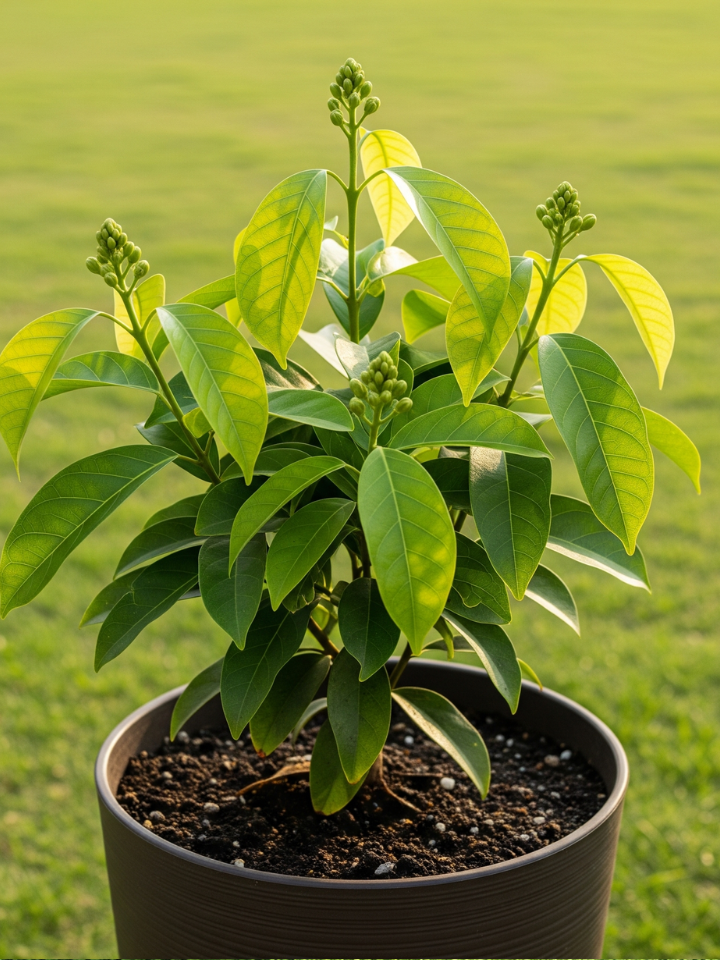
The plant starts as a scrambling shrub and given something to lean on, becomes a strong woody climber with long, arching stems. Its leaves grow in opposite pairs and are lance-shaped, leathery and glossy green; new shoots often emerge in a warm coppery-pink before hardening off.
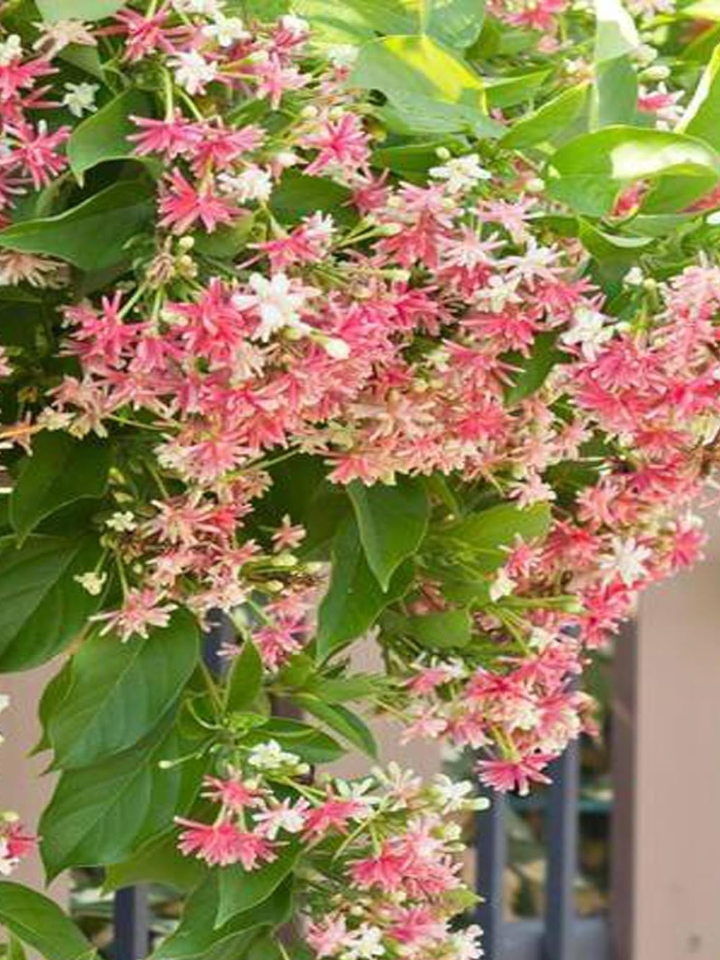
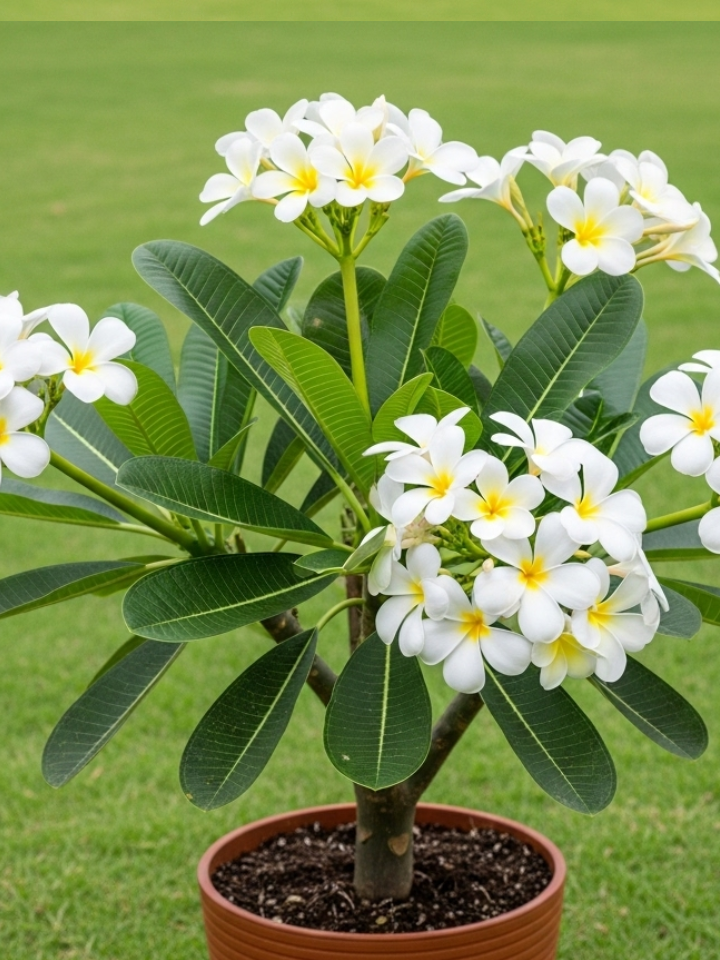
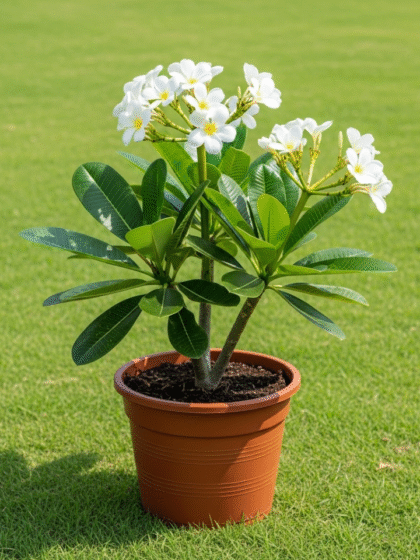
The flowers are what people remember. They hang in clusters of ten to thirty along the stems, each about 2–3 cm across with five frilled, fringed petals. Four are white or faintly pink, and the upper one carries a vivid yellow patch, which makes each bloom look lit from within. A single curved stamen sweeps out from the centre.
Then there is the scent: sweet, fruity and honey-like, strong enough to carry across a courtyard on a still spring morning. Unlike many fragrant climbers that save their perfume for night, this one is noticeable during the day, so bees and butterflies arrive while you are outside to enjoy them too.
After flowering comes the feature that gives the genus its name. Hiptage comes from the Greek for "to fly", and each fruit carries three papery wings that spin like a helicopter rotor when they fall.
What it is not: a houseplant or a small-balcony plant. It needs sun, space and a solid frame to climb.
Where does Madhabilata grow best?
Sunlight and space decide everything. Train it over a gate, an entrance arch or a pergola, along a boundary wall or up a sturdy grille on a large terrace. The best spot is one you walk past every day, because the fragrance is half the reason to grow it; a gate or porch works especially well, and ideas for greeting guests with plants at a home entrance show how to layer a climber with pots at ground level.
It is among the most rewarding outdoor climbing plants for a garden bed, where it can reach full size. On a rooftop, a 16–20 inch planter against a railing lets it join other plants that turn a bare terrace green. Only a large, open, sunny balcony with a strong grille will do; for smaller spaces, browse more compact plants for balcony in India instead.
As a spring bloomer it also fills a useful slot among flowering vines for Indian homes, flowering just before the monsoon climbers take over.
Product Specifications
- Plant name: Hiptage Plant (Madhavi Lata)
- Botanical name: Hiptage benghalensis (syn. Hiptage madablota)
- Also known as: Madhabilata, Madhabi Lata, Madhavi, Vasantadooti, helicopter flower
- Plant family: Malpighiaceae
- Origin: India, South and Southeast Asia
- Plant type: Woody flowering climber (liana); can be pruned into a large shrub
- Foliage: Opposite, lance-shaped, leathery, glossy green leaves; new growth often coppery-pink
- Flowers: Clusters of 10–30 frilled flowers, each about 2–3 cm; white or faintly pink with a yellow blotch on one petal
- Fragrance: Strong, sweet and fruity, noticeable during the day
- Flowering season in India: Mainly late winter to spring, roughly February to April in Bengal, with occasional flowers at other times
- Fruit: Three-winged samara that spins as it falls
- Growth habit: Scrambling climber; needs a trellis, arch, pergola or grille
- Growth rate: Fast in warm weather
- Suitable placement: Gate, entrance arch, pergola, boundary wall, large terrace or garden bed; outdoors
- Light requirement: Full sun, five to six hours or more; tolerates light afternoon shade
- Water requirement: Moderate; water when the top inch dries, less in winter
- Soil requirement: Fertile, loose, free-draining garden mix with compost
- Temperature: Roughly 15–38 °C; protect young plants from frost
- Fertiliser: Monthly compost February to September; light potash feed while budding
- Pruning: Immediately after flowering
- Difficulty level: Easy
- Suitable environment: Warm, sunny climates; well suited to Bengal and most of the Indian plains
- Attracts: Bees and butterflies
- Pet and child safety: No confirmed pet-safety data; not listed by the ASPCA. Keep away from pets that chew plants
How do you grow Madhavi Lata in a pot?
- Five to six hours of direct sun a day. In shade it grows leaves and long stems but few flowers.
- Water when the top inch of mix feels dry: every one to two days in peak summer for a potted plant, every five to seven days in winter. Established plants in the ground need far less.
- A loose, fertile, free-draining mix: two parts garden soil, one part compost and one part cocopeat or coarse sand.
- Start in a 12–14 inch pot and move up to 16–20 inches, or plant in the ground. Always use a drainage hole.
- Put the trellis, arch or wire in place on day one. Tie young stems loosely and weave them through; the plant scrambles rather than clinging on its own.
- A handful of compost or vermicompost every month from February to September, with a light potash feed as buds form. Too much nitrogen gives leaves instead of flowers.
- Prune right after flowering ends, cutting back long, wayward stems and thinning crowded growth. Pruning later removes next spring's flowering wood.
- Pick up fallen winged fruits so seedlings do not appear in nearby beds.
- Happiest at roughly 15–38 °C. It handles Indian summer heat well; young plants need shelter from frost in the far north.
When does Madhavi Lata flower? A year with it in Bengal
The plant is forgiving; the seasons set its rhythm. These notes come from growing it at our plant nursery in West Bengal.
Late winter and spring, February to April. Peak flowering. Clusters open over several weeks and the scent is at its strongest on warm mornings. Keep the soil lightly moist and feed with potash as buds swell.
Early summer, May to June. Flowering tapers and winged fruits form. This is the time to prune. Water well through the heat; alongside other flowers that carry spring into the summer months, it may throw a few late clusters.
Monsoon, July to September. Fast leafy growth. Tie in new stems, make sure pots drain after heavy rain and pick off spotted leaves.
Autumn, October to November. Growth slows and the stems ripen into next season's flowering wood. Occasional early flowers are normal.
Winter, December to January. Water less, skip heavy feeding and watch for the first buds, a sign that spring is on the way.
Why is my Madhabilata not flowering? Common problems and fixes
- Plenty of leaves, no flowers. Usually too little sun, pruning at the wrong time or too much nitrogen. Move it into full sun, prune only after flowering and feed with compost plus a little potash.
- Young plant, no buds yet. New plants spend their first season building roots and stems. Most flower well from their second spring.
- Yellowing leaves. Often overwatering or poor drainage, especially in the rains. Let the top inch dry between waterings.
- Sticky shoots or tiny insects. Aphids or mealybugs on soft new growth. Wash them off and spray diluted neem oil weekly for three weeks.
- Dull spots on leaves in the monsoon. Fungal leaf spot. Remove affected leaves, improve air flow and avoid wetting the foliage.
- Stems sprawling everywhere. It needs a firmer support and regular tying in. Cut back the longest runners after flowering.
Is Madhavi Lata safe for pets and children?
There is no confirmed answer. The ASPCA database does not list Hiptage as either toxic or non-toxic, and no reliable veterinary data exists for it. It is also used in traditional medicine, which means its tissues are biologically active. The safest course is to treat it as not pet-safe: keep it out of reach of dogs and cats that chew plants, and teach children not to eat leaves, flowers or seeds.
For a fragrant climber in a home with a curious pet, a true jasmine is the better choice, since the ASPCA lists Jasminum species as non-toxic.
Companions for a fragrant spring gate
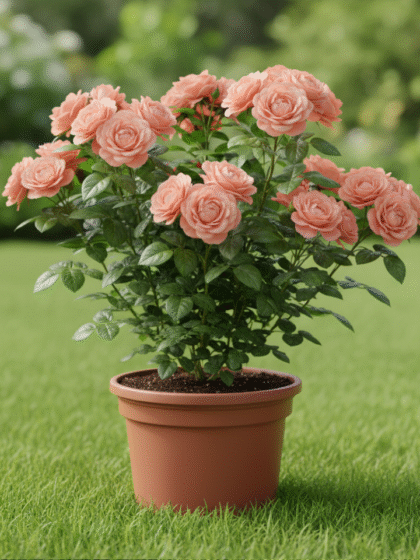
Train a climbing rose for the same arch on the other side of the frame and the two flower within weeks of each other. At ground level, a pot of gandharaj (gardenia) with its creamy blooms takes up the fragrance as its season ends. To cover the rest of a boundary wall in green all year, add a leafy wall creeper for year-round cover.
For a wider mix of blooms through the year, compare our potted flowering plants.
Bring home the scent of a Bengal spring
Order a Madhabilata plant now and it has the season to settle in before its first flowers. Every plant is raised and packed by the team that grows it.





















There are no reviews yet.