Sankrant vel is the Marathi name for Pyrostegia venusta, a woody climber of the trumpet-vine family, Bignoniaceae. It is native to southern Brazil, Paraguay, Bolivia and north-eastern Argentina, and has long been grown in Indian gardens for its winter colour. The name comes from its timing: across much of India the vine is in full flower around Makar Sankranti. In English it is called flame vine, orange trumpet vine or flaming trumpet, and in Hindi it is sometimes known as mirch bel.
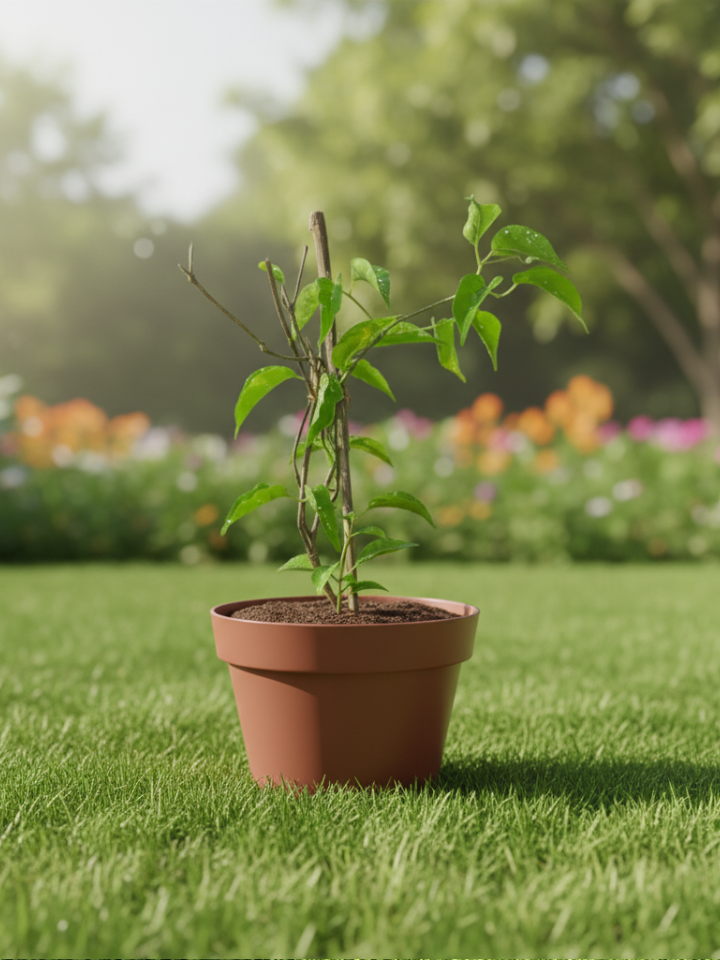
Unlike a climbing rose, it does not need to be tied in along its whole length. Each leaf carries a small, three-branched tendril that coils around wire, mesh or a trellis bar and grips rough brick. Guide the first shoots to the support and the vine pulls itself up from there.
What you notice first:
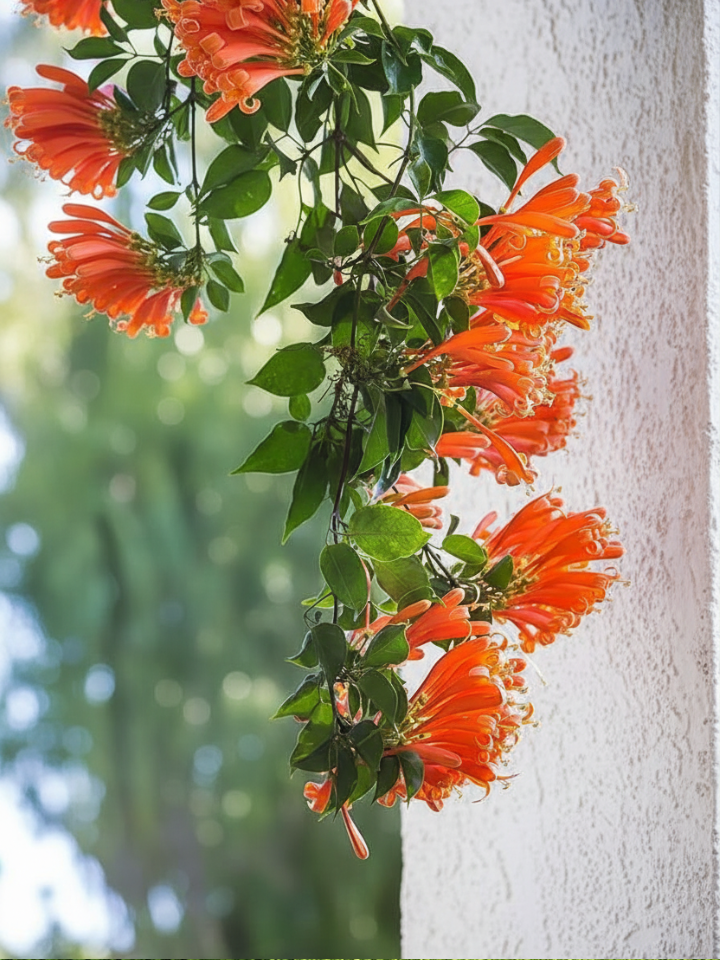
- Flowers. Slim orange tubes, 5–7 cm long, with tips that curl back and stamens that poke out. They hang in dense, drooping clusters, so a vine in full flower looks like a curtain of flame.
- Leaves. Glossy, mid-green and opposite, each with two or three oval leaflets 4–8 cm long. The middle leaflet is often replaced by a tendril.
- Stems. Slender and green when young, turning brown and woody with age.
- Habit. Evergreen in most of India, dense and quick to spread.
- Seed. It rarely sets pods in Indian gardens, so nursery plants are raised from cuttings or layers.
The flowers carry little or no scent. This is a vine grown for colour, and at its peak few climbers match it
Where should you grow sankrant vel?
Outdoors, in full sun, on something strong enough to carry a heavy vine.
- Over a pergola, carport or gate arch. The flower clusters hang downwards, so an overhead frame shows them off best. Among plants for outside home gates and porches, few put on a winter display this bright.
- Along a boundary wall or fence. Fix wire mesh or horizontal wires, or let the tendrils grip rough brick. Few wall climbing vines cover as much ground in a single season.
- On a terrace. Grow it in a half drum or large planter against a parapet trellis. It is among the best plants for a terrace screen, hiding a water tank or a neighbour's view behind a wall of orange.
- On a sunny balcony grille. A south- or west-facing balcony suits it. It earns a place among plants for a west-facing balcony in India, where afternoon heat defeats softer climbers.
- Not indoors or in shade. Without direct sun it makes long, leafy stems and almost no flowers.
How do you train a flame vine on a support?
- Put the support up first. A pergola, arch, strong trellis or taut wires, fixed before planting. A mature vine is heavy, so avoid flimsy bamboo frames.
- Guide the first shoots. Tie young stems loosely to the support with soft twine until the tendrils take hold, usually within a few weeks.
- Spread the stems out. Lead stems sideways and across the top of the frame. The vine flowers most heavily at the top of its support and at the ends of its stems, so width means more flowers.
- Keep it in bounds. Do not let it climb into trees, under roof tiles, into gutters or along electrical wires. Cut back any stray shoots as soon as you see them.
- Expect quick cover. In a sunny spot, a young plant usually covers a small arch or balcony grille within one or two growing seasons.
Product Specifications
- Plant name: Sankrant Vel (Flame Vine) Plant
- Botanical name: Pyrostegia venusta
- Also known as: Flame vine, orange trumpet vine, flaming trumpet, mirch bel
- Plant family: Bignoniaceae (trumpet-vine family)
- Origin: Southern Brazil, Paraguay, Bolivia and north-eastern Argentina
- Plant type: Evergreen, woody, perennial flowering climber
- Foliage: Glossy, mid-green opposite leaves of two or three oval leaflets, 4–8 cm long
- Climbing method: Three-branched tendrils that coil around supports and grip rough surfaces
- Flowers: Orange, tubular, 5–7 cm long, in dense drooping clusters
- Fragrance: Little or none
- Flowering season in India: Mainly December to March, peaking in January and February
- Growth habit: Vigorous, spreading climber; flowers mostly at the top of its support
- Growth rate: Fast
- Mature size: 2–3 m in a large pot with yearly pruning; 5 m or more in the ground
- Propagation of supplied plant: [CONFIRM cutting or air layer]
- Suitable placement: Pergola, gate arch, carport, boundary wall, fence, terrace parapet or sunny balcony grille; outdoors only
- Light requirement: Full sun, six hours or more of direct light
- Water requirement: Moderate; drought-tolerant once established in the ground
- Soil requirement: Fertile, free-draining mix of garden soil, compost and coarse sand
- Support needed: Yes; a sturdy pergola, arch, trellis, mesh or wires
- Temperature: Grows best at 15–35 °C; protect young plants from frost
- Fertiliser: Monthly compost March to September; potash-rich feed in October and November
- Pruning: Once a year after flowering (March or April), plus light trimming of stray shoots
- Common pests: Aphids and mealybugs on young growth; otherwise largely trouble-free
- Maintenance: Low to moderate (yearly pruning is essential)
- Difficulty level: Easy
- Suitable environment: Sunny, open outdoor spaces across most of India
- Pet safety: Not listed by the ASPCA; not confirmed pet-safe
How do you care for sankrant vel in a pot?
- Sunlight. Six hours or more of direct sun. Full sun gives the heaviest flowering.
- Pot. Start in a 12–14 inch pot and move to an 18–24 inch pot or half drum within a year. Drainage holes are essential.
- Soil. Two parts garden soil, one part compost or vermicompost and one part coarse sand. It needs free drainage and dislikes heavy, waterlogged clay.
- Watering. Water deeply when the top 3–4 cm feels dry. Once planted in the ground and settled, it copes well with dry spells.
- Feeding. Add compost once a month from March to September while it grows. In October and November, switch to a potash-rich feed as buds form, and hold back nitrogen, which pushes leaves at the expense of flowers.
- Pruning. Once a year, right after flowering ends in March or April. Shorten long stems by about a third, remove dead and tangled growth and thin crowded shoots. Trim stray stems through the rains, but avoid hard pruning after September, or you will cut off the shoots that carry the winter flowers.
- Repotting. Every two years in March, or top-dress with fresh compost once it is in its final container.
When does sankrant vel flower in India?
Mainly from December to March, with the peak in January and February. In the warm plains of the east and south, the first clusters can open in late November; in the north, flowering tends to start later and can be cut short by cold snaps. Blooms last for several weeks on the vine, and fallen flowers often carpet the ground below.
A young plant set out before the monsoon usually flowers in its first or second winter, once its stems have reached the top of the support.
A year with a flame vine in Bengal
These notes come from the Bengal nursery where we raise our flame vines, in the warm, humid climate of Kolkata.
March and April: prune and feed. Once the last flowers drop, prune, clear old mulch and add compost. New shoots follow within two to three weeks. Water more often as the heat builds.
May and June: fast growth. The vine puts on most of its length now. Guide new stems across the support, and water pots daily in the hottest weeks.
July to September: growing through the rains. Check that pots drain freely, trim wayward shoots and watch for mealybugs on soft growth. Stop any heavy pruning by the end of September.
October and November: buds forming. Clusters of green buds appear at the stem tips. Give a potash-rich feed and water less as the air cools.
December to February: the main show. The vine turns orange from end to end, and it is one of the few flowers that bloom in late winter with enough reach to cover a whole wall. The colour peaks in January and usually holds into February, sometimes March.
Why is my sankrant vel not flowering? Common problems and fixes
- Lots of leaves, no flowers. Usually too little sun, too much nitrogen, a very young plant or pruning done in autumn. Move it into full sun, switch to a potash-rich feed from October and prune only after flowering.
- Flowers only at the top, bare stems below. This is the vine's natural habit. Spread stems sideways, prune after flowering to encourage branching lower down, and plant a lower shrub at the base.
- Yellow leaves in the rains. Waterlogging. Improve drainage, raise pots on feet and let the soil dry slightly between waterings.
- Leaves scorched or dropping in a cold snap. Frost and nights below about 5 °C damage young growth in north India. Shelter young plants in their first winter; established vines regrow in spring.
- Sticky, cottony insects on young shoots. Aphids or mealybugs. Wash them off with a strong spray of water and follow with neem oil every five to seven days.
- The vine is taking over. Prune it hard straight after flowering and lead new growth back onto the support.
- Leaves dropping after delivery. Transit shock. It settles within two to three weeks in a sunny spot.
Is sankrant vel safe for pets and children?
It is not confirmed safe. The ASPCA does not list Pyrostegia venusta either way, and a few plant databases describe it as toxic without clear evidence. Treat it as you would any unfamiliar garden plant: train it where pets and small children will not chew the leaves or flowers, and call a vet if a pet eats a large amount. If you need a climber that is confirmed non-toxic, a rose trained on the same frame is a safer choice.
What to grow with a flame vine
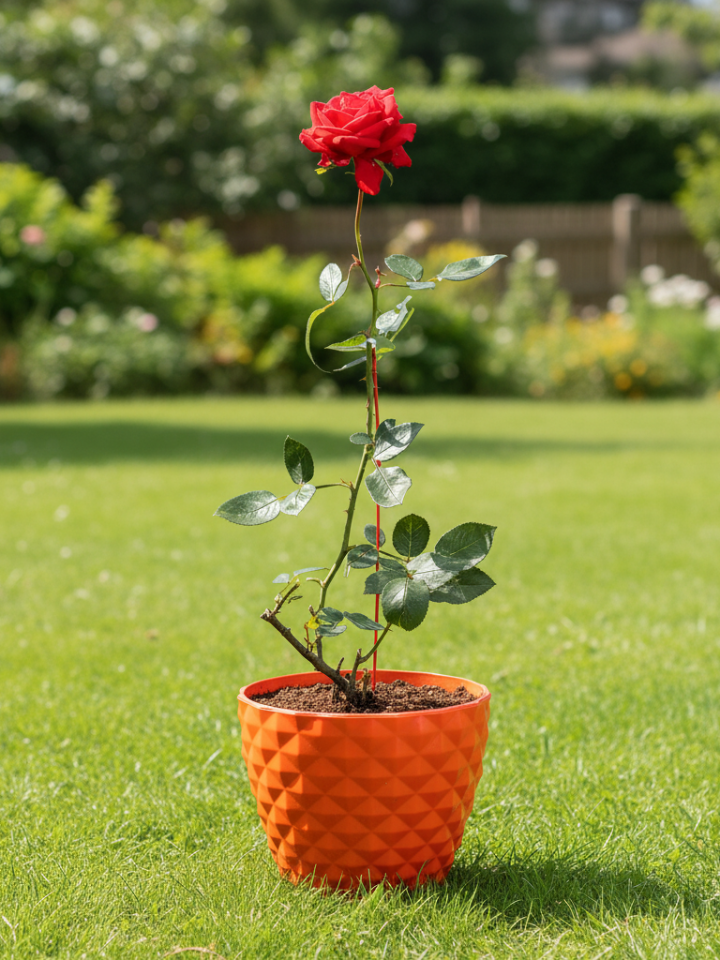
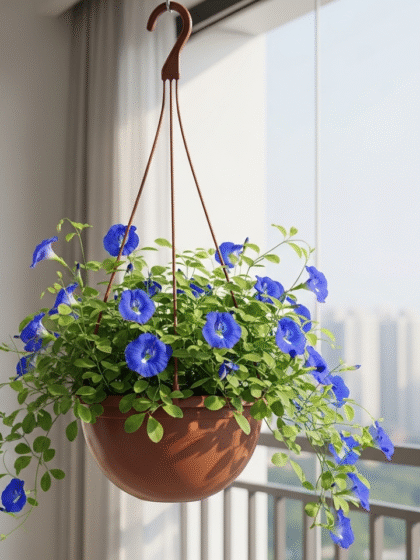
This vine gives you winter colour; a few companions carry the display through the rest of the year. Train a climbing rose that shares the same winter months on the next arch for red or pink against the orange. For the hot months, when the flame vine is growing rather than flowering, add a bougainvillea for summer colour on the same sunny wall. Run blue aparajita to keep the trellis in flower through the rains alongside it. Our guide to sun-loving plants for Indian gardens has more ideas for the brightest corners of a garden or terrace.
Get it on the wall before winter
Order now and plant it in early autumn or before the next monsoon, so it has time to climb before its first flowering season. Every plant is raised and packed upright for the journey by a plant selling website run by the family that grows the plants. Want more colour for beds and pots? Browse our fast growing flowering plants for quick results.





























There are no reviews yet.