English ivy is Hedera helix, an evergreen climbing and trailing vine of the ivy family, Araliaceae, the same family as aralia and schefflera. It is native to Europe, western Asia and North Africa and is also called common ivy or European ivy. A close cousin, Himalayan ivy (Hedera nepalensis), grows wild in the Indian hills, which is why ivy feels at home in a Darjeeling or Shimla garden but needs gentler handling on the plains.
What you notice first:
- Leaves. Glossy, dark green and usually three- to five-lobed, 4–10 cm long, with paler veins. Variegated forms are edged or marbled in cream or white.
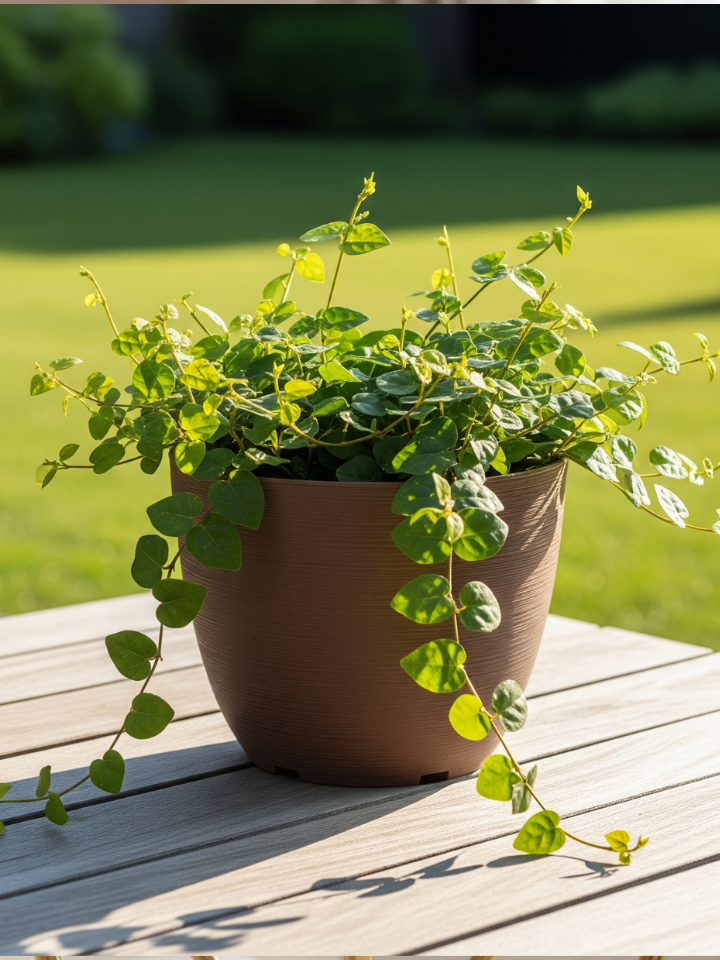
- Stems. Thin and flexible, often reddish when young. They trail over the edge of a pot or climb whatever they touch.
- Aerial rootlets. Tiny roots along the stem that grip bark, brick, moss and wooden frames. This is how it climbs without tendrils.
- Two forms. The plant sold in nurseries is the young, climbing form with lobed leaves, and in a pot it stays that way. Only after years of climbing high outdoors does it change to an adult form with plain oval leaves, small greenish flowers in autumn and black berries. That almost never happens indoors.
This is a foliage plant. You grow it for its cascade of leaves, which stays green all year when the plant is happy.
Is English ivy an indoor plant in India?
On the plains, yes. Most of India is hotter than this vine likes, so it does best inside the home, in a bright room that stays reasonably cool, away from hot walls, glass that bakes in the afternoon and the direct blast of an air conditioner.
In cool hill towns such as Darjeeling, Shillong, Shimla and Ooty, and in the milder climate of Bengaluru, it can also be grown outdoors in part shade, where it climbs walls and covers the ground under trees. Across Kolkata, Chennai, Delhi and Mumbai, treat it as a houseplant and let it spend the cool months on a shaded balcony if you like.
Where does ivy look best at home?
- In a hanging basket by a bright window. Among indoor hanging plants, few give such a full fall of small, neat leaves. East- and north-facing windows suit it best.
- On a shelf, bookcase or cabinet top. Let the stems trail down the side. It softens a living room or study without taking floor space.
- Up a moss pole or a small trellis. It is one of the few indoor wall creeper plants that climbs on its own. Give it a pole or frame rather than a painted wall, because the rootlets leave marks on paint and plaster.
- As a topiary. Wind the stems around a wire heart, ring or globe and trim the tips. It is a classic way to grow ivy in a pot and makes a lovely table centrepiece.
- On a shaded balcony. It is one of the better trailing plants for balconies that face north or east, where it gets light without the afternoon sun. Bring it indoors from April to June on the plains.
- Outdoors only where the climate is cool. As ground cover under trees in the hills, plant rooted cuttings 30–45 cm apart in shade and keep them watered until they spread. On the hot plains, choose a wall creeper for a sunny outside wall instead.
- Not in a dark corner. Without bright light the stems stretch, the leaves shrink and variegated forms turn plain green.
Product Specifications
- Plant name: English Ivy Plant
- Botanical name: Hedera helix
- Also known as: Common ivy, European ivy
- Plant family: Araliaceae (ivy family)
- Origin: Europe, western Asia and North Africa
- Plant type: Evergreen, perennial, woody trailing and climbing vine
- Foliage: Glossy, usually three- to five-lobed leaves, 4–10 cm long; dark green, or edged in cream or white in variegated forms
- Climbing method: Aerial rootlets along the stems; no tendrils
- Flowers: Not expected on potted plants; only the mature outdoor form flowers
- Growth habit: Trailing, or climbing when given a support
- Growth rate: Moderate; fastest in the cool months
- Mature size: Trails 1–2 m indoors over a few years; can climb 10 m or more outdoors in cool climates
- Suitable placement: Hanging basket, shelf, moss pole, wire topiary frame, or a shaded north- or east-facing balcony in the cool months
- Light requirement: Bright, indirect light; no harsh afternoon sun
- Water requirement: Moderate; water when the top 2 cm is dry, never waterlogged
- Soil requirement: Light, free-draining potting mix with compost and perlite or coarse sand
- Temperature: Best at 10–24 °C; stressed above about 30 °C
- Humidity: Moderate, with good airflow
- Fertiliser: Balanced liquid feed at half strength every three to four weeks from October to April on the plains
- Propagation: Stem cuttings, in water or moist potting mix
- Common pests: Spider mites, mealybugs, aphids, scale and whitefly
- Maintenance: Low in cool climates; moderate on the plains (summer heat and mite checks)
- Difficulty level: Easy to moderate
- Suitable environment: Bright, cool indoor rooms across India; outdoors in part shade in hill and mild plateau climates
- Pet safety: Toxic to dogs, cats and horses if eaten (ASPCA). Not pet-safe.
How do you care for English ivy in a pot?
- Light. Bright, filtered light for most of the day. A metre or two from an east or north window, or behind a sheer curtain on a sunnier side.
- Temperature and humidity. It grows best at 10–24 °C and likes moderate humidity with fresh air moving around it. A tray of wet pebbles under the pot helps in dry weather; constant misting without airflow does not.
- Watering. Water thoroughly when the top 2 cm is dry, then let the excess drain away. In summer that may mean every two to four days; in winter, about once a week. Never leave it in a saucer of water, and do not let it dry to a crisp, because drought stress invites spider mites.
- Soil. Light and free-draining: two parts good potting mix or cocopeat blend, one part compost and one part perlite or coarse sand.
- Pot. A 6–8 inch pot or hanging basket with drainage holes. Ivy roots are shallow, so do not jump to a much bigger pot.
- Feeding. A balanced liquid feed at half strength every three to four weeks while it is growing, which on the plains means October to April. Stop feeding when summer heat halts growth.
- Pruning. Pinch the tips to keep it bushy and cut back long, bare stems. Every cutting can become a new plant.
- Cleaning. Rinse the leaves under a gentle shower once a month. It is the simplest way to keep mites away.
- Handling. Some people get a skin rash from the sap, so wear gloves when you prune if your skin is sensitive.
- Repotting. Every one to two years, in October or February, when roots circle the pot.
Can English ivy grow in water?
Yes, cuttings root easily in water. Snip a 10–15 cm stem tip with three or four leaf nodes, strip the lowest leaves and stand it in a glass of clean water in bright, indirect light. Change the water every few days, and roots appear in two to three weeks. It is the same trick most Indian homes already use for a golden money plant in water. Ivy can stay in water for a few months, but it grows stronger once potted up, so move it to soil when the roots are 3–5 cm long.
A year with ivy in Bengal
These notes come from growing ivy in the warm, humid Hooghly climate on the shaded benches of our Kolkata nursery. The pattern holds, give or take a few weeks, across most of the plains.
October and November: the fresh start. As the heat breaks, new leaves unfurl within a couple of weeks. This is the time to repot, take cuttings and start feeding again.
December to February: the best season. Ivy looks its finest now. Bengal's cool, dry winter suits it so well that a potted plant can sit on a north- or east-facing balcony and even enjoy a little morning sun. It is also the safest time for a new plant to arrive and settle in.
March to May: getting through the heat. Once days pass about 32 °C, move it to the coolest bright room you have. Water more often, stop feeding, rinse the leaves every couple of weeks and check leaf undersides for fine webbing. It is one of those houseplants that needs a plan for summer; our guide to which houseplants survive Kolkata's summer heat covers the tactics that work in city flats.
June to September: humidity, with care. The damp air suits the leaves, but soil that stays wet for days leads to root rot. Let the top of the mix dry between waterings, keep saucers empty and give the plant air.
Why are my English ivy leaves turning brown or yellow? Common problems and fixes
- Speckled, dull leaves with fine webbing underneath. Spider mites, the most common ivy pest in hot, dry weather. Rinse the leaves well, spray neem oil every five to seven days and move the plant somewhere cooler.
- Yellow leaves, soft stems and soil that smells sour. Overwatering and root rot. Let the soil dry, trim soft roots and repot into fresh, free-draining mix.
- Crisp brown leaves or brown edges. Too hot, too dry or too much direct sun. Move it out of afternoon sun and water more evenly.
- Long, bare stems with small leaves. Too little light. Move it closer to a window and cut the stems back to encourage bushier growth.
- Variegated leaves turning plain green. Too little light. Remove the all-green shoots and give it a brighter spot.
- White, cottony tufts or brown bumps on the stems. Mealybugs or scale. Wipe them off with cotton dipped in soapy water, then spray neem oil.
- Leaves dropping after delivery. Transit shock. It settles within two to three weeks in bright shade.
Does ivy really purify the air?
Only a little, in any real room. It was one of the plants tested in NASA's 1989 sealed-chamber study, which is why it appears on most lists of air purifying indoor plants. A 2019 review of that research by Cummings and Waring found that at the number of plants people actually keep, the effect on indoor air is tiny compared with ordinary ventilation. The widely shared claim that ivy removes 78% of airborne mould comes from a 2005 conference presentation using small sealed containers of mouldy bread, not a room. For damp and mould, fix leaks and improve airflow first; our evidence-based guide explains whether any plant can really clear mould spores from the air. Enjoy ivy for its beauty.
Is English ivy poisonous to pets and children?
Yes. The ASPCA lists English ivy as toxic to dogs, cats and horses. The leaves contain saponins, and chewing or eating them can cause vomiting, abdominal pain, drooling and diarrhoea; the foliage is more toxic than the berries. The sap can also cause a skin rash in some people. Hang it well out of reach of pets and small children, and call a vet or doctor if a large amount is eaten.
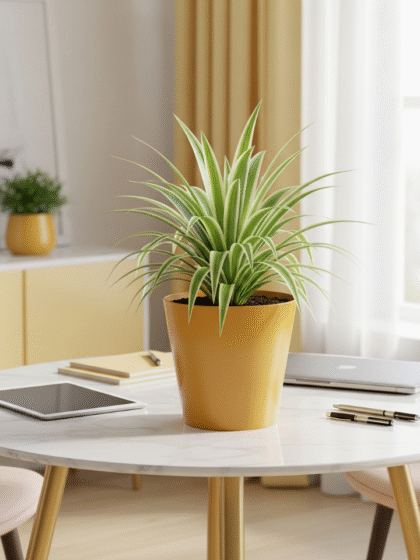
For a home with a cat or dog, a spider plant, which the ASPCA lists as safe for cats and dogs, gives a similar trailing look, and a Boston fern for a pet-safe hanging basket fills the same bright, humid corner.
Bring home a trailing vine for the cool months
Order now, from October to February, and your ivy settles in during its favourite season, with a full winter to grow before the heat returns. Every plant is raised and packed by Plantaeroot, so you receive houseplants grown and packed by our own online nursery rather than resold stock. Looking for more greenery for shelves and windowsills? You can buy indoor plants online from the same nursery.

































There are no reviews yet.