Set the word bonsai aside for a moment. What you are buying is Ficus microcarpa, the Chinese banyan — a tree that in open ground reaches twenty metres and shrugs off heat, wind and drought. That ancestry is why it has become the world’s most-sold indoor bonsai: the hard part of the craft has always been keeping a tree alive in a few handfuls of soil, and this species barely notices. It is not exotic here either. It grows as a street and temple tree across much of India, close enough to the Banyan and the Peepal Plant to be recognisable at a glance.
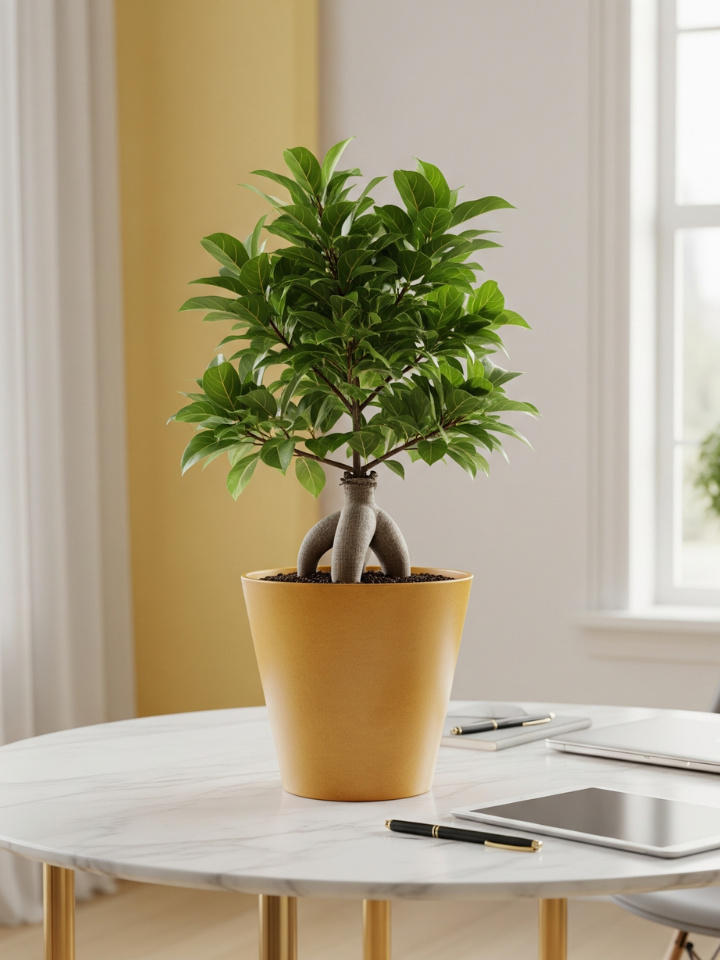
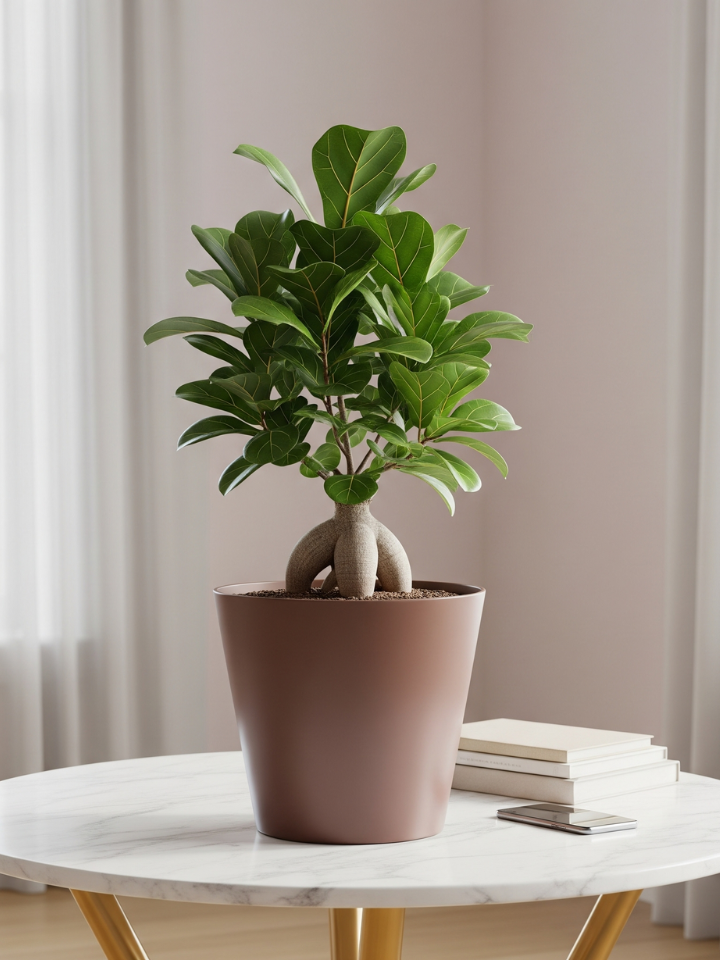
The thick, pale, muscular base is not a trunk in the ordinary sense. Growers raise young seedlings with the roots deliberately exposed, and those roots swell into the smooth, sinuous forms that earned the trade name Ginseng — the resemblance is to the ginseng root, nothing more. A slimmer, small-leaved variety is often grafted on top, which is why the canopy can look finer than the base suggests. The straight-trunked I-shape is the same species trained differently: one upright stem and a grafted crown.
The leaves are small, oval, thick and lacquer-glossy, held densely enough that a trimmed canopy reads as a miniature tree rather than a shrub in a tray. Cut any part of it and a white latex bleeds out; the plant seals its own wounds with it, and it is also why this is not a tree for a home where a cat chews foliage. In humid air the branches send down slender aerial roots that thicken over years into secondary trunks — the most satisfying thing this species does, and far easier to achieve in Bengal than in a dry climate.
Where it looks and grows best
Put it where you would sit and read: a table within a metre of a bright window, an east-facing sill, or a covered balcony that catches the morning. Small, sculptural and slow to change, it is a natural among tabletop plants for an office and one of the more interesting indoor plants for the drawing room, where one trained tree does more for a side table than three ordinary pots. It works as well among small plants for a bedroom, provided the window matters more to you than the room does.
It also makes an unusually considered gift — a tree that can be kept for decades reads differently from a bunch of flowers, which is why it turns up often among our indoor plant gifts. Avoid two things: the direct blast of an air-conditioner, and a dark corner chosen for looks. Everything else is forgiving, which is why it belongs among low maintenance houseplants despite the reputation bonsai carries.
Product Specifications
Only what the listing, the species and our own growing records support. Anything not yet established on your side is marked rather than invented.
| Specification | Detail |
| Plant name | Ficus Bonsai Plant |
| Botanical name | Ficus microcarpa |
| Also known as | Ficus Ginseng · Chinese banyan · Indian laurel fig · Curtain fig · Ficus Moclame · Ficus Long Island (often misspelt “Iceland”) |
| Plant family | Moraceae — the fig and mulberry family, which includes the Banyan and the Peepal |
| Origin | Tropical and subtropical Asia, from India and Sri Lanka through southern China to northern Australia |
| Plant type | Evergreen woody tree, trained and sold as an indoor bonsai |
| Form supplied | Ginseng form with a swollen, exposed root trunk, or I-shape with a single straight grafted trunk |
| Foliage | Small, oval, thick and high-gloss; deep green, held densely on a trimmed canopy |
| Flowers | None to expect indoors. The species carries its flowers inside closed figs and needs a specific wasp to set fruit, so a potted specimen will not bloom |
| Growth habit | Upright and freely branching, with a thickening base; produces aerial roots in humid air |
| Growth rate | Fast for a bonsai in the warm months, which is why regular trimming is part of ownership |
| Suitable placement | Living room table, office or study desk near a window, bright bedroom shelf, sill with morning sun, or a covered balcony |
| Light requirement | Bright, indirect light; gentle morning sun welcome. Not a low-light plant, despite what most listings claim |
| Water requirement | Moderate and frequent. When the top 2–3 cm of the mix is dry: about every 3–5 days in summer, 7–10 in winter |
| Soil requirement | Open, sharply drained bonsai mix — grit or coarse sand with cocopeat and sieved potting soil |
| Humidity | Moderate to high preferred. High humidity is what triggers aerial roots |
| Temperature | 15–35 °C ideal. Leaf drop below about 10 °C · not frost-hardy |
| Fertiliser | Balanced liquid feed at quarter to half strength every two to three weeks, March to October only |
| Pruning | Cut new shoots back to two leaves once they reach six to eight. The main shaping tool |
| Difficulty level | Easy to keep alive; moderate to keep in good bonsai shape |
| Suitable environment | Bright indoor rooms and sheltered balconies, out of harsh afternoon sun, heavy rain and air-conditioner draughts |
| Pet and child safety | Not safe. ASPCA lists Ficus as toxic to cats, dogs and horses; the latex sap also irritates skin |
| Air purification | No meaningful effect at household scale — see the note in the description |
| Lifespan | Decades in a pot with reasonable care; specimens are routinely passed down |
| Propagation | Semi-hardwood stem cuttings in the warm months; also, air-layering |
Care guide
| Care | What to do |
| Light | Bright, indirect light for most of the day, with gentle morning sun if you can offer it. Four hours of good light is the practical minimum. Harsh afternoon sun through glass scorches the leaves; a dim room thins the canopy |
| Water | Water thoroughly until it runs from the drainage holes, then wait until the top 2–3 cm of the mix is dry. Roughly every 3–5 days in summer, every 7–10 in winter. Check by touch rather than by calendar — a shallow tray in a breezy room can dry in two days |
| Soil | Free-draining and open. A bonsai mix of roughly equal parts coarse sand or akadama-type grit, cocopeat and sieved potting soil. Ordinary garden soil compacts in a shallow pot and is the usual cause of trouble |
| Humidity | Likes it humid, which is why Bengal suits it. In an air-conditioned room, stand the pot on a tray of pebbles and water, or group it with other plants |
| Temperature | Comfortable from about 15 °C to 35 °C. Below roughly 10 °C it drops leaves; it is not frost-hardy and does not want a cold, open balcony in January |
| Feeding | A balanced liquid feed at quarter to half strength every two to three weeks from March to October. Nothing from November to February. Restricted root space means little and often beats a heavy dose |
| Pruning | Let a shoot run to six or eight leaves, then cut it back to two. Repeat through the growing season. This is what builds a dense, tree-like canopy instead of a few long whips |
| Wiring | Optional. Aluminium wire on young, flexible shoots holds a shape in six to ten weeks. Check it monthly — ficus thickens fast and wire left too long scars the bark permanently |
| Repotting | Every two to three years in late February or March, before the growth flush. Trim about a third of the root mass, return it to the same pot with fresh mix, and keep it out of direct sun for a fortnight afterwards |
| Propagation | Very easy from cuttings. Take a 10–15 cm semi-hard shoot in the warm months, rinse the cut end to stop the latex bleeding, and set it in damp, gritty mix. Roots form in three to six weeks |
Keeping it in shape
This is the part almost no listing explains, and it is the difference between a tree that looks better every year and one that quietly turns back into a shrub.
Trim on a rhythm, not when it looks untidy. Let each new shoot run to six or eight leaves, then cut back to two, always just above a leaf facing the direction you want the next branch to take. The tree branches from that point, and a season of this builds the fine, twiggy structure that makes something small read as something large. Expect the latex to bleed for a minute; it seals itself. Turn the pot a quarter-turn each week too, or the canopy fills only on the window side.
Grow aerial roots deliberately. Those hanging curtains are a response to sustained humidity, not to age. Mist the trunk and lower branches each morning through the monsoon, or drape a loose clear bag over the canopy for a few hours a day, and new roots start down within weeks. Guide them into the soil and they thicken into secondary trunks. Bengal’s June-to-September air does most of this unaided.
Expose a little more root at every repot, lifting the base a centimetre and brushing soil from the top of the root mass — that is how growers deepen the signature look over years. Do it gradually. And leave the wire off unless you have a reason: directional pruning alone shapes this species, while wire forgotten for a season leaves spiral scars that never come out.
Growing it through the Bengal year
These notes come from growing ficus at our plant nursery in Kolkata and they differ from the generic advice written for cooler climates.
Summer, March to May. The strongest growth of the year. Water every three or four days, feed fortnightly, and run the pruning cycle in earnest — this is when the canopy is built. Keep it back from west-facing glass by May, when afternoon sun will crisp the leaves within a week, and watch air-conditioned rooms for the fine webbing that means spider mite.
Monsoon, June to September. The best months for this tree and the only risky ones. Warm, saturated air is what a banyan is built for: growth is fast and aerial roots appear. The risk is entirely below the soil — a shallow pot left in the rain, or watered on a summer schedule while the air holds moisture for weeks, stays wet long after the surface looks dry, and the fine roots rot. Keep it under cover and check the mix with a finger before every watering. Through August the honest answer is often that it needs nothing.
Autumn, October to November. Growth slows. Take the last real trim in early October, stop feeding by the end of the month, and move it to its winter position now rather than in December — a ficus dislikes being moved far more than it dislikes the cold.
Winter, December to February. Near-dormant. Water every week to ten days, feed nothing, prune nothing. Kolkata winters are mild enough that it needs no protection indoors, but keep it off an open balcony on the coldest January nights and away from room heaters. A handful of yellowing leaves is seasonal, not a fault.
Common problems and quick fixes
| Symptom | Likely cause | What to do |
| A flush of leaves drops in the first fortnight | Transit and the change of light. Ficus is famously reactive to being moved | Expected. Put it in its final bright spot, water only when the top is dry, and do not repot or feed. New growth follows in three to six weeks |
| Leaves yellow and fall steadily, soil stays damp | Overwatering, or a pot with poor drainage | Stop watering until the mix is dry through. Check that the drainage holes are clear. Repot into an open, gritty mix if it continues |
| Leaves fall with dry, tight soil | Underwatered, most often in a shallow tray in summer | Soak the pot until water runs freely from the base, then return to checking by touch every second day |
| Long bare shoots, sparse canopy, leaves getting larger | Too little light — the tree is stretching for it | Move it to the brightest position available and resume the six-leaves-back-to-two trimming cycle. It rebuilds within a season |
| Pale, bleached or crisp-edged leaves | Direct afternoon sun through glass | Move it back from the window or filter the light with a sheer curtain |
| Ants running over the pot and trunk | Almost always honeydew from scale or mealybug on the plant, occasionally a nest in dry soil | Treat the insects, not the ants. Wipe the stems, spray diluted neem oil weekly for three weeks, and water thoroughly — the ants leave once the honeydew and the dryness are gone |
| Small brown or tan bumps on stems and leaf undersides, sticky leaves | Scale insects | Scrape them off with a fingernail or an old toothbrush, then neem oil weekly for three weeks |
| White cottony specks in the leaf joints | Mealybug | Dab each one with cotton dipped in rubbing alcohol, then follow with neem oil |
| Fine webbing and faint stippling on the leaves | Spider mite, usually in dry, air-conditioned air | Rinse the whole canopy under a tap, raise the humidity, and spray neem oil weekly until it clears |
| Soft, dark base and a sour smell from the soil | Root rot after a long wet spell | Lift it out, cut away every soft root, and repot into fresh, sharply drained mix. Water very sparingly until new growth appears |
| White crust on the soil surface or pot rim | Mineral salts from hard water and feeding | Flush the pot with plenty of water two or three times a year and scrape the crust away |
Is the Ficus Bonsai safe for pets and children?
No. The ASPCA lists Ficus as toxic to dogs, cats and horses. The milky latex contains the enzyme ficin and a compound called psoralen; chewing the leaves or stems can cause mouth irritation, drooling, vomiting or diarrhoea, and the sap irritates skin on contact. Serious cases are uncommon, but this is not a tree to put where an animal grazes — and it is worth knowing before you gift one.
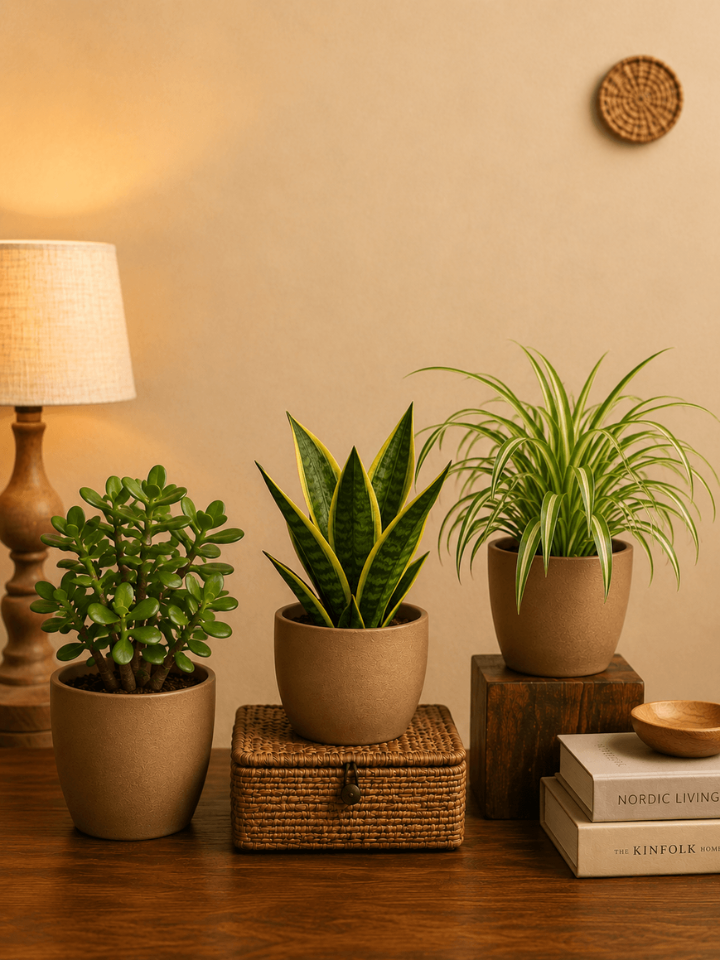
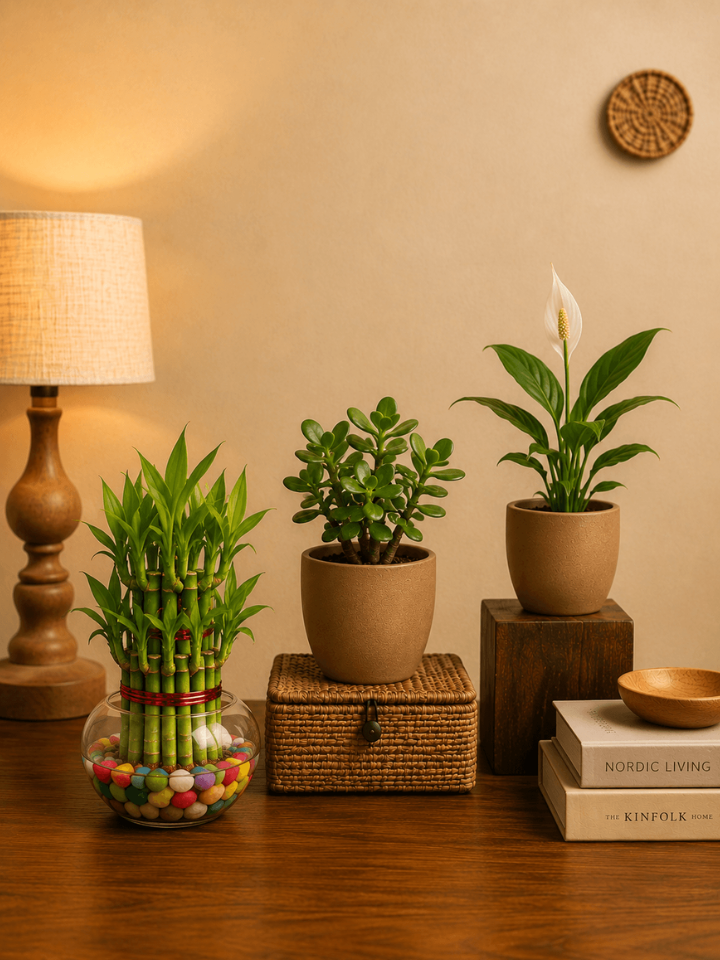
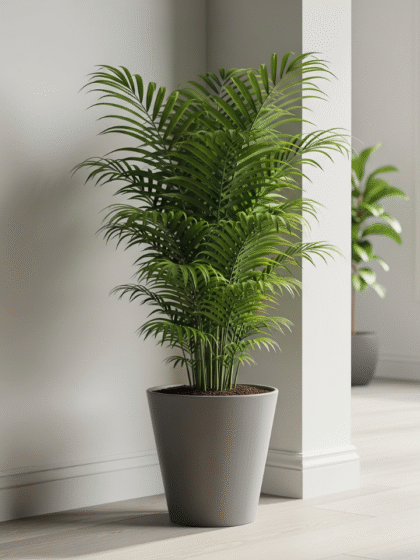
For a home with a cat or a dog, the two we can vouch for against ASPCA data are the pet-safe Areca Palm and the Spider Plant with its hanging plantlets, both happy in the same light. The Lucky Jade Plant takes to the same trimming with none of the toxic sap, and is an easier first exercise in shaping a woody plant.
Bonsai, luck and Vastu — an honest answer
The prosperity association comes from Chinese practice, where a thick-trunked ficus is treated as a money tree and placed near an entrance to gather wealth. That is a real tradition, and it is where almost every “lucky bonsai” listing online borrows its wording from.
Vastu is a different system and does not say the same thing. Classical texts predate bonsai in India and are silent on it, while many modern Vastu commentators advise against keeping deliberately dwarfed trees indoors, on the reasoning that restricted growth is not an image to live with. Others treat any healthy, well-tended plant as beneficial. There is no settled answer, and anyone who says otherwise has picked a side. Our own position is simpler: this is a long-lived tree that will outlast most of the furniture in the room. If placement matters in your household, our guide to where to place plants as per Vastu works through it room by room.
A straight answer on air purification
You will see this tree sold as an air purifier. The effect is real in a sealed laboratory chamber and negligible in a room: Cummings and Waring (2019), reviewing the chamber studies behind the claim, calculated that you would need between ten and a thousand plants per square metre to match the air exchange an open window already provides. Buy it because it is a tree you can keep on a table for thirty years. Our explainer on whether houseplants actually clean indoor air sets out the evidence.
























There are no reviews yet.