


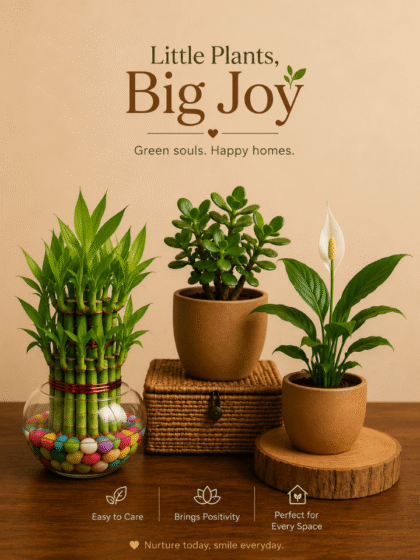
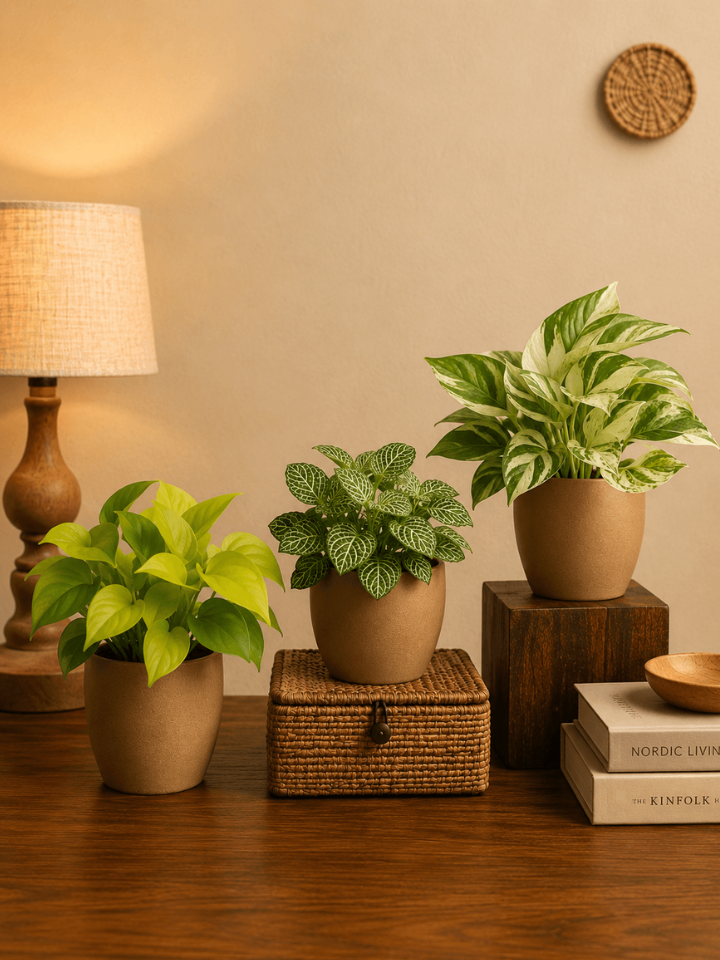
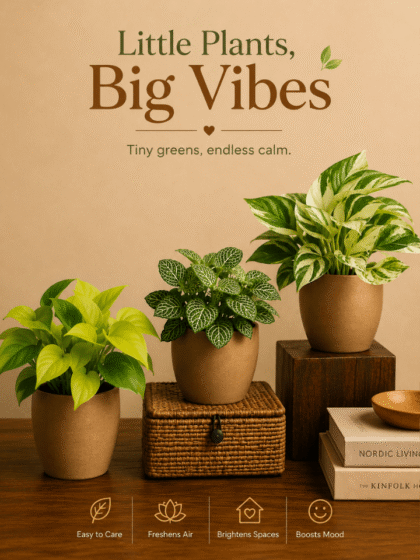

We often think outdoor pollution is the biggest threat. But the truth is, the air inside our home can sometimes be more polluted than the air outside. In growing urban cities across India, closed windows, traffic emissions, construction dust, cooking fumes, and chemical cleaners quietly reduce indoor air quality.
Most families now spend 70–90% of their time indoor — especially in the bedroom, living room, and office spaces. Poor ventilation allows dust, PM2.5 particles, VOCs, mold spores, and excess CO₂ to accumulate. Over time, this can affect sleep, focus, allergies, and overall health.
Parents search for a safe, natural solution. Students look for answers for a class 2 project, sometimes even preparing a drawing or a small PDF presentation on air and environment. Many people simply type on Google or even ask on reddit:
“Do plants really clean air?”
“Can a money plant improve oxygen at night?”
“Which is the best air purifying plant for bedroom in India?”
This growing curiosity reflects one simple desire — to breathe clean air naturally.
And that’s where the debate begins: plants vs air purifier.
The Rising Popularity of Indoor Plants for Clean Air
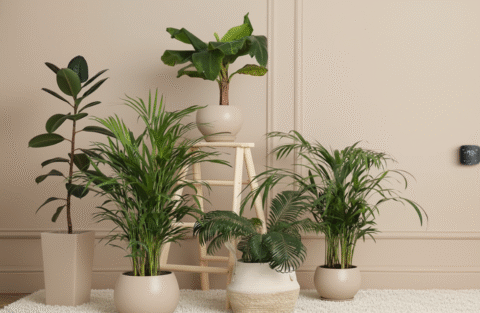
Over the last decade, indoor plants have become more than decoration. They are now seen as natural air purifying plants.
Search trends show increasing interest in:
- Top 10 air purifying plants
- Best low light indoor plants in India
- Money plant benefits
- Snake plant oxygen at night bedroom
- NASA clean air study PDF
- Air purifying plant names with names in India and price
Why this surge?
Because plants feel safe. They are green, beautiful, affordable, and non-mechanical. Unlike an electric purifier, they don’t consume power. They bring life, improve mood, and enhance aesthetics.
A simple money plant, snake plant, or areca palm in the bedroom feels calming. Their soft green leaves instantly transform a dull corner into a peaceful space. Many people believe certain varieties release more oxygen at night, making them ideal for sleeping areas.
But there’s also confusion.
Some blogs promise miracle results. Some pictures online exaggerate their power. A few viral posts create a myth that one plant can replace a machine. On the other hand, some experts argue plants are too slow to be effective.
So what does science really say?
Search Intent: Are Plants Truly a Replacement for Air Purifiers?
When someone searches:
- “Can plants replace air purifier?”
- “Best air purifying plant for home in India”
- “Are indoor plants harmful at night?”
- “Top air cleaning plants disadvantages”
- “NASA air study results explained”
They are not just looking for a list of plant names.
They want clarity.
They want to know:
- Do plants actually clean air or is it a marketing myth?
- Are there any disadvantages?
- Can plants remove harmful pollutants like PM2.5?
- Is it safe to keep plants in the bedroom?
- Which option gives better results — a mechanical purifier or natural greenery?
- What is practical for Indian apartments with low light conditions?
The famous NASA Clean Air Study often appears in discussions. Many blogs reference a PDF summary without explaining its real-world limitations. Some discussions on reddit debate whether the findings apply to modern urban homes.
This guide is designed to answer all of that — scientifically, practically, and honestly — especially for Indian households.
We will compare:
- Plant-based air improvement
- Mechanical filtration systems
- Realistic expectations
- Cost, space, and maintenance factors
Because at the end of the day, your goal isn’t just decoration.
It’s healthier air, better oxygen flow, and a safer, cleaner home for your family.
And sometimes, the best solution isn’t choosing one over the other — but understanding both deeply.
Understanding Indoor Air Pollution
Before deciding whether plants can replace an air purifier, we must first understand what we are trying to remove from the air.
Most people imagine pollution as smoke outside on busy roads in India. But the indoor air quality inside your home or bedroom can sometimes be worse — especially in urban apartments with limited ventilation.
Let’s break this down clearly.
Common Indoor Air Pollutants (PM2.5, VOCs, CO₂, Mold Spores)
Indoor pollution is not just “dust.” It includes several invisible and microscopic contaminants:
- PM2.5 (Fine Particulate Matter)
These are ultra-fine particles from vehicle emissions, construction dust, and smoke. They easily enter homes through windows and ventilation gaps.
PM2.5 is considered harmful because it can penetrate deep into the lungs and bloodstream.
- VOCs (Volatile Organic Compounds)
Released from:
- Furniture polish
- Paint
- Cleaning chemicals
- Air fresheners
- New wooden furniture
These gases silently reduce air quality inside your indoor home environment.
- Carbon Dioxide (CO₂)
In closed rooms, especially bedrooms with AC running all night, CO₂ levels rise due to breathing. Poor ventilation makes the space feel heavy and dull.
- Mold Spores
High humidity areas encourage fungal growth. Spores float in the air and can trigger allergies.
Understanding these pollutants helps us evaluate whether air purifying plants or a mechanical purifier is more effective.
Sources of Indoor Pollution in Urban Homes (India Context)
In modern Indian cities, common sources include:
- Traffic pollution entering from balconies
- Nearby construction dust
- Gas stove emissions
- Incense sticks and candles
- Mosquito coils
- Smoking indoors
- Poor cross-ventilation
Even newly painted apartments can release VOCs for months.
Many families try to improve conditions by adding green indoor plants, believing they will clean the air naturally. Some search for the top 10 air purifying plants in India with names and price. Others download a NASA clean air study PDF to understand what science says.
But does adding a money plant or snake plant solve serious PM2.5 exposure?
That’s where clarity is important.
Health Risks Associated with Poor Indoor Air
Poor air quality inside your home can lead to:
- Frequent headaches
- Fatigue
- Poor sleep quality
- Allergies
- Asthma triggers
- Reduced concentration
- Long-term respiratory issues
Children working on a school class drawing about environment may learn that plants give oxygen. That’s true — but oxygen production alone does not equal full air purification.
There is also a common myth that keeping plants in the bedroom at night is harmful because they release carbon dioxide. In reality, the amount released is minimal and not dangerous. However, this does not mean plants alone can handle high pollution levels.
Some online forums like reddit discuss both the benefits and disadvantages of relying only on plants. The truth lies somewhere in between.
Why This Section Matters
To answer whether plants can replace an air purifier, we must compare:
- The type of pollutants present
- Their concentration levels
- The cleaning capacity required
- The size of your indoor space
If pollution is mild and your home has good ventilation, plants may help improve the environment slightly.
If pollution levels are high, especially in metro cities of India, mechanical filtration might be necessary.
In the next section, we will understand how air purifiers actually work — including HEPA filters, activated carbon, and what “air changes per hour” really means.
How Air Purifiers Work
To fairly answer whether plants can replace an air purifier, we must first understand how a purifier actually functions.
Unlike decorative indoor plants, an air cleaning device is engineered specifically to remove pollutants from the air at measurable speed and efficiency. It works mechanically, continuously cycling the air in your home or bedroom through specialized filters.
Let’s break it down in simple terms.
HEPA Filters and Particle Removal
Most high-quality purifiers use a HEPA (High-Efficiency Particulate Air) filter.
A true HEPA filter can remove up to 99.97% of particles as small as 0.3 microns, including:
- PM2.5
- Dust
- Pollen
- Pet dander
- Smoke particles
This is important in India, where outdoor pollution often enters indoor spaces. If you live near traffic or construction, a HEPA-based purifier can significantly improve air quality inside your home.
Plants, on the other hand, mainly trap some dust on their green leaves, but they do not actively pull and filter air at this scale.
Activated Carbon Filters and VOC Absorption
Some advanced models also include activated carbon filters.
These filters absorb:
- Odors
- Cooking fumes
- Chemical gases
- VOCs from paint and furniture
This makes them useful in newly renovated apartments or closed bedroom environments.
While the famous NASA Clean Air Study suggested certain plants could remove VOCs in controlled lab conditions, real-world homes are larger and have continuous pollutant sources. This difference is critical and often misunderstood when people read the NASA study PDF summaries online.
Air Changes Per Hour (ACH) Explained
One key performance metric is Air Changes Per Hour (ACH).
ACH means how many times the purifier can completely filter the air in a room within one hour.
For example:
- ACH 4 = entire room air cleaned four times per hour.
This measurable circulation is something a plant cannot replicate. Even the best air purifying plants do not create forced airflow.
This doesn’t make plants useless — but it shows the difference between biological air interaction and mechanical filtration.
Advantages of Air Purifiers
✔ Fast removal of PM2.5 and allergens
✔ Effective in high pollution cities in India
✔ Helpful for asthma and allergy patients
✔ Measurable performance metrics
✔ Immediate improvement in particle levels
For people searching “top purifier for bedroom in India price,” the goal is usually protection against harmful particulate pollution.
Limitations of Air Purifiers
However, purifiers also have drawbacks:
- Electricity consumption
- Filter replacement cost
- Noise (in some models)
- No aesthetic or psychological benefit
- Does not produce oxygen
Unlike indoor plants, a purifier does not enhance mood, design, or natural ambiance. It solves a technical problem — but it doesn’t bring life into a space.
Important Perspective
If your indoor environment has:
- High PM2.5
- Allergies
- Smoking indoors
- Poor ventilation
A mechanical system may be necessary.
But if your pollution level is moderate and you want to improve overall wellness, greenery may complement air cleaning efforts.
The debate is not emotional — it’s scientific.
How Plants Purify Air: The Science Explained
Now comes the heart of the debate.
Many people believe that air purifying plants can completely replace an electric purifier. Others say this is a marketing exaggeration. The truth lies in understanding how plants actually interact with air.
Let’s explore the real science — not the myth.
Photosynthesis and Oxygen Production
Every plant performs photosynthesis.
During the day, plants absorb carbon dioxide and release oxygen. This process naturally contributes to a healthier indoor home environment.
In India, searches like:
- “Do plants give oxygen at night in bedroom?”
- “Best indoor plants for oxygen”
- “Snake plant oxygen night myth”
are extremely common.
Here’s the clarity:
- Most plants release oxygen during daylight.
- At night, most plants respire (like humans) and release a small amount of CO₂.
- Certain varieties such as snake plant and areca palm are often promoted for low-light adaptability and nighttime oxygen exchange.
However, the amount of oxygen released by a few plants in a normal bedroom is modest. It contributes to freshness, but it does not dramatically change air composition.
So yes — plants produce oxygen.
But no — one or two plants won’t transform overall air quality in a closed urban apartment.
Phytoremediation: How Roots and Soil Microbes Help
This is where things get interesting.
Plants can absorb certain airborne toxins through their leaves. Additionally, soil microorganisms break down some chemicals. This process is called phytoremediation.
The famous NASA Clean Air Study examined how plants remove VOCs like benzene and formaldehyde in sealed laboratory chambers.
Key takeaway from the NASA study:
- In small, controlled spaces, plants reduced certain pollutants.
- The test environment was sealed and limited in size.
- Real homes are larger and continuously exposed to pollution sources.
Many blogs reference a NASA clean air study PDF without explaining that the study was conducted in controlled conditions — not in typical Indian apartments with open windows, cooking activity, and constant airflow changes.
So while the science is real, expectations must be realistic.
Transpiration and Humidity Regulation
Plants release water vapor through transpiration.
This can:
- Slightly increase humidity
- Improve indoor comfort
- Reduce dryness caused by AC
In cities across India, especially during dry seasons, this natural humidity balancing can enhance comfort levels in a home or bedroom.
However, excessive plants in poorly ventilated spaces may increase moisture and potentially encourage mold growth. So balance is important.
NASA Clean Air Study – What It Actually Found
Because this study is frequently cited, let’s clarify it properly.
The NASA Clean Air Study (1989) concluded that certain indoor plants could remove trace amounts of toxins from sealed environments.
But later research and environmental engineers highlighted a crucial limitation:
To match the pollutant removal power of a modern HEPA air purifier, you would need dozens — sometimes hundreds — of plants in a single room.
That’s not practical for most urban homes in India.
So when you see a top 10 air purifying plant list online claiming one plant can clean an entire room, treat it cautiously. That is often a simplified interpretation of the original research.
What Plants Truly Offer
Instead of overselling, let’s understand the real benefits:
✔ Mild support in reducing certain VOCs
✔ Small contribution to oxygen levels
✔ Psychological and stress-reducing effect
✔ Aesthetic beauty with green leaves
✔ Connection to nature
✔ Improved perceived freshness
Plants are not useless.
They are just not industrial air-cleaning machines.
Can Plants Remove Dust and PM2.5?
This is one of the most searched questions in India:
- “Do indoor plants remove dust?”
- “Can air purifying plants reduce PM2.5?”
- “Are plants better than air purifier for pollution?”
Let’s answer this clearly, without myth or exaggeration.
Surface Deposition on Leaves
Yes — plants can trap some dust.
Their green leaves act like natural surfaces where airborne particles settle. If you wipe a leaf after a few days, you’ll notice visible dust. This shows that plants passively capture some particles from the surrounding air.
Large-leaf varieties like:
- Areca palm
- Rubber plant
- Money plant
- Peace lily
can accumulate dust over time.
However, this process is passive. The plant does not actively pull air through itself like a mechanical purifier. Dust simply settles on leaves due to gravity and airflow patterns inside the home.
That’s why regular leaf cleaning is important — otherwise, accumulated dust can reduce photosynthesis efficiency.
Effectiveness Compared to Mechanical Filtration
Here’s the scientific reality:
PM2.5 particles are extremely small — about 30 times smaller than a human hair.
A HEPA-based air purifier can remove up to 99.97% of these particles because it forces air through a dense filter.
Plants, on the other hand:
- Do not create forced air circulation
- Do not filter air through a controlled system
- Cannot guarantee measurable reduction in PM2.5 levels
Research suggests that to significantly reduce particulate pollution using plants alone, you would need a very large number of them — far beyond what is practical for a typical bedroom or apartment in urban India.
This is where the common myth appears online.
Some blogs show attractive pictures and claim one plant can clean an entire room. That is not scientifically accurate. Discussions on reddit often highlight this confusion between laboratory findings and real-world application.
Realistic Expectations in Home Settings
So what can plants realistically do?
✔ Slightly trap dust on leaves
✔ Improve perceived freshness
✔ Add humidity balance
✔ Enhance overall environment aesthetics
But they cannot replace a purifier when it comes to:
- Heavy traffic pollution
- Construction dust
- Smoke exposure
- High PM2.5 environments
If you live in a metro city in India with high AQI levels, relying only on a money plant or snake plant may not be enough for serious air cleaning.
That doesn’t make plants useless. It simply means their role is supportive — not primary — in high pollution scenarios.
The Key Difference
Think of it this way:
- A purifier is a filtration machine designed for measurable air cleaning.
- Plants are living organisms that contribute naturally but slowly.
Both improve your home — but in different ways.
Plants vs Air Purifiers: A Direct Comparison
Now let’s answer the big question directly:
Can plants replace an air purifier?
Instead of opinions, we’ll compare them across key performance factors that matter in a real home in India — especially in a bedroom or living room setup.
- Pollutant Removal Efficiency
Air Purifier:
- Removes up to 99.97% of PM2.5 using HEPA filtration
- Absorbs VOCs with activated carbon
- Designed specifically to improve measurable air quality
Indoor Plants:
- Absorb small amounts of certain gases
- Trap some dust on leaves
- Supported by the NASA Clean Air Study, but only in sealed lab conditions
Reality: To match one high-quality purifier, you would need dozens of plants in a single room. Not practical for most apartments in India.
- Speed of Air Cleaning
Purifier:
- Cleans the entire room air multiple times per hour (ACH rating)
- Provides visible AQI improvement in minutes
Plants:
- Slow, passive process
- No forced air circulation
If someone searches “best air cleaning solution for bedroom,” speed matters — especially in high pollution seasons.
- Coverage Area
Air Purifier:
- Designed for specific room sizes (200–500 sq. ft.)
- Performance is measurable
Plants:
- No defined coverage
- Effect varies based on plant size, leaf surface area, and airflow
A single money plant near a window will not purify an entire living room.
- Energy Consumption
Air Purifier:
- Requires electricity
- Continuous running increases power usage
Plants:
- No electricity
- Sustainable and eco-friendly
Here, plants clearly win in sustainability and natural living.
- Cost Over Time
Air Purifier:
- Initial purchase cost
- Filter replacement every 6–12 months
- Ongoing electricity expense
Indoor Plants:
- Lower upfront price
- Minimal maintenance cost
- Occasional fertilizer and repotting
For budget-conscious families in India, plants are more affordable long-term.
- Maintenance Requirements
Purifier:
- Regular filter changes
- Cleaning of filters
- Mechanical maintenance
Plants:
- Watering
- Occasional pruning
- Cleaning dust from green leaves
- Proper placement in low light or indirect sunlight
While plants require care, many varieties adapt well to low light conditions and are ideal for urban apartments.
- Additional Benefits Beyond Air Cleaning
This is where plants truly shine.
✔ Enhance mood
✔ Reduce stress
✔ Improve focus
✔ Beautify interiors
✔ Increase perceived freshness
✔ Support biophilic design
A purifier improves numbers.
Plants improve experience.
This is why searches like “top 10 air purifying plant names with names in India” are so popular. People are not just buying cleaner air — they are investing in lifestyle.
Quick Comparison Summary
| Factor | Air Purifier | Indoor Plants |
| PM2.5 Removal | Highly effective | Minimal |
| VOC Removal | Effective | Mild (lab conditions) |
| Speed | Fast | Slow |
| Electricity | Required | Not required |
| Cost | Higher long-term | Budget-friendly |
| Aesthetic Value | None | High |
| Oxygen Production | No | Yes (daytime) |
Honest Insight
If your concern is heavy pollution, allergies, or asthma — a purifier is necessary.
If your goal is wellness, aesthetic improvement, and natural freshness — plants are the best complementary choice.
So the debate isn’t “either-or.”
It’s about understanding your environment.
How Many Plants Would You Need to Replace an Air Purifier?
This is where expectations meet reality.
Many people search:
- “How many air purifying plants per square foot?”
- “Can 10 plants clean a bedroom?”
- “NASA study plant calculation PDF?”
- “Top 10 air purifying plants enough for home?”
Let’s answer this scientifically and practically — especially for urban homes in India.
Scientific Estimates
The famous NASA Clean Air Study showed that certain plants could remove trace toxins in sealed chambers.
However, later environmental engineers analyzed those findings and estimated something important:
To match the pollutant removal capacity of one standard HEPA air purifier, you would need roughly 100–1000 plants per 100 square meters (depending on pollutant load).
For a typical bedroom of 120–150 sq. ft., that could mean dozens of medium-sized plants.
That’s not a top 10 list — that’s a small indoor jungle.
The reason is simple:
- Plants work passively.
- Purifiers actively circulate and filter air multiple times per hour.
The scale difference is significant.
Practical Limitations in Urban Apartments (India Context)
Now think practically.
Most apartments in cities like Kolkata, Delhi, Mumbai, or Bangalore have:
- Limited floor space
- Moderate to low light conditions
- Furniture occupying most corners
- AC usage in bedrooms
Placing 30–50 large plants inside a small home is unrealistic.
Additionally:
- Overcrowding plants can increase humidity.
- Poor airflow can create mold risk.
- Maintenance becomes time-consuming.
So while a money plant, snake plant, or peace lily contributes modestly to indoor freshness, they cannot realistically replace mechanical filtration in high pollution areas.
Space and Light Considerations
Another critical factor is light.
Many people search for:
- “Best low light indoor plants in India”
- “Bedroom plants low light oxygen”
Even the best air purifying plants need:
- Some natural light
- Air circulation
- Proper watering
Without adequate light, plants struggle to perform photosynthesis effectively — meaning reduced oxygen production and slower growth.
If you place many plants in a closed, dark room expecting them to dramatically clean air, results will disappoint you.
The Realistic Recommendation
For a typical Indian household:
✔ 3–6 well-placed indoor plants can improve aesthetics and slightly enhance freshness.
✔ They contribute small oxygen benefits during the day.
✔ They support mental wellness and reduce stress.
But:
❌ They cannot match the PM2.5 removal power of a certified air purifier.
❌ They cannot instantly reduce harmful pollution spikes.
This is where understanding the difference between myth and measurable science becomes important.
Simple Explanation
Think of it this way:
- A purifier is like a vacuum cleaner for air.
- Plants are like natural companions that gently improve the environment.
Both have value.
But they serve different roles.
Best Air-Purifying Plants for Homes in India
Even though plants cannot fully replace an air purifier, choosing the right indoor plants can still help improve your home environment naturally.
Many people search for:
- “Top 10 air purifying plants in India with names and price”
- “Best bedroom plants for oxygen”
- “Low light indoor plants India”
- “Money plant benefits and disadvantages”
Below are some of the best options that are practical, beautiful, and suitable for Indian homes.
Areca Palm (Dypsis lutescens)
Why it’s popular:
Known for its feathery green leaves, the Areca Palm enhances aesthetics instantly.
Benefits:
- Helps maintain humidity
- Adds tropical freshness
- Suitable for living rooms and bright bedrooms
Care Tips:
- Needs indirect sunlight
- Water moderately
- Avoid waterlogging
Ideal for homes in India with decent natural light.
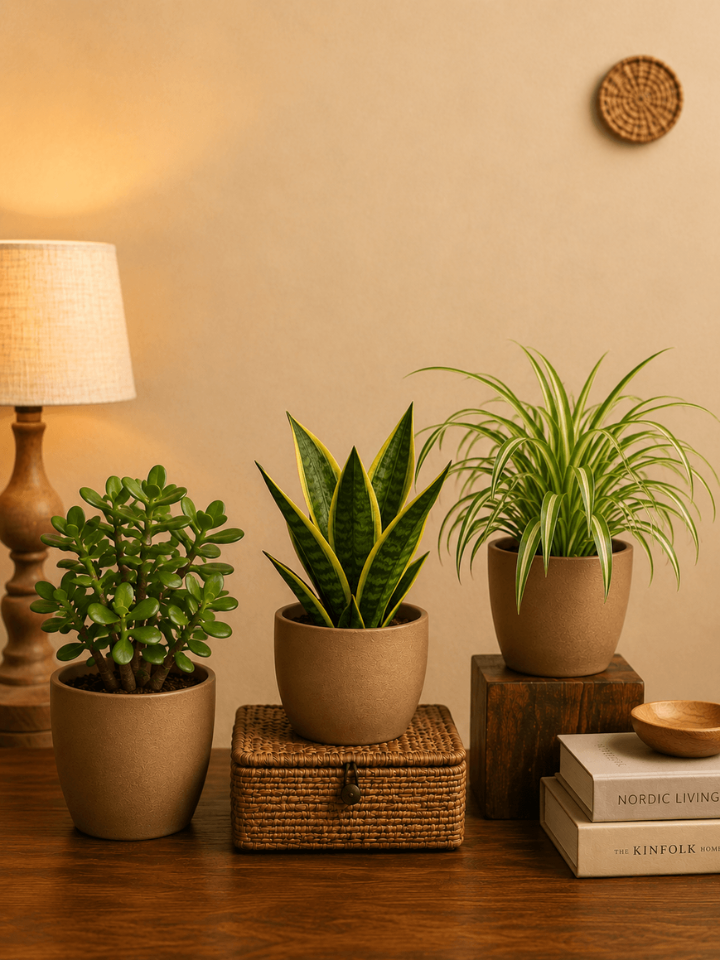
Snake Plant (Sansevieria)
Often recommended in the NASA Clean Air Study, this plant is famous for low maintenance.
Why people love it:
- Tolerates low light
- Survives neglect
- Popular for bedroom placement
There is a common belief that it releases oxygen at night. While it does perform a form of nighttime gas exchange, the amount is modest — not a replacement for ventilation.
Still, it’s one of the most practical indoor options in India.
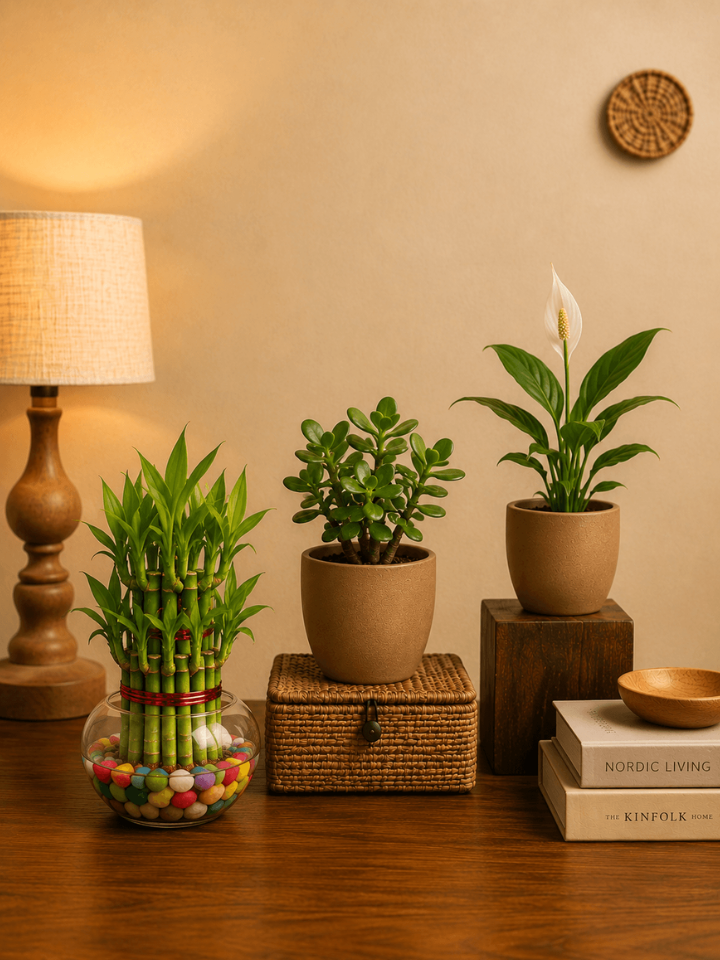
Why it stands out:
Beautiful white blooms and glossy leaves.
Potential Benefits:
- Mild VOC absorption (lab conditions)
- Adds elegance to interiors
Care Tips:
- Prefers indirect light
- Keep soil slightly moist
- Avoid direct harsh sun
Great for decorative corners in apartments.
Spider Plant (Chlorophytum comosum)
Perfect for beginners.
Advantages:
- Adapts well to indoor settings
- Works well in hanging baskets
- Low maintenance
It’s often included in the top 10 air purifying plants list due to ease of care.
Money Plant (Epipremnum aureum)
One of the most searched plants in India.
Common queries include:
- “Money plant benefits”
- “Money plant in bedroom harmful or safe?”
- “Money plant low light indoor”
Benefits:
- Extremely adaptable
- Thrives in low light
- Easy to grow in water or soil
- Enhances interior greenery
Myth Check:
Some believe it can completely clean air or bring financial luck. While it improves ambiance and slightly supports freshness, it is not a full air cleaning system.
Care Tips for Maximum Indoor Benefit
To truly improve your indoor environment:
✔ Clean leaves regularly to remove dust
✔ Avoid overcrowding plants in one small room
✔ Ensure some airflow in the home
✔ Choose varieties suited to your light conditions
✔ Avoid overwatering
Remember: Healthy plants contribute better to the environment.
Practical Advice for Indian Homes
For a typical apartment:
- 3–6 well-placed plants are ideal
- Combine low light options for bedrooms
- Use larger leafy varieties in living rooms
If pollution levels are high, combine greenery with a certified air purifier for measurable improvement in air quality.
Plants add life.
Purifiers add filtration.
When Plants Are Enough
By now, we’ve established that plants cannot fully replace a mechanical air purifier in high-pollution environments.
But that doesn’t mean they are ineffective.
There are situations where indoor greenery is enough to maintain a healthy and comfortable home atmosphere — especially in parts of India where pollution levels are moderate.
Let’s understand when plants can realistically do the job.
- Naturally Ventilated Homes
If your home has:
- Good cross-ventilation
- Regular airflow from windows
- Minimal external pollution sources
Then indoor plants can meaningfully contribute to freshness.
In well-ventilated houses, fresh outdoor air already dilutes indoor pollutants. In such cases, adding air purifying plants supports humidity balance, oxygen exchange, and aesthetic enhancement.
You may not need a dedicated purifier in these conditions.
- Low Pollution Areas
If you live in:
- Tier 2 or Tier 3 cities in India
- Suburban neighborhoods
- Areas away from heavy traffic and construction
Then pollution load inside your indoor home may already be low.
Here, placing 4–6 well-maintained plants can help maintain comfort and perceived air freshness.
Plants like snake plant, money plant, spider plant, and areca palm work well in moderate or low light apartments.
- Small Rooms with Minimal Pollutant Sources
In a simple bedroom setup where:
- No one smokes
- No mosquito coils are used
- No heavy chemical cleaners are sprayed
- Ventilation exists during the day
Plants may be sufficient for general wellness.
Many families in India search whether it is safe to keep plants in the bedroom at night. The answer is yes — they are not harmful. The CO₂ released at night is negligible compared to normal breathing levels.
So the common myth that plants are dangerous in sleeping spaces is not supported by evidence.
- Psychological & Wellness Benefits
Even if plants don’t dramatically reduce PM2.5, they offer something powerful:
✔ Stress reduction
✔ Improved mood
✔ Better concentration
✔ Visual calm
✔ A sense of connection to nature
This is why interior designers often recommend greenery for modern apartments.
Unlike a mechanical purifier, plants bring emotional warmth. Their green leaves, natural textures, and organic presence make a space feel alive.
Sometimes perceived freshness improves simply because the environment feels balanced.
When “Enough” Means Balanced Expectations
Plants are enough when:
- Pollution levels are low
- Ventilation is good
- The goal is comfort, not medical-grade filtration
- You want a sustainable, electricity-free solution
They are not enough when:
- AQI is consistently high
- Family members have asthma or allergies
- The home is poorly ventilated
- There is exposure to smoke or construction dust
Understanding this difference prevents disappointment.
When an Air Purifier Is Necessary
While plants add beauty and mild natural support, there are clear situations where a mechanical air purifier becomes essential — especially in urban India.
If your goal is serious improvement in measurable air quality, here’s when you should strongly consider a purifier.
- High Pollution Cities
If you live in metros like Delhi, Kolkata, Mumbai, or other densely populated cities, outdoor AQI levels often cross safe limits.
When outdoor pollution enters your home, indoor PM2.5 levels rise quickly — even with windows closed.
In such environments:
- A few indoor plants will not significantly reduce particle concentration.
- HEPA filtration is required for effective cleaning.
If your concern is protection from harmful fine particles, a purifier is the safer solution.
- Allergy or Asthma Conditions
For individuals with:
- Asthma
- Dust allergies
- Respiratory sensitivity
- Elderly family members
- Young children
Controlled filtration becomes important.
A purifier can:
✔ Reduce pollen
✔ Capture pet dander
✔ Remove fine particulate matter
✔ Lower allergy triggers
Plants may improve comfort, but they cannot guarantee removal of microscopic allergens at the speed required.
If someone searches “best air purifier for bedroom in India,” it’s usually because health is the priority.
- Homes with Pets and Smokers
Pet hair, dander, and indoor smoking significantly reduce indoor air quality.
Smoke particles are extremely fine and linger in closed rooms. In such cases:
- Plants cannot absorb smoke effectively.
- Mechanical filtration is necessary.
Relying only on greenery here can be a costly mistake.
- Poor Ventilation Environments
Modern apartments often have:
- Sealed windows
- Continuous AC usage
- Limited natural airflow
In these cases, CO₂ levels rise, and pollutants accumulate faster.
Plants provide some oxygen exchange during the day, but they do not circulate air. Without airflow, pollutants remain suspended.
A purifier actively moves and filters air — which is critical in poorly ventilated rooms.
- Construction or Renovation Exposure
New paint, polish, adhesives, and furniture release VOCs for weeks or months.
While the NASA Clean Air Study showed plants can absorb certain VOCs in lab conditions, the real-world rate is slow.
Activated carbon filters in purifiers work much faster in these scenarios.
Clear Practical Guidance
Choose an air purifier if:
- AQI is consistently high
- Someone in the family has respiratory issues
- Indoor smoking is present
- You need measurable filtration
Choose plants if:
- Pollution is low
- You want aesthetic and wellness benefits
- You prefer sustainable solutions
Or better yet — combine both strategically.
Read Also: Which Plant Purifies Air the Best?
The Hybrid Approach: Plants + Air Purifier
If we think like innovators — not extremists — the smartest solution isn’t choosing between plants and an air purifier.
It’s combining both.
In modern Indian homes, especially in cities where pollution fluctuates, a hybrid strategy offers the best balance between measurable filtration and natural wellness.
Creating a Balanced Indoor Ecosystem
An air purifier is engineered for performance.
It removes:
- PM2.5
- Dust
- Smoke particles
- Allergens
It improves measurable air quality quickly.
But it does not:
- Increase visual comfort
- Improve emotional connection to nature
- Add natural humidity balance
- Produce oxygen
That’s where indoor plants come in.
When you combine:
✔ 3–6 well-placed plants
✔ A purifier sized correctly for your room
✔ Basic ventilation habits
You create a layered system:
- Mechanical cleaning
- Biological support
- Psychological wellness
This is especially useful in India, where outdoor pollution can spike seasonally.
Enhancing Aesthetics While Maintaining Air Quality
A purifier is functional — not beautiful.
Plants transform your home.
A money plant trailing along a shelf, a snake plant in the bedroom, or an areca palm in the living room instantly upgrades your interior space.
Their green leaves soften modern interiors filled with concrete, glass, and electronics.
Even if plants don’t dramatically lower PM2.5, they enhance perceived freshness and comfort — which directly influences mental well-being.
People often search for:
- “Best indoor plants low light India”
- “Top 10 air purifying plant names”
- “Bedroom plants oxygen night myth”
These searches reflect a desire for healthier living, not just filtration statistics.
Energy-Efficient Indoor Wellness Strategy
Instead of running a purifier 24/7, you can optimize:
- Use the purifier during high pollution hours.
- Turn it off when AQI improves.
- Let plants maintain everyday freshness.
This reduces electricity consumption while maintaining balance.
In moderately polluted areas, greenery may handle baseline comfort — and the purifier handles spikes.
That’s intelligent indoor management.
Why Hybrid Works Best in India
Urban apartments often face:
- Seasonal smog
- Construction dust
- AC dependency
- Limited ventilation
Relying solely on plants may not be enough during high AQI days.
Relying solely on a purifier may create a sterile, lifeless interior.
The combination creates:
✔ Cleaner air
✔ Improved oxygen balance
✔ Better sleep comfort
✔ A calmer, greener atmosphere
Simple Conclusion of This Section
Think of it this way:
- The purifier protects your lungs.
- The plants nurture your mind.
Together, they create a healthier home environment.
Read Also: Low-maintenance Plants for Home Garden
Do Plants Improve Mental Health Even If They Don’t Fully Clean Air?
Here’s something powerful:
Even if plants don’t replace an air purifier, they still improve your life in ways a machine never can.
In modern India, where stress, screen time, and urban living dominate daily routines, the role of greenery goes beyond measurable air quality.
Let’s explore what science and psychology say.
Stress Reduction
Studies in environmental psychology show that simply being around green leaves can lower stress levels.
When you look at plants:
- Heart rate slows slightly
- Cortisol (stress hormone) reduces
- Mental fatigue decreases
This is why hospitals, offices, and schools increasingly use indoor greenery.
Even a small money plant near your desk or a snake plant in your bedroom creates a subtle calming effect.
Unlike a purifier, plants offer visual therapy.
Productivity and Focus
Work-from-home culture has increased dramatically across India.
Many professionals now search:
- “Best indoor plants for home office”
- “Low light plants for study room”
- “Bedroom plants improve sleep?”
Research suggests that natural elements in indoor spaces can:
✔ Improve concentration
✔ Enhance creativity
✔ Reduce mental exhaustion
✔ Boost mood
This is particularly helpful for students preparing for exams or even working on a class project drawing about environment and clean air.
The psychological benefit is real — even if pollutant removal is modest.
Biophilic Design: Why Humans Need Nature
Biophilic design is the idea that humans are naturally connected to nature.
Modern homes are filled with:
- Concrete
- Glass
- Artificial lighting
- Air conditioning
This creates environmental disconnection.
Adding plants restores balance.
When your home includes greenery:
- Spaces feel alive
- Air feels fresher (even psychologically)
- Visual comfort increases
This emotional improvement matters just as much as filtration statistics.
Sleep and Bedroom Placement
There’s a long-standing myth that keeping plants in the bedroom at night is harmful.
In reality:
- The CO₂ released at night is minimal.
- It does not meaningfully reduce oxygen levels.
Many people report improved sleep comfort simply because the space feels calmer.
While plants alone won’t dramatically increase nighttime oxygen, they can enhance relaxation — which indirectly improves sleep quality.
The Hidden Advantage
An air purifier improves numbers.
Plants improve experience.
That experience includes:
✔ Reduced stress
✔ Better mood
✔ Aesthetic beauty
✔ Emotional grounding
For families in India, especially in busy urban areas, this connection to nature is becoming increasingly valuable.
The Bigger Insight
Even if plants cannot fully clean air, they:
- Improve mental well-being
- Create healthier living habits
- Encourage sustainable thinking
- Inspire connection with nature
And sometimes, improving how a space feels is just as important as improving measurable data.
Common Myths About Plants and Air Purification
The internet is full of bold claims about air purifying plants. Some come from misinterpreted research, some from marketing, and some from social media discussions on platforms like reddit.
Let’s separate fact from fiction — especially for homeowners in India who want honest answers.
Myth 1: “One Plant Can Clean an Entire Room”
This is the most common misunderstanding.
Many blogs share a top 10 air purifying plant list and imply that placing one plant in your bedroom will dramatically improve air quality.
Reality:
- Plants absorb small amounts of certain gases.
- They trap limited dust on their leaves.
- They do not actively circulate air.
To match the performance of a standard HEPA air purifier, you would need dozens of plants in one room.
So while a money plant or snake plant enhances freshness, it cannot fully clean an enclosed space.
Myth 2: “More Plants Mean Perfect Air”
Another common belief is that adding more greenery automatically guarantees clean air.
But excessive indoor plants can create new issues:
- Increased humidity
- Mold risk in poorly ventilated rooms
- Maintenance challenges
- Overcrowded spaces
Balance is key.
Plants support a healthy home, but they are not industrial filtration systems.
Myth 3: “Plants Are Harmful in the Bedroom at Night”
This belief often appears in school discussions or small class projects, and sometimes in online forums.
The concern:
Plants release carbon dioxide at night and may reduce oxygen levels.
Scientific reality:
- The CO₂ released is extremely minimal.
- It is insignificant compared to human breathing.
- It does not make a normal bedroom environment harmful.
So keeping plants in your bedroom is safe.
However, expecting them to dramatically increase nighttime oxygen is also unrealistic.
Myth 4: “NASA Proved Plants Replace Air Purifiers”
The famous NASA Clean Air Study is frequently cited.
Many people download a PDF summary or see simplified charts online.
What the study actually did:
- Tested plants in sealed, controlled chambers.
- Measured removal of specific VOCs.
What it did NOT conclude:
- That one plant can purify an entire modern apartment.
- That plants can replace mechanical filtration in polluted cities.
Real homes in India have continuous airflow, pollutant sources, and larger spaces — very different from laboratory chambers.
Myth 5: “Plants Remove PM2.5 Completely”
PM2.5 particles are microscopic and remain suspended in the air.
While dust can settle on leaves, plants do not actively filter fine particles like a HEPA-based purifier.
If you live in a city with high AQI, relying solely on greenery may not provide sufficient protection from harmful pollutants.
Why Myths Spread
- Oversimplified marketing
- Misinterpretation of research
- Viral social media posts
- Emotional appeal of “natural solutions”
People want a simple answer:
“Buy this plant and solve air pollution.”
But indoor environmental health requires realistic understanding.
The Balanced Truth
Plants:
✔ Improve aesthetic and mental well-being
✔ Offer mild air-support benefits
✔ Contribute to sustainable living
They do not:
❌ Replace a purifier in high pollution areas
❌ Instantly eliminate harmful particles
❌ Function as mechanical filtration systems
Expert Verdict: Can Plants Replace an Air Purifier?
After examining science, real-world conditions, and practical home environments in India, here is the clear, evidence-based conclusion.
No — plants cannot fully replace an air purifier in environments with moderate to high pollution.
But they are extremely valuable as supportive natural enhancers of indoor wellness.
Now let’s break this down properly.
Evidence-Based Conclusion
From the NASA Clean Air Study to modern environmental engineering research, we know:
- Plants can absorb small amounts of certain airborne toxins.
- They contribute to oxygen production during daylight.
- They trap limited dust on leaves.
- Their air-cleaning effect is slow and passive.
On the other hand, a certified HEPA-based purifier:
- Removes up to 99.97% of PM2.5
- Actively circulates air
- Provides measurable improvement in air quality
- Works efficiently in closed bedroom and living spaces
To match the cleaning power of a purifier, you would need an impractical number of indoor plants.
That’s not a myth — it’s physics and airflow science.
Practical Recommendation for Indian Homes
For households in India, the decision depends on your situation:
✔ Choose Plants If:
- You live in a low pollution area
- Your home has good ventilation
- You want aesthetic and wellness benefits
- You prefer sustainable, electricity-free solutions
3–6 well-maintained indoor plants like snake plant, areca palm, spider plant, or money plant are ideal.
They will enhance freshness, comfort, and mental well-being.
✔ Choose an Air Purifier If:
- AQI is frequently high
- Family members have allergies or asthma
- You live near traffic or construction
- Indoor smoking occurs
- Your apartment has poor ventilation
In these conditions, mechanical filtration becomes necessary for health protection.
✔ The Smartest Option: Hybrid Approach
The most practical solution for urban India is:
Plants + Air Purifier
- The purifier handles harmful particles.
- Plants improve experience, oxygen balance, and mood.
Together, they create a healthier and more balanced home environment.
Final Answer in Simple Terms
Plants are natural wellness partners.
Air purifiers are engineered protection systems.
One supports lifestyle.
The other protects lungs.
If your goal is pure filtration performance, a purifier wins.
If your goal is holistic indoor comfort, greenery is essential.
If you want the best outcome — combine both strategically.
FAQs
Indoor plants can absorb small amounts of certain airborne toxins and trap some dust on their leaves. The NASA Clean Air Study showed pollutant reduction in controlled lab conditions.
However, in a real home environment, plants alone cannot significantly reduce PM2.5 levels or replace a mechanical purifier.
They support freshness — they do not function as industrial air filters.
There is no fixed universal formula.
Environmental engineers estimate that to match one HEPA-based air purifier, you would need dozens of plants in a standard room.
For practical indoor wellness in India:
- 3–6 well-maintained plants per room are sufficient for aesthetic and psychological benefits.
- They are not enough for serious pollution control.
No.
For allergy or asthma conditions, a certified HEPA purifier is more effective. It actively removes:
- Pollen
- Dust mites
- Pet dander
- Fine particulate matter
Plants may improve overall comfort, but they do not remove microscopic allergens at the required speed.
Plants often recommended in popular top 10 air purifying plant lists include:
- Snake plant
- Areca palm
- Peace lily
- Spider plant
- Money plant
These were highlighted in the NASA study for lab-based toxin absorption.
However, in real-world conditions, no single plant dramatically removes pollutants from a full-sized room.
The benefit is gradual and supportive — not transformational.
Yes, it is safe.
There is a common myth that plants are harmful at night because they release carbon dioxide.
In reality:
- The amount of CO₂ released is extremely minimal.
- It does not meaningfully affect oxygen levels in a normal bedroom.
Certain plants like snake plant are popular for bedroom placement due to low light tolerance and ease of care.
Plants produce oxygen during the day through photosynthesis.
However, in a closed urban apartment, the oxygen increase from a few plants is modest.
They improve perceived freshness more than measurable oxygen concentration.
Not effectively on their own.
PM2.5 particles require active filtration through a HEPA system. Plants can trap surface dust but cannot significantly reduce fine airborne particles in high AQI conditions.
The most balanced approach is:
✔ Use a properly sized air purifier during high pollution periods.
✔ Maintain 3–6 indoor plants for wellness and aesthetic enhancement.
✔ Ensure ventilation when outdoor AQI is safe.
This combination delivers both measurable protection and natural comfort.
Conclusion
The Role of Plants in Modern Homes
In today’s fast-moving urban life in India, our homes have become more sealed, more digital, and more disconnected from nature. Air conditioning runs longer. Windows stay closed. Screens dominate our attention.
In this environment, plants play an important role.
They may not replace a high-performance air purifier, but they do something equally meaningful — they restore balance.
A simple money plant in the corner, a snake plant in the bedroom, or a lush areca palm in the living room brings:
- Natural texture
- Visual calm
- A touch of oxygen exchange
- A sense of freshness
Their green leaves soften concrete spaces and make your home feel alive.
Sustainable Living and Indoor Air Quality
When it comes to measurable air quality, especially in polluted cities, science is clear:
- HEPA filtration removes PM2.5 efficiently.
- Mechanical systems provide fast, measurable results.
- Plants offer mild, supportive purification.
The famous NASA Clean Air Study showed that plants can absorb certain toxins under controlled conditions. But in real Indian apartments, expectations must be realistic.
Plants are not a substitute for serious pollution control.
However, they are part of a sustainable lifestyle.
They require no electricity.
They create no noise.
They promote environmental awareness.
And they inspire greener living habits.
Creating a Healthier Green Space Naturally
The smartest approach for most households in India is balance:
✔ Use an air purifier during high pollution periods.
✔ Add 3–6 well-maintained indoor plants.
✔ Choose low light varieties for bedrooms and apartments.
✔ Clean leaves regularly to prevent dust buildup.
✔ Maintain proper ventilation whenever possible.
This hybrid method gives you:
- Protection from harmful pollutants
- Emotional well-being
- Aesthetic enhancement
- Long-term sustainable comfort
Final Thought
If your goal is pure filtration performance — choose a purifier.
If your goal is a healthier lifestyle — choose plants.
If your goal is the best overall indoor environment — combine both thoughtfully.
Because clean air is important.
But so is living in a space that feels calm, green, and connected to nature.
And sometimes, the healthiest home is not just the one with the lowest PM2.5 reading — but the one where you breathe easier, feel better, and live closer to nature.