




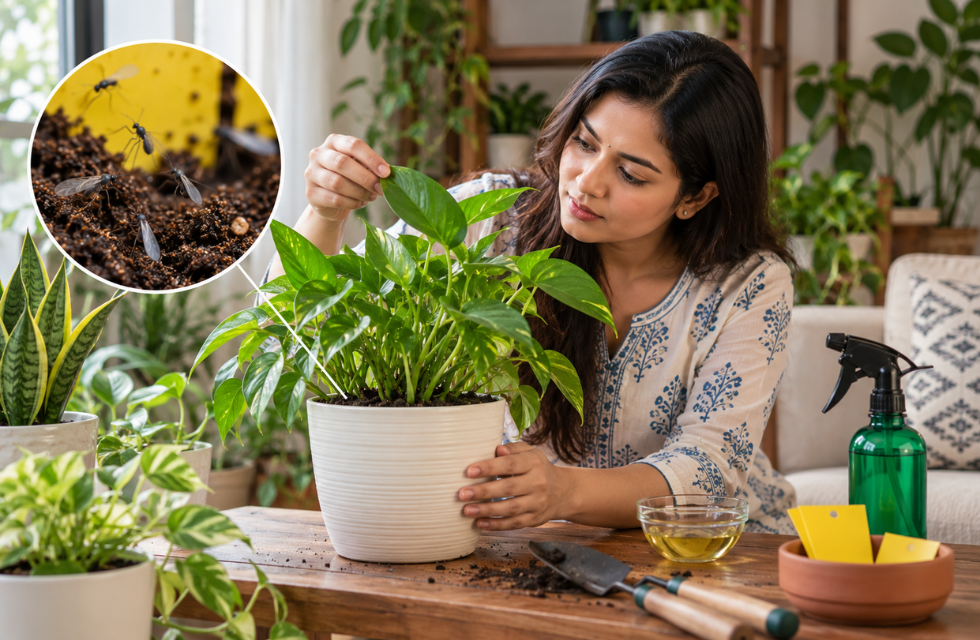
If you are wondering how to get rid of fungus gnats in indoor plants, the short answer is to target the soil, not the flies. The tiny insects breed in damp potting mix. Let the top 2–5 cm dry out, catch the adults on yellow sticky traps and treat the larvae where they live. Keep going for three to four weeks, because eggs and pupae survive a single treatment. Most plants recover fully once the breeding cycle breaks.
Do this first:
- Stop watering until the top 2–5 cm of soil feels dry to your finger.
- Place a yellow sticky trap in or beside every affected pot.
- Treat the larvae in the soil with Bti, a potato-slice trap or a mild peroxide drench.
- Check and repeat every few days for three to four weeks, the length of one life cycle.
Are those tiny flies really fungus gnats?
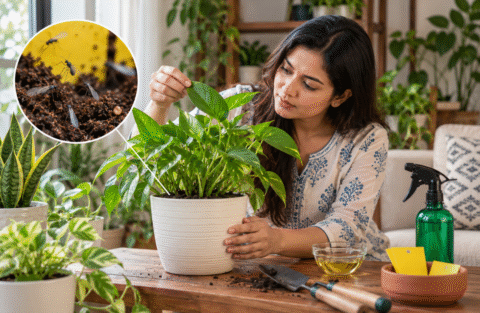
If the flies are dark, about 2–4 mm long and rise from the soil when you touch the pot, they are almost certainly fungus gnats. They look like miniature mosquitoes, with long slender legs and long antennae, and they fly weakly in short, zigzag hops. You will often spot them resting on the soil surface or crawling up a window near the plant.
The real problem sits under the soil. The larvae are about 5–6 mm long, translucent white and legless, with a shiny black head. They live in the top few centimetres of moist mix. When the surface stays wet, they can leave thin, shiny trails that look like tiny slug tracks.
Other small household flies are easy to confuse with them:
- Fruit flies are tan or brown, rounder, often red-eyed, and circle ripe fruit, juice and the kitchen dustbin.
- Drain or moth flies are fuzzy and heart-shaped, and they sit on bathroom walls and near sink drains.
- Shore flies are stockier and darker, and they appear where algae grows on very wet soil.
If the flies gather around the fruit bowl or the sink rather than a plant pot, your plant is not the source. A quick test settles any doubt: lay a slice of raw potato on the soil overnight and look underneath it the next morning for wriggling white larvae.
Why do fungus gnats keep coming back to indoor plants?
They keep coming back because the top layer of soil stays damp for days at a time, which gives females a safe place to lay eggs. Their return has nothing to do with a dirty home. One female can lay up to about 200 eggs, so a small problem grows quickly once the soil suits them.
In Indian homes, the usual causes are these:
- Watering on a fixed timetable instead of by touch, so the pot is topped up before the surface has dried.
- A decorative pot with no drainage hole, which lets water collect at the bottom and keeps the whole mix soggy.
- Water-holding mixes, such as heavy garden soil, unfinished compost or a mix that is mostly cocopeat.
- Water left standing in saucers or in an outer planter after watering.
- Fallen leaves and flowers left to rot on the soil surface.
- Eggs arriving with new plants or in an opened bag of potting mix stored indoors.
- Wet kitchen waste used as plant food, such as rice water, soaked dal, used tea leaves or banana peel left on the soil.
- Monsoon humidity, which slows evaporation so much that pots stay wet far longer than usual.
Do fungus gnats harm your plants, or you?
Adult gnats are a nuisance, not a danger: they do not bite people and do not damage plants. Their larvae are the stage that can cause trouble, and how much depends on the plant.
An established, well-rooted houseplant usually shrugs off a light infestation. Seedlings, fresh cuttings and plants with weak roots are more vulnerable. Heavy larval feeding on young roots can cause yellowing, slow growth, wilting and leaf drop. Greenhouse studies have also found the gnats carrying spores of root-disease fungi such as Fusarium, so they can help spread rot in plants that are already stressed.
For pets and children, the flies themselves are harmless. The bigger concern is the treatments, so keep sticky traps and any products out of reach.
How to get rid of fungus gnats in indoor plants, step by step
The fastest results come from attacking both life stages at once: dry the soil to stop egg-laying, trap the adults, and kill the larvae in the top few centimetres. The steps below run in that order.
Step 1: Let the top layer of soil dry out
Drying the surface is the single most important step, because eggs and young larvae die in dry soil. Push a finger or a wooden chopstick 2–5 cm into the mix and water only when it comes out dry and clean. Succulents and snake plants can go much drier than that.
In humid weather this can take a week or more. Thirsty plants such as ferns and peace lilies should not wilt completely, so give them a small drink from below: stand the pot in a tray of water for 15–20 minutes, then drain it. Bottom-watering keeps the surface drier than pouring from above.
Step 2: Trap the adults with yellow sticky cards
Yellow sticky traps catch adult gnats before they lay more eggs. Push one into the soil on a stake or lay it flat across the surface, and replace it when it is covered. The traps cannot touch the larvae, so treat them as a brake and a progress meter, not a cure. Keep them away from curtains, pets and small hands.
Step 3: Kill the larvae with Bti
Bti (Bacillus thuringiensis subsp. israelensis) is a naturally occurring soil bacterium that kills fly larvae, including mosquito and gnat larvae, while being harmless to plants. You mix it with water and use it to water the pot, so it reaches the larvae where they feed. Its effect is temporary, so repeat it as the label directs for at least three weeks. [CONFIRM: availability and labelled Bti products for home use in India.] Always follow the label.
Step 4: Use potato slices to test and trap larvae
Raw potato is very attractive to the larvae. Press two or three slices, cut side down, onto the soil surface. After a day or two, lift them, check the underside and throw them away with the larvae attached. This shows you how bad the infestation is and removes some larvae, but it will not clear a pot on its own.
Step 5: Try a hydrogen peroxide drench for heavy infestations
For a badly infested pot, a mild hydrogen peroxide drench kills larvae on contact. Mix 1 part 3% hydrogen peroxide with 4 parts water and pour it through soil that has already dried. It fizzes briefly, then breaks down into water and oxygen. Use it once and repeat no more than weekly, because overuse can stress fine roots. Skip it on seedlings and very young cuttings.
Step 6: Top-dress the soil with grit or coarse sand
Once the surface is dry, a 1–2 cm layer of coarse sand, fine grit or perlite discourages females from laying eggs. The layer dries quickly even when the soil below is moist. It only works alongside careful watering, and it hides the soil, so push your finger beneath it before you water.
Step 7: Repot when the infestation is severe
If the soil smells sour or the plant is wilting despite moist soil, repot it. Remove the top 3–5 cm of mix, slide the plant out and check the roots. Healthy roots are firm and pale; mushy brown ones should be trimmed with clean scissors. Replant in fresh, airy mix in a pot with a drainage hole, and wash the old pot before reuse.
How long does it take to get rid of fungus gnats?
Expect three to four weeks of steady effort, because one generation takes roughly 21–28 days to go from egg to adult. Eggs and pupae survive most single treatments, so stopping after a few days lets the cycle restart.
A typical timeline looks like this:
- Week 1: the soil dries, traps fill up quickly and the first larval treatment goes in.
- Week 2: fewer adults are caught, but larvae from surviving eggs are still hatching, so repeat the treatment.
- Week 3: only a handful of adults appear on the traps.
- Week 4: the traps stay almost empty. Keep one in place as an early-warning monitor.
If you still catch many adults after four weeks, the soil is not drying out enough between waterings. Recheck drainage, cut watering further or repot into a lighter mix.
Which fungus gnat home remedies don’t actually work?
Most popular home remedies catch a few adults or do little to the larvae, which is why the flies keep returning after people try them. Here is an honest look at the common ones:
- Cinnamon powder has a mild antifungal effect on the soil surface, but there is little evidence that it stops larvae.
- Matchsticks pushed into the soil are unreliable, and we do not recommend them.
- Garlic or chilli sprays have thin evidence behind them and can irritate leaves and skin.
- Neem oil sprays do not give lasting control of adults, according to university extension advice. Neem cake mixed into the soil may deter larvae a little, but it is not a cure, and neem can upset pets that chew soil or leaves.
- Diatomaceous earth only works when dry, so it loses its effect the moment you water.
- Vinegar and soap traps catch some adults, especially fruit flies, but do nothing about breeding in the soil.
One method genuinely works but is hard to use at home here. Beneficial nematodes (Steinernema feltiae) and soil-dwelling predatory mites control larvae well in commercial growing, but they are difficult to buy in India.
How can you stop fungus gnats coming back?
Prevention comes down to letting the surface of the soil dry between waterings and keeping rotting matter out of the pot. These habits keep most homes gnat-free:
- Water by touch, not by the calendar. A dry pot also feels noticeably lighter when you lift it.
- Use the pot-in-pot method. Keep the plant in a plastic nursery pot with drainage holes inside your decorative planter, and tip out collected water after 15 minutes.
- Choose an airy mix, such as equal parts cocopeat, perlite and well-rotted compost or vermicompost.
- Quarantine new plants for two weeks in a separate spot with a sticky trap beside them.
- Seal opened bags of potting mix and store them outdoors or in a dry cupboard.
- Compost kitchen waste first. Rice water, tea leaves and peels poured straight onto the soil feed the fungi the larvae eat.
- Pick up dead leaves from the soil surface every week.
Water-grown plants need a slightly different routine. Gnats rarely breed in clean water, but standing water can breed mosquitoes. If you keep golden money plant cuttings in bottles, change the water weekly and rinse the jar. If you are still building your collection, easy houseplants for a first-time grower are a good place to start.
Why are fungus gnats worse in the monsoon in Kolkata and Bengal?
Gnat numbers climb in the monsoon because humid air slows evaporation, so pots stay wet for days longer than in any other season. In eastern India, that wet spell runs from June to September, and it is when most people first notice the flies.
Monsoon (June to September). The air stays heavy with moisture and indoor pots can take twice as long to dry. Cut watering sharply, move pots closer to a bright window and empty every saucer. Some species cope better than others with the damp, and plants that thrive through the wet months are worth knowing before the rains arrive.
Pre-monsoon (March to May). The heat dries soil fast, so gnats usually fall away. The risk now is overcorrecting: anxious daily watering in April and May can set up the next outbreak. Check the soil before every watering, even in the heat.
Winter (December to February). Plants grow slowly and soil dries slowly too. Cool weather slows the gnat life cycle, but it does not stop it, so stretch the gap between waterings.
Plants raised in this climate, such as Kolkata-grown nursery plants, are already used to the humidity, but their soil still needs to dry between waterings. For a fuller picture of how indoor plants behave through a Kolkata year, see our seasonal guide. In drier north and west India, indoor pots dry much faster, so outbreaks there are tied more to overwatering than to the season.
Which indoor plants are less likely to attract fungus gnats?
Plants that like their soil to dry out between waterings attract fewer gnats, because the surface rarely stays damp long enough for eggs to survive. No plant is gnat-proof, though: any pot kept constantly wet will draw them in.
Good low-risk choices include:
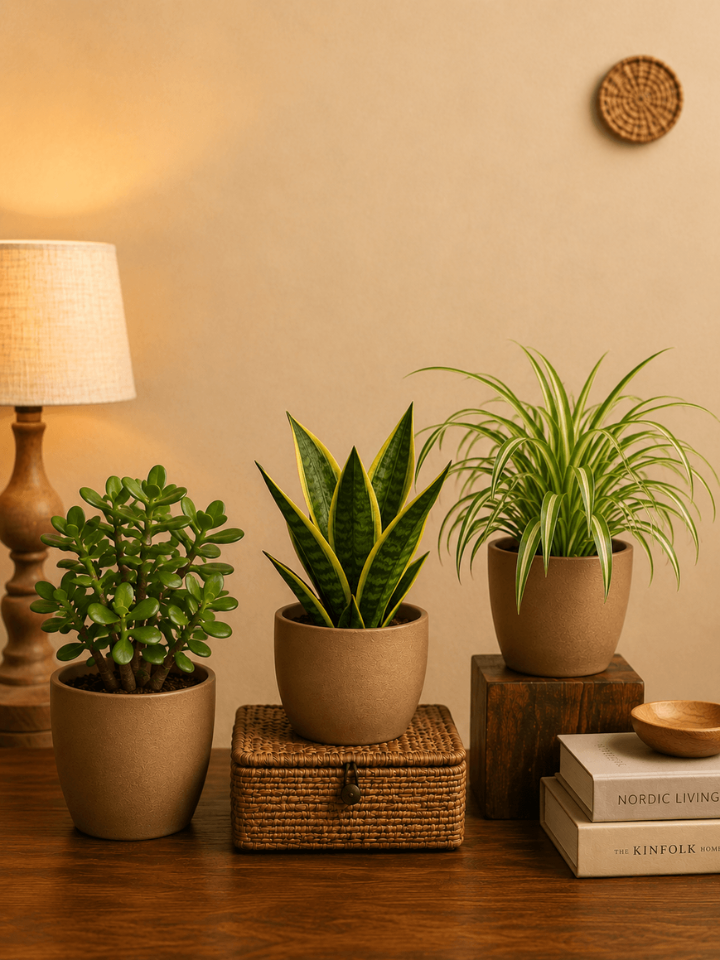
- A compact golden snake plant, which prefers to be left dry for two to three weeks at a time.
- A small, slow-growing haworthia, a succulent that needs water only when its soil is fully dry.
- The thick-leaved lucky jade, which stores water in its leaves and resents soggy roots.
- A glossy-leaved peperomia, whose semi-succulent leaves let it go longer between drinks.
For more options, the range of cacti and succulents that prefer dry soil is the lowest-risk group of all. Many houseplants that cope with an irregular watering routine also suit busy owners who tend to overwater.
Room choice matters too. In a dim room the soil dries slowly, so pick plants suited to dim rooms and water them even more sparingly. Moisture lovers such as ferns, peace lilies and calatheas need closer watching. You can also browse our indoor plant range, sorted by light and room.
If you have cats or dogs, note that the ASPCA lists snake plants and jade as toxic to them. Spider plant, areca palm and calathea are listed as non-toxic.
Frequently asked questions
No, these gnats do not bite, sting or spread disease to people or pets. They are a nuisance rather than a health risk. The larger concern is the treatment you use, so keep sticky traps, neem products and hydrogen peroxide away from curious pets and small children.
Yes, most plants with larvae in the roots can be saved if some healthy roots remain. Remove the top few centimetres of soil, trim any mushy roots and repot into fresh, well-draining mix. Then water only when the surface is dry and treat the soil for three to four weeks.
An adult gnat lives for about a week. The full life cycle, from egg through larva and pupa to adult, takes roughly three to four weeks at room temperature. Because the generations overlap, eggs, larvae and adults are usually present in the same pot at once.
Neem helps a little but rarely solves the problem on its own. Neem oil sprays do not give lasting control of adults, and neem cake in the soil only mildly deters larvae. Drying the soil and using a larval treatment such as Bti work far better.
Cinnamon is unlikely to get rid of an infestation by itself. It has a mild antifungal effect on the soil surface, but there is little evidence that it kills larvae. Use it, if at all, alongside drier watering and sticky traps rather than instead of them.
Repot only if the infestation is heavy, the soil smells sour or the roots look damaged. For light infestations, drying the soil and treating the larvae is enough. If you do repot, use fresh mix and a pot with a drainage hole, and clean the old pot thoroughly.
They rarely disappear on their own while the soil stays damp. They breed continuously in moist mix, so numbers tend to rise. If you let the surface dry between waterings for a few weeks, the cycle usually breaks without any other treatment.
Gnats near a money plant bottle usually come from a nearby soil pot, not the water. They breed in damp soil, not clean water. Check neighbouring pots for larvae, change the bottle water weekly, and keep the jar clean to avoid mosquito breeding too.
Start with the soil, and the flies will follow
These flies are a sign of soil that stays too wet, not of a failing plant. Dry the surface, trap the adults, treat the larvae and give it a full month. Once the cycle breaks, your plant usually carries on as before. If you are adding new greenery, Plantaeroot grows its plants at its own nurseries in Rishra and Joka. You can check the cities we ship live plants to before you order.
Sources we checked