Echeveria Pegasus is a hybrid cultivar of Echeveria, a genus of about 150 rosette-forming succulents in the stonecrop family, Crassulaceae. Wild echeverias come from the dry hills and rocky slopes of Mexico, Central America and the northern Andes, which explains almost everything about how this plant likes to be treated: plenty of light, a gritty soil that drains in seconds, and long dry spells between drinks. "Pegasus" is a nursery trade name, so no fixed parentage is published for it.
What you will notice when it arrives:
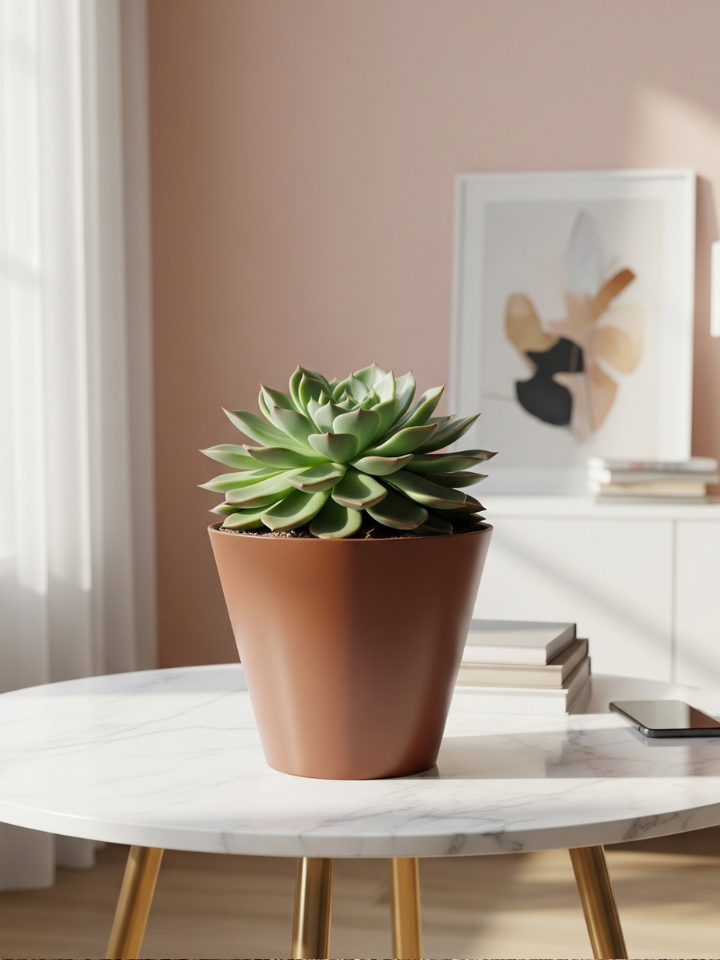
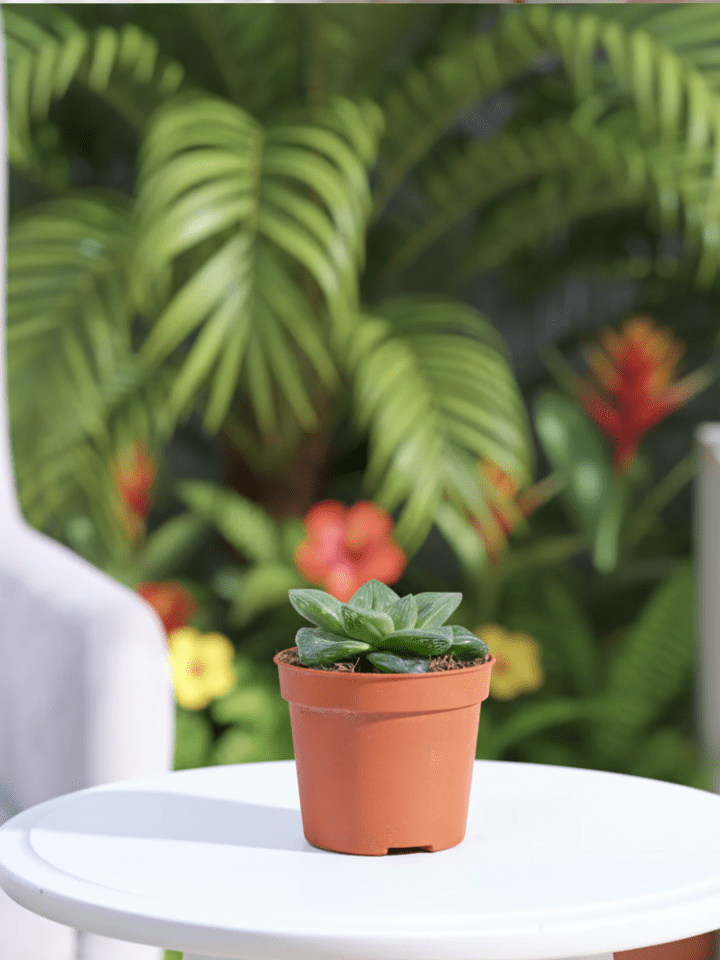
- Rosette. A tight, symmetrical spiral of fleshy leaves that looks like a sculpted flower. Most hybrids of this type settle at around 10–15 cm across in a pot. [CONFIRM size on dispatch]
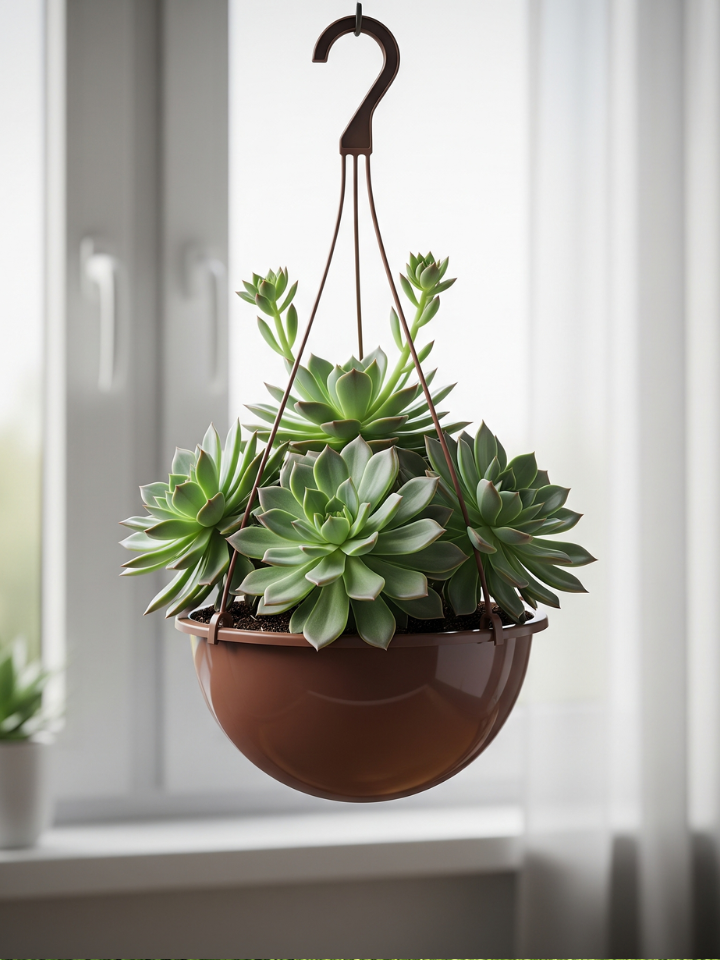
- Leaves. Thick, smooth and spoon-shaped, ending in a fine point. They store water, which is why the plant copes so well with a missed watering.
- Colour. A soft blue-grey base with pink, peach or lilac blushing on the tips and margins. The colour is strongest in good sun and in the cooler months.
- Farina. A thin, powdery wax coats each leaf and gives the plant its frosted look. It protects the leaf from strong sun. Try not to touch it: fingerprints rub it off for good.
- Flowers. Mature echeverias often send up arching stalks of small bell-shaped flowers, usually in coral, pink or orange. A young plant may not flower in its first year.
Why choose a pastel succulent like this?
Most succulents are green. This one brings the soft colours people usually buy cut flowers for, and keeps them for years with very little effort. That makes it one of the easiest ways to add colour to a sunny corner without a weekly watering routine.
It suits:
It does not suit a dim room, a bathroom without a window or a corner several metres from the glass. If your space is shady, a haworthia for the shadier sill is the better succulent.
Product Specifications
- Plant name: Echeveria Pegasus (listed as Echeveria Pegasas)
- Botanical name: Echeveria 'Pegasus' (hybrid cultivar; parentage not published)
- Plant family: Crassulaceae (stonecrop family)
- Origin of genus: Mexico, Central America and north-western South America
- Plant type: Evergreen rosette succulent
- Pot supplied: 4-inch nursery pot
- Leaves: Thick, spoon-shaped and pointed; powder-blue with pink, peach or lilac blush; coated in powdery farina
- Flowers: Bell-shaped, usually coral to pink, on arching stalks; mainly on mature plants
- Growth habit: Compact, symmetrical rosette; slowly forms offsets
- Growth rate: Slow to moderate
- Mature size: Typically about 10–15 cm across in a pot for hybrids of this type
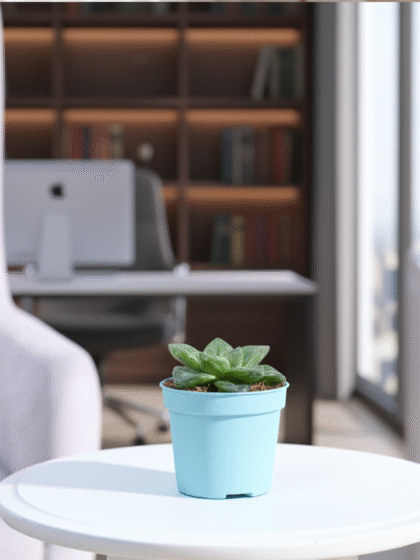
- Suitable placement: Sunny windowsill, bright desk near a window, sheltered balcony ledge, dish garden
- Not suitable for: Dim rooms, windowless bathrooms, or open spots exposed to monsoon rain
- Light requirement: Bright light with three to five hours of direct sun; protect from harsh afternoon sun in peak summer
- Water requirement: Low; water only when the soil is completely dry
- Soil requirement: Gritty, fast-draining succulent mix
- Recommended pot: Shallow terracotta or ceramic pot with a drainage hole
- Fertiliser: Quarter-strength liquid feed or a little vermicompost monthly, February to May
- Temperature: Grows best between about 15 and 30 °C; dislikes frost and prolonged wet humidity
- Propagation: Leaf cuttings, offsets or beheading
- Common problems: Root and stem rot, stretching in low light, sunburn, mealybugs
- Maintenance: Low
- Difficulty level: Easy
- Suitable environment: Bright homes and balconies across India; extra care needed in the monsoon
- Pet safety: Non-toxic to cats and dogs (ASPCA lists several echeveria species as non-toxic; the cultivar is not listed by name)
How do you care for Echeveria Pegasus?
The short answer: lots of light, very little water, and soil that drains fast. Everything else is detail.
- Light. Three to five hours of direct sun, with morning sun the safest. Indoors, keep it right at the window. In the fierce afternoon sun of an Indian May, give it light shade so the leaves do not scorch.
- Watering. Use the "soak and dry" method. Water slowly until it drains from the bottom, empty the saucer, then wait until the soil is dry all the way down. In practice that means about every 10–14 days in summer, every three to four weeks in winter, and often not at all during long rainy spells. Water the soil, not the centre of the rosette.
- Soil. A gritty, fast-draining mix. Combine one part cocopeat or garden soil with one part coarse sand and one part perlite or small brick pieces.
- Pot. A shallow terracotta pot with a drainage hole works best, because clay dries out quickly. Repot into a slightly wider pot every year or two, in late winter or spring.
- Feeding. Very little. A quarter-strength liquid fertiliser or a pinch of vermicompost once a month from February to May is plenty. Do not feed in the monsoon or winter.
- Grooming. Pull off dry lower leaves gently. They are normal as the rosette grows and can trap moisture if left.
Because it asks for so little, it belongs among houseplants that thrive on a forgotten watering can, and if this is your first plant, our guide to first plants for people who have never kept one alive suggests good companions.
Why is my echeveria losing its colour or stretching?
Almost always too little light. In a dim spot the rosette turns greener, the leaves spread flat and the centre grows upwards on a long stem, a habit called etiolation. Move the plant gradually into brighter light over a week or two. The new growth will be compact and coloured again. A stretched plant can be "beheaded": cut the rosette off with a short stem, let it dry for a few days, then set it on dry gritty soil to root.
Colour also varies with the season. Pink and lilac tones are usually richest in the cool, sunny months from November to February, and softer in the humid heat of summer and the rains. That is natural, not a sign of trouble.
Echeveria Pegasus through the Bengal year
These timings come from growing succulents in the humid Kolkata climate and suit most of eastern and southern India.
February to May: best growth. Bright days, dry air and warm temperatures suit it well. Water when dry, feed lightly, and repot or propagate now.
June to September: monsoon caution. This is the riskiest season. Keep the pot under cover, out of direct rain, in the brightest airy spot you have. Water only when the soil is bone dry, and check the base of the rosette for soft, dark leaves. This guide to what the Kolkata monsoon does to indoor plants and how to plan for it covers airflow and drainage in more detail.
October to January: colour season. Cooler nights bring out the pink and lilac blush. Growth slows, so water sparingly. In north India, bring it indoors on frosty nights.
How do you propagate Echeveria Pegasus?
Echeverias are some of the easiest succulents to multiply.
- Leaves. Twist a healthy lower leaf off cleanly, let it dry for two or three days, then lay it on dry succulent mix in bright shade. Tiny roots and a baby rosette appear in a few weeks. Mist the soil lightly only once roots show.
- Offsets. Mature plants sometimes form small "pups" around the base. Separate them in spring with a few roots attached and pot them up on their own.
What problems affect echeverias?
- Soft, translucent or black leaves at the base. Rot from overwatering or rain. Stop watering, remove the damaged leaves and move the plant somewhere bright and airy. If the stem is affected, behead and re-root the healthy top.
- Wrinkled, thin leaves. Thirst. Give it a thorough soak; it should plump up within a day or two.
- Brown, crispy patches. Sunburn, usually after a sudden move into strong afternoon sun. Acclimatise it over a fortnight.
- White cottony tufts between leaves. Mealybugs. Dab them off with a cotton bud dipped in rubbing alcohol and repeat weekly until clear.
Is Echeveria Pegasus safe for cats, dogs and children?
Yes, as far as current evidence goes. The ASPCA lists several echeveria species, including blue echeveria (Echeveria glauca), as non-toxic to dogs, cats and horses. 'Pegasus' is not listed by name, but it belongs to the same genus. It is still an ornamental plant, not food, so keep it out of reach of pets and toddlers who like to chew. If you are building a pet-safe shelf, browse plants that are kinder to curious cats and dogs, or add a Christmas cactus for the bright shelf beside it, another succulent the ASPCA lists as non-toxic.
A little colour that asks for almost nothing
Each rosette is potted, checked and packed by an online nursery that raises its own succulents, then delivered across India. Give it sun and patience with the watering can, and your Echeveria Pegasus will reward you with pastel colour for years.


























There are no reviews yet.