

Is It Really Possible to Have Flowers All Year?
Yes, it is absolutely possible to enjoy flowers throughout the year — but only if you choose the right plants and provide suitable growing conditions.
Many gardeners believe that flowering plants bloom only in specific seasons. While that is true for some varieties, there are several year-round flowering plants that can produce blooms almost 12 months with proper care.
Understanding how these plants work and how climate affects them is the key to maintaining continuous color in your home garden, balcony, or terrace.
Understanding Year-Round Flowering Plants
A 12 months flowering plant is usually a tropical perennial that does not depend heavily on seasonal changes to bloom. Unlike seasonal flowers that complete their life cycle in a few months, these plants keep growing and producing buds repeatedly.
There are generally two types:
- Continuous bloomers – Plants that flower almost non-stop in warm climates.
- Repeat bloomers – Plants that flower in cycles throughout the year with short resting periods.
The ability to produce flowers regularly depends on:
- Sunlight exposure
- Temperature stability
- Soil nutrition
- Proper pruning and feeding
With balanced care, many flowering varieties can surprise you with blooms even during off-seasons.
Climate Influence on Continuous Blooming
Climate plays a major role in determining whether a plant can flower throughout the year. Most long-blooming varieties thrive in:
- Warm temperatures (18°C to 35°C)
- Moderate humidity
- Adequate sunlight (4–6 hours daily)
In colder regions, flowering slows down because low temperatures reduce metabolic activity in plants. Frost and extreme winter conditions can completely stop blooming.
On the other hand, tropical and subtropical regions provide a stable growing environment, allowing plants to remain active for longer periods.
Why Indian Weather Supports Longer Flowering Cycles
India’s climate, especially in regions like Kolkata, Bangalore, Mumbai, and Chennai, is highly favorable for extended blooming. The long summers, mild winters, and good sunlight availability create ideal conditions for many tropical flowering plants.
Even during winter in most Indian cities, temperatures rarely drop to freezing levels. This means:
- Roots remain active
- Growth continues slowly
- Flower buds still develop
That is why many gardeners in India successfully grow plants that bloom nearly all year, particularly in balconies, terraces, and home gardens.
With the right plant selection and basic maintenance, you can create a garden that stays colorful in every season — not just spring.
What Does “12 Months Flowering Plant” Actually Mean?
Seasonal vs Perennial Bloomers
Not all flowering plants behave the same way.
Seasonal plants complete their flowering cycle within one specific season — such as winter petunias or summer zinnias. Once their season ends, the plant either slows down or finishes its life cycle.
In contrast, perennial flowering plants continue to grow for several years. These are the plants that can bloom throughout the year, especially in warm regions. Their flowering pattern depends more on care and climate than on strict seasonal changes.
For Indian home gardens, perennial varieties are usually the best choice for long-lasting blooms.
Continuous Bloomers vs Repeat Bloomers
Within long-blooming varieties, there are two main categories:
Continuous Bloomers
- Produce flowers almost regularly in stable climates
- Require consistent sunlight and feeding
- Ideal for balconies and terraces with good light
Repeat Bloomers
- Flower in cycles (for example, 6–8 weeks of blooms, then a short rest period)
- Benefit from pruning after each flowering flush
- Often respond well to organic fertilizers
Most plants marketed as “12 months flowering” fall into one of these two categories.
Factors That Affect Year-Round Flowering
Even the best flowering plant will not bloom consistently without proper conditions. Key factors include:
- Sunlight: At least 4–6 hours of bright light daily
- Soil quality: Well-draining soil rich in nutrients
- Watering balance: Neither overwatering nor underwatering
- Pruning: Removing old flowers encourages new buds
- Feeding schedule: Regular use of compost or balanced fertilizer
In Indian climates, where sunlight is abundant for most of the year, maintaining these factors becomes easier compared to colder countries.
So, when we say a plant flowers 12 months, it means the plant has the natural potential to bloom across all seasons — provided it receives the right care and environment.
Top Plants That Give Flowers 12 Months a Year (Best for Indian Homes)
If you’re wondering which plant gives 12 months of flowers in India, the answer lies in choosing tropical and long-blooming varieties. India’s warm climate makes it possible to grow several flowering plants that bloom almost throughout the year with proper care.
Below are some of the best options for balconies, terraces, and home gardens.
- Hibiscus rosa-sinensis (Gudhal)
Hibiscus is one of the most reliable year-round flowering plants in tropical regions. In warm Indian cities like Kolkata, Mumbai, and Chennai, it can bloom almost every month.
Why it flowers long:
- Loves full sunlight
- Responds well to regular pruning
- Produces new buds continuously
Care Tip: Give at least 5–6 hours of sunlight daily and feed with organic compost every 20–25 days for better flowering.
- Anthurium andraeanum
If you are looking for an indoor flowering plant that blooms most of the year, Anthurium is an excellent choice. Its colorful spathes can last for several weeks.
Why it works indoors:
- Thrives in indirect bright light
- Prefers humid conditions
- Flowers multiple times a year
It is ideal for living rooms and office spaces where direct sunlight is limited.
- Ixora coccinea
Ixora is a popular tropical shrub known for its dense clusters of small flowers. In warm climates, it can bloom repeatedly across the year.
Best for:
- Terrace gardens
- Outdoor landscapes
- Sunny balconies
It prefers slightly acidic soil and consistent watering.
- Kalanchoe blossfeldiana
Kalanchoe is a low-maintenance flowering succulent. While it blooms heavily during certain seasons, with proper light exposure it can flower multiple times in a year.
Why beginners love it:
- Requires less watering
- Compact growth
- Suitable for small spaces
Place it near a bright window for best results.
- Rosa (Rose – Desi & Hybrid Varieties)
Many rose varieties are repeat bloomers and can flower throughout the year in Indian weather.
To encourage continuous blooms:
- Prune after each flowering cycle
- Use phosphorus-rich fertilizer
- Ensure full sunlight
Roses perform beautifully in terrace gardens and sunny balconies.
Choosing the Right Plant for Your Space
The best 12 months flowering plant depends on:
- Indoor or outdoor location
- Sunlight availability
- Maintenance level you prefer
In most Indian cities, combining two or three of these varieties can help you enjoy blooms in every season.
Best Flowering Plants for Different Locations (Balcony, Terrace, Indoor)
Choosing the right plant for the right space is the secret to enjoying flowers throughout the year. Even the best 12 months flowering plant will struggle if placed in unsuitable conditions. Below is a simple location-based guide to help you select wisely for Indian homes.
Year-Round Flowering Plants for Balcony
Balconies usually receive partial to full sunlight, depending on direction. South- and west-facing balconies are ideal for long-blooming varieties.
Best choices:
- Hibiscus rosa-sinensis
- Rosa
- Ixora coccinea
These plants require:
- 4–6 hours of sunlight
- Medium to large pots with drainage
- Regular feeding every 3–4 weeks
If your balcony has limited sunlight, shift pots gradually to brighter spots to maintain blooming.
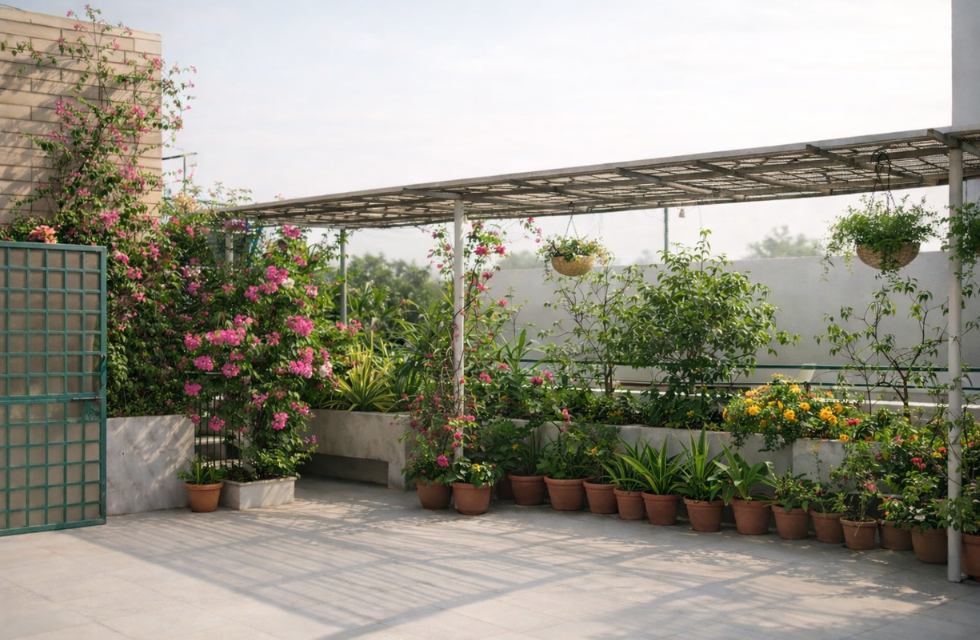
Flowering Plants for Terrace Garden
Terraces usually get maximum sunlight, which is excellent for continuous flowering. However, protection from extreme summer heat may be necessary.
Ideal options:
- Rosa (especially hybrid varieties)
- Hibiscus rosa-sinensis
- Bougainvillea
Terrace gardening tips:
- Use large grow bags or sturdy pots
- Ensure proper drainage
- Provide shade net during peak summer if needed
With proper pruning and nutrition, terrace plants can bloom across most months in Indian climates.
Indoor Flowering Plants for Living Room
Not all flowering plants thrive indoors, but some varieties perform well in bright, indirect light.
Recommended indoor bloomers:
- Anthurium andraeanum
- Kalanchoe blossfeldiana
- Spathiphyllum
Indoor care essentials:
- Place near a bright window
- Avoid direct harsh sunlight
- Maintain moderate humidity
- Rotate the pot occasionally for balanced growth
These plants may not flower daily, but they bloom multiple times throughout the year under stable indoor conditions.
Low-Maintenance Flowering Plants for Beginners
If you are new to gardening and wondering which plant gives flowers all year with minimal effort, choose hardy varieties.
Beginner-friendly options:
- Kalanchoe blossfeldiana
- Hibiscus rosa-sinensis
- Ixora coccinea
These plants are:
- Adaptable to Indian weather
- Responsive to basic care
- Less sensitive to small watering mistakes
Starting with easy-care varieties increases your chances of enjoying continuous blooms without stress.
By selecting plants based on your available space and sunlight, you can maintain a garden that remains colorful throughout the year.
Climate-Based Guide (India-Specific Growing Advice)
India’s diverse climate plays a major role in determining which plant gives 12 months of flowers successfully in your region. From humid coastal cities to dry inland areas, understanding your local weather helps you choose the right flowering varieties and maintain blooms throughout the year.
Below is a region-focused growing guide tailored for Indian conditions.
Best Flowering Plants for Hot Climates
In cities where summers are intense—such as Kolkata, Delhi, Hyderabad, and Nagpur—heat-tolerant plants perform best.
Ideal choices:
- Hibiscus rosa-sinensis
- Bougainvillea
- Ixora coccinea
Growing tips for hot regions:
- Water early morning or late evening
- Use mulch to retain soil moisture
- Avoid overhead watering during peak sun
These plants thrive in warm temperatures and continue producing flowers even during long summers.
Flowering Plants for Humid Regions
Coastal areas like Mumbai, Chennai, and parts of West Bengal experience high humidity. While this supports tropical growth, it can also encourage fungal issues.
Suitable plants:
- Anthurium andraeanum
- Hibiscus rosa-sinensis
- Spathiphyllum
Care advice:
- Ensure good air circulation
- Use well-draining potting mix
- Avoid water stagnation in pots
Humidity actually supports longer flowering cycles if soil drainage is properly managed.
Winter Care Tips for Continuous Blooms
In North Indian cities like Delhi, Jaipur, and Chandigarh, winter temperatures can slow down flowering.
To maintain year-round blooms:
- Shift pots to sunny spots
- Reduce watering frequency
- Avoid heavy pruning in extreme cold
- Use organic compost to strengthen roots
In most parts of India, winters are mild compared to colder countries. This allows many perennial flowering plants to stay active and resume blooming quickly once temperatures rise.
Matching Plants to Your Microclimate
Even within the same city, microclimates matter. A sunny terrace behaves differently from a shaded balcony. Observing how much sunlight and airflow your space receives will help you select plants that bloom more consistently.
By aligning plant choice with regional climate and seasonal care, you can successfully grow flowers almost 12 months a year in India.
How to Make Any Flowering Plant Bloom Throughout the Year
Even if you choose the right variety, consistent flowering depends on proper care. If you’re wondering how to encourage blooms for 12 months, the answer lies in balancing sunlight, nutrition, watering, and pruning. With the right routine, many flowering plants in Indian homes can produce buds repeatedly across seasons.
Below are practical, easy-to-follow tips.
- Provide Adequate Sunlight
Most flowering plants need at least 4–6 hours of direct or bright sunlight daily. Without sufficient light, plants focus on leaf growth instead of producing flowers.
- Place pots in south- or west-facing balconies when possible
- Rotate indoor plants weekly for even exposure
- Avoid deep shade for sun-loving varieties
Light is the primary trigger for bud formation.
- Use Nutrient-Rich Soil
Healthy roots lead to consistent blooms. A well-draining potting mix enriched with compost supports long flowering cycles.
Ideal soil components:
- Garden soil
- Vermicompost or organic compost
- Cocopeat for aeration
- Sand or perlite for drainage
Replenish nutrients every 20–30 days during active growth.
- Follow a Balanced Fertilizer Schedule
Flowering plants benefit from phosphorus-rich feeding, which encourages bud development.
- Use organic compost regularly
- Add liquid fertilizer every 2–3 weeks
- Avoid excess nitrogen, as it promotes leaves instead of flowers
A consistent feeding schedule significantly improves blooming frequency.
- Prune and Deadhead Regularly
Removing faded flowers (deadheading) signals the plant to produce new buds. Light pruning also improves air circulation and stimulates fresh growth.
- Trim after each flowering cycle
- Remove weak or dry branches
- Avoid heavy pruning during extreme summer or winter
Proper pruning can double the number of blooms over time.
- Maintain Proper Watering Balance
Overwatering is one of the most common reasons flowering stops.
- Water only when the topsoil feels dry
- Ensure pots have drainage holes
- Reduce watering during cooler months
Consistent moisture without waterlogging keeps roots healthy.
- Prevent Pest and Disease Issues
Aphids, mealybugs, and fungal infections can reduce bud formation.
- Inspect leaves weekly
- Use neem oil spray as a preventive measure
- Remove infected leaves immediately
Healthy plants naturally produce more flowers.
Final Tip: Stress Can Trigger Blooming
Interestingly, mild stress—like slight root binding or controlled watering—can sometimes encourage flowering. However, avoid extreme neglect.
By maintaining the right balance of light, nutrition, pruning, and care, you can maximize blooms and enjoy flowers almost throughout the year in Indian conditions.
Common Reasons Why Plants Stop Flowering
Even the best 12 months flowering plant can suddenly stop producing buds. If your plant was blooming well and has now slowed down, there is usually a clear reason behind it. Understanding these common mistakes can help you restore healthy growth and encourage flowers again.
- Lack of Sunlight
Insufficient light is one of the main reasons plants stop blooming. Many gardeners place flowering plants in decorative corners that receive limited sunlight.
Signs of low light:
- Healthy green leaves but no buds
- Long, stretched stems
- Slow overall growth
Most flowering varieties require at least 4–6 hours of bright light daily to continue producing flowers.
- Overwatering or Poor Drainage
Too much water damages roots and reduces oxygen in the soil. When roots are stressed, flowering naturally decreases.
Common symptoms:
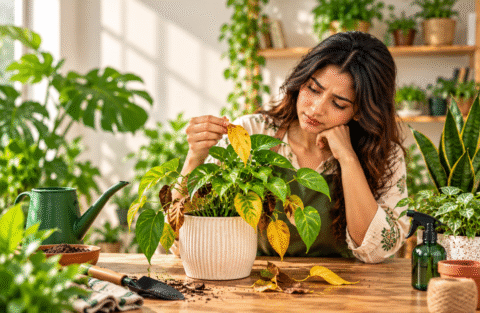
- Yellowing leaves
- Mushy or soft stems
- Foul smell from soil
Always check the topsoil before watering and ensure the pot has proper drainage holes.
- Nutrient Deficiency
If a plant lacks essential nutrients—especially phosphorus and potassium—it may grow leaves but fail to produce buds.
Solution:
- Add organic compost every 3–4 weeks
- Use a balanced liquid fertilizer during active growth
- Avoid excess nitrogen
Feeding plays a major role in maintaining continuous blooms.
- No Pruning or Deadheading
Old flowers left on the plant can reduce new bud formation. Pruning encourages fresh growth and improves air circulation.
Remove:
- Dried flowers
- Weak stems
- Crowded branches
Light trimming after each bloom cycle can revive flowering performance.
- Root-Bound Plants
When roots outgrow the pot and become tightly packed, nutrient absorption decreases.
Indicators of root binding:
- Roots emerging from drainage holes
- Water draining too quickly
- Reduced flowering despite proper care
Repotting into a slightly larger container often restores healthy blooming.
- Sudden Temperature Changes
Extreme heat or unexpected cold waves can temporarily pause flowering. While many tropical plants adapt well in India, sudden climate shifts may stress them.
Protect plants by:
- Providing shade during peak summer
- Shifting pots indoors during cold nights
- Avoiding drastic location changes
Quick Recovery Checklist
If your flowering plant has stopped blooming, check:
- Is it getting enough sunlight?
- Is watering balanced?
- Has it been fertilized recently?
- Does it need pruning or repotting?
Frequently Asked Questions (FAQs)
Which plant flowers all 12 months in India?
In warm Indian climates, Hibiscus rosa-sinensis is one of the most reliable plants that can bloom almost throughout the year. Other good options include Ixora coccinea and certain varieties of Rosa.
However, consistent flowering depends on sunlight, watering balance, and regular feeding.
What is the easiest year-round flowering plant for beginners?
For beginners, Kalanchoe blossfeldiana is easy to maintain and produces multiple bloom cycles annually. If you have good sunlight, hibiscus is also beginner-friendly and highly rewarding.
Start with hardy varieties that adapt well to Indian weather conditions.
Can flowering plants grow indoors all year?
Yes, but only certain varieties thrive indoors. Anthurium andraeanum and Spathiphyllum can bloom multiple times a year when placed in bright, indirect light.
Indoor flowering requires:
- Stable temperature
- Moderate humidity
- Proper drainage
How do I increase flowering naturally?
To improve flowering naturally:
- Provide 4–6 hours of sunlight
- Use organic compost regularly
- Prune faded flowers
- Avoid overwatering
- Apply phosphorus-rich fertilizer
Healthy roots and proper light exposure are the biggest triggers for bud formation.
Do flowering plants stop blooming in winter in India?
In most Indian cities, winters are mild. While flowering may slow down slightly, many tropical perennials continue producing blooms or resume quickly once temperatures rise. Moving pots to sunnier spots during winter helps maintain growth.
Final Thoughts: Bringing 365 Days of Color to Your Home
Growing flowers throughout the year is not a myth. With the right plant selection and consistent care, you can enjoy continuous blooms in balconies, terraces, and indoor spaces across India.
Start with one reliable variety, observe how it responds to your environment, and gradually expand your garden. Even a single flowering plant can transform your home into a vibrant and refreshing space.