



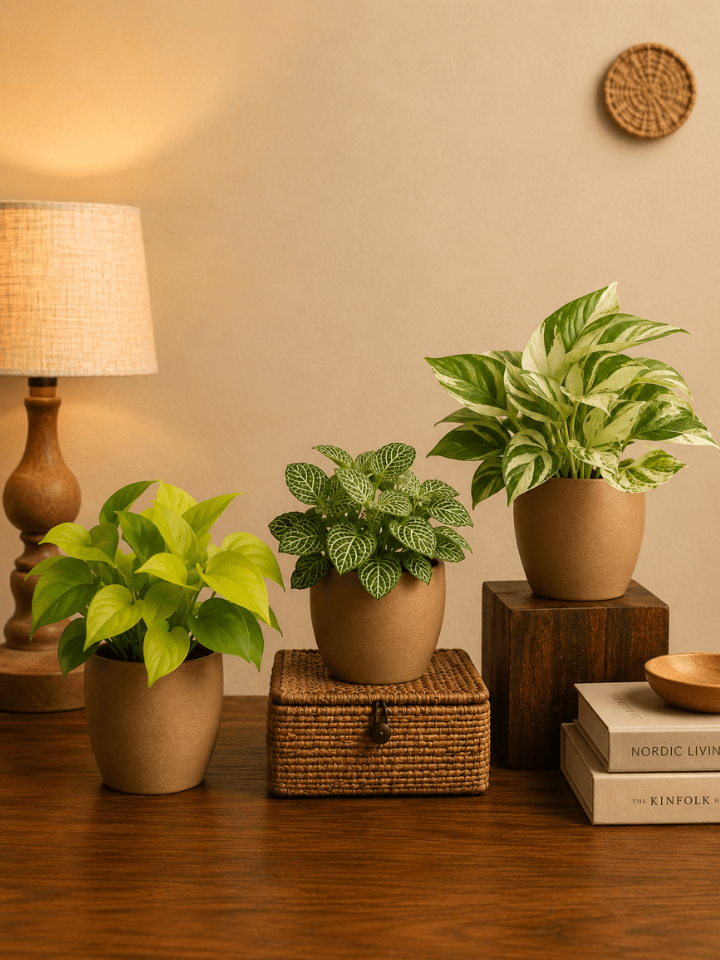

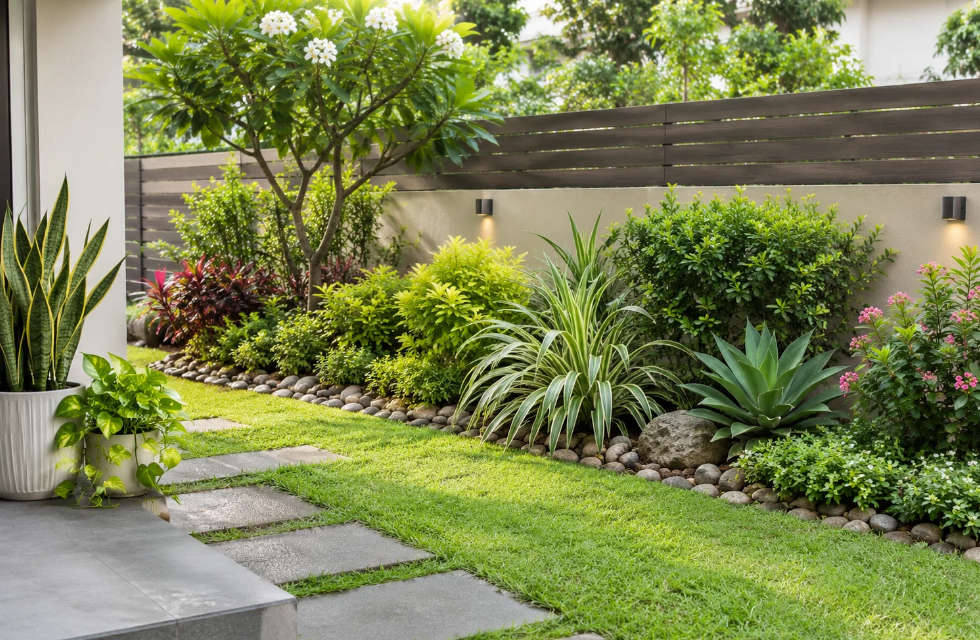
The best low-maintenance outdoor plants for an Indian home garden are bougainvillea, adenium, champa, crown of thorns, nayantara (vinca), ixora, rain lily, kunda, areca palm, snake plant, spider plant, aparajita, curry leaf, tulsi and aloe vera. Each of them survives a missed watering, needs no routine pest spraying, and copes with Indian heat once its roots have settled.
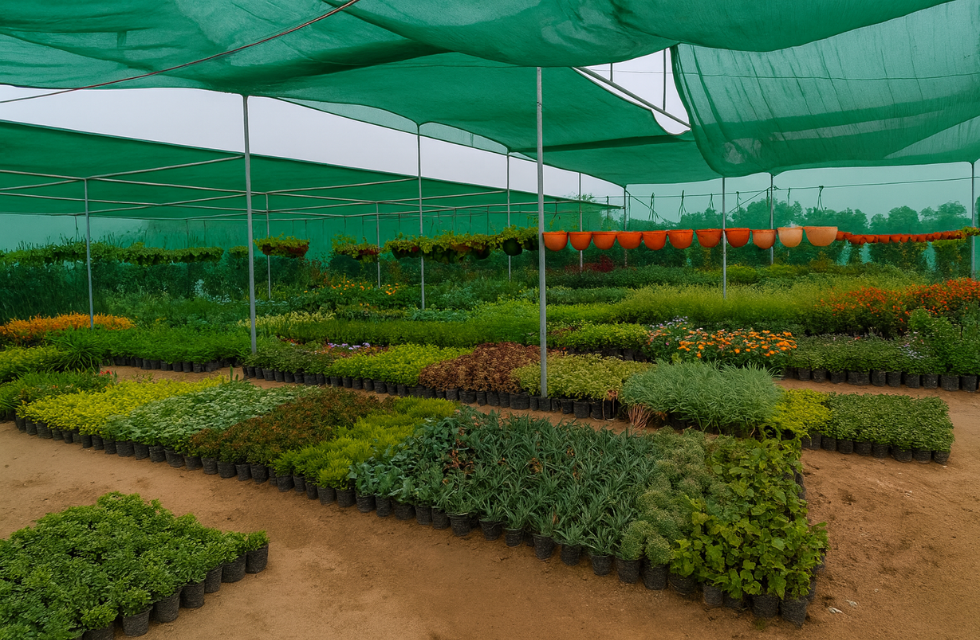
There is one catch. “Easy” depends on where the plant lives. A sun-lover in a shaded courtyard will sulk, and a succulent in a waterlogged pot will rot by August. This guide matches every plant to the light, water and season it really needs. The advice comes from what we see every year at our growing nurseries in Rishra and Joka, where these plants face open sun, heavy monsoon rain and the short Bengal winter.
Quick picks: the right easy-care plant for your spot
- Hot, open terrace with six or more hours of sun: bougainvillea, adenium, champa and crown of thorns.
- Balcony or courtyard with three to five hours of sun: ixora, nayantara, kunda and rain lily.
- Shaded verandah or north-facing entrance: areca palm, snake plant and spider plant.
- Sunny kitchen ledge: curry leaf, tulsi and aloe vera.
- Bare grille or boundary fence:
- Homes with cats or dogs: areca palm, spider plant and kunda are the safest places to start.
What Makes an Outdoor Plant Truly Low Maintenance?
A low-maintenance outdoor plant is one that, once established, needs water no more than two or three times a week in summer, little or no feeding, a trim once or twice a year, and no regular spraying for pests. Plenty of plants are sold as “easy”. Far fewer pass all of the tests below in real Indian conditions.
- It forgives a missed week. In mild weather, a skipped watering should leave it looking tired, not dead.
- It survives your hardest month in place. In Bengal that is the monsoon. In north India it is the May heat or the January cold.
- It needs pruning rarely. Once or twice a year, not every fortnight.
- It seldom attracts pests. Mealybugs, aphids and fungal leaf spots should be the exception, not the routine.
- It grows at a steady pace. A plant that outgrows its pot every season is not saving you any work.
Easy care is not the same as zero care. Every new plant needs four to six weeks of steady attention while its roots grow into fresh soil. After that, the plants in this guide ask for very little. In practice, choosing the right spot matters even more than choosing the right species.
How Do You Choose the Right Easy-Care Plant for Your Space?
Match the plant to three things before you buy it: the hours of direct sun the spot receives, whether the plant will live in a pot or in the ground, and how often you are away from home. Get these right and almost any plant on this list will thrive with minimal care.
1. Count the hours of direct sun
On a clear day, look at the exact spot at around 9 am, noon and 3 pm, and note when sunlight actually falls on it. Six hours or more is full sun. Three to five hours is part sun. Anything under three hours is shade. A bright sky with the spot itself in shadow counts as shade, which is why so many “sunny” balconies disappoint flowering shrubs.
2. Decide between a pot and the ground
Plants in garden soil need water far less often, because open ground holds moisture that no container can match. Pots dry out faster, and terracotta dries fastest of all, although it keeps roots cooler in summer. For a rooftop, choose plants that cope with an exposed, windy terrace and check with your builder before lining the parapet with heavy containers. Smaller spaces suit low maintenance plants for balcony gardens in India, most of which grow happily in 10 to 12 inch pots.
3. Be honest about your routine
- You travel often: choose succulents and woody shrubs such as adenium, crown of thorns, champa, bougainvillea and snake plant, in larger pots that hold more water.
- You are home daily but busy: ixora, kunda, nayantara and curry leaf need a quick check two or three times a week.
- You enjoy pottering: mogra, hibiscus and roses repay extra attention, but they belong in a different list (see the section on plants that are harder than they look).
Which Are the 15 Best Low-Maintenance Plants for an Outdoor Garden?
The 15 plants below are grouped by the light they need, because light decides success outdoors more than anything else. Each entry covers why the plant is easy, its sun and water needs, and the one thing that can still go wrong.
Full-sun plants for terraces and open gardens
1. Bougainvillea
Bougainvillea is the hardest-working flowering plant for a hot terrace, and it blooms best when you do less. The colour comes from papery bracts around tiny white flowers. A plant kept slightly dry and lean produces far more of them than one that is fed and watered generously. Prune lightly after each flush of colour to keep it compact and to trigger the next round.
- Light: six hours or more; strong afternoon sun is welcome.
- Water: only when the top few inches of soil are dry; in winter, about once a week.
- Watch for: hooked thorns, so keep it away from walkways and play areas.
A bougainvillea trained for a terrace edge or sunny railing settles fastest when planted between February and April.
2. Adenium (Desert Rose)
Adenium stores water in its swollen base, which is why it shrugs off a week of neglect in April yet struggles in a soaking July. Give it the sunniest ledge you have and a gritty mix with plenty of coarse sand or brick chips. In return it flowers in pink, red or white for months. During heavy rain, move it under a shade or a roof overhang.
- Light: six hours or more.
- Water: only when the mix is dry right through; very little in winter, when many plants drop their leaves.
- Watch for: the sap and all plant parts are toxic, so keep it well away from pets and children.
Pick desert rose plants for a sun-baked ledge if your terrace sees almost no shade.
3. Champa (Plumeria, Frangipani)
Champa is a small tree that thrives on neglect and rewards it with fragrant flowers through the warm months. Its thick branches hold moisture, so an established plant in a large pot needs water perhaps twice a week in peak summer and far less after the rains. In many parts of India it sheds leaves in the cool season. Bare branches in January are normal, not a sign that the plant has died.
- Light: six hours or more.
- Water: twice a week in summer, sparingly in winter.
- Watch for: an irritant milky sap, and orange rust spots under the leaves in humid months; remove affected leaves promptly.
A fragrant champa tree for a large terrace pot also gives light shade to smaller plants beneath it.
4. Crown of Thorns (Euphorbia milii)
Crown of thorns flowers almost all year in Indian sun and needs about as much water as a cactus. Small red, pink or yellow bracts appear on its thorny stems even in harsh afternoon heat. That makes it one of the few flowering plants for a west-facing wall with no shade at all. It grows slowly and rarely needs repotting.
- Light: five hours or more.
- Water: about once a week in summer, every two to three weeks in winter.
- Watch for: thorns, plus a milky sap that irritates skin and eyes and is harmful if chewed by pets.
It is a good match for gardeners who are often away from home.
5. Nayantara (Vinca, Madagascar Periwinkle)
Nayantara may be the easiest flowering plant of all to begin with. It blooms almost nonstop through summer and the rains, and it often seeds itself into neighbouring pots. It tolerates poor soil, heat and dry spells. What it will not tolerate is soggy soil, so plant it in a well-drained mix and remove saucers during the monsoon.
- Light: four to six hours; it still flowers in part sun.
- Water: when the top inch feels dry; daily only during May heatwaves.
- Watch for: the ASPCA lists periwinkle as toxic to cats and dogs, so place it out of their reach.
Use it in railing pots and along sunny borders wherever you want colour without fuss.
Part-sun plants for balconies and courtyards
6. Ixora (Rangan)
Ixora carries clusters of red, orange, pink or yellow flowers from summer through the rains and stays evergreen all year. That makes it a dependable choice for a low hedge or an entrance row. Dwarf types such as Rugmini stay under a metre in a pot. Its one quirk is a liking for slightly acidic soil. If new leaves turn yellow while the veins stay green, the soil or water is too alkaline, and an iron or sulphur-based soil acidifier usually corrects it.
- Light: three to five hours, ideally morning sun.
- Water: about twice a week in summer.
- Watch for: the ASPCA lists Ixora coccinea as non-toxic to cats and dogs, but many dwarf nursery types are hybrids, so treat this as a guide rather than a guarantee.
A compact Rugmini ixora for a part-sun balcony flowers well even where afternoons are shaded.
7. Rain Lily (Zephyranthes)
Rain lily is a bulb that keeps its own calendar. It bursts into pink, white or yellow flowers a few days after a heavy shower, then rests. The grassy leaves stay tidy in shallow pots and along bed edges, and the bulbs multiply on their own every year. It suits anyone who wants a seasonal surprise without any effort.
- Light: three to six hours.
- Water: regularly through the rains; let it dry a little in winter.
- Watch for: snails at night, and remember that the bulbs are toxic if eaten.
Plant rain lily bulbs that flower after every big shower around the base of taller shrubs.
8. Kunda (Star Jasmine, Jasminum multiflorum)
Kunda is a fragrant jasmine that flowers through winter, when most outdoor plants slow down. Its white, star-shaped blooms appear from about November to February on a shrubby plant that you can train up a grille or keep bushy with a trim after flowering. It needs less water than mogra and rarely attracts pests.
- Light: four to six hours.
- Water: twice a week in summer, once a week in winter.
- Watch for: the ASPCA lists true jasmines (Jasminum) as non-toxic; raat ki rani is not a true jasmine and is not covered by that listing.
Grow kunda, the jasmine that blooms in the cool months, beside a doorway so you catch the scent each evening.
Shade-tolerant plants for verandahs and north-facing entrances
9. Areca Palm
Areca palm gives a shaded courtyard or covered entrance a full, tropical look without needing direct sun. Outdoors in India it grows best in bright shade or gentle morning light, because harsh afternoon sun scorches the fronds brown. Keep the soil evenly moist but never standing in water, and feed it lightly twice a year.
- Light: bright shade, or two to three hours of morning sun.
- Water: when the top inch of soil is dry.
- Watch for: brown tips from dry wind or hard water. The ASPCA lists areca palm as non-toxic to cats and dogs.
An areca palm for a shaded courtyard or covered porch screens a view while staying easy to manage.
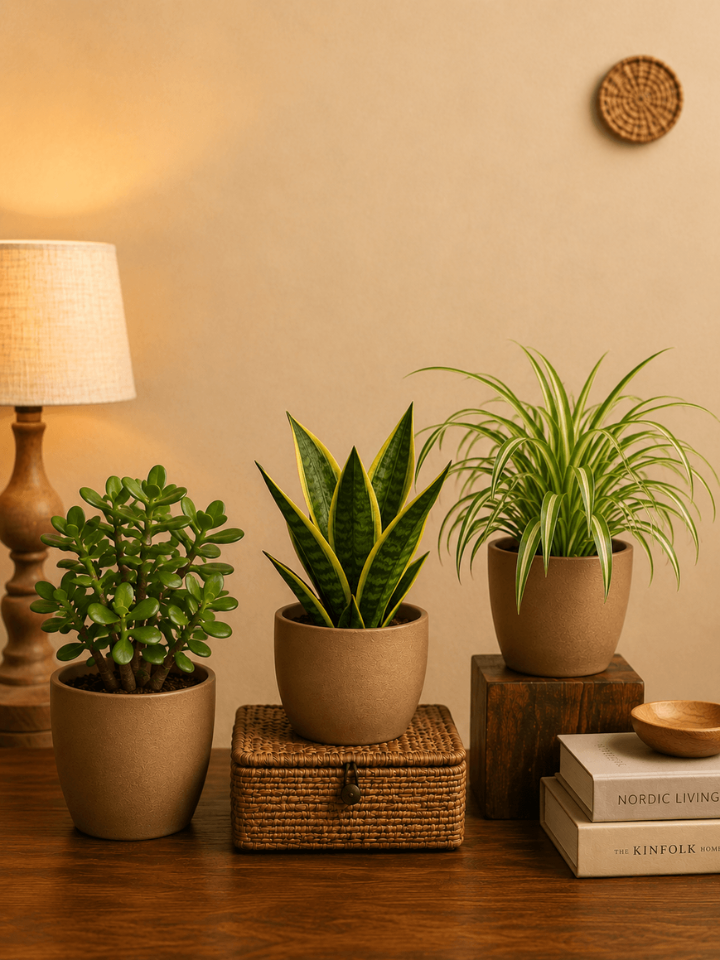
10. Snake Plant (Sansevieria)
Snake plant handles outdoor shade, part sun and long dry spells better than almost any other plant. That makes it the safest choice for a busy family’s entrance. Its only real enemy is waterlogging. During the monsoon, keep it under a roof overhang or in a pot with large drainage holes and a sandy mix, and water only when the soil is dry throughout.
- Light: shade to four hours; move it into stronger sun gradually.
- Water: every 10 to 14 days in summer, about once a month in winter.
- Watch for: soft, mushy leaf bases, which mean rot. It is toxic to cats and dogs.
A green snake plant for a shaded doorway needs less attention than anything else in this guide.
11. Spider Plant
Spider plant is the simplest choice for an outdoor hanging basket on a shaded verandah. It is also one of the few plants here that the ASPCA lists as non-toxic to cats and dogs. Its arching, striped leaves send out baby plantlets that you can pot up for free. Keep it out of direct afternoon sun, which bleaches the leaves.
- Light: bright shade.
- Water: about twice a week in summer.
- Watch for: brown leaf tips from salty or heavily treated water; stored rainwater helps.
Hang it at eye level, where the plantlets are easy to enjoy and to pot up.
A climber for grilles and boundary walls
12. Aparajita (Butterfly Pea)
Aparajita is the quickest way to green a bare grille. It climbs several feet in a single season, flowers blue or white for most of the warm year, and needs little more than something to twine around. As a legume it fixes some of its own nitrogen, so it manages in poor soil. Cut it back hard in late winter if it turns straggly.
- Light: five hours or more.
- Water: twice a week in summer.
- Watch for: self-sown seedlings; pull the unwanted ones while they are small.
Train it up a sunny grille or fence, or pair it with other creepers and climbers for a bare boundary wall.
Useful plants for a kitchen garden corner
13. Curry Leaf (Kadi Patta)
Curry leaf is a hardy shrub that keeps supplying the kitchen for years with very little care. It likes sun, a deep pot of at least 14 to 16 inches, and a drink whenever the top two inches of soil are dry. Growth slows in the cool months, so avoid overwatering or feeding it then. Pinch the tips in spring for a bushier plant.
- Light: four to six hours.
- Water: when the top two inches are dry.
- Watch for: slow growth in the first year, which is normal. Leave the berries for the birds; the seeds are not for eating.
A curry leaf plant for a kitchen terrace is one of the most useful pots you can keep near the kitchen door.
14. Tulsi (Holy Basil)
Tulsi grows readily in a sunny courtyard or balcony and is often the first plant in an Indian home garden. It needs regular water in summer but little else. Pinch off the flower spikes (manjari) to keep it leafy. Plants left to seed turn woody and short-lived, though most drop enough seed to replace themselves.
- Light: five hours or more.
- Water: every one to two days in peak summer, much less in winter.
- Watch for: cold nights in north India; move it against a warm, sheltered wall.
Keep it in the courtyard or on a sunny balcony ledge, where it is easy to pinch and water.
15. Aloe Vera
Aloe vera is a near-unkillable succulent for a sunny ledge, needing water only every two to three weeks once established. It produces offsets that slowly fill the pot, giving you new plants to share. Grow it in a wide, shallow pot with a sandy mix, and protect it from continuous monsoon rain.
- Light: four to six hours; give it afternoon shade during north India’s May.
- Water: every two to three weeks.
- Watch for: leaves turning reddish-brown, a sign of too much harsh sun. It is toxic to cats and dogs.
Aloe sits well beside other drought-proof cacti and succulents for a hot ledge, since they share the same sparse watering rhythm.
Which Low-Maintenance Plants Suit Kolkata and the Humid East?
In Kolkata and the rest of humid eastern India, the easiest outdoor plants are the ones that tolerate months of wet soil: ixora, kunda, rain lily, areca palm, nayantara and curry leaf. Adenium, aloe and snake plant stay easy here only if you shield them from monsoon waterlogging.
The Bengal year has four stretches that decide whether an easy plant stays easy:
- March to May: heat arrives with high humidity. Water early in the morning, and give any newly delivered plant a fortnight of afternoon shade before full exposure.
- Kalbaishakhi storms (April and May): these Nor’westers build within an hour. Stake tall plants, push light pots against a wall, and check hanging hooks before the season begins.
- June to September: waterlogging, not drought, kills most plants. Lift pots onto bricks or pot feet, clear every drainage hole, and move succulents under cover.
- December and January: the winter is short and mild. Champa may drop its leaves and growth slows everywhere, so cut watering back by about half. October and November, just after the rains, are the best weeks to plant.
Gardeners near our Kolkata nursery, which delivers outdoor plants across the city, can see these plants growing in the same conditions they will face at home.
What about the rest of India?
- Dry north and north-west: bougainvillea, adenium, crown of thorns and aloe handle the dry summer heat best. Move adenium and tulsi to a sheltered wall in December and January, and expect areca palm to struggle if frost is likely.
- Humid west and south coast: treat drainage the way Bengal gardeners do, because heavy monsoons create the same root-rot risk.
- Deccan plateau: dry heat and mild winters suit nearly all 15 plants. Water a little more often in April and May.
How Do You Set Up a Garden That Almost Looks After Itself?
Five habits cut outdoor upkeep dramatically: a free-draining potting mix, the right pot size, a layer of mulch, grouping plants by thirst, and a fixed feeding and pruning calendar. Set these up once and the weekly work shrinks to a quick check and a watering.
- Use a mix that drains: for shrubs, combine two parts garden soil, one part well-rotted compost or vermicompost, and one part coarse sand or brick chips. Add a handful of cocopeat only for moisture lovers such as areca palm and ixora. For succulents, double the sand.
- Size the pot to the plant: go only 2 to 3 inches wider than the root ball. An oversized pot stays wet for days and rots the roots, while one that is too small dries out by afternoon.
- Protect the drainage: every pot needs open holes and should stand on feet or bricks. Remove saucers from June to September.
- Mulch the surface: a 2-inch layer of dry leaves, coconut husk chips or pebbles keeps roots cool and slows evaporation, so you water less often.
- Group by thirst: keep succulents together and moisture lovers together, so one watering suits every pot in the cluster.
- Water by feel, not by date: push a finger into the soil. Water deeply when it feels dry at the depth of your knuckle, then wait. For trips away, a self-watering pot or a simple drip line keeps shrubs going for a week or more.
- Feed lightly, twice a year: add vermicompost before summer and again after the monsoon. Flowering shrubs can take a bloom booster monthly while in flower. Skip feeding in winter.
- Prune on a calendar: trim flowering shrubs right after each flush, and give climbers and bougainvillea a firmer cut in February.
When Is the Best Time to Plant Outdoor Plants in India?
For most of India, the best time to plant outdoor shrubs and climbers is February to March and again from September to November, when temperatures are moderate. Monsoon planting suits thirsty shrubs well, but hold back on succulents until the rains end.
- February to March: ideal for bougainvillea, champa, crown of thorns and adenium, which then grow into the heat.
- May to June: plant rain lily bulbs and nayantara just before the rains so they establish with the first showers.
- July to August: good for ixora, curry leaf and areca palm, which enjoy steady moisture while their roots spread.
- September to November: the best all-round window, especially in Bengal. Plant kunda now for scent through winter, alongside other winter flowering plants for pots and borders.
- April to May and December to January: avoid planting in extreme heat or cold unless you can shade or shelter new plants.
Which “Easy” Plants Are Harder Than They Look?
Several popular plants sold as easy need more attention than anything above. Mogra, hibiscus, desi roses and gandharaj are worth growing, but they are not low maintenance, and lantana is best avoided altogether.
- Mogra: heavily scented but thirsty. It needs steady watering and a prune after each flush, or it stops setting buds. It suits someone who enjoys a daily garden round.
- Hibiscus (jaba): flowers generously but attracts mealybugs and needs regular feeding. Check the undersides of the leaves every week.
- Desi roses: need feeding, deadheading and an eye on black spot through the monsoon. Roses flower best in the cooler months.
- Gandharaj (gardenia): prone to yellow leaves and bud drop where water is hard or alkaline. It is a lovely plant, but not a beginner’s shrub.
- Lantana: often listed online as the easiest flowering shrub, yet Lantana camara is one of India’s most damaging invasive weeds, and birds spread its seeds into forests and farmland. Grow nayantara or ixora for the same carefree colour.
What Mistakes Kill Low-Maintenance Plants Most Often?
Overwatering kills more easy-care plants than neglect does. Most of the other common losses come down to light and drainage rather than the plant itself.
- Watering on a schedule: soil dries at different speeds in May and December. Always check by touch first.
- Moving a new plant straight into full sun: nursery plants need 10 to 14 days of gradually longer exposure. Some leaf drop after delivery is normal, and new growth usually follows within a few weeks.
- Choosing a pot that is too big: extra soil holds extra water, and that is how roots rot.
- Leaving saucers under pots in the rain: roots sitting in water suffocate within days.
- Overfeeding: too much fertiliser burns roots and pushes soft leafy growth that attracts pests.
- Ignoring the first month: easy care begins after establishment. Check new plants every two or three days until they put out fresh leaves.
Frequently Asked Questions About Low-Maintenance Outdoor Plants
Adenium, crown of thorns, snake plant and aloe vera need the least water. Once established in a sandy, free-draining mix, they manage on a watering every one to three weeks in mild weather. Even in peak summer, weekly watering is usually enough, provided the pot drains quickly.
Nayantara and crown of thorns flower almost continuously in warm parts of India. Bougainvillea blooms in repeated flushes through most of the year, and ixora flowers from spring well into the monsoon. Kunda covers the winter months, so a mix of these keeps colour going year-round.
Areca palm, snake plant and spider plant are the most reliable choices for outdoor shade. They grow in bright shade or with two to three hours of soft morning sun, which suits verandahs, covered entrances and north-facing courtyards. Keep all three out of harsh afternoon sun.
Areca palm and spider plant are the safest choices, as the ASPCA lists both as non-toxic to cats and dogs. True jasmines such as kunda also appear on its non-toxic list, and so does Ixora coccinea. Keep adenium, nayantara, aloe vera, snake plant and crown of thorns out of reach of pets.
Most outdoor shrubs in pots need water two or three times a week in an Indian summer, while succulents need it once a week or less. Water early in the morning, soak the pot until water runs out of the base, and always check soil moisture with a finger before watering again.
Yes, as long as water can leave the pot quickly. Raise containers on bricks or pot feet, clear every drainage hole, and remove saucers before June. Move succulents such as adenium, aloe and snake plant under a roof overhang until the heavy rains pass.
For a shaded doorway, choose snake plant or areca palm. For a sunny gate, ixora, bougainvillea or kunda work well and need little upkeep. A pair of matching pots on either side looks deliberate and is easy to water together. There is more on layout in this guide to outdoor plants that welcome guests at the front door.
They need very little. A handful of vermicompost before summer and again after the monsoon is enough for most of the plants in this guide. Flowering shrubs such as bougainvillea and ixora benefit from a monthly bloom feed while flowering, but too much fertiliser causes more harm than too little.
Choose woody shrubs and succulents that store water, such as adenium, crown of thorns, champa, bougainvillea and snake plant. Plant them in larger pots, mulch the soil surface, and group them together in light shade before you leave. A self-watering pot or drip line covers longer trips.
Most new plants settle in four to six weeks. A few yellow or dropped leaves in the first fortnight are normal after transport. Keep the soil lightly moist, shield the plant from harsh afternoon sun at first, and avoid feeding until fresh leaves appear.
Start Your Easy-Care Garden This Season
Pick three plants that match your light, plant them in the right pots, and give them a month of attention. After that, they will largely look after themselves. Start with the full range of hardy outdoor plants for terraces, courtyards and gates, or narrow it down to low maintenance garden plants for busy households. Every plant is raised at the Plantaeroot nurseries in Rishra and Joka and can be shipped to the towns and PIN codes we deliver live plants to across India.