




The first cool morning of the season changes what your plants need. Days shorten, the sun sits lower in the sky, and growth slows right down. Yet most of us keep watering on the same summer routine, and that single habit causes more winter plant losses in Indian homes than the cold itself.
This guide covers the two decisions that matter most between November and February: when to bring tender plants indoors, and how far to cut back on water. It also explains how winter differs from Delhi to Bengaluru, because advice written for snowy countries rarely fits an Indian balcony.
Bring tropical houseplants indoors, or to a sheltered spot, once night temperatures stay below about 12°C. Place them in the brightest window you have, away from heaters and cold drafts. Water only when the top 2–3 cm of soil feels dry, which for most indoor plants means roughly half as often as in summer. Succulents may need water only once every three to four weeks.
Key takeaways
- Slower growth means slower water use, so wet soil stays wet for longer and roots can rot.
- Most tropical foliage plants start suffering chill damage below about 10°C.
- Move plants gradually over a week to limit leaf drop and shock.
- Check the soil before every watering; never water by the calendar in winter.
- Pause fertiliser for indoor plants until late February or March.
- Winter flowers and vegetables growing outdoors in the sun still need regular water and feeding.
Why do plants need different care in winter?
Plants need less water and no feeding in winter because shorter, weaker daylight and cooler air slow their growth. With less photosynthesis happening, roots draw up far less moisture, and soil that dried in two days in May can stay damp for a week in January.
That slowdown is a natural rest period, often called semi-dormancy. It is not a sign of illness. The risk comes from treating a resting plant like an actively growing one. Extra water sits around the roots, air pockets in the soil fill up, and fungal root rot sets in. By the time the leaves yellow, the damage below the surface is often well advanced.
Cold adds a second layer of stress. Many popular houseplants come from tropical forests where temperatures rarely dip below 15°C. When nights fall under roughly 10°C, these species can develop chilling injury: dark, water-soaked patches on leaves, curling, and sudden leaf drop.
How does winter differ across India?
Indian winters range from frosty nights in the north to barely noticeable changes on the coasts, so your care routine should follow your local minimum temperature rather than the calendar. Here is how the season typically plays out in each region.
- North Indian plains (Delhi NCR, Punjab, Haryana, Uttar Pradesh, Rajasthan): The toughest zone for houseplants. Night temperatures commonly drop to 3–8°C in late December and January, with occasional ground frost and cold waves. Dense fog and smog can block sunlight for days. Tender plants should be indoors by mid-November.
- East India (Kolkata, the rest of West Bengal, Odisha, Bihar): Mild but noticeable. In Kolkata and Hooghly, December and January nights usually sit around 11–15°C, with dry northerly winds and heavy morning dew. Most indoor plants cope well with a sheltered spot, though the most sensitive tropicals appreciate coming in on the coldest nights.
- Western and central India (Mumbai, Pune, Nagpur, Ahmedabad, Indore): Coastal Mumbai stays warm, so routines change mostly in watering. Pune, Nagpur and Indore can see nights near 8–12°C, cold enough to protect delicate foliage.
- South India (Bengaluru, Chennai, Hyderabad, Kochi): Bengaluru nights often fall to around 14–16°C, Hyderabad a little lower, while Chennai and Kerala stay warm. Tamil Nadu and coastal Andhra also receive the northeast monsoon between October and December, so drainage matters as much as cold.
- Hill regions (Darjeeling, Shimla, Shillong, Ooty, Srinagar): Freezing nights are routine. Every tropical plant belongs indoors, and even hardy outdoor pots need cover.
If you live in Bengal, a season-by-season plant calendar for Kolkata flats goes deeper into how local humidity, dew and the short winter shape plant choices through the year.
When should you move plants indoors for winter?
Move tropical plants indoors when night temperatures stay below about 12°C for several days in a row, or before any forecast cold wave. Do not wait for leaves to show damage, because chill-injured foliage rarely recovers.
Use these signals to time the move:
- Your weather app shows night lows dropping under 12°C for most of the coming week.
- The India Meteorological Department issues a cold wave or dense fog warning for your district.
- Leaves on sensitive plants start curling inward, darkening at the edges or drooping in the morning.
- Pots on an open terrace feel icy to touch at sunrise.
As a rough timetable, gardeners in the northern plains usually move plants between late October and mid-November. In East India, only the most delicate species need to come in, typically in late December. In most of South India and along the western coast, a move is rarely required; shifting pots away from windy edges is usually enough.
Which plants should come in, and which should stay out?
Bring in plants of tropical origin that dislike cold, and leave sun-loving winter bloomers and hardy shrubs outdoors where they get the light they need.
Bring indoors or to a sheltered spot:
- Aglaonema, calathea and syngonium, which are among the most cold-sensitive foliage plants.
- Money plant (pothos), philodendron, monstera and anthurium.
- Peace lily, ferns and areca palm.
- Tender succulents such as echeveria and adenium in the north, where nights near freezing combine with damp air.
Keep outdoors in full sun:
- Seasonal flowers such as petunia, calendula, pansy, dianthus, marigold and chrysanthemum, which grow best in cool, bright conditions.
- Roses, bougainvillea and hibiscus in mild regions (cover them during northern cold waves).
- Winter herbs and greens such as coriander, methi, spinach and mint.
Winter is the main growing season for many potted bloomers in India. If your balcony feels bare, a few flowers that bloom in winter will keep it colourful while the foliage plants rest inside.
How do you move plants indoors without shocking them?
Move plants gradually over about a week, clean and inspect them first, and keep them isolated briefly so pests do not spread to your existing houseplants. A sudden shift from bright outdoor light to a dim room is the main cause of yellowing and leaf drop after the move.
- Inspect every plant. Check the undersides of leaves, leaf joints and the soil surface for mealybugs, aphids, spider mites, snails and ants. Look under the pot too; drainage holes are a favourite hiding spot.
- Clean before you carry. Rinse foliage gently with water. For light pest problems, wipe leaves with a mild neem oil and liquid soap solution, testing on one leaf first.
- Trim only what is dead. Remove yellow, damaged or diseased leaves. Avoid heavy pruning now, since the plant has little energy to regrow before spring.
- Acclimatise over 7–10 days. Start by shifting pots to a shaded outdoor area for a few days. Then bring them indoors for a few hours each day, increasing the time until they stay in full-time.
- Quarantine for one to two weeks. Keep newly moved plants in a separate room or corner, away from the rest of your collection, until you are sure no pests came along.
- Choose the right spot. Place plants near your brightest window but 30–50 cm away from the glass, which turns cold at night. Keep them clear of doors that open to cold air, AC vents and room heaters.
- Expect a little leaf drop. Ficus, crotons and some palms shed a few leaves as they adjust. Steady conditions and careful watering usually settle them within two to three weeks.
Short of window space? Some species handle dim rooms surprisingly well, and these indoor plants without sunlight can take the darker corners while the light-hungry ones get the windowsill.
How much should you water plants in winter?
Water less often but still thoroughly: wait until the top 2–3 cm of soil is dry, then water until it drains from the bottom of the pot. For most indoor plants this works out to about half to a third as often as in summer, though the exact interval depends on the plant, pot size, potting mix and how warm your room stays.
The goal is not to give smaller sips. Light splashes wet only the top layer while the lower roots stay dry and salts build up. A full soak followed by a proper dry-out keeps roots both hydrated and supplied with oxygen.
How to check whether a plant needs water
- Finger test: Push a finger 2–3 cm into the soil. Dry and crumbly means water; cool and damp means wait.
- Chopstick test: For deep pots, insert a wooden chopstick or skewer to the bottom, leave it for a minute and pull it out. Dark, damp wood or clinging soil means the root zone is still wet.
- Lift test: Get a feel for the weight of the pot just after watering. A noticeably lighter pot is ready for a drink.
- Moisture meter: An inexpensive soil meter takes the guesswork out, especially for large planters.
Winter watering guide by plant type
These are starting points for a typical Indian home, not fixed schedules. Always confirm with the soil check above.
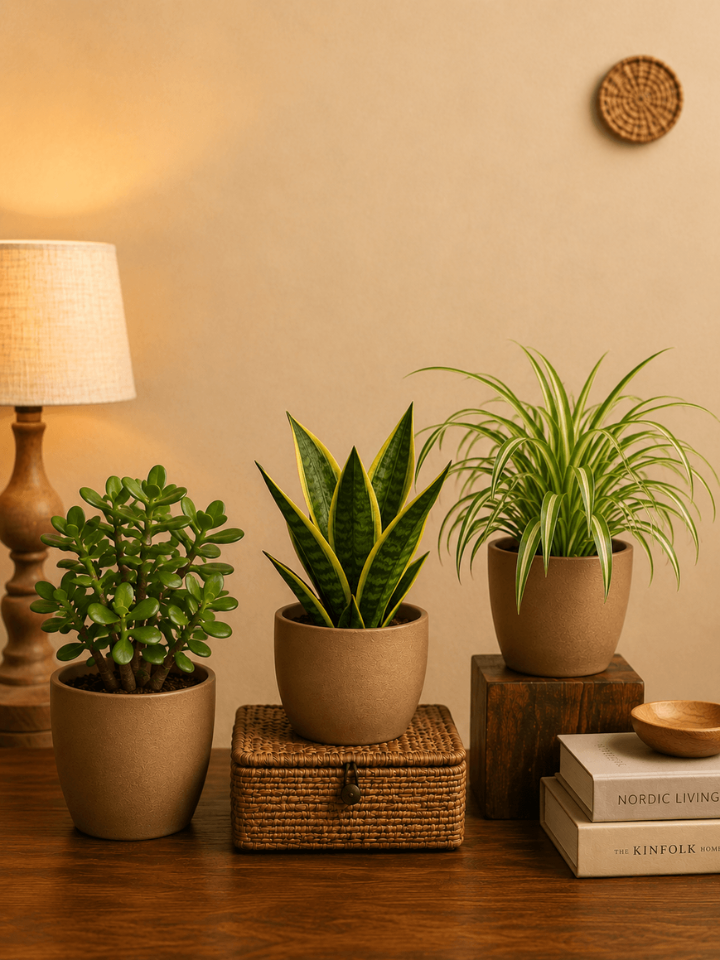
- Cacti and succulents: Roughly every three to four weeks, only when the soil is completely dry. In the northern plains, skip watering entirely during cold waves. A crassula ovata jade plant can go a month or more without water in a cool room.
- Snake plant and ZZ plant: Every three to four weeks. These store water in thick leaves and rhizomes and are the first to rot when overwatered.
- Money plant, syngonium, philodendron and aglaonema: When the top 2–3 cm is dry, often every 8–12 days indoors. A golden pothos money plant will tell you when it is thirsty by softening its leaves slightly.
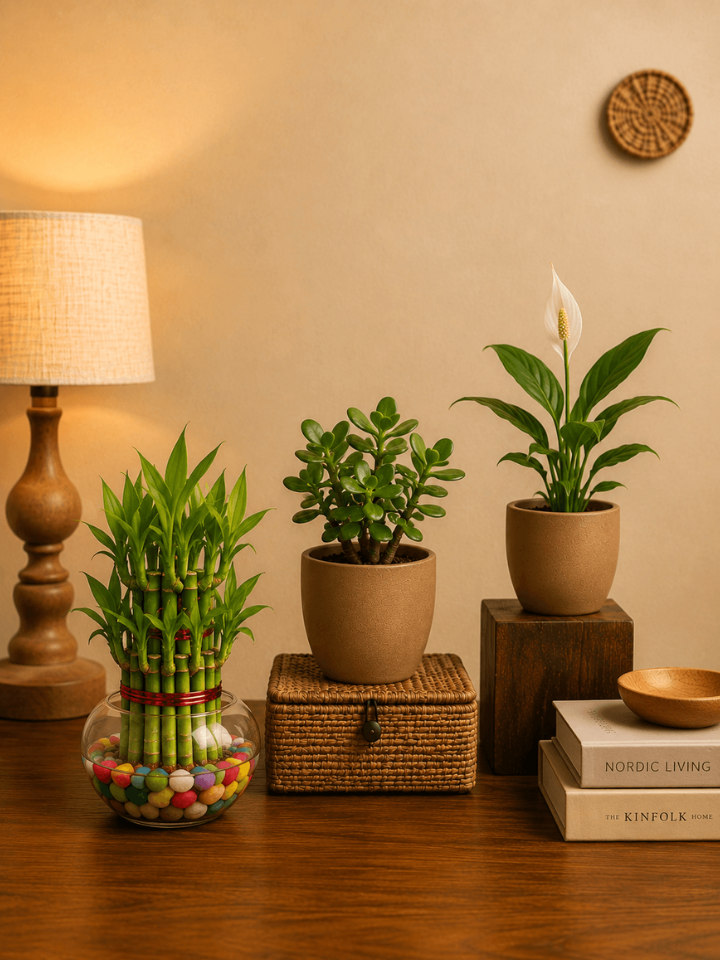
- Peace lily, ferns and calathea: Keep lightly moist but never soggy, usually every 5–8 days. A white peace lily droops visibly when dry and perks up within hours of watering, which makes it a useful indicator plant.
- Winter bloomers indoors: Keep the soil evenly moist while buds form. A holiday cactus in flower needs more regular water than a desert cactus, while a christmas plant poinsettia prefers watering only after the surface dries.
- Outdoor winter flowers and vegetables: These are actively growing in the sun, so check every two to three days and water in the morning when the surface is dry.
If you would rather spend the season with plants that barely need attention, look through these indoor plants that need little water before you shop.
When and how to water in winter
- Water in the morning. Plants use the moisture through the day, and leaves and soil surface dry before the cold night, reducing fungal problems.
- Use room-temperature water. Tap water in North Indian winters can be very cold and can stress roots. Fill a bucket the night before and let it sit indoors.
- Empty saucers after 15–20 minutes. Standing water in a cold saucer keeps the root ball soaked for days.
- Skip evening misting. Leaves that stay wet through a cold night invite leaf spot and mildew.
- Check drainage. Every pot needs a working drainage hole. Decorative pots without holes are best used as outer covers only.
What are the signs of overwatering and underwatering in winter?
In winter, overwatering is far more common than underwatering, and its signs are easy to mistake for thirst. Wilting with wet soil is a warning, not a cue to water again.
Signs of overwatering:
- Lower leaves turn yellow and soft, sometimes several at once.
- Stems feel mushy at the soil line or turn dark brown to black.
- Soil smells sour or musty and stays wet for more than a week.
- White mould appears on the surface, or small black fungus gnats hover around the pot.
- The plant wilts even though the soil is damp, because rotting roots can no longer take up water.
Signs of underwatering:
- Leaf tips and edges turn brown and crisp, often in rooms with heaters.
- Soil pulls away from the sides of the pot and feels light and dusty.
- Leaves look dull and limp but recover within a few hours of watering.
How to rescue an overwatered plant: Stop watering and move the pot to a brighter, airy spot. If the soil stays soggy for days, slide the plant out and check the roots. Healthy roots are firm and white or light tan; rotten ones are brown, slimy and smell bad. Trim the damaged roots with clean scissors and repot into fresh, dry, well-draining mix. This is the one situation where repotting in winter is worth the risk.
How do you give indoor plants enough light in winter?
Move plants to the brightest available window, ideally south- or east-facing, and rotate them weekly. In India the winter sun travels low across the southern sky, so south-facing windows and balconies receive the most direct light at this time of year.
- Rotate pots a quarter turn every week so all sides get light and stems do not lean.
- Wipe leaves every two weeks with a soft, damp cloth. In smog-prone northern cities, dust on leaves can noticeably reduce the light reaching them.
- Clean window glass. Dirty panes and heavy curtains cut more light than most people realise. Open curtains fully during the day.
- Give sun lovers a daytime outing. In mild regions, carry succulents and herbs to a sunny balcony from about 10 am to 3 pm and bring them back before evening.
- Consider a grow light during long foggy spells. A full-spectrum LED placed 20–30 cm above the plants for 10–12 hours a day fills the gap well.
Desert species are the exception to almost every winter rule. Live succulent plants still want as much direct sun as you can give them, even while they need very little water.
Should you fertilise plants in winter?
No, stop feeding indoor foliage plants from about November and resume in late February or March, when new leaves appear. Resting plants cannot use the nutrients, and unused fertiliser salts build up in the soil and burn root tips.
There are two exceptions. Winter-flowering plants and seasonal vegetables growing outdoors are in their peak season, so feed them every two to three weeks with well-rotted compost, vermicompost or a diluted liquid fertiliser. Plants in bud indoors, such as poinsettia and Christmas cactus, can also take a light, diluted feed once a month while they flower.
If you see a white crust on the soil or pot rim, flush the pot by running plain water through it slowly two or three times, then let it drain completely.
How do you protect plants from cold, heaters and dry air?
Protect plants by keeping them away from both cold drafts and direct heat, raising humidity around them, and covering outdoor pots on the coldest nights. Sudden temperature swings do more harm than steady cool weather.
Indoors
- Keep plants at least 1–1.5 metres from room heaters, oil heaters and blowers. Hot, dry air scorches leaf edges quickly.
- Move pots off windowsills at night if the glass gets cold to the touch, and keep leaves from pressing against it.
- Group plants together; collectively they hold a little more humidity around their leaves.
- Set pots on a tray of pebbles and water, keeping the pot base above the waterline.
- Run a humidifier in heated rooms in North India if you grow calathea, ferns or other humidity lovers.
Outdoors and on terraces
- During cold waves, cover plants at night with a cotton cloth, old bedsheet, jute sack or frost cloth, and remove it in the morning. Avoid plastic that touches the leaves, as it transfers cold.
- Lift pots off cold concrete floors using wooden planks, bricks or pot stands.
- Add a 3–5 cm layer of dry leaves, straw or coco husk on the soil to insulate roots.
- Cluster pots against a south-facing wall, which absorbs sunlight by day and releases warmth at night.
- Shield pots from cold northerly winds with a screen or by moving them to a sheltered corner.
What winter plant care mistakes should you avoid?
The most common mistakes are watering on a fixed schedule, repotting at the wrong time and overreacting to normal seasonal changes. Avoid these and most plants come through winter in good shape.
- Watering by the calendar. A summer routine in winter is the leading cause of root rot. Let the soil decide.
- Repotting or dividing plants. Roots grow slowly in cold soil, so a new pot full of damp mix stays wet too long. Wait until February or March unless the plant has root rot.
- Heavy pruning. Cut back only dead or diseased growth until spring.
- Placing plants beside heaters for warmth. Comfortable for you, harmful for leaves.
- Ignoring pests. Dry indoor air suits spider mites and mealybugs. Check leaf undersides weekly.
- Panicking over a few yellow leaves. Losing one or two older leaves is normal during a move or a cold spell. Look for patterns before changing your care.
- Fertilising a plant that is struggling. Feed does not fix cold stress or overwatering; it adds to the problem.
A note for pet owners: Several winter favourites, including jade plant and poinsettia, appear on the ASPCA list of plants toxic to cats and dogs. Spider plant and an areca palm indoor plant are listed as non-toxic, so they are safer choices for rooms your pets share. Keep any toxic species out of reach as you rearrange pots indoors.
What does a month-by-month winter plant care checklist look like?
Use this checklist as a rough guide for most of India, shifting it two to four weeks earlier in the north and later in the south and east.
- October: Give indoor foliage plants their last feed of the year. Inspect for pests and repot anything root-bound before the weather cools. Sow seasonal flowers and winter vegetables in the north and east.
- November: Move tender plants indoors in North India. Start cutting back watering across the board. Clean windows and rearrange pots for maximum light.
- December: The coldest month begins. Water sparingly, keep plants away from heaters and cover outdoor pots during cold waves. Enjoy the poinsettias and Christmas cactus in bloom.
- January: Keep up the low-water routine and weekly pest checks. Wipe dusty leaves. Feed outdoor winter flowers and vegetables regularly.
- February: As days lengthen and new leaves appear, increase watering gradually. Repot and resume feeding in late February or March, and return sun-loving plants to the balcony once nights stay above 15°C.
When warmer weather and showers return, the routine reverses again; this guide to rainy season plants in India picks up where winter care ends.
Frequently asked questions
Most indoor plants need water every 7–14 days in an Indian winter, but the right interval is whenever the top 2–3 cm of soil is dry. Succulents and snake plants may need water only once every three to four weeks, while ferns and peace lilies need it more often.
Bring tropical plants indoors when nights stay below about 12°C. Many common houseplants, such as aglaonema and calathea, show chill damage below 10°C. Succulents and jade plants tolerate cooler nights, down to around 5°C, as long as their soil is dry.
It is better to water in the morning during winter. Soil and leaves that stay wet through a cold night are more prone to fungal disease and root rot, while morning watering lets plants use the moisture during the warmer part of the day.
Yellow leaves in winter are most often caused by overwatering, low light or cold drafts. Check whether the soil has stayed wet for days, whether the plant sits near a cold window or door, and whether it has moved to a darker spot. Losing one or two old leaves is normal.
Keep plants at least 1–1.5 metres away from room heaters and blowers. The hot, dry air dries soil unevenly and scorches leaf edges, causing brown, crispy tips. A cool, bright, draft-free spot is far healthier than a warm one next to a heat source.
Avoid repotting in winter unless a plant has root rot or a broken pot. Roots grow slowly in cool weather and fresh soil stays wet too long. Late February to March, when new growth starts, is the best time to repot in most of India.
Succulents need very little water in winter, usually once every three to four weeks, and only when the soil is completely dry. In North India, skip watering during cold waves. They still need plenty of direct sun, so keep them in your brightest window or on a sunny balcony.
Yes, winter is a good time to buy plants in most of India, especially seasonal flowers and hardy foliage plants. In the northern plains during cold waves, unbox deliveries promptly, keep new plants indoors in a bright spot and water lightly until they settle. You can check online plant delivery to your city before ordering.
Ready to refresh your plant collection this winter?
Winter is a quiet season for houseplants, and the best care is often less care: brighter light, less water, no fertiliser and steady temperatures. Get those four right and your plants will push out fresh growth as soon as spring arrives.
If you are adding to your collection, Plantaeroot raises its plants at its nursery in West Bengal and ships them across the country. Browse our online nursery plants, or start with these beginner indoor plants if this is your first winter as a plant parent. Just keep cold-sensitive picks such as an aglaonema red in a warm, bright corner until the nights warm up.