Few houseplants earn a place in Indian homes as effortlessly as the rubber plant. With its broad, mirror-glossy leaves and upright, sculptural shape, a compact specimen brings instant architecture to a shelf, study table or sunlit windowsill. For anyone building a first green corner, a small rubber plant is one of the easiest ways to add bold foliage without committing to a floor-sized tree from day one.
This guide is written for real buyers: it covers what the plant actually is, how to place and water it, what a fair price looks like, how the popular varieties differ, and how to keep it thriving through Indian summers and monsoons. Whether you are browsing indoor plants in Bangalore, decorating a rented flat in Mumbai or greening a family home in Kolkata, the aim is simple — help you choose confidently, buy online with clarity, and grow it well.
What Is a Rubber Plant?
The rubber plant, botanically Ficus elastica, is an evergreen member of the fig (Moraceae) family native to the forests of eastern South Asia and Southeast Asia — including parts of northeast India. In the wild it grows into a towering tree, but indoors it stays a manageable, slow-to-moderate grower that is happy in a pot for years.
Its common name comes from the milky latex in its stems and leaves, once tapped as a natural source of rubber. Today it is prized purely as an ornamental foliage plant. The thick, leathery leaves emerge from a reddish sheath and unfurl into deep green — or, in some cultivars, burgundy, cream and pink. That combination of hardiness and drama is exactly why it sits so comfortably alongside other easygoing indoor plants in modern Indian interiors.
Why Choose a Small Rubber Plant for Home
Starting small has real advantages. A younger plant adapts faster to your light and humidity, costs less, and lets you shape its growth from the beginning. Here is why the compact size is such a popular pick:
- Beginner-forgiving: it tolerates an occasional missed watering and recovers readily, which places it firmly among low maintenance plants suited to busy households.
- Space-smart: a small footprint fits desks, entryway consoles and narrow balcony ledges where a full tree would overwhelm.
- Big visual payoff: even a knee-high plant delivers large, statement leaves, so you get impact without bulk.
- Grows with you: pot it up gradually and the same plant can mature into a floor-standing centrepiece over a few seasons.
- Year-round good looks: it stays evergreen indoors, holding its polish through every season rather than dropping leaves seasonally.
Key Features of This Plant
Here is a quick snapshot of what you can expect at a glance, followed by what arrives with your order.
| Feature | Detail |
| Botanical name | Ficus elastica (family Moraceae) |
| Common names | Rubber plant, rubber fig, Indian rubber tree |
| Type | Evergreen foliage houseplant |
| Small-size height | Roughly 25–45 cm including a starter pot |
| Light | Bright, indirect light preferred |
| Watering | When the top 3–4 cm of soil feels dry |
| Growth pace | Slow to moderate; faster in warm months |
| Best spots | Living room, study, bright bedroom corner, shaded balcony |
| Pet note | Toxic if chewed — keep away from cats, dogs and toddlers |
What comes in the box
- 1 healthy rubber plant — well-rooted and ready to settle into its new home.
- Nursery pot with a nutrient-rich soil mix — prepared to support strong early growth.
- Care instruction card — watering schedule, light needs and growth tips tailored for Indian conditions.
- A warm thank-you note — because every plant journey deserves a friendly start.
- Secure, eco-safe packaging — designed to protect the foliage through transit.
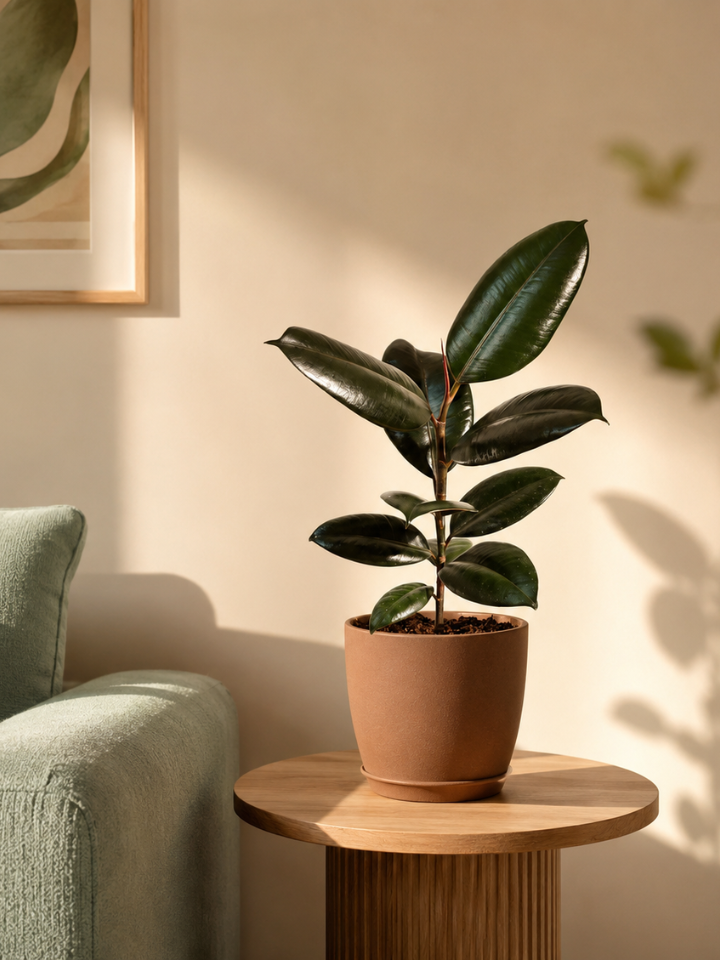
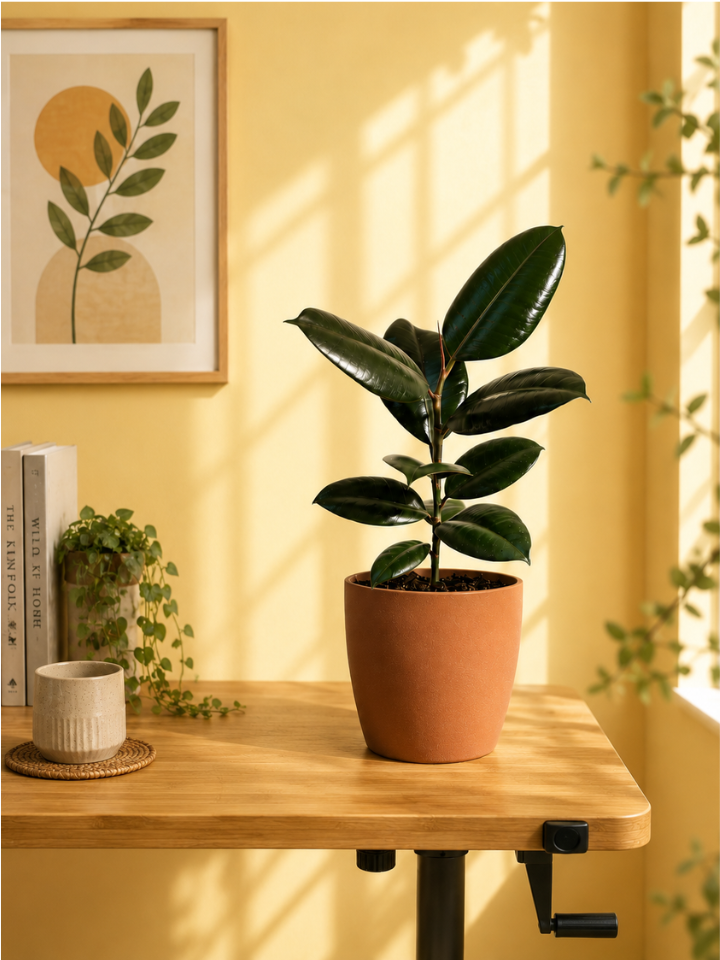
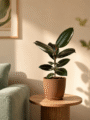
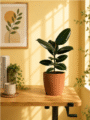
Note: the image shown is for reference. Actual size and leaf shape may vary slightly with season and growth stage — a sign your plant is real, living and freshly grown rather than mass-produced.
Rubber Plant Price and Value Guide
One of the first things buyers want to know is the rubber plant price — and it varies more than most people expect, because "rubber plant" covers everything from a rooted cutting to a shoulder-height tree. Cultivar, size and pot type all move the number. The ranges below reflect typical retail pricing when you buy a rubber plant online in India and are meant as a planning guide rather than a fixed quote.
| Size / Type | Typical height | Indicative price range (INR) |
| Small (starter) | 25–45 cm | ₹200 – ₹450 |
| Medium (bushy) | 45–75 cm | ₹450 – ₹800 |
| Large / floor plant | 90 cm and above | ₹900 – ₹2,500+ |
| Variegated cultivars | Any size | Usually 30–60% higher |
Why the spread? A variegated rubber plant grows slower and propagates less easily, so nurseries price it above the plain green form. Bigger, well-branched specimens represent years of growth, which is reflected in the cost. When comparing a rubber plant price online, look past the sticker: a slightly higher price for a fuller, root-established plant usually delivers better value than a bargain cutting that needs a year to fill out.
A quick word on alternatives some shoppers consider: an artificial rubber plant needs no care and never outgrows its corner, but it offers none of the freshness, air movement or living character of the real thing — and it cannot grow with your space. Likewise, growing from rubber plant seeds is rarely practical at home; the species is almost always propagated from stem cuttings, which is why nurseries sell rooted young plants rather than seed packets.
Rubber Plant Indoor or Outdoor: Best Placement
A common question is whether the rubber plant is an indoor or outdoor plant. The honest answer: it does both, within limits. Indoors it is a star performer near bright windows. Outdoors it thrives in warm, filtered light but resents harsh afternoon sun and cold.
Indoors
Position it a metre or two from a bright east- or north-facing window where it receives plenty of light without scorching midday rays. This is where the plant looks its best and stays cleanest, making it a natural fit for home décor schemes across living spaces.
Outdoors
On a balcony or veranda it grows happily in bright shade or dappled light. Keep it out of direct summer sun, which can bleach and crisp the leaves, and bring it under cover during heavy monsoon downpours to avoid waterlogging. In regions with mild winters it can stay outside year-round; where nights turn cold, move it in.
Light Requirements for Healthy Growth
Light is the single biggest lever on how well your plant does. Bright, indirect light is the sweet spot — enough to keep growth steady and colours rich, without the intensity that burns.
- Green varieties are the most shade-tolerant and will cope in medium light, though growth slows and internodes stretch in very dim rooms.
- Variegated and darker types need brighter, indirect light to hold their patterning; too little light and the cream or burgundy fades toward plain green.
- Signs of too much sun: pale, scorched patches or brown crisp edges — move it back from the glass.
- Signs of too little light: leggy stems, small new leaves and leaning toward the window — rotate the pot weekly and shift it brighter.
Watering and Soil Care
Rubber plants dislike soggy roots far more than they dislike a little dryness, so the golden rule is: water thoroughly, then wait. Overwatering is the most common way these plants are lost.
Watering rhythm
- Check the soil with a finger; water only when the top 3–4 cm feels dry.
- In warm months this may mean once every 5–7 days; in cooler weather, stretch it to every 10–14 days.
- Water until it drains from the bottom, then empty the saucer so roots never sit in standing water.
- Wipe the leaves with a damp cloth every couple of weeks — clean foliage breathes and photosynthesises better, and it keeps that signature shine.
Soil and potting
Use a well-draining, nutrient-rich mix — a blend of quality potting soil with cocopeat and a little compost works beautifully, and the pot must have drainage holes. Feed lightly with a balanced houseplant fertiliser once every 4–6 weeks during the active growing season (roughly spring through the warmer months), and pause feeding in winter when growth naturally slows.
Rubber Plant Varieties Explained
The world of rubber plant varieties is more colourful than the classic glossy green suggests. Knowing the main cultivars helps you match a plant to your light and your décor.
| Variety | Look | Notes |
| Robusta / classic green | Broad, deep-green glossy leaves | The hardiest and most shade-tolerant; ideal first plant |
| Black (Abidjan / Melany) | Very dark, near-black burgundy leaves | A striking black rubber plant look; needs good light to stay dark |
| Tineke | Green centres with creamy-white margins | A popular variegated rubber plant; brighter light keeps variegation crisp |
| Ruby | Pink, cream and green marbling | The showiest; slowest-growing and most light-hungry |
| Decora | Large, bold rounded leaves | Classic statement foliage for bigger displays |
If you want maximum drama, a variegated or ruby type rewards a bright spot. If you want the most forgiving plant, the plain green form is the safest bet — and still every bit as elegant.
Small Rubber Plant vs Big Rubber Plant
Should you start small or buy a big rubber plant outright? Both make sense — it depends on your patience, budget and the gap you want to fill.
| Consideration | Small rubber plant | Large rubber plant |
| Upfront cost | Lower — easy to try | Higher — you pay for years of growth |
| Adaptation | Settles into your home quickly | May sulk or drop a few leaves while adjusting |
| Placement | Tables, shelves, sills | Floor corners, empty nooks |
| Best for | First-timers, gifting, small spaces | Instant impact, staging a room |
| Long game | Grows into a big plant over time | Already there |
For most homes, a small plant that you nurture upward is the more rewarding route — and a rubber plant big enough to anchor a room is simply a small one given time, light and the occasional repot.
Best Uses in Home Décor
As a design element, this plant is quietly versatile. Its bold leaves read as modern and minimal, yet warm enough for traditional interiors — one reason it ranks among the most useful indoor plants for home decor.
- Entryway statement: a single plant on a console greets guests with instant greenery.
- Desk and shelf greenery: a compact size softens work-from-home corners and bookshelves.
- Gifting: hardy, handsome and long-lasting — a thoughtful housewarming present.
- Height play: group it with trailing greenery in indoor hanging plant pots to build layers of foliage at different levels.
- Colour accent: a burgundy or variegated form adds a pop against neutral walls and light-toned furniture.
For anyone shortlisting the best indoor plants for home spaces, the rubber plant belongs near the top — dependable, sculptural and endlessly re-styleable.
Rubber Plant for Living Room Styling
The living room is where this plant truly shines. Placed in a bright corner, it fills empty vertical space and draws the eye upward, giving the room a finished, considered feel. It pairs naturally with other plants for the living room — think a trailing pothos on a shelf above and a low succulent on the coffee table — to create a balanced green vignette.
Styling tips: choose a planter that echoes your palette (matte ceramic for a calm, modern look; woven baskets for warmth), keep it a comfortable distance from the TV and windows, and rotate it every week so it grows evenly rather than leaning toward the light. As it matures into a larger specimen, it can graduate from tabletop accent to a floor-standing anchor beside a sofa or reading chair.
Care Tips for Indian Weather Conditions
India’s climate swings — dry heat, heavy monsoons, cool northern winters — call for a few seasonal tweaks. The plant is adaptable, but these adjustments keep it thriving from Delhi to Chennai.
Summer
- Shield it from direct afternoon sun through glass, which can scorch leaves; sheer curtains help.
- Water a little more often as soil dries faster, and mist occasionally in very dry, air-conditioned rooms.
Monsoon
- Ease off watering — humidity is high and soil stays damp longer, raising the risk of root rot.
- Ensure the pot drains freely and never let it sit in collected rainwater on a balcony.
Winter
- Growth slows; water less and stop fertilising until warmth returns.
- Keep it away from cold draughts and unheated corners in northern cities; it prefers temperatures above roughly 12–15°C.
In humid coastal and southern regions the plant is especially happy year-round; in drier zones, the occasional leaf-wipe and light misting keep it looking fresh.
Common Problems and How to Fix Them
Most issues trace back to water and light. Here is how to read the signs and respond.
| Symptom | Likely cause | Fix |
| Lower leaves yellow and drop | Overwatering / soggy soil | Let soil dry more between waterings; check drainage |
| Brown, crispy leaf edges | Dry air or under-watering | Water more evenly; mist in dry rooms |
| Pale, scorched patches | Direct harsh sun | Move to bright, indirect light |
| Leggy stems, small leaves | Too little light | Shift to a brighter spot; rotate weekly |
| Faded variegation | Insufficient light for the cultivar | Give variegated types brighter, indirect light |
| Sticky leaves or fine webbing | Sap-sucking pests (scale/mites) | Wipe leaves; treat with neem or insecticidal soap |
Handling tip: the milky sap can irritate skin and eyes, so wash your hands after pruning and keep cuttings away from children and pets.
Does a Rubber Plant Clean the Air?
Rubber plants are often marketed as air purifiers, and there is a kernel of truth worth stating accurately. Foliage plants in this broad group were studied in NASA’s well-known 1989 chamber experiments and showed some capacity to absorb certain airborne compounds under sealed lab conditions. However, a widely cited 2019 re-analysis (Cummings & Waring) found that in real rooms, normal ventilation clears these compounds far faster than a few potted plants can — you would need an impractically large number of plants to match an open window.
The fair takeaway: a rubber plant is a lovely, leafy addition that supports a calmer, greener indoor environment and may make modest contributions to air quality, but it should be enjoyed for its beauty and wellbeing benefits rather than treated as a substitute for fresh air and ventilation.
Is the Rubber Plant Safe Around Pets and Children?
In the interest of honest guidance: Ficus elastica is listed as toxic to cats and dogs by the ASPCA. Its milky latex sap can cause mouth and skin irritation, drooling and stomach upset if leaves are chewed, and can irritate human skin too. This does not make it a plant to avoid — countless homes keep one safely — but if you share your space with curious pets or small children, place it out of reach on a high shelf or in a room they don’t access. If you specifically need non-toxic greenery, ask us and we’ll point you to genuinely pet-friendly options instead.















There are no reviews yet.