A poinsettia is a shrub of the spurge family, Euphorbiaceae, native to the Pacific slopes of Mexico and Central America. It was named after Joel Roberts Poinsett, the first US minister to Mexico, who sent cuttings home in the 1820s. In Mexico it is the flor de Nochebuena, the Christmas Eve flower, and that link to the season have followed it around the world. In India it has been grown in gardens for well over a century, and many people simply call it the Christmas flower or lal pata, after the red form.
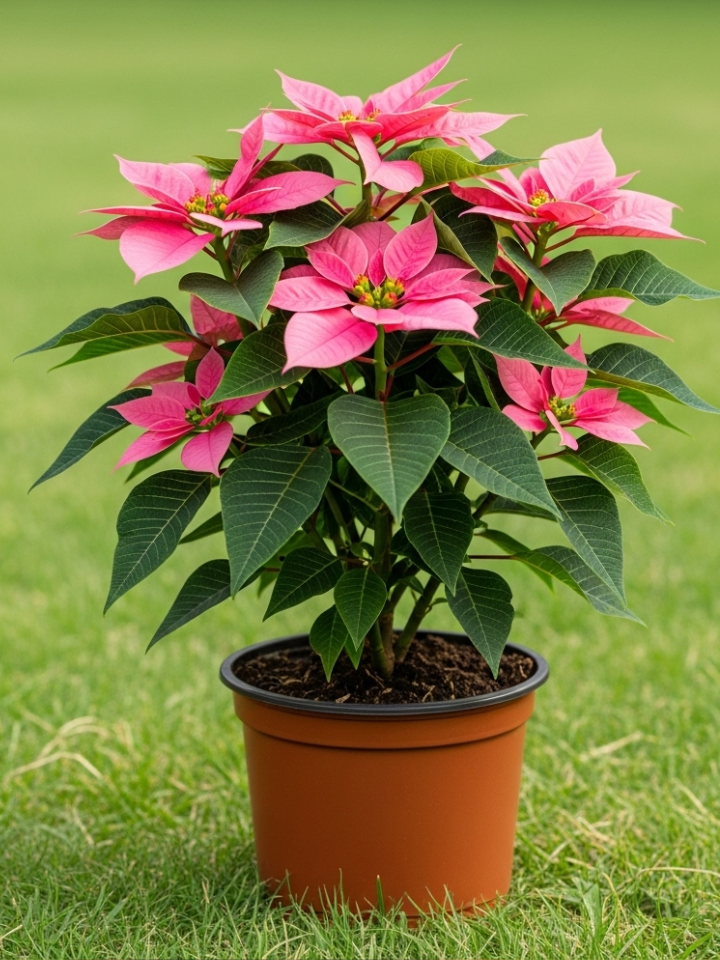
This plant is the pink form. Its dark green, oval to lobed leaves grow 7–15 cm long on sturdy, slightly woody stems. At the top of each stem sits a star of broad bracts in shades from blush to rose-pink, sometimes with paler edges or darker veins depending on the cultivar. At their centre are small, bead-like yellow and green flowers called cyathia. When those tiny flowers drop their pollen, the display is past its peak, so buy and choose plants whose centres are still tight.
Pink reads differently from the classic red. It suits pale walls, wooden furniture and mixed festive arrangements where red can feel heavy, and it photographs beautifully for gifts. Like all euphorbias, it has a milky sap when cut or broken; wash your hands after pruning.
Is a poinsettia an indoor or outdoor plant?
Both, depending on the season. In India it grows best outdoors as a sun-loving shrub for most of the year and can come indoors to a bright spot while it is in colour.
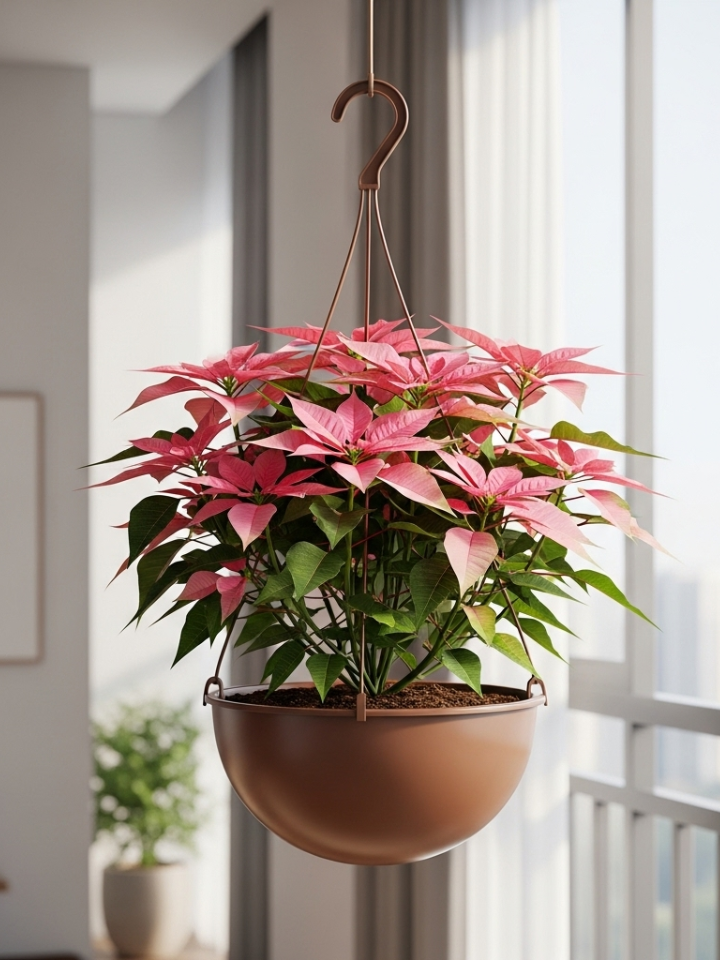
Indoors, from November to February, place it by your brightest window, ideally east or south-facing, where it catches some direct morning sun. Grouped on a console or dining table, it is one of the easiest flowers for the living room during Christmas and New Year but move it back to the window between occasions. A dim corner fades the bracts and drops leaves within two or three weeks.
On a balcony or terrace in winter it is happiest of all. Morning or afternoon sun deepens the colour, which makes it among the best plants for a sunny balcony in India from November onwards. After the bracts fade, plant it in a sunny bed or keep it in a large pot outdoors, where it grows into a proper shrub alongside other ornamental outdoor plants.
What it dislikes: air-conditioner blasts, cold draughts below about 10 °C, and waterlogged soil.
Product Specifications
- Plant name: Poinsettia Pink Plant
- Botanical name: Euphorbia pulcherrima, pink-bracted cultivar
- Also known as: Pink poinsettia, Christmas plant, Christmas flower, Christmas star, flor de Nochebuena
- Plant family: Euphorbiaceae (spurge family)
- Origin: Mexico and Central America
- Plant type: Evergreen to semi-deciduous flowering shrub; sold as a potted seasonal plant
- Foliage: Dark green, oval to lobed leaves, 7–15 cm long
- Colour: Pink bracts (modified leaves), shade varying from blush to rose-pink by cultivar
- Flowers: Tiny yellow green cyathia at the centre of the bracts
- Colour season in India: Mainly November to February; bracts last six to eight weeks or more
- Flowering trigger: Short-day plant; needs long, unbroken nights from October
- Growth habit: Upright, bushy and branching when pinched
- Suitable placement: Bright window indoors in winter; sunny balcony, terrace, veranda or garden bed for the rest of the year
- Light requirement: Bright light with some direct sun; full sun outdoors in winter, light afternoon shade in peak summer
- Water requirement: Moderate; water when the top 2–3 cm dries; never waterlog
- Soil requirement: Light, free-draining mix with compost and sand or cocopeat
- Temperature: 15–30 °C ideal; protect below 10 °C; not frost-hardy
- Fertiliser: None while in colour; balanced feed every three to four weeks from March to September
- Pruning: Cut back to about 15 cm after the bracts fade; pinch tips until mid-August
- Propagation: Stem cuttings in the monsoon
- Difficulty level: Easy for the festive season; moderate to recolour the following year
- Suitable environment: Warm, frost-free climates; well suited to Bengal, the eastern and southern states and coastal India
- Pet and child safety: Not pet-safe. ASPCA lists it as toxic to dogs, cats and horses (irritant sap, generally mild). Sap can irritate skin and eyes.
How do you care for a pink poinsettia in India?
- Light. Six hours or more of light a day, including some direct sun. Outdoors in winter, full sun is fine; in the April-to-June heat, give it light afternoon shade.
- Water. Water thoroughly when the top 2–3 cm of mix is dry, then let the pot drain completely. Remove any decorative foil or sleeve before watering, because water trapped inside it rots the roots. Indoors in winter, that usually means every three to five days.
- Temperature. Comfortable between 15 °C and 30 °C. Across most of Bengal and the south this is easy. In north India, bring it indoors on nights that fall below 10 °C.
- Soil. A light, free-draining mix: two parts garden soil, one part compost, one-part coarse sand or cocopeat. It rots in heavy, sticky soil.
- Feeding. None while it is in colour. From March to September, give a balanced liquid feed or a handful of vermicompost every three to four weeks.
- Pruning. When the bracts fade, around late February or March, cut each stem back to about 15 cm. Pinch the tips of new shoots once or twice until mid-August to keep the plant bushy, then stop.
- Repotting. Move it to a pot 5 cm wider in spring, once new growth appears. Expect it to grow taller than it arrived; nursery plants are often kept compact with growth regulators that wear off.
How do you make a poinsettia turn pink again?
A poinsettia is a short-day plant. Its bracts change colour only after about six to eight weeks of long, unbroken nights, roughly 13–14 hours of darkness a day. In Bengal the natural day length gets close to that from October, which is why garden shrubs here colour up on their own by late November.
The catch is artificial light. A street lamp, a balcony bulb or a string of Diwali lights can keep the bracts green all winter. From the start of October to mid-November, keep the plant somewhere that gets full daylight but stays dark at night. If that is not possible, cover it with a cardboard box or move it into a cupboard from about 6 pm to 8 am each day, bringing it back into the sun every morning. Stop once the bracts are well coloured.
A year with a poinsettia in Bengal
These notes come from growing the poinsettia beds at our Kolkata nursery.
Winter, November to February. Peak colour. Keep it in the brightest spot you have, water carefully and do not feed. Indoors, it can hold its colour well into February.
Spring, March to April. The bracts fade to green or drop. Prune hard, repot if the roots are crowded, and move it outdoors into sun.
Summer, May to June. Fast, leafy growth. Water freely in the heat, give light afternoon shade in May, and feed monthly. Pinch the new tips.
Monsoon, July to September. Keep drainage clear and empty saucers after heavy rain, because soggy roots are the main risk. Take cuttings now if you want more plants. Make your last pinch by mid-August.
Autumn, October. Start the long-night routine. If your plant lives indoors through the rest of the year, this guide to how indoor plants fare through a Kolkata winter covers light and watering for the cool months.
Why is my poinsettia dropping leaves? Common problems and fixes
- Leaves dropping soon after delivery. Transit stress and a sudden change of light. Give it a bright spot, water only when needed and wait; it settles in a week or two.
- Yellow lower leaves and drooping. Overwatering, often from water trapped in a sleeve or saucer. Let the mix dry a little and empty the saucer.
- Wilting with dry soil. Underwatering. Water thoroughly; it usually recovers within hours.
- Bracts fading and leaves falling in December. Too little light or a cold draught. Move it to a brighter, sheltered window.
- Bracts staying green in winter. Light at night. Follow the long-night routine from October.
- White fluff, sticky leaves or tiny flying insects. Mealybugs, whitefly or fungus gnats. Spray neem oil weekly for three weeks and let the top of the mix dry between waterings.
Is the pink poinsettia safe for pets and children?
No, but its danger is often exaggerated. The ASPCA lists poinsettia as toxic to dogs, cats and horses because its milky sap irritates the mouth and stomach, which can cause drooling or vomiting. It also notes that the plant is generally over-rated in toxicity; serious poisoning is rare. For people, the sap can irritate skin and eyes, and those with a latex allergy may react to it.
Keep it out of reach of pets that chew leaves and wash your hands after pruning. If you want festive colour that is kinder to curious cats and dogs, a Christmas cactus in bloom beside it is ASPCA-listed as non-toxic and flowers at the same time of year.
A winter display to pair it with
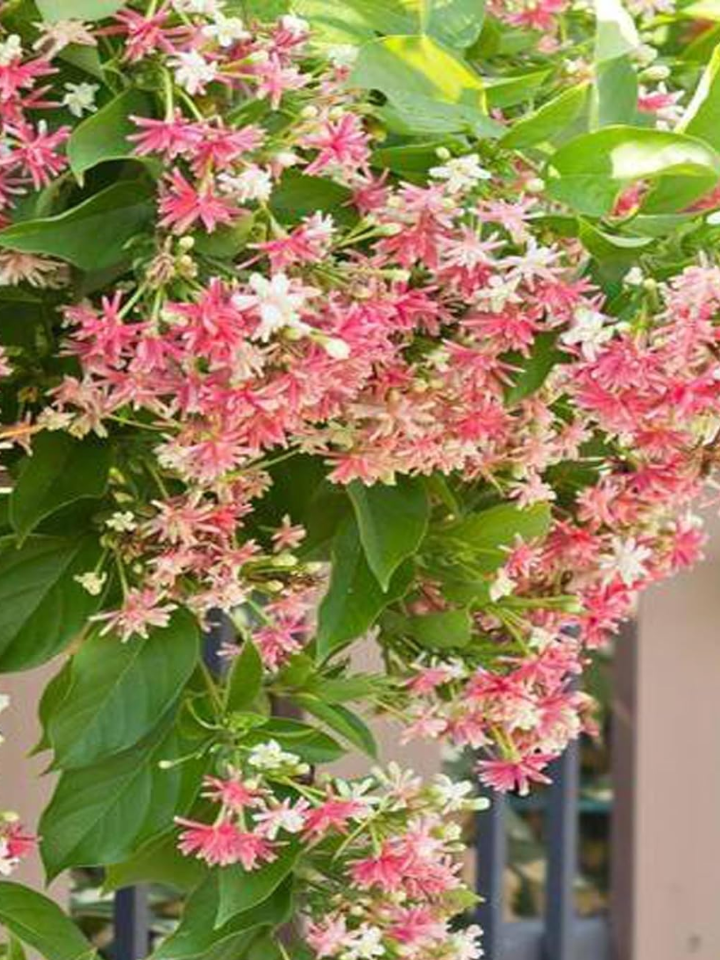
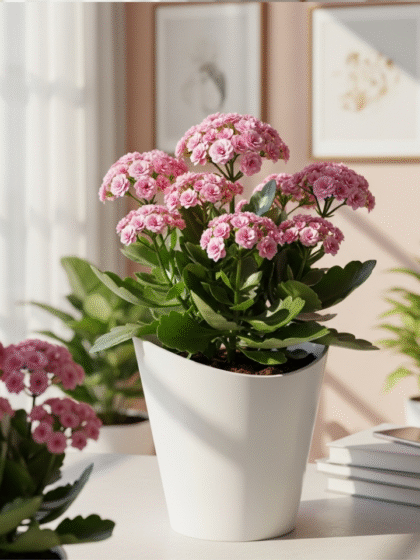
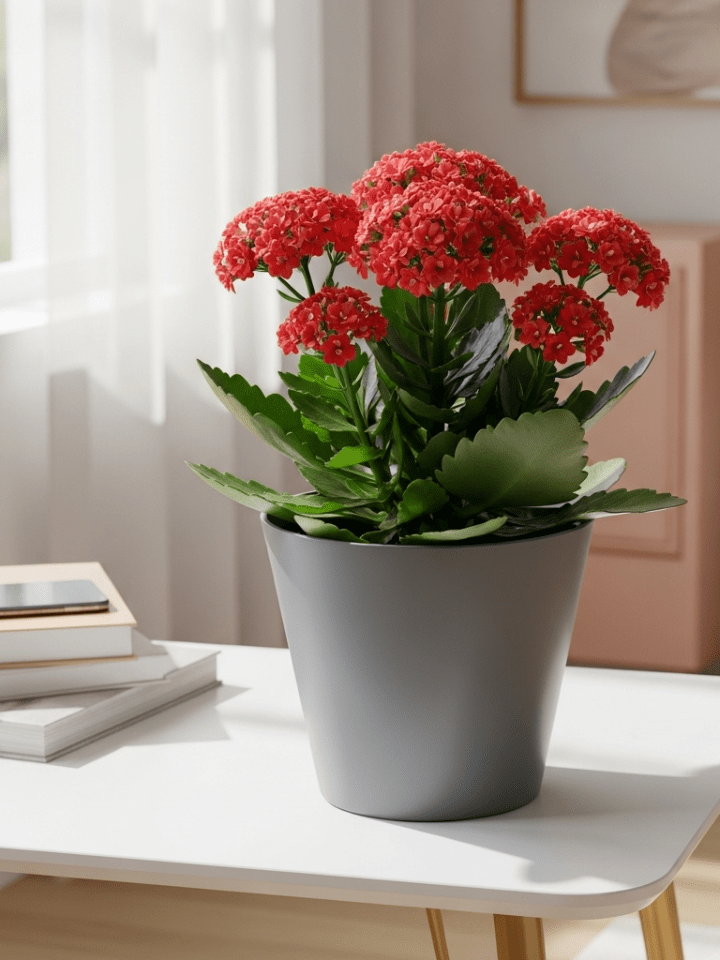
Poinsettia is the centre of a winter window, not the whole of it. A potted red kalanchoe adds small, long-lasting flower heads at table height. Outdoors, an Indian red rose that also peaks in winter makes a strong contrast in the same sunny bed, and kunda jasmine for white winter stars brings scent to the railing. For more ideas across the season, our range of the best winter flowering plants is grouped in one place.
Is a pink poinsettia a good gift?
Yes, and a longer lasting one than cut flowers. A healthy plant keeps its colour for six to eight weeks or more, and with care it grows on for years. It suits Christmas, New Year, Diwali, housewarmings and office desks by a bright window. Browse more Christmas and Diwali plant gifts if you are sending several.
Bring home festive colour this winter
Order your Poinsettia Pink Plant early and it arrives ready for the season, with its bracts coloured or colouring. We pack every plant at our own nursery and ship it through our online nursery for seasonal plants to every region we send winter plants to. For more cheerful colour, see our other flower plants online.
































There are no reviews yet.