The spider plant is Chlorophytum comosum, an evergreen perennial from the forests and grasslands of tropical and southern Africa. It belongs to the asparagus family, Asparagaceae, and is also known as ribbon plant and spider ivy. The name comes from its babies: small plantlets that form at the ends of long runners and hang down like spiders on a thread.
What you will notice when it arrives:
- Leaves. Narrow, strap-shaped and gently arching, in a fresh mid-green. On a mature plant they reach about 30–45 cm long.
- Shape. A loose, fountain-like rosette, usually 30–45 cm tall and a little wider, that softens the edge of any shelf or basket.
- Runners and plantlets. Once settled, the plant sends out wiry stems that carry tiny white star-shaped flowers and then baby plants.
- Roots. Thick, fleshy white roots that store water. This is why the plant forgives a missed watering better than most leafy houseplants.
- Growth. Quick. In good light a young plant fills its pot within a season.
Green spider plant or variegated: which one is this?
This is the plain green form, sometimes searched for as the non-variegated spider plant. The white-striped types sold in many shops, such as 'Vittatum' and 'Variegatum', are cultivars of the same species. The all-green plant has more chlorophyll in every leaf, so it holds its colour better in a room with less sun and tends to grow a little more vigorously. Its care is otherwise identical.
Where should you keep a spider plant at home?
Anywhere with steady, indirect light and no hot afternoon sun. It looks best where the leaves and babies can spill downwards. Good spots include:
Avoid direct afternoon sun through glass, the blast of an AC vent, and a spot right beside a heater.
Can a spider plant grow in low light?
It can manage medium light, a few metres back from a window, but it is not a plant for a dark corner. In poor light it grows slowly, the leaves turn limp and pale, and it rarely produces babies. For a full, bushy plant with plenty of runners, give it bright, indirect light near an east- or north-facing window.
Product Specifications
- Plant name: Spider Plant
- Other common names: Ribbon plant, spider ivy
- Botanical name: Chlorophytum comosum
- Variety: Plain green form
- Plant family: Asparagaceae (asparagus family)
- Native range: Tropical and southern Africa
- Plant type: Evergreen, clump-forming indoor perennial
- Growing medium supplied: Premium potting mix
- Leaves: Narrow, strap-shaped, arching, mid-green; about 30–45 cm long when mature
- Roots: Thick, fleshy and water-storing
- Growth habit: Fountain-shaped rosette; runners carry small white flowers and baby plantlets
- Growth rate: Fast
- Mature size indoors: About 30–45 cm tall and 30–60 cm wide, excluding runners
- Suitable placement: Hanging basket or bracket, bathroom with a window, bedroom or study shelf, living room bookshelf, office desk near a window
- Not suitable for: Direct afternoon sun, very dark corners, spots beside AC vents or heaters, waterlogged pots
- Light requirement: Bright, indirect light; tolerates medium light with slower growth
- Water requirement: Moderate; water when the top 2–3 cm of soil is dry
- Soil requirement: Light, free-draining potting mix
- Humidity: Average indoor humidity is enough
- Fertiliser: Balanced liquid feed at half strength, monthly from March to September
- Temperature: About 18–32 °C ideal; keep above about 10 °C
- Recommended next pot: 5–6 inch with a drainage hole, after 3–4 weeks
- Propagation: Plantlets (in water or soil) and division
- Common problems: Brown tips from tap water or overfeeding, root rot from overwatering, mealybugs, spider mites
- Maintenance: Low
- Difficulty level: Very easy; suitable for beginners
- Suitable environment: Indoors across India; shaded verandahs in warm, humid regions
- Pet safety: Non-toxic to cats and dogs (ASPCA); also horses (NC State Extension)
How do you care for a spider plant?
The short answer: indirect light, water when the top of the soil dries, and a pot that drains freely.
- Light. Bright, indirect light for most of the day. Gentle early-morning sun is fine; hot afternoon sun scorches the leaves.
- Watering. Water thoroughly until it runs out of the drainage hole, then wait until the top 2–3 cm of soil feels dry. In a 4-inch pot that can mean twice a week in April and May, and every 7–10 days in winter. The fleshy roots handle a short dry spell; they do not handle soggy soil.
- Water quality. It is sensitive to fluoride, chlorine and salts in tap water, which cause brown tips. Use filtered water or rainwater, or let tap water stand overnight, and flush the pot with plain water every few months.
- Soil. A light, free-draining potting mix. The supplied mix works well; add a little compost when you repot.
- Humidity. Average room humidity is enough. It enjoys the moist air of a Bengal monsoon but does not need misting.
- Feeding. A balanced liquid fertiliser at half strength once a month from March to September. Too much feed causes brown tips, so err on the light side.
- Grooming. Trim brown tips and old yellow leaves with clean scissors. Cut off some runners if you want the mother plant to stay fuller.
- Temperature. Happiest at about 18–32 °C. Keep it above about 10 °C on cold north Indian nights.
What size pot does a spider plant need?
Keep it in the 4-inch nursery pot for its first three or four weeks while it settles. After that, move it to a 5- or 6-inch pot with a drainage hole. Spider plants like to be slightly snug: a pot that is too large stays wet for days, while a moderately crowded root ball encourages the plant to send out runners. Repot again, one size up, whenever the white roots push out of the drainage hole or lift the plant in the pot, usually every year or two.
How do you propagate spider plant babies?
This is one of the easiest houseplants to multiply, and the babies make lovely gifts.
- In water. Snip off a plantlet that has small root nubs, stand its base in a glass of water and pot it once the roots are 2–3 cm long.
- In soil while attached. Rest a plantlet on a small pot of moist mix beside the mother plant. Once it has rooted, usually in two to three weeks, cut the runner.
- By division. When repotting a large plant, separate the clump into two or three sections, each with its own roots and leaves.
Runners form most freely when nights are long, so in India you will often see the most babies between October and February.
Spider plant through the Indian year
These notes come from growing it in West Bengal and suit most of eastern and southern India.
March to June: fast growth. Water more often as the soil dries quickly, feed monthly and move it back from any window that gets hot afternoon sun. Brown tips appear first if the air is dry or the pot dries out completely.
June to September: monsoon care. Growth stays lush, but the soil stays wet far longer. Check with a finger before every watering, never let the pot stand in water, and watch the base for soft, rotting leaves.
October to February: the season for babies. Water less often and stop feeding by December. This is when most plants send out runners. In north India, move it away from cold windows on winter nights.
Why are my spider plant leaves turning brown or yellow?
- Brown leaf tips. Usually fluoride or salts in tap water, dry air, overfeeding or a pot that dried out completely. Switch to filtered or rested water and trim the tips at an angle.
- One or two yellow outer leaves. Natural ageing. Pull or cut them off at the base.
- Many yellow, soft leaves at once. Overwatering or poor drainage. Let the soil dry more between waterings and check the roots for rot.
- Pale, washed-out leaves. Too little light, or too much direct sun. Move it to bright, indirect light.
- No babies. The plant is too young, too dim or in too big a pot. Give it more light and a snug pot, and wait for the long nights of winter.
- White cottony clusters or fine webbing. Mealybugs or spider mites, most common in dry, air-conditioned rooms. Rinse the plant and spray with diluted neem oil.
Is a spider plant safe for cats and dogs?
Yes. The ASPCA lists the spider plant as non-toxic to dogs and cats, and NC State Extension adds horses. That makes it one of the most reliable choices among houseplants that can share a flat with a playful kitten. Cats in particular love to bat at and chew the dangling leaves. A pet that eats a lot of them may get a mild stomach upset, so a high basket is still the best spot.
For more pet-safe greenery, try a trailing peperomia with round, glossy leaves for the shelf beside it, or a slender bamboo palm for the floor below it. The ASPCA lists both as non-toxic.
Spider plant vs snake plant: which should you choose?
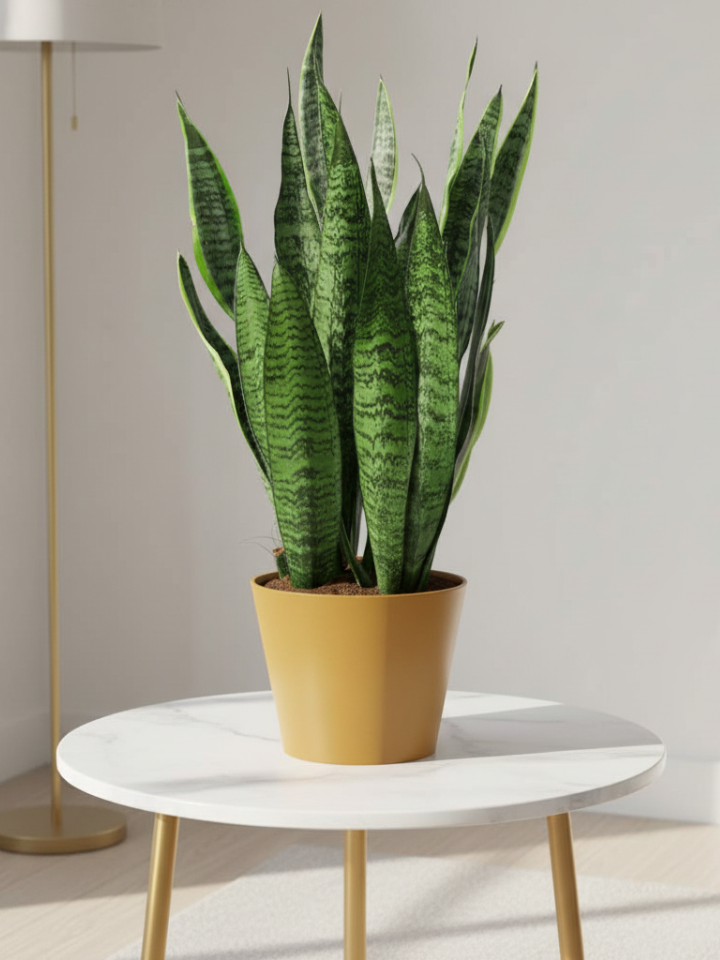
Both are easy, but they suit different homes. The spider plant is soft, arching and quick-growing, needs water about once or twice a week in summer, and is safe around pets. The upright green snake plant that shrugs off weeks without water is stiff and slow, survives far dimmer corners and longer dry spells, but the ASPCA lists it as toxic to cats and dogs. Many people keep both: the snake plant on the floor and this one hanging above it.
Does a spider plant purify indoor air?
Only slightly. A spider plant was one of the species tested in NASA's 1989 clean-air study, which is why it appears on so many lists of air-purifying plants. Those tests used small sealed chambers, though. A 2019 review by Cummings and Waring found that a real room would need somewhere between 10 and 1,000 plants per square metre to match the effect of ordinary ventilation. Grow it for its fresh green colour, its easy nature and the fun of raising its babies.
Is a spider plant good for beginners?
It is one of the best. It grows quickly enough to show results within weeks, tells you clearly when it needs water by turning slightly limp and pale, and recovers fast once you correct the problem. If you are building a first collection, it sits comfortably alongside the easiest houseplants to start a collection with, and it belongs among hardy indoor plants that bounce back after a missed watering.
A pet-safe hanging plant that keeps on giving
Each Spider Plant is raised and potted at our own nurseries in West Bengal, then packed and sent to the towns and cities our courier partners reach with live plants. Give it gentle light and a steady hand with the watering can, and within a season it will reward you with cascading leaves and babies to share.









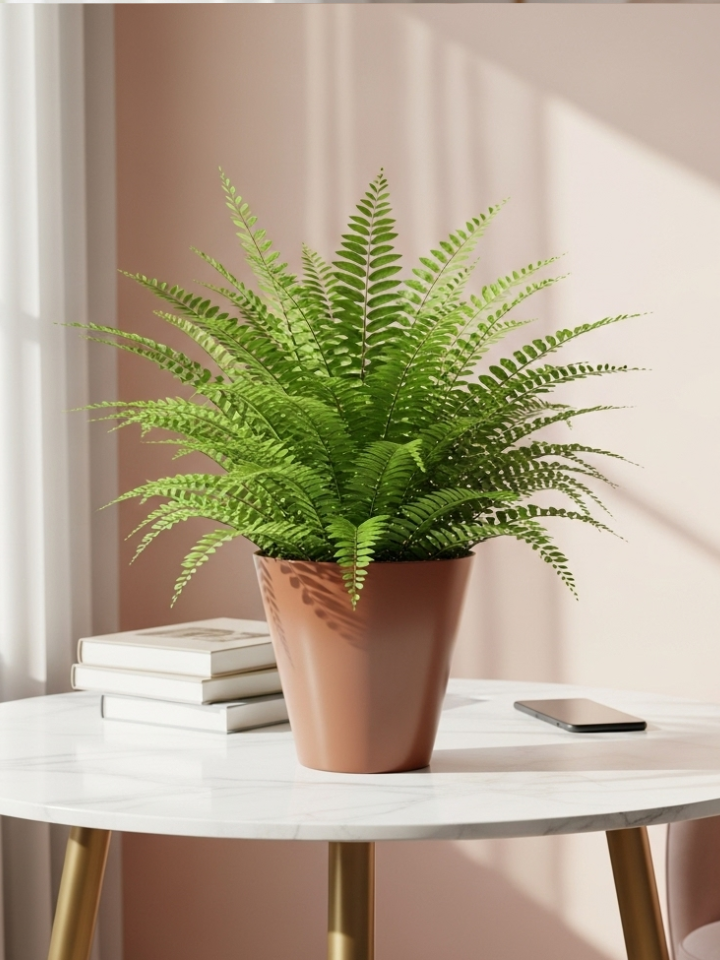
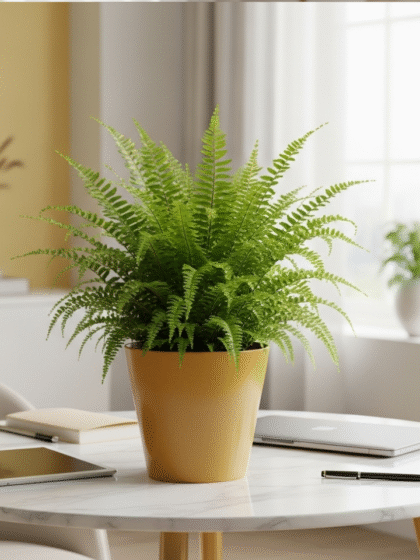




Rohan Kapoor –
The Spider Plant from Plantaeroot is pure elegance—lush, vibrant, and beautifully styled. It arrived fresh and instantly uplifted my space with a clean, premium green aesthetic. Truly a timeless indoor essential.
Rohan Kapoor –
The Spider Plant is pure elegance—lush, vibrant, and beautifully styled. It arrived fresh and instantly uplifted my space with a clean, premium green touch. Truly a timeless indoor essential.
Sumana S –
The spider plant that I ordered from Plantaeroot is already making my indoor space look better! It was fresh and healthy upon reaching here, so I am very happy. Also the quality of the plant is amazing. I will buy another plant from here with no regrets. Also it is a great choice if anyone wants to gift someone a plant. Please keep up the good work!