

Before naming plants, it helps to understand what the phrase actually promises — because gardening forums, nurseries and Pinterest boards use it loosely.
There are essentially three honest interpretations:
True daily bloomers. Plants that genuinely open fresh flowers nearly every day of the year when growing conditions are right. Vinca, Hibiscus and Pentas fit here in Indian plains.
Continuous-flush bloomers. Plants that don’t drop a flower every morning, but stay in flower for 9–11 months a year through overlapping flushes — Bougainvillea, Ixora, Adenium, Lantana, Kalanchoe.
Indoor year-round bloomers. Plants that, given the right indoor microclimate (filtered light, stable humidity, no temperature shocks), keep producing flowers across all seasons. Anthurium, Peace Lily and Crown of Thorns fit here.
India’s climatic advantage matters a lot. Most of the country sits in tropical to subtropical zones with average temperatures between 18°C and 35°C for the better part of the year. Plants that struggle to bloom continuously in colder countries — periwinkle, hibiscus, plumbago, ixora — thrive here almost without a pause. That is genuinely a gardening superpower Indian homeowners often underestimate.
Air Purifying Indoor Plants Combo
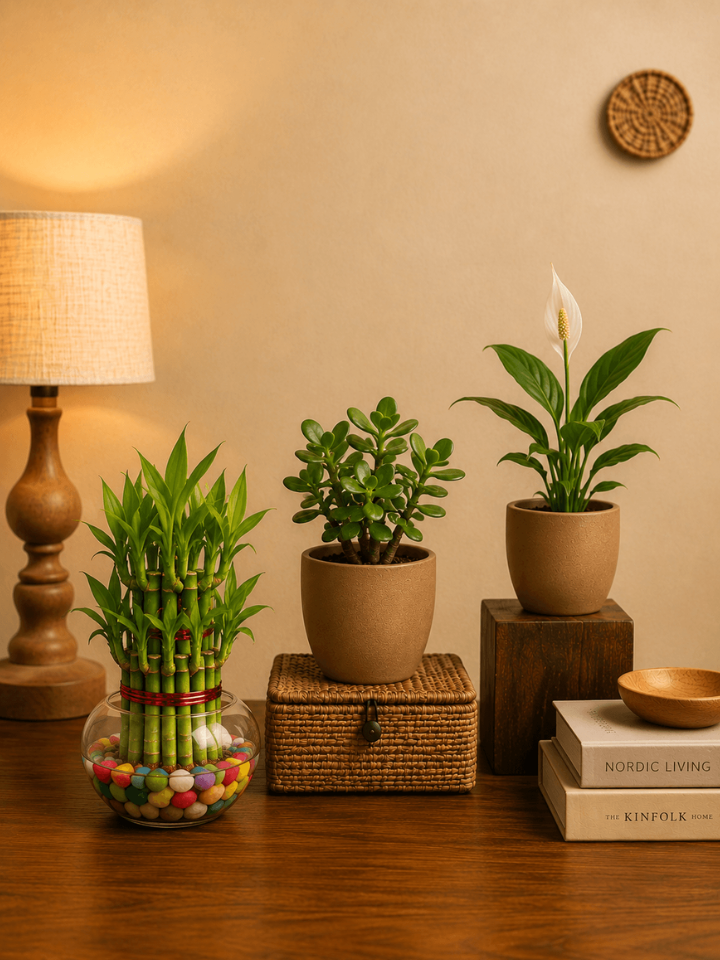
Set of 3 Vastu Plants
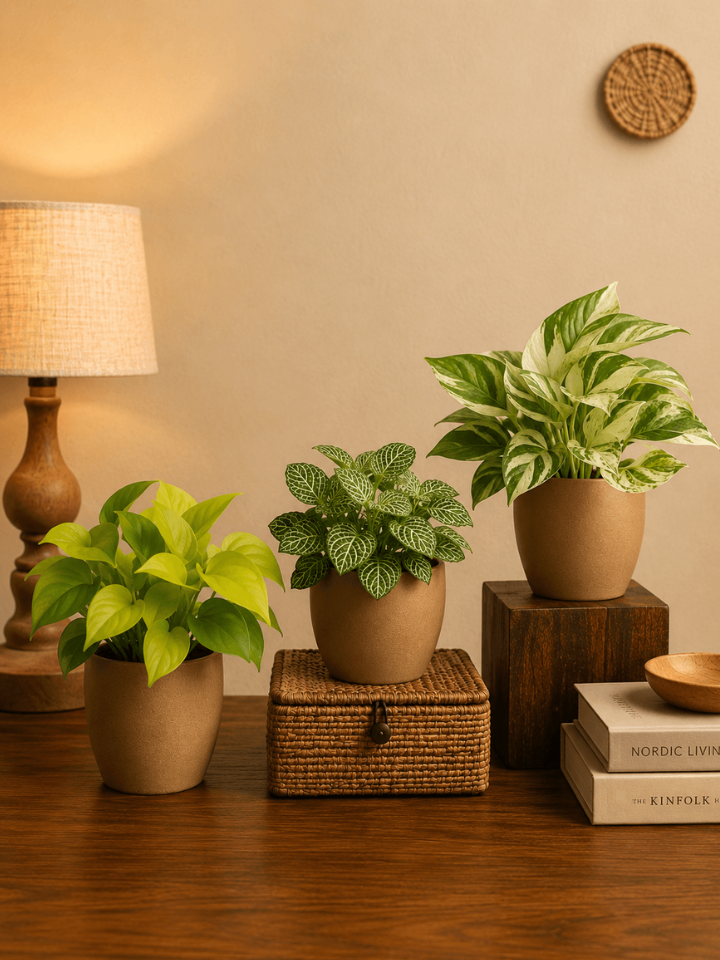
Combo of 3 Minimalist Plant Set
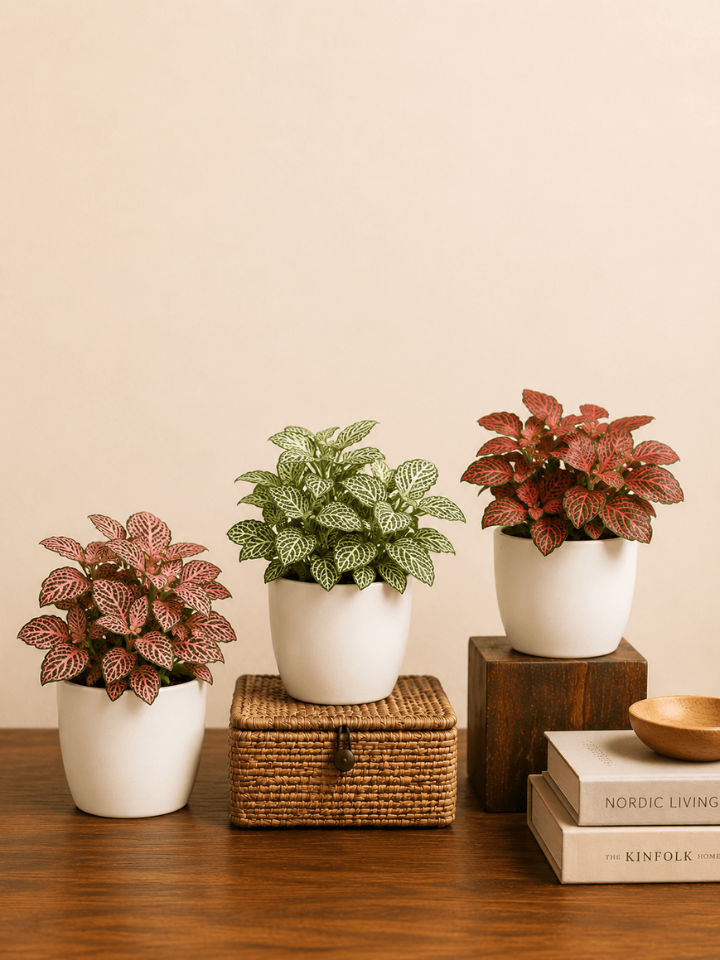
Set of 3 Indoor Plant Combo – Fittonia
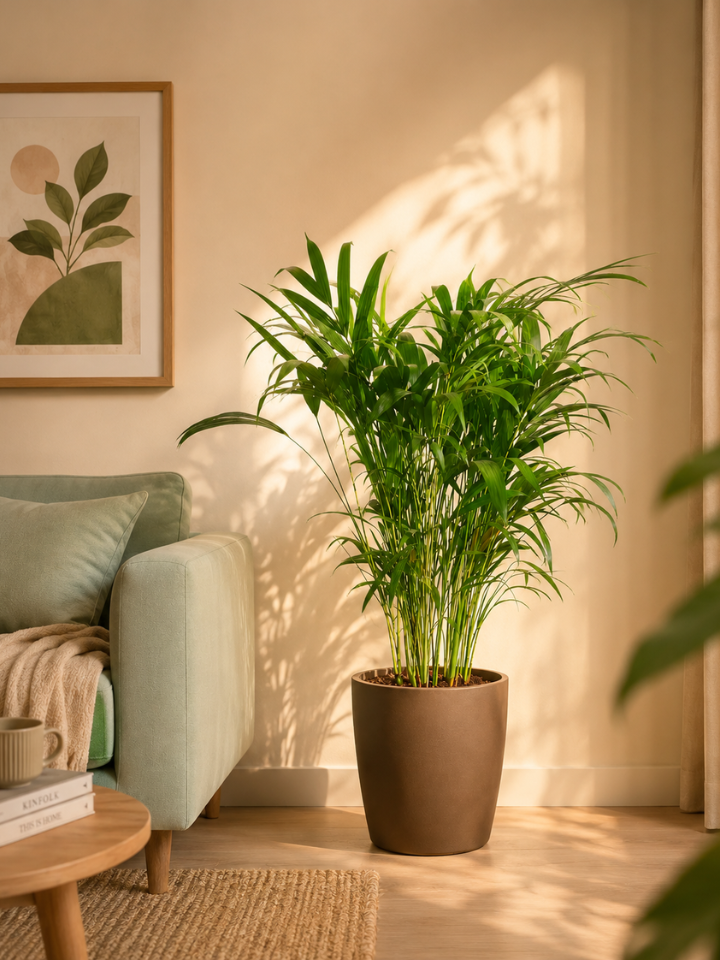
Areca Palm Plant (XL)
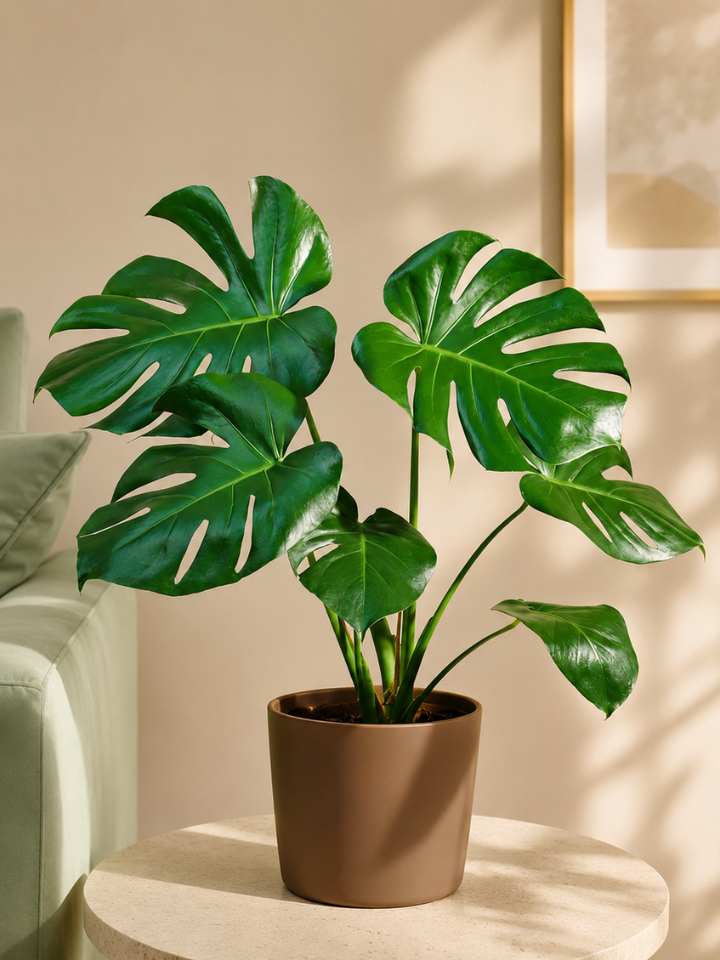
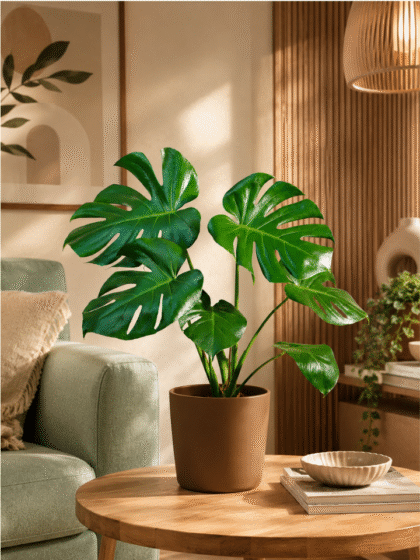
Monstera Deliciosa Plant (XL)
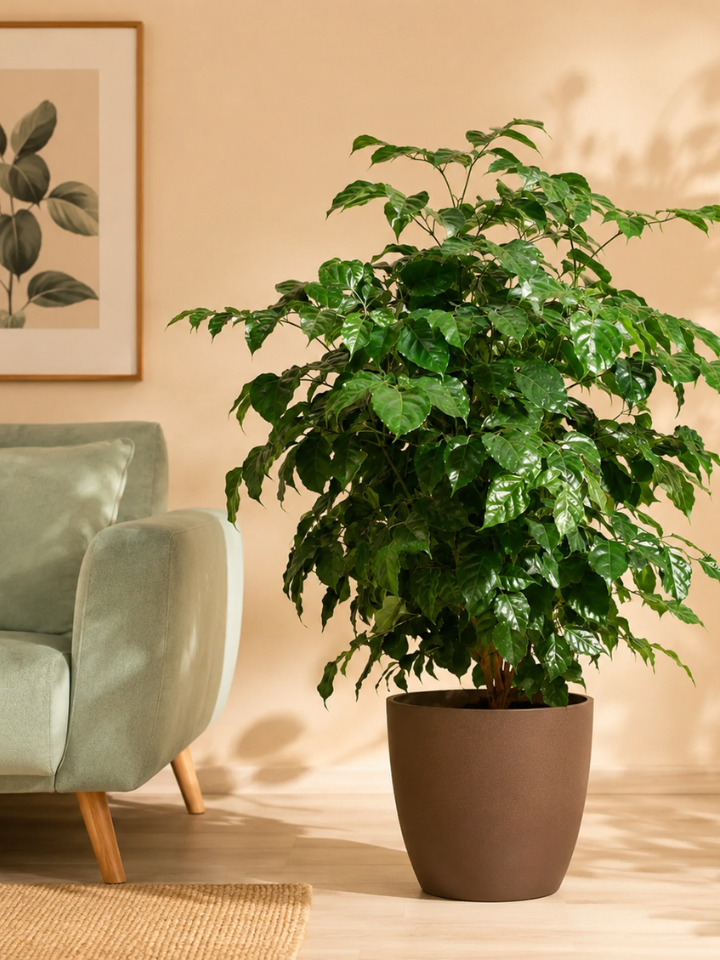
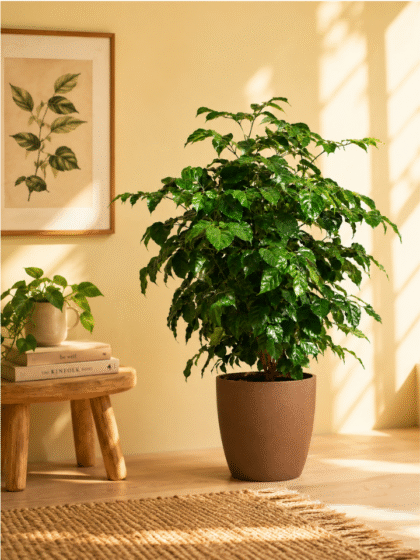
China Doll Plant (XL)
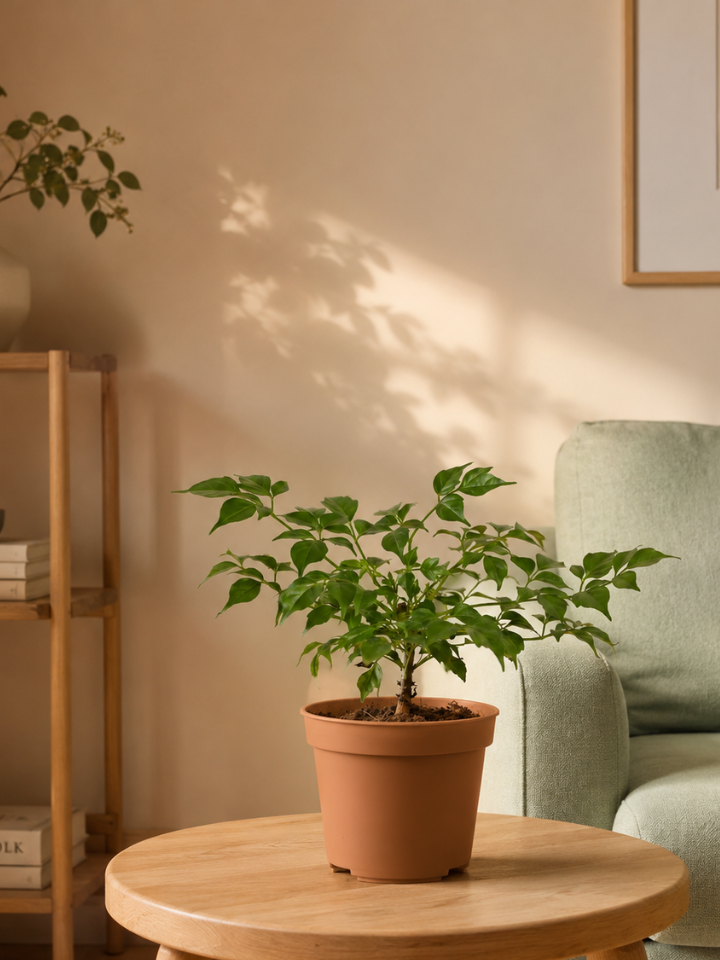
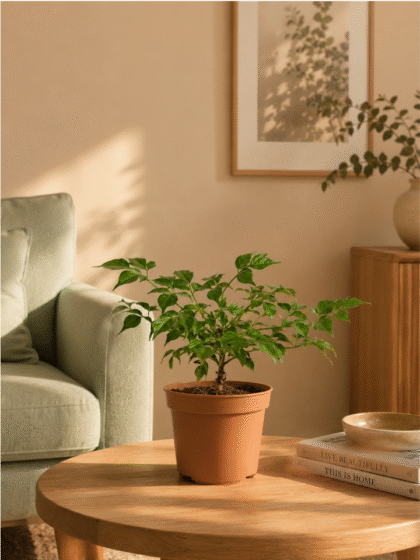
China Doll Plant (Small)
Expert note: Even the best “365-day flowering plants in India” need at least 4–6 hours of direct or bright filtered light, well-drained soil, and a light feed every 15–20 days during their active flowering window. No plant flowers continuously on neglect alone.
2. The Top 15 Year-Round Flowering Plants for Indian Homes
These are ranked roughly in order of how reliably they flower across Indian climates — from the most foolproof to the most rewarding-with-care. Each plant gets a complete profile so you can choose based on your space, light and time commitment.
2.1 Vinca / Periwinkle (Nayantara) — Catharanthus roseus
If there is one plant that earns the title of daily blooming flower in India, it is Vinca. Native to Madagascar but completely naturalised across India, it flowers from the day a seedling is two months old until frost or extreme heat finally slows it down — which, in most of India, never really happens.
- Flower colours: White, pink, magenta, red, white-with-pink-eye, lavender
- Bloom pattern: New flowers daily; each flower lasts 1–3 days; constant overlap means the plant is never empty
- Best position: Full sun to partial shade; thrives on balconies, terraces, ground beds
- Watering: Once daily in summer, alternate days in monsoon and winter
- Why it’s a winner: Drought-tolerant, almost pest-free, self-seeds, also a known medicinal plant (source of vincristine, a cancer-treatment compound)
Vinca is honestly the answer most expert Indian gardeners give when asked about full year flowering plants. It does not sulk, it does not demand, and it does not stop.
2.2 Hibiscus (Joba / Jaba / Gudhal) — Hibiscus rosa-sinensis
The cultural flower of Bengal and Kerala, and one of the most generous bloomers in Indian gardening. A healthy hibiscus produces flowers almost every single day from March through November, and continues sporadically through mild winters in South and Central India.
- Flower colours: Red, pink, yellow, orange, white, peach, double-petal varieties, hybrid bicolours
- Bloom pattern: Each flower opens for one day; replaced by a new bud the next morning during peak season
- Best position: 5–6 hours of direct sun; tolerates large containers well
- Watering: Deep watering 3–5 times a week in summer, less in winter
- Pro tip: Prune hard once a year (around February in North India, post-monsoon in the South) to trigger heavy flowering flushes
Hibiscus is also one of the easiest plants to propagate from cuttings — which is why nearly every Indian household garden has at least one.
2.3 Bougainvillea (Kagoj Phul / Booganbel) — Bougainvillea spectabilis
When you see a wall absolutely smothered in magenta, orange or white papery flowers across an Indian city — that’s bougainvillea doing what it does best. It is arguably the showiest 12 months flowering plant in Indian conditions.
- Flower colours (technically bracts): Magenta, pink, white, orange, yellow, red, double-shade varieties
- Bloom pattern: Heavy flushes lasting 6–10 weeks, with short gaps of 2–4 weeks between; in coastal and South Indian climates it stays in flower nearly continuously
- Best position: Full, harsh sun — the more the better; tolerates poor soil
- Watering: Less is more. Bougainvillea blooms more when slightly water-stressed
- Maintenance: Annual hard pruning; minimal fertiliser (excess nitrogen kills flowering)
This is the plant you choose when you want curtain-of-colour impact rather than dainty daily blooms.
2.4 Ixora (Rangan / Rugmini) — Ixora coccinea
A classic temple-side and roadside plant across India, Ixora produces dense ball-shaped clusters of tiny tubular flowers in clusters of 30–50 blooms. Where summer is long, it flowers nearly year-round.
- Flower colours: Red, orange, yellow, pink, white
- Bloom pattern: Clusters last 2–4 weeks; new clusters keep forming throughout warm months
- Best position: Full sun to bright filtered light
- Watering: Regular but well-drained — Ixora hates wet feet
- Special note: Dwarf Ixora (Ixora coccinea ‘Nora Grant’) is ideal for small flowering plants in India for balcony gardens
2.5 Adenium (Desert Rose) — Adenium obesum
A flowering succulent with a swollen caudex (the bulbous base) and large trumpet-shaped flowers. Adenium is increasingly popular in urban Indian terrace gardens because it tolerates neglect and rewards minimum care with maximum colour.
- Flower colours: Pink, red, white, double-petals, picotee bicolours, deep maroon
- Bloom pattern: Three to four major flushes a year in pots; near-continuous in ground in South India
- Best position: Full sun, hot and dry conditions ideal
- Watering: Sparing — water only when soil is fully dry. Overwatering rots the caudex
- Bonus: As it ages, the caudex develops a sculptural bonsai-like shape
2.6 Pentas (Egyptian Star Cluster) — Pentas lanceolata
Often overlooked, Pentas is one of the most rewarding daily-flowering plants you can grow in India. The star-shaped flower clusters bloom continuously and attract butterflies in dramatic numbers.
- Flower colours: Red, pink, white, lavender, deep magenta
- Bloom pattern: Continuous from late spring through late autumn; sporadic in mild winters
- Best position: Full sun to partial shade; excellent container plant
- Watering: Moderate, consistent
- Why it stands out: Attracts pollinators, deer-resistant, ideal for all season flower plants for home gardens
2.7 Lantana — Lantana camara
A multi-coloured bloomer where each cluster changes colour as it ages — a single Lantana plant can show yellow, orange, pink and red flowers simultaneously, making it a true multicolor flower plant for the Indian garden.
- Flower colours: Yellow, orange, pink, red, white, multi-shade clusters
- Bloom pattern: Almost continuous in warm climates
- Best position: Full sun
- Watering: Drought-tolerant once established
- Caution: Invasive in some regions; grow in containers to keep it contained
2.8 Kalanchoe — Kalanchoe blossfeldiana
A succulent that produces dense clusters of tiny four-petalled flowers. Modern hybrids are bred for long-lasting flowering, often staying in bloom 6–8 weeks at a stretch, with multiple cycles per year.
- Flower colours: Red, pink, yellow, orange, white, magenta
- Bloom pattern: Multiple long flushes; with deadheading and short-day light cycles, near year-round
- Best position: Bright indirect light indoors, or morning sun on a balcony
- Watering: Sparing — typical succulent care
- Best for: Indian flat-dwellers wanting flowering succulents on a windowsill
2.9 Crown of Thorns — Euphorbia milii
A spiny succulent shrub with small, persistent flower bracts. In Indian conditions, it flowers nearly year-round with almost no attention.
- Flower colours: Red, pink, yellow, white
- Bloom pattern: Continuous in good light
- Best position: Bright light or full sun
- Watering: Minimal
- Note: Sap is mildly irritant — wear gloves while pruning
2.10 Allamanda (Golden Trumpet) — Allamanda cathartica
A vigorous climbing or shrubby plant producing large, yellow trumpet flowers. In the warm humid coastal climates of Kerala, Karnataka, Goa and Bengal, it flowers almost continuously.
- Flower colours: Bright yellow (most common), pink, purple varieties
- Bloom pattern: Heavy flushes from March to November; sporadic flowering through winter in South India
- Best position: Full sun
- Use: One of the most spectacular climbing flowers for Indian fences and pergolas
2.11 Plumbago (Sky Flower) — Plumbago auriculata
Soft sky-blue clusters of tubular flowers on a sprawling shrub. Plumbago is the rare blue flower that blooms reliably for most of the Indian year.
- Flower colours: Sky blue (most popular), white variety also available
- Bloom pattern: Almost continuous in warm zones
- Best position: Full sun to light shade
- Watering: Moderate
- Why grow it: A genuine blue flower is rare in tropical gardening, and Plumbago delivers it without fuss
2.12 Anthurium — Anthurium andraeanum
For Indian homes wanting a year-round indoor bloomer, Anthurium is the most striking option. Its waxy, heart-shaped spathes (the colourful “flower”) last 6–8 weeks each, with overlapping cycles producing flowers throughout the year.
- Flower colours: Red, pink, white, salmon, purple, green
- Bloom pattern: Continuous with overlapping spathes
- Best position: Bright indirect light, away from direct AC
- Watering: Moderate, with high humidity
- Best for: Living rooms, office desks, north-facing windows — a star among indoor flowering plants india
2.13 Peace Lily — Spathiphyllum wallisii
The classic low-light indoor bloomer. Its elegant white spathes appear in flushes 2–3 times a year, with each spathe lasting up to a month — meaning the plant carries flowers for the majority of the year.
- Flower colours: White (cream as it ages)
- Bloom pattern: 2–3 flushes per year, with long-lasting individual spathes
- Best position: Low to medium indirect light — perfect for bathrooms and bedrooms
- Watering: Keep evenly moist
- Why it’s popular: Air-purifying, low maintenance, and one of the most reliable peace lily flowering plants for Indian apartments
2.14 Tecoma (Yellow Bells) — Tecoma stans
A small ornamental tree or large shrub that produces masses of bright yellow trumpet flowers. In Indian conditions it flowers from spring through early winter, with a brief pause in extreme summer heat.
- Flower colours: Yellow, occasionally orange varieties
- Bloom pattern: Heavy flushes for 9–10 months a year
- Best position: Full sun
- Watering: Moderate, drought-tolerant once mature
- Best use: Boundary planting, large pots, garden focal points
2.15 Portulaca (Moss Rose / Time Flower / Nau Bajiya) — Portulaca grandiflora
A creeping succulent that blankets the soil with brilliantly coloured flowers that open with sunshine. In Indian summers and monsoons, it is a non-stop bloomer.
- Flower colours: Pink, red, yellow, white, orange, magenta, multi-shade
- Bloom pattern: Daily new flowers; nearly continuous in summer and monsoon; rests in cold winters
- Best position: Full direct sun
- Watering: Sparing
- Best for: Hanging baskets, terrace edges, ground cover — and one of the most cheerful hanging flower plants in india
3. Quick Comparison Table: Best All-Season Bloomers at a Glance
Plant | Bloom Frequency | Light Needs | Care Level | Best Use | Indoor or Outdoor |
Vinca / Nayantara | Daily, year-round | Full sun to part shade | Very easy | Beds, balconies, edges | Outdoor |
Hibiscus / Joba | Daily for 9–11 months | 5+ hours sun | Easy | Pots, hedges, gardens | Outdoor |
Bougainvillea | Heavy flushes, near-continuous | Full sun | Easy | Walls, fences, terraces | Outdoor |
Ixora / Rangan | Cluster flushes, continuous in warm zones | Full sun to bright | Easy | Hedges, pots | Outdoor |
Adenium | 3–4 major flushes per year | Full sun | Easy | Decorative pots, bonsai | Outdoor / bright indoor |
Pentas | Continuous in warm seasons | Full sun to part shade | Easy | Containers, beds | Outdoor |
Lantana | Almost continuous | Full sun | Very easy | Borders, containers | Outdoor |
Kalanchoe | Long flushes, multiple cycles | Bright indirect | Very easy | Windowsills | Indoor / balcony |
Crown of Thorns | Continuous | Bright light | Very easy | Pots, low maintenance gardens | Both |
Allamanda | Heavy 8–9 month flush | Full sun | Easy | Fences, climbers | Outdoor |
Plumbago | Near-continuous | Full sun to light shade | Easy | Hedges, large pots | Outdoor |
Anthurium | Continuous overlapping | Bright indirect | Moderate | Indoor decor | Indoor |
Peace Lily | 2–3 long flushes annually | Low to medium indirect | Easy | Bathrooms, bedrooms | Indoor |
Tecoma | 9–10 months of bloom | Full sun | Easy | Boundary, focal trees | Outdoor |
Portulaca | Daily in summer/monsoon | Full direct sun | Very easy | Hanging baskets, ground cover | Outdoor |
4. Indoor vs Outdoor Year-Round Flowering Plants
A common question Indian gardeners ask is whether a true 365-day flowering plant can survive indoors. The honest answer: very few flowering plants stay in continuous bloom inside an Indian apartment without significant direct light. Indoors, your best bets shift toward plants that bloom in overlapping flushes rather than daily.
Best Indoor Year-Round Bloomers for Indian Homes
- Anthurium — the king of indoor blooming; spathes last weeks
- Peace Lily — white spathes 2–3 times a year; thrives in low light
- Kalanchoe — happy on a bright windowsill, blooms repeatedly
- Crown of Thorns — flowers continuously in bright light
- African Violet (Saintpaulia) — small, compact, blooms in flushes year-round in good light
- Begonia (varieties like Rex and wax) — flowering or foliage interest
- Bromeliads — long-lasting colourful bracts, up to 6 months per bloom
For deeper indoor selection guidance, the wider category of low maintenance indoor flowers is worth exploring before you commit, especially if your home leans toward shaded interiors or has limited window access.
Best Outdoor 365-Day Bloomers
Outdoor or balcony spaces unlock the full spectrum of Indian flowering plants. If you have even 4–5 hours of direct sun, the world of outdoor flowering plants opens dramatically — Vinca, Hibiscus, Bougainvillea, Ixora, Pentas, Adenium, Lantana, Plumbago and Portulaca will all reward you.
Hybrid Approach: Indoor-Outdoor Rotation
A smart approach that experienced Indian gardeners use: rotate flowering plants between an outdoor sunny spot and an indoor display position. Move a blooming Kalanchoe or Anthurium inside while it’s in peak flower, then return it outside to recharge in bright light. This way your interiors are never without flowers, and your plants stay healthy long-term.
5. Region-Wise Guide: What Blooms All Year Where You Live
India isn’t one climate — it’s at least seven. A “365 days flowering plant” in Chennai behaves very differently in Shimla. Here’s a realistic regional breakdown.
South India (Tamil Nadu, Kerala, Karnataka, Andhra Pradesh, Telangana)
This is the easiest region in the country for true year-round flowering. Warm temperatures, monsoon-fed humidity, mild winters.
Best 365-day bloomers: Hibiscus, Vinca, Ixora, Plumeria, Allamanda, Bougainvillea, Pentas, Adenium, Crown of Thorns, Lantana, Plumbago
East India (West Bengal, Odisha, Assam, Northeast)
Hot humid summers, heavy monsoon, cool but rarely freezing winters. Bengal in particular is the heartland of many traditional Indian flowering plants.
Best 365-day bloomers: Joba (Hibiscus), Nayantara (Vinca), Rangan (Ixora), Madhabilata (Hiptage), Jui and Beli (Jasmines), Champa (Plumeria), Aparajita, Bougainvillea, Pentas
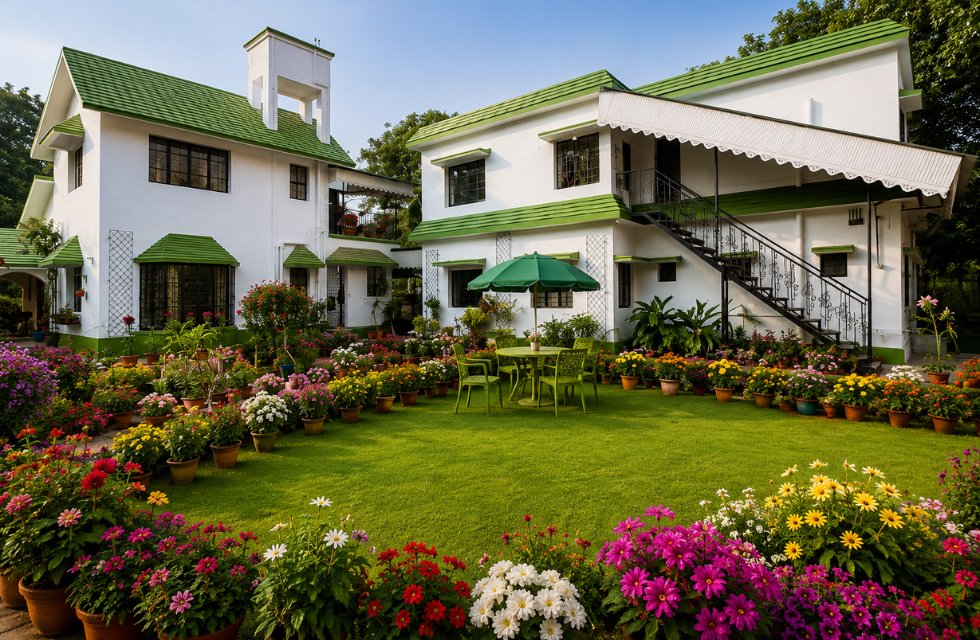
A note on the Kolkata–Hooghly belt where many of our customers live: this region’s blend of warm humid summers and short mild winters is ideal for keeping outdoor flowering plants in colour 10–11 months a year, with only a brief slow-down in late December and January.
North India (Delhi NCR, UP, Punjab, Haryana, Rajasthan)
The toughest region for “true” 365-day flowering, because of harsh summers (45°C+) and cold winters (sometimes 2–5°C). But with the right selection, you can still maintain near-continuous colour.
Best year-round bloomers: Bougainvillea (excellent in dry heat), Vinca, Hibiscus (March–November), Adenium, Lantana, Crown of Thorns, Portulaca (summer–monsoon), Kalanchoe (winter), Pentas
Strategy: In North India, combine summer bloomers and winter bloomers in pairs to guarantee year-round colour. For example, pair Vinca (summer-strong) with Pansy or Petunia (winter-strong) in your beds.
Western India (Maharashtra, Gujarat, Goa)
Mostly mild winters, hot summers, defined monsoons. Coastal Goa and Konkan have humidity that suits tropical flowering plants beautifully.
Best 365-day bloomers: Bougainvillea, Hibiscus, Ixora, Allamanda, Adenium, Plumbago, Plumeria, Vinca
Hill Regions (Himachal, Uttarakhand, Northeast hills, Western Ghats high zones)
Cooler temperatures change the game entirely. Tropical bloomers slow down, but temperate flowering plants thrive.
Best bloomers: Geranium, Fuchsia, Hydrangea (seasonal), Begonia, Roses (with care), Pansy and Petunia (cool months), Impatiens
In these regions, a true 365-day single plant is harder to achieve — but a thoughtfully planted mixed garden can maintain continuous flowering.
6. Best Year-Round Flowers by Colour
Choosing flowers by colour is one of the most common ways gardeners design their spaces. Here’s a colour-wise breakdown of plants that flower nearly year-round in India.
Best White Flower Plants in India for All-Year Bloom
White flowers add elegance, work beautifully in moon gardens, and suit nearly every Indian home aesthetic.
- Peace Lily — indoor evergreen with creamy white spathes
- White Vinca / Nayantara — daily white blooms outdoors
- White Hibiscus — graceful, daily flowers
- Arabian Jasmine (Mogra / Beli) — extremely fragrant, blooms heavily March–November
- White Bougainvillea — bright cascading masses
- Anthurium White — striking indoor option
- White Pentas — clusters of star-shaped flowers
- White Ixora — less common but elegant
Best Red Flower Plants in India for Year-Round Bloom
Red is the dominant colour in Indian gardens — symbolic, dramatic and pollinator-attracting.
- Red Hibiscus — the temple flower, blooms daily
- Red Ixora (Rangan) — vivid clusters
- Red Vinca — daily, durable
- Red Bougainvillea — non-stop colour
- Red Pentas — butterfly magnet
- Red Kalanchoe — indoor and balcony favourite
- Red Anthurium — indoor signature plant
- Red Adenium — modern hybrids
Best Multicolour Flowering Plants
A single plant showing multiple flower colours is rare and prized. These are the standouts:
- Lantana — clusters change colour as flowers age (yellow → pink → red within one cluster)
- Bougainvillea — grafted plants can show 2–3 colours
- Portulaca mixed varieties — pinks, yellows, reds, whites on one plant
- Multi-grafted Adenium — multiple flower colours on one trunk
- Mixed Petunia hanging baskets — multi-colour combinations
If you want a single show-stopping multicolor flower plant, Lantana and grafted Bougainvillea are the most reliable choices for Indian conditions.
Pink and Yellow Year-Round Bloomers
- Pink: Vinca, Adenium, Plumeria, Pentas, Bougainvillea, Pink Hibiscus, Pink Anthurium
- Yellow: Allamanda, Tecoma, Yellow Hibiscus, Yellow Bougainvillea, Yellow Kalanchoe, Marigold (seasonal in North, near-perennial in South)
7. Hanging, Climbing & Small Compact All-Season Bloomers
Modern Indian homes — apartments, balconies, terraces — demand flowering plants that fit specific spaces. Here’s a focused breakdown.
Best Hanging Flower Plants
Hanging plants make the most of vertical space and are perfect for balconies that lack floor area.
- Portulaca / Moss Rose — full sun, drought tolerant, daily flowers
- Petunia (hanging varieties) — non-stop colour in cooler months
- Hanging Begonia — partial shade, all-year interest
- Verbena hybrid — long flowering, cascading habit
- Million Bells (Calibrachoa) — small petunia-like flowers, continuous bloom
For a complete look at hanging options across Indian conditions, our wider hanging flower plants in india range covers everything from sun-loving to shade-loving cascading bloomers.
Best Climbing Flowering Plants
Climbers transform fences, pergolas and railings into vertical gardens.
- Bougainvillea — most popular climbing flower in India
- Allamanda — yellow trumpet climber
- Madhumalati (Rangoon Creeper) — fragrant, multi-colour flowers
- Aparajita (Blue Pea / Asian Pigeonwings) — daily blue flowers, also medicinal
- Morning Glory — daily flowers throughout warm months
- Jasmine vines (Jui, Beli, Madhabilata) — fragrant continuous bloomers
- Climbing Rose — best in North India and hill regions
A balcony covered with thoughtfully chosen climbing flowers can become your most rewarding gardening project.
Small & Compact Flowering Plants for Apartments
Not every Indian home has space for a four-foot Hibiscus. Compact varieties matter.
- Dwarf Ixora (Nora Grant) — stays under 2 feet
- Mini Vinca — neat mounding habit
- Compact Hibiscus hybrids — pot-friendly, daily flowers
- Miniature Roses
- Dwarf Adenium
- Compact Pentas
- Kalanchoe miniatures
- Portulaca — naturally low-growing
- Dwarf Bougainvillea
These are the heart of the small flowering plants india category — built for window grilles, balcony rails and tabletop pots.
8. Flowering Succulents That Bloom Most of the Year
Succulents have transformed urban Indian gardening because they handle erratic watering and intense heat. Flowering succulents combine that resilience with continuous colour.
Top Flowering Succulents for Indian Conditions
- Adenium (Desert Rose) — large trumpet flowers, multiple flushes
- Kalanchoe blossfeldiana — continuous clusters
- Crown of Thorns (Euphorbia milii) — near year-round in warm light
- Christmas Cactus (Schlumbergera) — winter–spring flowering, multiple cycles indoors
- Portulaca — daily flowers in warm months
- Echeveria (in flowering season) — coral spike flowers
- Sedum varieties — small star-shaped flower clusters
- Aloe Vera — tall flower spikes once a year in mature plants
The combined advantage: minimal water needs, low pest pressure, sculptural foliage even when not in flower. Browse the wider flowering succulents section to match varieties to your light conditions.
9. How to Keep Your Flowering Plants Blooming All Year — Expert Care Guide
Here is where most “365-day flowering plant” guides fall short. They tell you what to buy but not how to keep it blooming. After years of plant-parenting across Indian conditions, these are the practices that genuinely make the difference.
9.1 Light: The Single Biggest Factor
Most flowering plants need 4–6 hours of direct or bright filtered light to bloom continuously. Move plants seasonally — what gets gentle morning sun in summer might need a fully sunny spot in winter.
Indoor signal that your plant lacks light: Long internodes (stretched stems), pale foliage, no flower buds forming. Move it closer to the brightest window you have, or rotate it out to a balcony for a week.
9.2 Watering: The Most Misunderstood Skill
Overwatering kills more Indian houseplants than any pest. The principle:
- Succulents and Adenium: Water only when soil is fully dry to the touch 1 inch down
- Hibiscus, Pentas, Vinca: Water when top inch is dry; deep watering preferred
- Anthurium, Peace Lily: Keep evenly moist, never soggy
- Bougainvillea: Slight underwatering encourages more flowering
In Indian monsoons, scale back watering significantly. In peak summer, even daily watering for sun-exposed pots is acceptable.
9.3 Soil & Repotting
Use a well-draining mix. A reliable Indian garden recipe:
- 40% garden soil
- 30% well-rotted cow dung or compost
- 20% coco peat
- 10% river sand or perlite
Repot flowering plants every 18–24 months, refreshing the soil. Adenium and succulents need a sandier mix — increase sand/perlite to 30–40%.
9.4 Fertilising for Continuous Bloom
Flowering plants need different nutrients than foliage plants. The key element is phosphorus (the middle number in NPK ratings).
- Daily feeding routine: Once every 15 days during active growth — a balanced fertiliser (NPK 19-19-19)
- Boost flowering: Once a month — a bloom booster (NPK 13-27-27 or similar)
- Organic option: Mustard cake water (soak 50g in 1 litre water for 2 days, dilute 1:10) — applied every 20 days
Stop heavy feeding during peak summer or extreme winter — plants in stress don’t process nutrients well.
9.5 Pruning & Deadheading
Removing faded flowers (deadheading) signals the plant to produce new buds rather than develop seeds. For continuous bloomers:
- Daily quick pinch: Vinca, Pentas, Portulaca — pinch faded flowers every 2–3 days
- Weekly trim: Hibiscus, Pentas — cut back any leggy stems
- Major annual pruning: Bougainvillea, Hibiscus, Allamanda — once a year, cut back hard at start of growing season
9.6 Pest & Disease Management
Common Indian flowering plant pests: aphids, mealybugs, spider mites, scale insects, whitefly.
Natural treatment routine:
- Spray neem oil solution (5ml in 1L water + few drops dish soap) every 15 days as prevention
- For mealybugs: dab with cotton dipped in diluted alcohol
- Encourage ladybirds and predatory insects in outdoor gardens
- Quarantine new plants for 2 weeks before mixing with existing collection
9.7 Seasonal Adjustments
- Summer (April–June): Move plants away from direct afternoon sun, water more frequently, mulch the soil surface
- Monsoon (July–September): Reduce watering, increase ventilation, watch for fungal diseases
- Post-monsoon (October–November): Best growing season — fertilise heavily, repot if needed
- Winter (December–February): Reduce watering, stop feeding sensitive plants, move tropical bloomers to warmer spots
10. Common Mistakes That Stop Year-Round Blooming
Even with the right plants, these are the eight mistakes that quietly kill continuous flowering:
- Buying based on photos, not light conditions. A plant that flowered beautifully at the nursery in full sun will stop in your shaded living room. Match plant to location.
- Overwatering. Soggy soil rots roots. Roots can’t take up nutrients. Plant stops flowering. Most “my plant isn’t blooming” cases trace back to wet feet.
- Wrong fertiliser ratio. Too much nitrogen makes lush green leaves but few flowers. Switch to high-phosphorus fertiliser for blooming plants.
- Skipping deadheading. Plants that go to seed slow down flowering. Pinch faded blooms regularly.
- Never pruning. Most Indian flowering plants need annual hard pruning to trigger new flowering wood. Avoiding it leads to woody, sparse plants.
- Moving the plant constantly. Flowering plants don’t like position changes. Find the right spot and leave them there.
- Ignoring pot drainage. A pot without proper drainage holes will eventually kill any plant. Always check before buying.
- Forgetting micronutrients. Plants need more than NPK. Add a teaspoon of Epsom salt (magnesium) per litre of water once a month for vivid flower colour.
11. Step-by-Step: Build a 12-Month Flowering Garden
A complete strategy for ensuring your space is never without flowers — designed specifically for Indian conditions.
Step 1: Audit Your Space
Spend a week tracking sunlight in your balcony or garden. Note:
- Hours of direct sun
- Hours of bright indirect light
- Wind exposure
- Average summer and winter temperatures
Step 2: Pick Your Core Year-Round Bloomers
Choose 3–5 plants from the master list above that match your conditions. For most Indian urban balconies, a solid core might be:
- 1 Hibiscus (the everyday workhorse)
- 1 Vinca cluster (3–5 plants for daily flowers)
- 1 Bougainvillea (for vertical drama)
- 1 Adenium (for sculptural year-round interest)
- 1 indoor Peace Lily or Anthurium
Step 3: Layer in Seasonal Specialists
Add seasonal flowering plants that fill the brief gaps:
- Winter: Pansy, Petunia, Calendula, Snapdragon, Dianthus
- Summer: Sunflower, Zinnia, Cosmos, Tithonia
- Monsoon: Rain Lily, Balsam, Coleus
Step 4: Plan for Flowering Overlap
Stagger your plants so that as one flowering peak fades, another rises. A simple calendar:
Month | Peak Bloomers |
January | Bougainvillea, Pansy, Petunia, Adenium |
February | Bougainvillea, Hibiscus restart, Kalanchoe |
March | Hibiscus, Bougainvillea, Ixora, Mogra |
April | Hibiscus, Pentas, Allamanda, Plumeria |
May | Adenium, Vinca, Portulaca, Crown of Thorns |
June | Vinca, Portulaca, Lantana, Hibiscus |
July | Rain Lily, Pentas, Vinca, Allamanda |
August | Hibiscus, Vinca, Pentas, Plumbago |
September | Hibiscus, Ixora, Pentas, Adenium flush |
October | Bougainvillea, Hibiscus, Tecoma |
November | Marigold, Chrysanthemum, Bougainvillea, Tecoma |
December | Chrysanthemum, Petunia, Bougainvillea, Kalanchoe |
Step 5: Set Up a Care Routine
A 15-minute daily routine sustains a thriving flowering garden:
- 5 minutes: Watering check
- 5 minutes: Deadheading and quick inspection for pests
- 5 minutes: One small task — fertilising, pruning, or repositioning
Step 6: Track and Refine
Keep a simple notebook. Note when each plant flowers, when it pauses, and what worked. Over two years you’ll know exactly what your space delivers.
12. Choosing the Right Container for Year-Round Flowering
Container choice is often treated as a decorative decision, but it directly affects whether your plant flowers continuously or struggles. After years of Indian terrace gardening experience, these are the rules that genuinely matter.
Pot Size — Bigger Isn’t Always Better
A common beginner mistake is buying the largest available pot for a small plant. Excess soil holds excess moisture, which roots can’t reach, leading to root rot. Match pot size to the current root ball:
- Vinca, Pentas, Portulaca: 6–8 inch pots
- Hibiscus (young): 10–12 inch; mature plants need 14–18 inch
- Bougainvillea: Restricted root space actually triggers more flowering; 12–14 inch is ideal
- Adenium: Wide shallow pots show off the caudex; depth less important than width
- Anthurium, Peace Lily: Slightly snug pots; repot only when roots circle the bottom
Material Matters
- Terracotta clay pots: Breathable, ideal for succulents, Adenium and Mediterranean-style plants. Drawback — dries out fast in Indian summer
- Glazed ceramic pots: Retain moisture longer, perfect for tropical bloomers like Anthurium and Peace Lily indoors
- Plastic pots: Lightweight, retain moisture; useful on terraces where weight is a concern
- Concrete planters: Stable, weather-resistant, but heavy and can leach lime initially
Drainage Is Non-Negotiable
Every pot must have drainage holes. For pots that don’t, drill holes or use them as decorative outer covers (a “cache pot”) with a properly drained inner pot. Add a 1-inch layer of broken pottery shards or pebbles at the base before adding soil — this prevents the drainage hole from clogging.
The Self-Watering Pot Question
Self-watering pots help for indoor flowering plants like Anthurium and Peace Lily that prefer consistent moisture. They are not ideal for Adenium, Bougainvillea, succulents or any plant that needs to dry out between waterings.
13. Propagation: Multiply Your Year-Round Bloomers at Home
One of the most satisfying parts of growing flowering plants is multiplying them for free. Most of the 365-day bloomers covered in this guide propagate easily.
Stem Cutting Method (works for most plants)
Best plants: Hibiscus, Bougainvillea, Ixora, Pentas, Vinca, Crown of Thorns, Adenium, Allamanda, Plumeria
Step-by-step:
- Select a healthy semi-hardwood stem, 6–8 inches long
- Cut at a 45-degree angle just below a leaf node
- Remove lower leaves, keep 2–3 upper leaves
- Dip the cut end in rooting hormone (commercial or natural cinnamon powder)
- Plant in a mix of 50% coco peat and 50% sand
- Keep in bright indirect light, mist daily
- Roots typically develop in 3–6 weeks
Best season: Late monsoon to early winter (September–November) in most of India.
Layering Method
Best plants: Bougainvillea, Allamanda, climbing roses, Jasmine vines
Bend a low branch to touch the soil, lightly scrape the bark, cover with soil, and weigh it down with a stone. Roots form within 6–8 weeks, after which you can sever and replant.
Division Method
Best plants: Peace Lily, Anthurium, ground-cover Portulaca
When repotting, gently separate the root ball into 2–3 sections, each with healthy roots and shoots. Pot each separately.
Seed Method
Best plants: Vinca, Marigold, Petunia, Zinnia, Portulaca, Pentas (some hybrids)
Sow on a moist seed-starting mix, cover lightly, keep in bright filtered light. Germination usually takes 7–21 days depending on species.
Air Layering (for advanced gardeners)
Particularly useful for Adenium and Plumeria. Wrap a section of stem with damp sphagnum moss, cover with plastic, and let roots develop before cutting and potting.
14. Troubleshooting Common Year-Round Flowering Problems
Even seasoned Indian gardeners face the same recurring issues. Here are the most frequent problems with diagnoses and fixes.
Problem 1: Plenty of Leaves, No Flowers
Likely causes: Too much nitrogen fertiliser, insufficient light, oversized pot
Fix: Switch to a high-phosphorus bloom booster, move to a brighter location, and resist the urge to repot into a larger container until the plant is genuinely root-bound.
Problem 2: Flower Buds Drop Before Opening
Likely causes: Sudden temperature change, water stress (under or over), position movement, pest damage
Fix: Stabilise watering schedule, avoid moving the plant once buds form, inspect for tiny pests like thrips that damage forming buds.
Problem 3: Yellow Leaves on Flowering Plants
Likely causes: Overwatering (most common), iron deficiency, root-bound plant
Fix: Reduce watering frequency, check drainage. If yellowing is between green veins, apply chelated iron supplement. If roots are circling the pot, repot one size up.
Problem 4: Brown Leaf Edges on Indoor Bloomers
Likely causes: Low humidity (especially in AC rooms), salt build-up from fertilisers, fluoride in tap water
Fix: Mist daily, use a pebble tray with water under the pot, flush the soil with plain water once a month, and switch to filtered or rain water for sensitive plants like Peace Lily and Anthurium.
Problem 5: Sticky Residue and Curling Leaves
Likely causes: Aphid or whitefly infestation
Fix: Spray a neem oil and mild soap solution (5ml neem oil + 1ml dishwash soap in 1 litre water) every 5 days for two weeks. Repeat as needed.
Problem 6: White Cottony Patches on Stems
Likely causes: Mealybug infestation
Fix: Dab each cluster with a cotton swab dipped in 70% isopropyl alcohol diluted 1:1 with water. Repeat every 4 days for 2 weeks. Isolate infected plants.
Problem 7: Black Spots on Leaves
Likely causes: Fungal infection (common in Indian monsoon)
Fix: Remove and dispose of infected leaves. Improve air circulation. Apply a fungicide based on copper oxychloride or a neem-based bio-fungicide. Avoid overhead watering during monsoon.
Problem 8: Plant Suddenly Wilting Despite Wet Soil
Likely causes: Root rot from overwatering
Fix: This is urgent. Unpot the plant, trim away all soft, dark, smelly roots, dust the remaining healthy roots with cinnamon powder (a natural antifungal), and repot in fresh, well-draining soil. Withhold water for a week.
Problem 9: Bougainvillea Won’t Flower
Likely causes: Too much water, too much nitrogen, oversized pot, too much shade
Fix: Stress it slightly. Reduce watering by half for 3 weeks, withhold nitrogen fertiliser, and ensure 6+ hours of direct sun. Bougainvillea flowers as a survival response — pampering kills the show.
Problem 10: Indoor Flowering Plant Slowly Declining
Likely causes: Insufficient light (most common), low humidity, cold draft from AC
Fix: Track sunlight in your home for a few days. If your plant is more than 3 feet from a window, it likely needs supplemental grow light. Move away from direct AC vents, group plants together to raise local humidity.
15. Advanced Tips for Maximising Continuous Flowering
For readers ready to go beyond basics, these techniques can dramatically increase the flowering performance of your 365-day plants.
Foliar Feeding
Mix a half-strength balanced fertiliser in water and spray on the leaves once every 20 days, preferably early morning. Plants absorb nutrients faster through foliage than roots — useful for quick boosts before festivals or special displays.
Bloom Pruning Cycle
For Hibiscus, Ixora and Pentas, light pruning every 6–8 weeks (removing the top 2–3 inches of each branch) triggers fresh flowering wood. The plant responds by producing more side shoots, each carrying flowers.
Strategic Stress for Bougainvillea, Adenium and Plumeria
These tropical performers flower more under controlled stress. Withhold water for 7–10 days at the start of the dry season — when you resume watering, flowering increases dramatically. This mimics their natural climate cycle.
Pollination Boost
If you have indoor flowering plants like Anthurium or Peace Lily, gently shake the flower stems during the day or use a soft brush to move pollen. This stimulates the plant to produce more flowers as a reproductive response.
Cool Night Treatment for Kalanchoe
Kalanchoe is photoperiodic — it flowers more heavily when nights are longer than days. To trigger off-season blooming, cover the plant with a dark cloth from 6 PM to 8 AM for 4–6 weeks. New flower buds typically appear within 8 weeks.
Mulching for Outdoor Plants
A 2-inch layer of organic mulch (dried leaves, coco husk, neem leaves) around the base of outdoor flowering plants regulates soil temperature, retains moisture, suppresses weeds, and gradually feeds the soil. Replace every 3–4 months.
Companion Planting
Group flowering plants with complementary needs. Marigold planted around vegetable or flowering beds deters many pests naturally. Tulsi near rose plants repels aphids. Basil among Vinca improves both plants’ vigour.
Annual Soil Refresh
Once a year — ideally October in most of India — refresh the top 2–3 inches of soil in every pot with fresh compost mixed with bone meal and a handful of fresh garden soil. This single practice can double the flowering output of a stagnating plant.
Frequently Asked Questions
Vinca (Periwinkle / Nayantara) is the closest plant to a true 365-day flowering plant in Indian conditions. It produces fresh flowers daily through almost the entire year, pausing only briefly in very cold winters. Hibiscus, Pentas and Bougainvillea are also widely considered year-round bloomers.
Vinca, Portulaca, Crown of Thorns, Adenium and Kalanchoe are among the most low-maintenance choices. They tolerate irregular watering, handle Indian heat well, and bloom with minimal feeding. Our wider selection of flowering plants low maintenance gives more options across light conditions.
Yes, but only specific ones — Anthurium, Peace Lily, Kalanchoe, Crown of Thorns, African Violet and Bromeliads can bloom or carry flowers nearly year-round indoors, provided they get bright indirect light and consistent care. Most flowering plants still bloom best outdoors.
Vinca, Hibiscus, Portulaca (in summer/monsoon), Pentas and certain Jasmines produce fresh flowers every single day during their growing season. In tropical and subtropical Indian climates, this season extends to 10–11 months for these plants.
Bougainvillea, Adenium, Lantana, Crown of Thorns, Portulaca, Vinca, Plumeria and Ixora thrive in hot Indian summers. Most actually flower more enthusiastically when the temperature rises, provided they have adequate water and well-drained soil.
Annual flowering plants complete their life cycle in one season (Marigold, Petunia, Cosmos, Zinnia). Perennial flowering plants live for multiple years and re-flower season after season (Hibiscus, Bougainvillea, Vinca, Ixora, Adenium). For genuine year-round flowering, perennials are the foundation; annuals fill seasonal gaps.
Place it in 5–6 hours of direct sunlight, water deeply 3–5 times a week, feed with a bloom booster every 15 days, prune lightly to remove spent flowers and stems, and apply a deep pruning once a year. Healthy hibiscus plants in Indian conditions reliably produce daily flowers for most of the year.
Yes. White Vinca, White Hibiscus, Arabian Jasmine (Mogra), White Bougainvillea, White Anthurium, Peace Lily and White Pentas are all reliable white flower plants in India that bloom for most of the year in suitable conditions.
Pentas, Lantana, Vinca, Ixora, Hibiscus and Bougainvillea are powerful butterfly magnets. A small balcony with even two or three of these can support a steady population of butterflies and pollinators.
Absolutely. Choose compact varieties: Dwarf Ixora, Mini Vinca, Compact Hibiscus, Dwarf Adenium, Portulaca in hanging baskets, and a Kalanchoe or Anthurium for indoor display. A 4×6 foot balcony can comfortably house 6–10 flowering plants in continuous bloom.
Peace Lily, Anthurium, Begonia, African Violet, Spathiphyllum varieties and Bromeliads tolerate low-light indoor conditions and still produce flowers. They need bright indirect light — close to a window but out of direct sun. Explore the broader 365 days flowering plants in india range for low-light suitable options.
For most continuous bloomers, fertilise once every 15 days during active growth with a balanced or bloom-focused fertiliser. Use a high-phosphorus fertiliser monthly to boost flowering. Reduce or pause feeding during extreme heat or cold.
Arabian Jasmine (Mogra / Beli) is among the most fragrant flowering plants in India, blooming heavily March through November. Plumeria (Champa), Parijat (Night Jasmine) and Gardenia are also intensely fragrant. For true daily fragrance, a Mogra in a sunny spot is unbeatable.
The five most common reasons in Indian conditions are: insufficient sunlight, overwatering, wrong fertiliser (too much nitrogen), no pruning, and pest damage. Check each factor methodically and the plant usually responds within 4–6 weeks.
Some are, some aren’t. Pet-friendly options include Tulsi, Hibiscus (most varieties), Areca Palm, Marble Money Plant, Parijaat and certain Jasmines. Avoid Adenium, Allamanda, Lantana, Plumbago, Crown of Thorns and Anthurium around curious pets — their sap or parts can be toxic.
Bringing It All Together
A genuinely 365-day flowering garden in India isn’t built around finding one magical plant — it’s built around understanding your space, choosing the right combination of resilient bloomers, and giving them consistent (not excessive) care.
If you remember just three things from this guide:
- Vinca and Hibiscus are the foundation of any Indian year-round flowering garden
- Light, drainage and deadheading matter more than expensive fertilisers
- Mix perennials with seasonal specialists to cover every month of the year
India’s climate is one of the most generous in the world for flowering plants. With the right choices, even a single 4×4 foot balcony can give you fresh flowers every morning of the year. The plants are willing, the climate is ready, and the only thing left is for you to start.
Whether you begin with a single Vinca or build a full 12-month flowering landscape, the journey is rewarding from day one — and your home, your mood and the small ecosystem of pollinators around you will thank you for it.
Have a specific space, climate zone, or plant question? Our support team is happy to recommend a personalised year-round flowering plant set for your home. Reach out via WhatsApp at +91 9874758056 or email support@plantaeroot.com — and start building your daily-bloom garden today.