Sitaphal is Annona squamosa, a member of the custard apple family, Annonaceae. It is native to the tropical Americas and reached India centuries ago, where it has since run wild across the dry Deccan hills and settled into gardens from Gujarat to Bengal. In English it is custard apple, sugar apple or sweetsop. In Hindi it is sitaphal or sharifa, in Bengali ata (আতা), in Marathi sitaphal, in Telugu seethaphalam, in Tamil seetha pazham and in Kannada seethaphala.
It is easy to mix up with two cousins. Nona or ramphal (Annona reticulata, bullock's heart) has smooth, reddish, heart-shaped fruit, and soursop or lakshman phal (Annona muricata) has large, spiny fruit. The fruit you know from the autumn market, with its bumpy skin and seed-studded segments, is sitaphal.
What you will notice first:
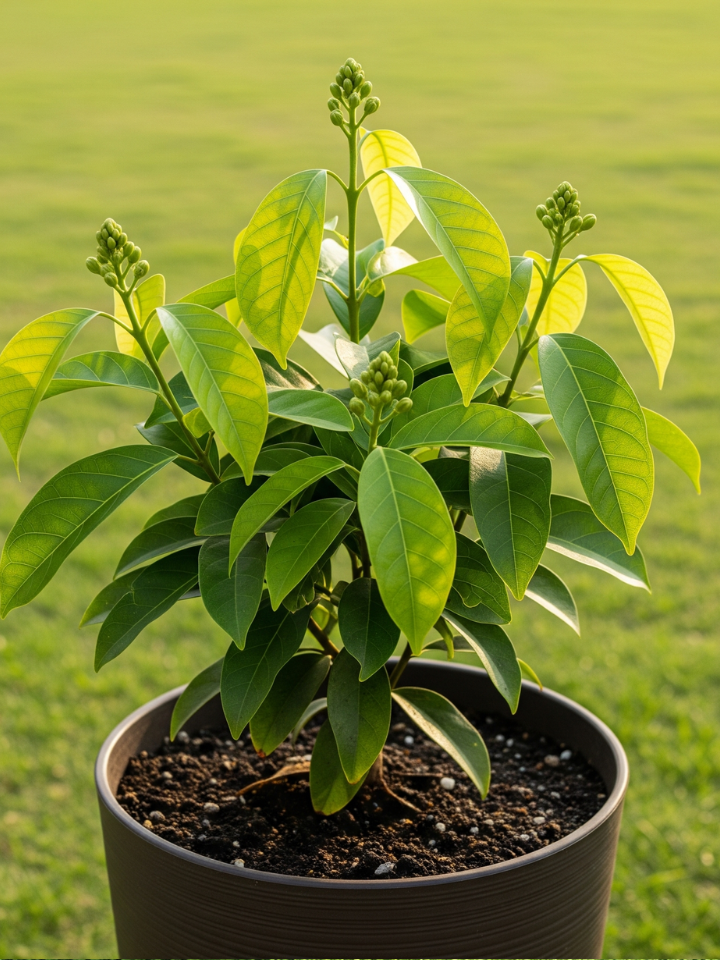
- Leaves. Thin, oblong, soft green leaves in two neat rows along the branches, with a faint, distinctive smell when crushed.
- Branches. A small, open, often multi-stemmed tree with a low, spreading crown.
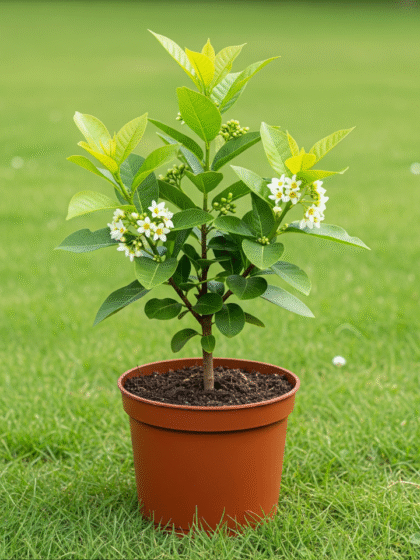
- Flowers. Small, fleshy, greenish-yellow flowers that hang from the shoots and are easy to miss. They open with the new leaves in spring and early summer.
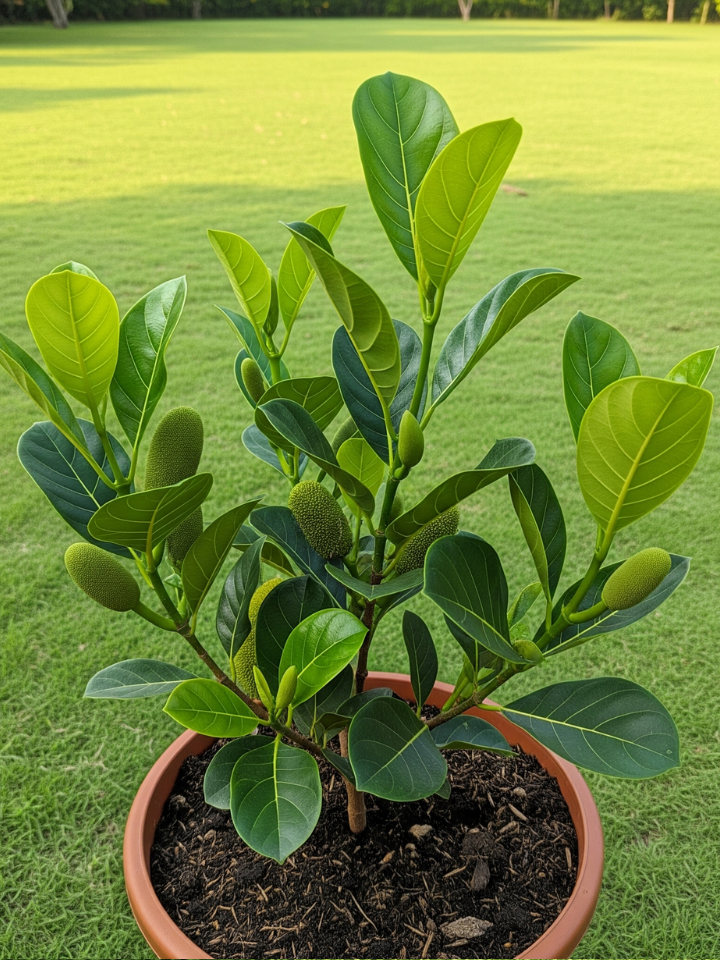
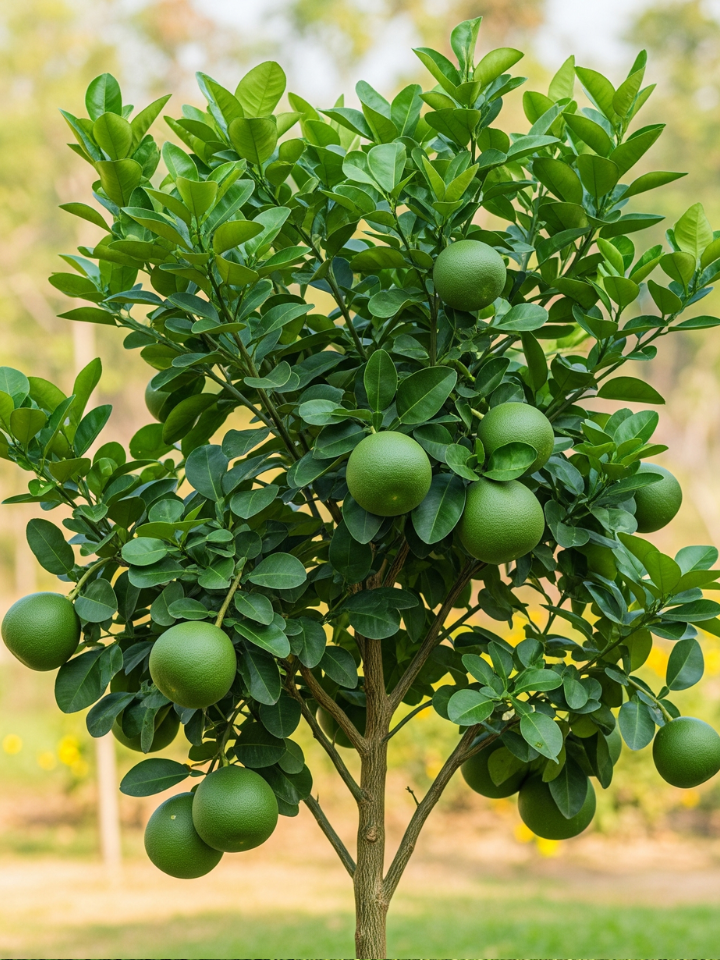
- Fruit. Round to heart-shaped and pale green, about 6–10 cm across, covered in rounded bumps that loosen as it ripens. Inside lie soft, creamy white segments around shiny black seeds, with a sweet, fragrant, custard-like taste.
Why grow a custard apple tree at home?
- Fruit from a small tree. Sitaphal stays compact enough for a terrace drum or the corner of a small garden, yet a mature tree can give dozens of fruits a season.
- Tough in heat and drought. It shrugs off hot summers, rocky or sandy soil and the occasional missed watering, which is why it grows wild across dry parts of India.
- Quick to reward you. A grafted sapling is one of the faster fruit trees to bear, often giving its first fruits within two or three years.
- An autumn tradition. Ripe sitaphal arrives with the festive season, and a tree of your own means fruit picked at its sweetest, not bought days old.
- Little fuss. Among the best low maintenance outdoor plants for fruit, it asks for sun, drainage and a light prune each year, and very little else.
Where should you plant a sitaphal tree?
Full sun and free drainage matter more than rich soil. A custard apple tree suits:
- A sunny garden, courtyard or farmhouse. The ground is where it grows largest and crops most. Leave about 4–5 m from walls and other trees so the crown gets sun on every side.
- A sunny terrace, in a half-drum. A grafted sapling fruits well in a large container, which is why it belongs in any selection of plants for terrace gardening where there is room for a half-drum at least 45 cm deep. Stand it on bricks so water drains freely, and check that the roof can take the weight of wet soil.
Not on a balcony or indoors. It needs strong, direct sun and open air to flower and set fruit.
Product Specifications
- Plant name: Sitaphal Plant / Custard Apple Plant
- Botanical name: Annona squamosa
- Common names: Custard apple, sugar apple, sweetsop; sitaphal and sharifa (Hindi), ata (Bengali), sitaphal (Marathi), seethaphalam (Telugu), seetha pazham (Tamil), seethaphala (Kannada)
- Plant family: Annonaceae (custard apple family)
- Origin: Tropical Americas; long naturalised across India
- Plant type: Semi-deciduous fruit tree
- Foliage: Thin, oblong, soft green leaves in two rows; most drop in late winter and regrow in spring
- Flowers: Small, fleshy, greenish-yellow, hanging; female stage before male stage, so hand pollination improves fruit set
- Flowering season in India: About April to June, with the new leaves
- Fruiting season in India: Ripe fruit about August to November, peak September and October
- Years to first fruit: First fruits often in year two or three for grafted plants, fuller crop from about year four; seedlings three to four years or more
- Fruit: Round to heart-shaped, pale green with rounded bumps, about 6–10 cm across; sweet, creamy white pulp around black seeds
- Growth habit: Small, open, spreading tree, often with several stems
- Growth rate: Moderate
- Mature size: About 2–2.5 m in a half-drum with pruning; about 3–5 m in the ground, up to 6–8 m if never pruned
- Suitable placement: Garden, courtyard, farmhouse, sunny terrace in a half-drum; outdoors only
- Light requirement: Full sun, at least six hours of direct sun a day
- Water requirement: Low to moderate; water deeply when the top 3–5 cm dries; much less while leafless; does not tolerate waterlogging
- Soil requirement: Well-drained sandy loam or light soil; tolerates poor, rocky and slightly alkaline soil (about pH 5.5–8)
- Temperature: Thrives at about 20–35 °C; tolerates dry heat; young plants are damaged by frost
- Fertiliser: Compost or cow dung manure with a balanced fertiliser in two split doses (start and end of the monsoon); none while leafless
- Common pests and problems: Mealybug, fruit fly, poor fruit set, fruit splitting, root rot from waterlogging
- Maintenance: Low; yearly prune, seasonal feeding, pest checks in the fruiting months
- Difficulty level: Easy
- Suitable environment: Warm, dry to moderately humid plains and plateaus across India; frost-free areas
- Special features: Fast to bear when grafted; drought and heat tolerant; compact enough for a terrace drum
- Safety: Seeds, leaves and bark are poisonous; seed powder can seriously injure the eyes; not listed by the ASPCA; not classed as pet-safe
Can you grow a custard apple tree in a pot?
Yes. Sitaphal is one of the easiest fruit trees to grow in a container, as long as the container is large and drains well.
- Container. Start in a 16–18 inch pot for the first year, then move it to a half-drum or a 20–24 inch grow bag with several drainage holes.
- Soil. Mix two parts garden soil, one part well-rotted compost or cow dung manure and one part coarse sand. It tolerates poor, rocky and slightly alkaline soil, but not heavy clay that stays wet.
- Watering. Water deeply, then wait until the top 3–5 cm is dry. In April and May a drum may need water every day or two; during the rains, water only if the soil dries.
- Pruning. When the sapling is about 60 cm tall, pinch the tip so it forms three or four main branches. Keep it to about 2–2.5 m in a drum.
- Fruit load. On a young potted tree, keep only four to six fruits for the first crop and remove the rest while they are small.
How do you care for a sitaphal plant?
- Sunlight. Full sun all day gives the most flowers and the sweetest fruit. In shade it grows leggy and fruits poorly.
- Watering. Moderate while it is in leaf, flowering and fruiting; much less once the leaves fall in late winter. Waterlogging is the one thing it will not forgive.
- Feeding. Give compost or cow dung manure with a balanced fertiliser in two split doses: one at the start of the monsoon and one after the rains as the fruit swells. Skip feeding while the tree is leafless.
- Pruning. Sitaphal fruits on new shoots, so a light prune at the end of winter, just before the new flush, encourages more fruiting wood. Remove dead, crossing and weak branches, and any shoots from below the graft joint.
- Mulch. A layer of dry leaves or straw keeps the roots cool in summer, but keep it a hand's width from the trunk.
Why does my sitaphal tree flower but not set fruit?
The flowers are the reason. Each sitaphal flower is female first and male later, so the stigma is ready before its own pollen is released, and the small beetles that pollinate it in the wild are scarce in towns. Dry, hot weather makes it worse. Many flowers therefore drop without fruiting, especially on young trees.
Hand pollination fixes most of it, and commercial growers rely on it:
- In the afternoon, pick two or three flowers whose petals have opened wide; these are shedding pollen. Tap the pollen onto a sheet of paper and keep it in a small packet.
- Next morning, find flowers whose petals are only half open. With a soft paintbrush, dab the pollen gently inside each one.
- Mark the flowers you pollinate with a thread. Most set fruit within a week or two.
Watering the ground under the tree in the morning during the flowering months also raises the humidity around the flowers and helps fruit set.
When does sitaphal flower and fruit in India?
A sitaphal tree drops most of its leaves in the dry months of late winter, from about January to March. New leaves and flowers follow together from about April to June, and the pre-monsoon showers help the fruit set. Fruit takes around four months to mature, so ripe sitaphal is ready from about August to November, with the peak in September and October. A grafted sapling often gives its first fruits in the second or third year and a fuller crop from about the fourth; a seedling usually takes three to four years or longer.
A sitaphal is ready to pick when the fruit turns from dark green to pale yellowish-green and the gaps between the bumps widen and show a creamy colour. Pick it firm and let it soften at room temperature for two to four days. Fruit left on the tree too long tends to split or be taken by birds, squirrels and bats.
A year with ata in Bengal
June to August: planting. The monsoon is the best time to plant. Warm, moist soil helps the roots settle, but plant on a slight mound if your garden holds water after heavy rain.
August to November: harvest. Ata ripens as the rains ease and arrives in time for the Durga Puja season. Pick fruit every few days and bring it in to soften.
December to March: rest. Growth stops and the leaves yellow and fall. This is normal. Water sparingly, and give the tree its yearly prune in February, just before it wakes.
April to June: new leaves and flowers. Fresh green shoots and small hanging flowers appear together. Keep the soil lightly moist, pollinate by hand if you can, and feed at the start of the rains.
Why are my sitaphal leaves falling or turning yellow?
- Leaves yellowing and falling in winter. Natural leaf fall. The tree rests from about January to March and flushes again in spring.
- White, cottony clusters on fruit, shoots and leaf undersides. Mealybugs, the most common problem on sitaphal. Wipe them off, spray neem oil every seven to ten days, and put a sticky band around the trunk to stop ants carrying them up.
- Soft, rotting spots on ripening fruit. Fruit fly. Bag young fruits with paper or mesh bags, hang fruit fly traps, and pick up fallen fruit every day.
- Fruits shrivelling black while still small. Usually poor pollination, drought stress or a fungal spot in very humid weather. Remove affected fruits and keep watering steady.
- Yellowing leaves and root rot in the rainy season. Waterlogging. Improve drainage at once; this tree prefers to be too dry rather than too wet.
Is sitaphal safe around children and pets?
The ripe pulp is everyday food, but the rest of the plant deserves care. Sitaphal seeds are poisonous, and the seed powder, sometimes used as a home remedy against lice, can seriously injure the eyes, so never crush the seeds and teach children to spit them out whole. The leaves and bark also contain the same insecticidal compounds. Annona has no entry on the ASPCA toxic or non-toxic plant lists, so we do not class it as pet-safe. Keep pets from chewing the leaves, bark, seeds and fallen fruit.
What to plant with a sitaphal tree
Sitaphal fits neatly into a dry, sunny fruit corner. For a winter crop after the custard apples finish, add an amrud tree for winter fruit .On a hot terrace, pair it with dragon fruit for a hot, dry parapet, and in the garden with pomegranate, another fruit tree that shrugs off a dry spell. You can browse more hardy fruit plants for dry, sunny corners or read about fruit trees that thrive in full sun and dry heat when you plan the rest of the space.
Plant your own sitaphal tree this season
Order during the rains and your sapling has the rest of the warm season to settle before its first winter rest. Every plant is raised and packed at our own nursery, and we ship to the cities and PIN codes our fruit saplings reach across India. Give it your sunniest spot and soil that never stays soggy, and in a couple of years you will be picking sweet, creamy sitaphal from your own tree.



























There are no reviews yet.