Dragon fruit, also sold as pitaya or pitahaya, is a climbing cactus of the family Cactaceae. Botanists now place it in the genus Selenicereus, though most nurseries still use the older name Hylocereus. It comes from the dry forests of Mexico and Central America, where it scrambles up trees and rocks. In India it has spread fast since the 2010s, from farms in Gujarat, Maharashtra and Karnataka to rooftops in Kolkata, and Gujarat has given it a local name, kamalam, after the lotus shape of the fruit.
What you will notice first:
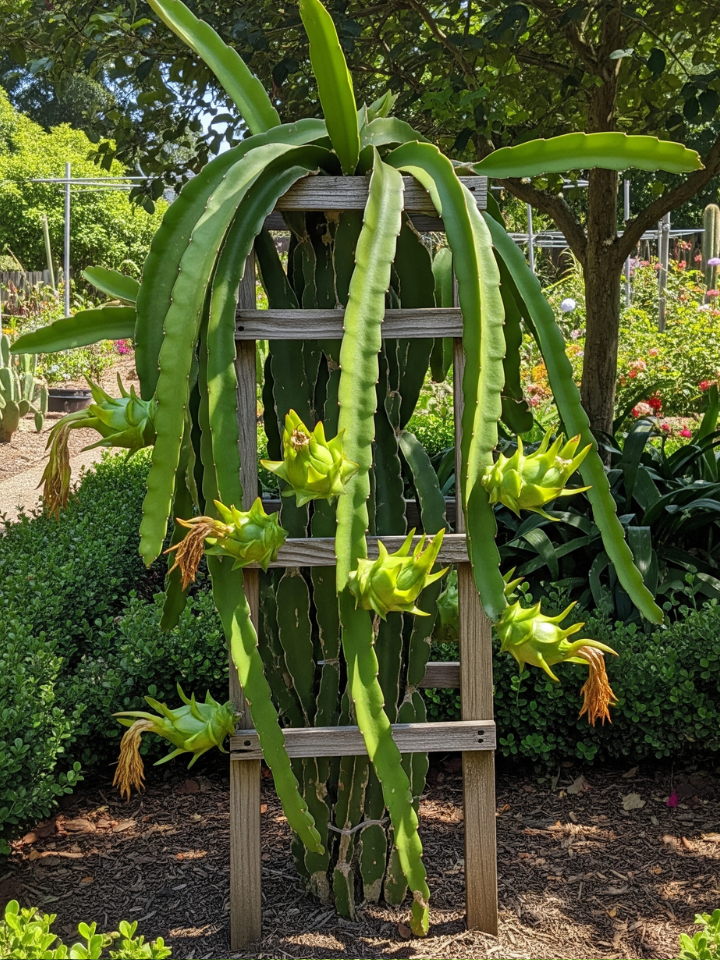
- Stems. Fleshy, bright green and three-winged, with a wavy edge and small clusters of short spines. They send out aerial roots that grip a pole or wall.
- Flowers. Among the largest of any fruit plant, often 25–30 cm long, creamy white and sweetly scented. Each one opens after dark and closes by the next morning.
- Fruit. Oval, with pink or red skin and green-tipped scales. Inside is white, red or magenta flesh dotted with tiny edible black seeds.
Why grow pitaya at home?
- A fruit tree for a rooftop. It needs no deep soil and no open ground. One pole in a large pot can give a steady run of fruit through the monsoon and autumn.
- Tough in heat and dry spells. As a cactus it stores water in its stems, so a missed watering or a hot week does it little harm.
- A night-time show. A flush of moon-white flowers opening on a June evening is worth staying up for, and it is the moment you can help pollinate them.
- Years of harvests. A well-supported plant keeps bearing for 15–20 years, far longer than papaya or banana.
Where should you grow a dragon fruit cactus?
Pitaya wants hot sun, fast drainage and something tall to climb. The best spots are:
- A sunny terrace or rooftop. It is among the best plants for an outdoor terrace that bakes all afternoon, because the heat that scorches leafy plants suits its water-storing stems. Stand the pot on bricks so rainwater drains away, and check that the roof can take the weight of a filled drum and pole.
- A large pot or half-drum. Use a container at least 45–60 cm wide and deep, with plenty of holes. It is one of the few fruiting plants for large outdoor pots that gives a real harvest without ever going into the ground.
- A garden bed, boundary wall or kitchen plot. In open ground, plant on a raised mound beside a concrete or wooden post, or train it along a strong wall with a trellis.
- Not indoors, and not on a shaded balcony. Without several hours of direct sun it stays green and healthy but rarely flowers. A south- or west-facing balcony with full sun and room for a pole can work.
It also has a place in any collection of cactus plants in India, as the rare cactus you can eat from.
Will pitaya grow in my climate?
It grows across most of India's plains, coast and warmer hills up to about 1,700 m. According to NIAM, it does best between 20 °C and 30 °C with 500–1,500 mm of rain a year. It takes 40 °C summers in its stride once established, though young stems can yellow or scorch in harsh sun and are happier with 30–40% shade in May and June. Cold is the bigger risk: stems suffer below about 5 °C and frost kills them, so north Indian growers should shelter pots against a warm wall in winter. Waterlogged soil, not rainfall itself, is what rots the plant.
Product Specifications
- Plant name: Dragon Fruit Plant (Pitaya / Kamalam)
- Botanical name: Selenicereus undatus (syn. Hylocereus undatus) for white-fleshed types; S. costaricensis (syn. H. polyrhizus) for red-fleshed types
- Common names: Dragon fruit, pitaya, pitahaya, strawberry pear; kamalam (Gujarat)
- Plant family: Cactaceae
- Origin: Mexico and Central America
- Plant type: Perennial climbing (hemi-epiphytic) cactus grown for fruit
- Propagation of supplied plant: Rooted stem cutting
- Stems: Fleshy, green, three-winged, with small spines and aerial roots
- Flowers: Very large (about 25–30 cm), creamy white, scented; open for one night
- Pollination: White-fleshed types usually self-fertile; many red-fleshed types need cross- or hand-pollination
- Time to first fruit: Usually in the second year, about 12–20 months after planting; full bearing at about three years
- Flowering and fruiting season: Flowers about May to September; fruit about June to November, in several flushes
- Flower to ripe fruit: About 30–40 days
- Productive life: 15–20 years or more
- Growth habit: Climbing and then arching; needs a pole, trellis or wall
- Growth rate: Moderate to fast in warm weather
- Mature size: Trained to the height of its support (usually 1.5–1.8 m), with stems spreading about 1 m around the top
- Suitable placement: Sunny terrace, rooftop, garden bed, boundary wall, farmhouse; a full-sun balcony with room for a pole; outdoors only
- Light requirement: Full sun, at least six hours a day; light shade for young plants in peak summer
- Water requirement: Low to moderate; let the top soil dry between waterings; no waterlogging
- Soil requirement: Light, free-draining mix rich in organic matter; pH about 5.5–7
- Climate: Tropical and warm subtropical; best at about 20–30 °C; tolerates heat and drought; harmed by frost, cold below about 5 °C and waterlogging
- Fertiliser: Compost or vermicompost every two or three months; balanced fertiliser in spring and after harvest
- Common pests and problems: Stem and root rot, stem canker, anthracnose, sunscald, mealybug, scale, fruit fly, birds
- Maintenance: Low to moderate; training, occasional pruning, feeding
- Difficulty level: Easy to grow; moderate to bring into fruit
- Suitable environment: Frost-free plains, coast and warm hills up to about 1,700 m
- Safety: ASPCA lists pitaya as non-toxic to dogs and cats; stems have small, sharp spines
How do you plant and care for it?
- Planting time. February–March or July–August suit most of India. In Bengal, spring planting lets roots settle before the heavy rain; if you plant in the monsoon, use a raised bed or a well-drained pot.
- Pole and pot. Set a concrete, wooden or GI pole about 1.5–1.8 m tall firmly in the pot or 30 cm into the ground, and fix a ring, a square frame or an old tyre on top. Plant one or two cuttings about 15–20 cm from the base and tie the stems loosely to the post.
- Soil. A light, free-draining mix: garden soil with coarse sand or brick chips and plenty of compost. Slightly acidic to neutral soil, around pH 5.5–7, is ideal. Heavy clay must be loosened and raised.
- Watering. Water when the top few centimetres feel dry: roughly twice a week in dry summer, much less in the rains and in winter. Steady moisture during flowering and fruit set helps the fruit swell; soggy soil rots the roots.
- Feeding. Add a handful of compost or vermicompost every two or three months, and a balanced fertiliser in spring and after each harvest. Too much nitrogen gives lush stems and few flowers.
- Training and pruning. Keep one or two main stems growing straight up the pole and rub off side shoots until they reach the top. Then pinch the tip so the plant branches and the stems arch over the ring; flowers form on these hanging stems. After the season, cut out old, crowded or damaged stems with clean secateurs.
How long does a dragon fruit plant take to give fruit?
A rooted cutting usually flowers and fruits in its second year, about 12–20 months after planting, depending on its size, the sun it gets and how quickly it reaches the top of its support. ICAR researchers in the Andamans saw first flowers in about nine months from planting. A plant reaches full bearing at about three years. Each flower becomes a ripe fruit about 30–40 days after it opens, and in most of India the fruit comes in several flushes from June to November.
Does it need a second plant to fruit?
Not always. The flowers open for one night only, and in its homeland large moths and bats pollinate them. Most white-fleshed plants set fruit with their own pollen. Many red-fleshed types set poorly on their own and do much better with pollen from a second variety. For the surest crop, hand-pollinate: between about 8 pm and midnight, brush the yellow pollen from the ring of stamens onto the long, star-shaped stigma in the centre of the same flower, or better, of a flower on another plant.
A year with pitaya in Bengal
Our cuttings are rooted in the warm, humid Kolkata climate, and these timings suit most of the eastern plains. You can see more about the dragon fruit cuttings we root at our Bengal nursery.
February to March: planting and new growth. The best time to plant. Fresh green shoots appear as the days warm.
April to May: fast growth and first buds. Water twice a week, feed, and shade young plants from the fiercest sun. Mature plants push out their first flower buds in late May.
June to September: night flowers and fruit. Flushes of flowers every few weeks; hand-pollinate on flowering evenings. Heavy rain can knock off flowers and bring brown spots on stems, so keep drainage clear.
October to November: the last harvests. Pick the final fruit, then prune old and crowded stems.
December to January: the rest. Growth slows. Water sparingly and let the soil dry between waterings.
When is a pitaya ready to pick?
Pick when the skin has turned fully pink or red and the scales begin to wither at the tips, usually three or four days after the colour changes. A ripe fruit gives slightly under gentle pressure. Twist it off or cut the short stalk with secateurs. Fruit left too long can split in wet weather or attract birds.
Why is my dragon fruit cactus rotting, yellowing or not flowering?
- Soft, brown, smelly stems at the base. Stem or root rot from wet soil. Cut away rotten parts, let the cuts dry, improve drainage and water less.
- Yellow or bleached patches on sunny stems. Sunscald. Give light shade in the hottest weeks; the plant will harden off.
- Brown or orange spots and sunken lesions. Stem canker or anthracnose, common in humid monsoon weather. Remove affected stems, sterilise your tools and improve air flow.
- Flowers but no fruit. Poor pollination, heavy rain on the flowers, or a red-fleshed type without a partner. Hand-pollinate at night.
- No flowers at all. Too little sun, a plant still too young, or stems that have not yet reached the top and hung down. Give full sun and keep training upward.
- White cottony clusters or hard brown bumps. Mealybug or scale. Wipe off and spray neem oil every seven to ten days until clear.
- Pecked or maggoty fruit. Birds or fruit fly. Bag young fruit in paper or fine net.
Is the dragon fruit cactus safe around children and pets?
The ASPCA lists pitaya (Hylocereus undatus) as non-toxic to dogs and cats, and the fruit is widely eaten. The stems do carry small, sharp spines, so place the pot where children and pets will not brush against it, and wear gloves when tying or pruning.
What to plant with pitaya
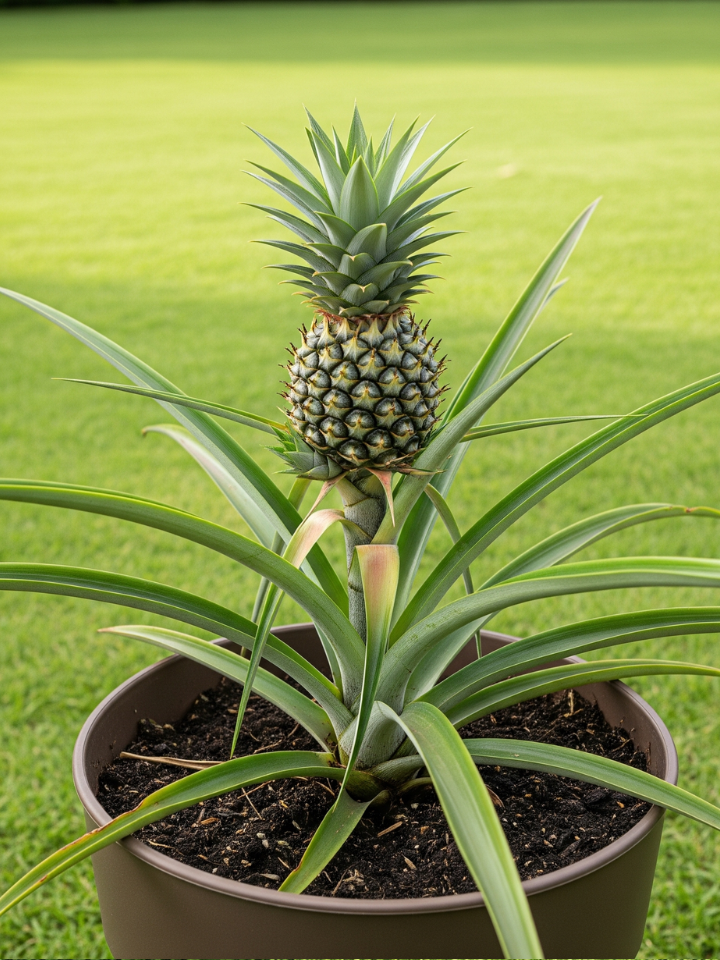
Dragon fruit shares its love of full sun and quick drainage with several other terrace favourites. Add a dalim plant for the next drum along, a kagzi lemon for the pot beside it, and a pineapple in a grow bag beside it for a rooftop that crops from spring to winter. For more choices, browse our exotic fruit plants that crop on an Indian rooftop, or read about other plants that thrive in blazing Indian sun.
Grow your own dragon fruit this season
Order now and your cutting can root in before winter, ready to climb its pole in spring and flower by its second summer. Each plant is rooted and packed at our own nursery in West Bengal. Give it your sunniest spot, a sturdy pole and a quick-draining pot, and you could soon be picking pitaya from your own terrace.































There are no reviews yet.