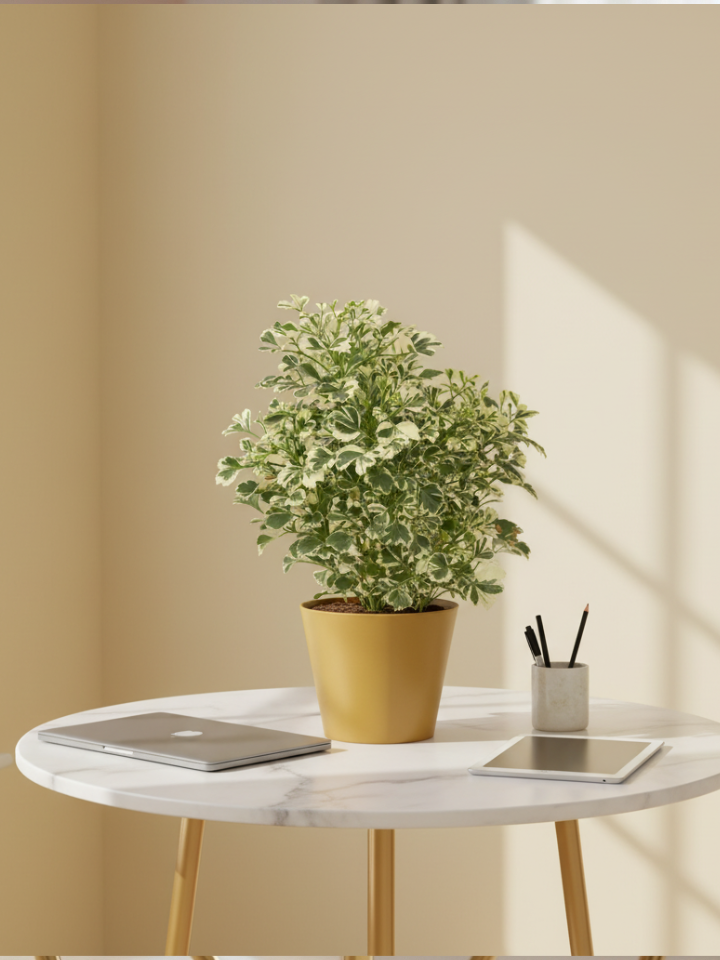
"Aralia" is the everyday name Indian nurseries use for several shrubs in the genus Polyscias, part of the ivy family, Araliaceae. This one is the variegated form of the geranium-leaf aralia, a tropical shrub native to the islands of the south-west Pacific. Outdoors in warm climates it can reach 2–3 m, which is why you often see it clipped into a hedge in Indian gardens. In a pot it stays far smaller and grows slowly, making it a long-lived indoor plant.
What you will notice:
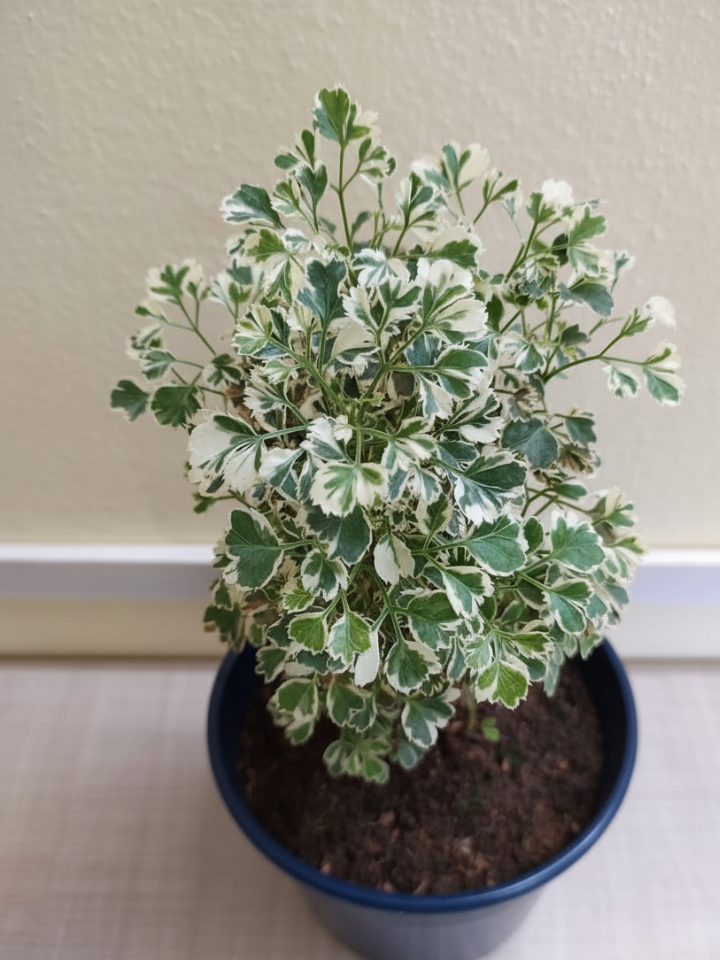
- Leaves. Each leaf is made of several leaflets (usually five to nine) with softly toothed or lobed edges.
- Colour. A fresh green centre with a cream to white rim. New leaves can open with a faint pink or yellow tinge.
- Shape. Upright woody stems that branch into a bushy, vase-like form.
- Pattern. No two leaves carry quite the same amount of white, so every plant looks a little different.
Is aralia an indoor plant?
Yes. The variegated aralia does well indoors in India, provided it gets bright light. It is a good fit for:
It is not a low-light plant. In a dim room it drops its lower leaves and the white edges fade.
How much sunlight does a variegated aralia need?
It needs bright, indirect light for most of the day, ideally within one to two metres of an east- or north-facing window. A few hours of soft morning sun help keep the cream edges crisp. Direct afternoon sun through glass, especially in April and May, can scorch the white parts of the leaves, which have less green to protect them.
Product Specifications
- Plant name: Aralia Variegated Plant
- Botanical name: Polyscias guilfoylei (variegated form)
- Common names: Variegated aralia, geranium-leaf aralia, white aralia
- Plant family: Araliaceae (ivy family)
- Native range: Islands of the south-west Pacific
- Plant type: Evergreen tropical shrub, grown as an indoor foliage plant
- Foliage: Compound leaves of about five to nine toothed or lobed leaflets, green with a cream to white margin
- Growth habit: Upright, bushy, woody stems
- Growth rate: Slow to moderate indoors
- Mature size: Usually 60–150 cm in a pot with pruning; up to about 2–3 m outdoors
- Suitable placement: Living room, office, bedroom with a bright window, covered balcony or verandah, semi-shaded garden border
- Not suitable for: Dark rooms, harsh afternoon sun, cold draughts
- Light requirement: Bright, indirect light; soft morning sun is fine
- Water requirement: Moderate; water when the top 2–3 cm of soil is dry
- Soil requirement: Loose, well-drained mix with cocopeat and compost
- Temperature: 18–32 °C ideal; may drop leaves below about 10 °C
- Humidity: Medium to high
- Fertiliser: Vermicompost or diluted liquid fertiliser monthly, March to September
- Pruning: Spring or early monsoon, to keep it bushy
- Propagation: Semi-hard stem cuttings in the monsoon
- Common problems: Leaf drop after moves or draughts, root rot, spider mites, mealybugs
- Maintenance: Low
- Difficulty level: Easy
- Suitable environment: Bright indoor spaces across India; outdoors in warm, frost-free regions
- Pet safety: Toxic to cats, dogs and horses (ASPCA); not pet-safe
How do you care for an aralia plant?
- Watering. Push a finger into the soil and water only when the top 2–3 cm is dry. In summer that usually means checking twice a week; in winter, about once a week. Let excess water drain away and never leave the pot standing in a tray of water.
- Soil. A loose, well-drained mix works best, such as garden soil, cocopeat and compost with a little coarse sand. Heavy, sticky soil leads to root rot.
- Humidity. It likes humid air, which most of eastern and coastal India provides. In dry or air-conditioned rooms, group it with other plants or set the pot on a tray of wet pebbles.
- Feeding. Add a little vermicompost or a diluted liquid fertiliser once a month from March to September. Skip feeding in winter.
- Pruning. Trim leggy stems in spring or early monsoon to keep the plant bushy. Cut just above a leaf joint. The sap can irritate sensitive skin, so wear gloves.
- Repotting. Move it up one pot size every one to two years, in spring or early monsoon, into a container with drainage holes.
- Propagation. Semi-hard stem cuttings, 10–15 cm long, root well in moist soil during the humid monsoon months.
Most of the work comes down to good light and careful watering, which is why it sits among the foliage plants that get by on very little fuss.
Can an aralia plant stay in an AC room?
Yes, with care. Keep it away from the direct blast of the air conditioner, which dries and chills the leaves. Aralias dislike sudden changes, so a cold draught, a move to a new spot or a sharp drop in temperature can cause leaf drop. Choose one bright place and leave the plant there. It usually recovers with new growth within a few weeks.
Does aralia purify the air?
Like all plants, an aralia takes in carbon dioxide and gives off oxygen in light. However, a 2019 review of decades of research by Cummings and Waring found that you would need hundreds of plants in a room to match the effect of ordinary ventilation. Buy this plant for its foliage and easy nature, not as an air purifier. If you are curious, read about what clean-air studies found once they left the sealed test chamber.
Variegated aralia through the year in Bengal
These timings come from growing aralias in the humid Kolkata climate and suit most of the eastern plains.
March to June: summer. Fresh growth begins. Check the soil twice a week, shade it from harsh afternoon sun and start monthly feeding.
July to September: the monsoon. It grows fastest now. Water less, as the air stays humid and the soil dries slowly. This is the best time to prune and take cuttings.
October to February: the cool season. Growth slows. Water about once a week, stop feeding and keep it away from cold winter draughts on open balconies. In north India, bring it indoors when nights fall below about 10 °C.
Common problems and simple fixes
- Sudden leaf drop. Usually caused by a move, a cold draught or dry soil after a long gap. Keep it in one bright spot and water evenly.
- Yellow leaves and soft stems. Overwatering. Let the soil dry further between waterings and check the drainage hole.
- White edges turning brown and crisp. Too much direct sun or very dry air. Move it slightly back from the window.
- Fading variegation. Too little light. Move it closer to a bright window.
- Spider mites or mealybugs. Look under the leaves in dry weather. Wipe them off and spray with neem oil every seven to ten days.
Is the aralia plant safe for cats and dogs?
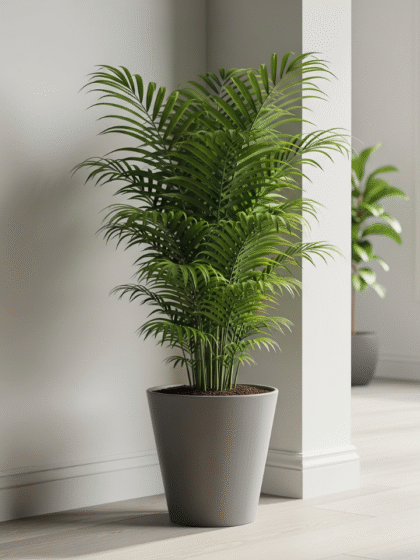
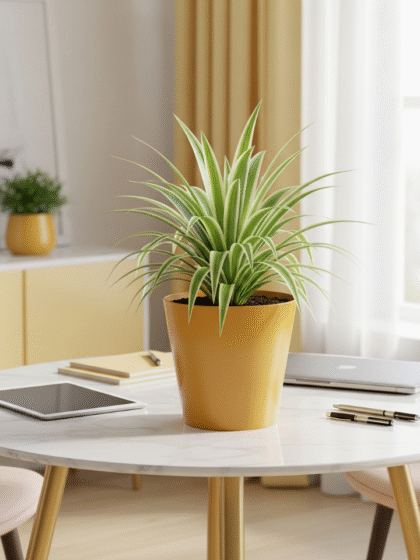
No. The ASPCA lists geranium-leaf aralia (Polyscias guilfoylei) as toxic to cats, dogs and horses. Its saponins can cause vomiting, loss of appetite and skin irritation if chewed. Keep it out of reach of pets and small children. For a home with pets, choose an areca palm to anchor a pet-safe corner or a spider plant, which the ASPCA lists as safe for cats and dogs.
What to grow with an aralia
Its upright, lacy outline contrasts well with trailing and sculpted plants. Pair it with a marbled money plant to trail from the shelf beside it, or with a ficus bonsai with a sculpted root trunk on a nearby table. Older aralias can be trained into a bonsai-like shape too. For more choices, browse our variegated indoor plants that brighten a plain Indian home.
A bright, easy plant for a well-lit room
Every aralia is raised and potted at our own nurseries in West Bengal and packed carefully for the journey, whether it is going across Kolkata or to the cities and towns we ship potted foliage plants to. Give it good light, steady watering and a spot it can call home.



































There are no reviews yet.