Jamun is Syzygium cumini, an evergreen tree of the myrtle family, Myrtaceae, the same family as guava, jamrul and clove. It is native to India, Sri Lanka, Myanmar and the Andaman Islands, and grows wild along roadsides, riverbanks and village ponds from Punjab to Kerala. In Hindi it is jamun, in Bengali kalo jam, and in English Java plum, jambolan or Indian blackberry. Despite that last name, it is not related to the thorny bramble blackberry sold in Europe.
What you will notice as the tree grows:
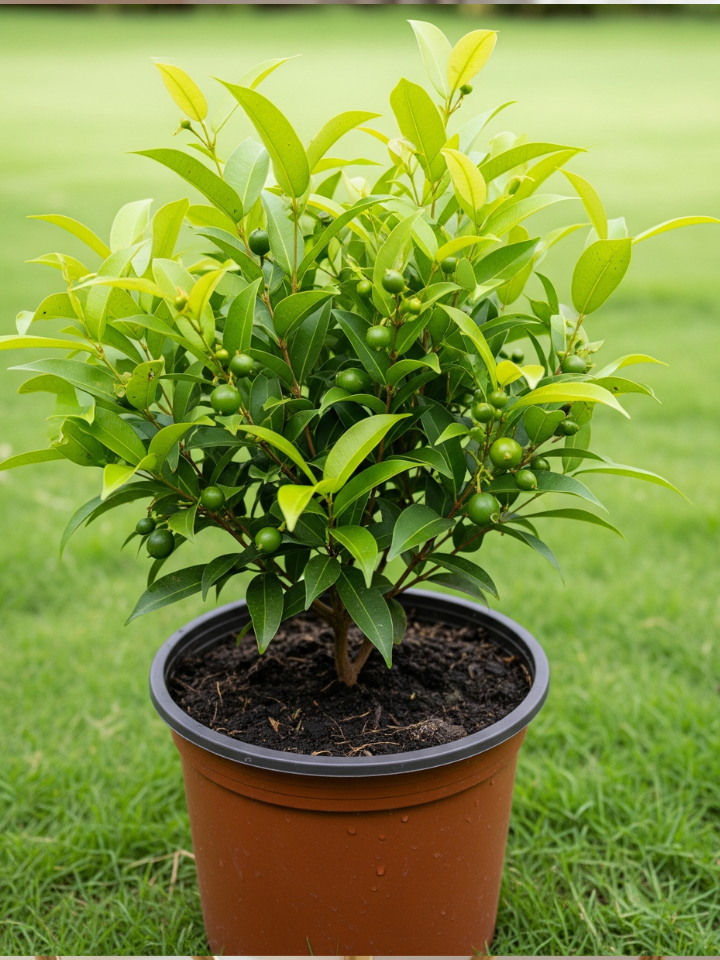
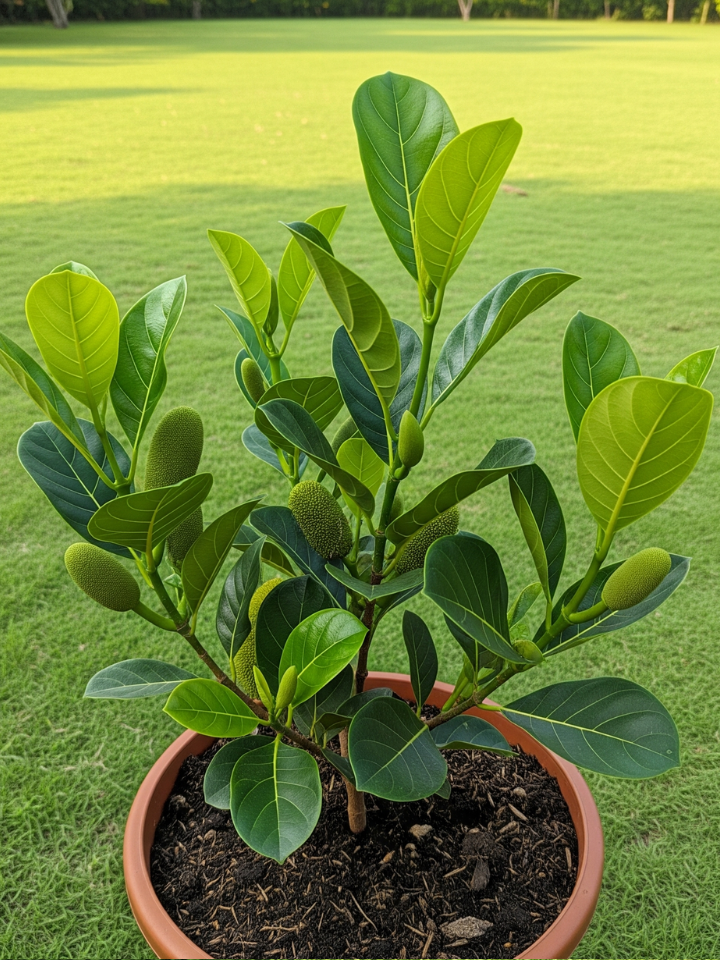
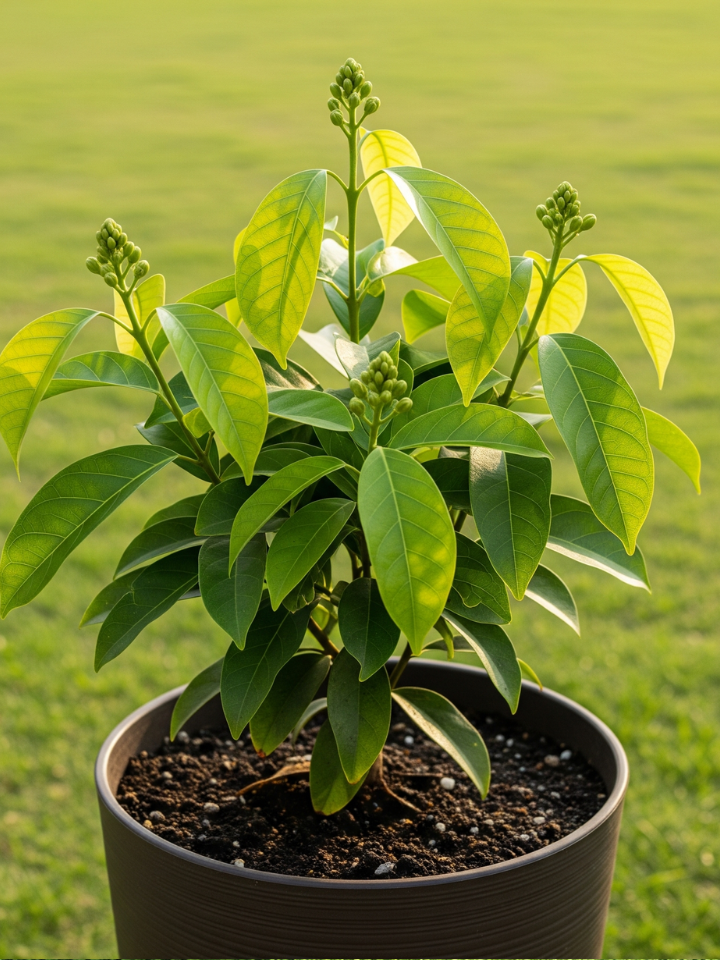
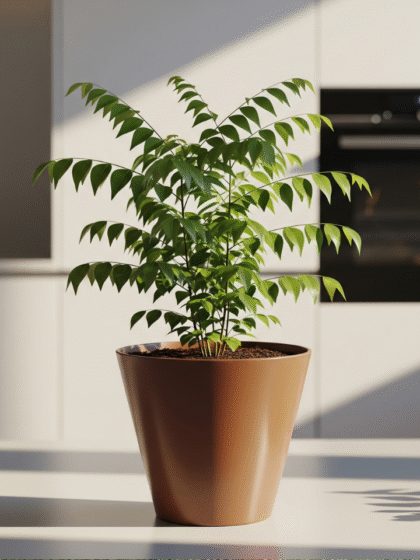
- Leaves. Opposite, leathery and glossy, about 7–15 cm long, with a faint turpentine scent when crushed. New shoots come up a soft coppery pink before turning dark green.
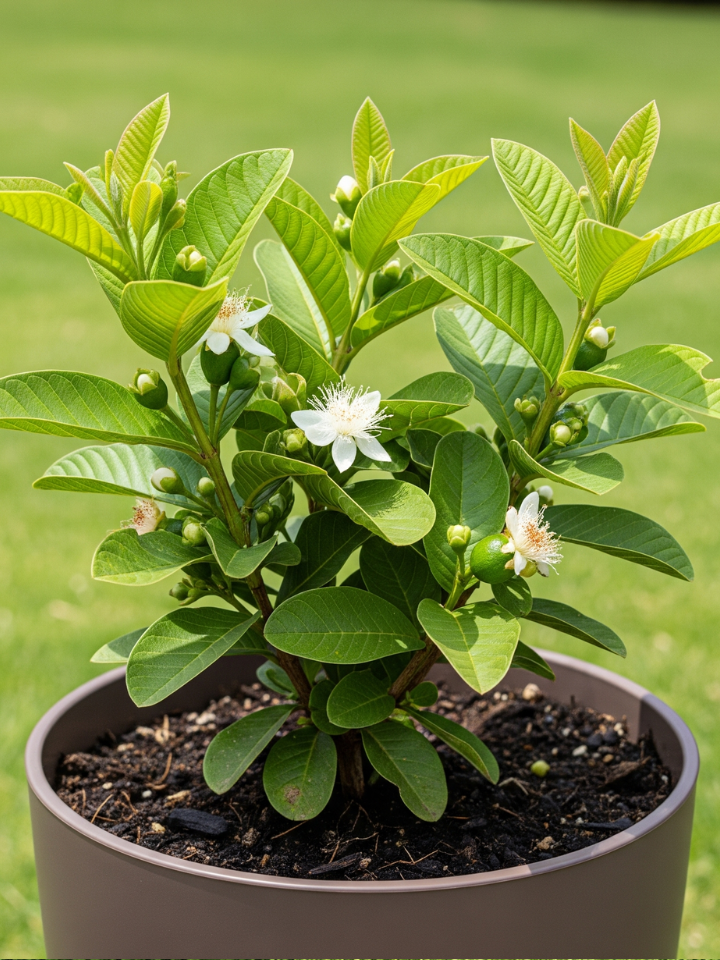
- Flowers. Small, fragrant, creamy-white clusters in spring, loved by bees.
- Fruit. Oval, 2–3 cm long, turning from green to pink, then deep purple-black. The juicy flesh stains the tongue purple and wraps around one large seed.
- Bark. Pale grey-brown and smooth on young stems, becoming flaky with age.
- Shape. An upright tree with a dense, rounded crown that gives deep shade once mature.
Where should you plant a jamun tree?
Jamun needs sun, room and a spot where falling fruit will not matter. The best places are:
- An open garden, farmhouse or orchard plot. In the ground it becomes a handsome canopy tree, one of the best shade-giving trees for a large garden or farmhouse plot. Keep it 6–8 m from the house, boundary walls and septic tanks, as the roots spread wide.
- A pond bank or low, damp corner. Unusually for a fruit tree, it tolerates short spells of waterlogging, which is why old jamun trees line village tanks across Bengal.
- A large drum on a strong roof. A grafted plant can live for years in a half-drum or 24-inch grow bag at least 60 cm deep, pruned to about 2.5–3.5 m. It is one of the few terrace plants that can grow into small trees in a drum, though the crop will be far lighter than in open ground. Check that the slab can carry the weight.
- Not over a driveway, white tiles or a washing line. Ripe fruit drops and leaves purple stains that are hard to remove.
- Not indoors or on a shaded balcony. Without full sun it grows weakly and will not flower.
Will jamun grow in my climate?
It suits almost every part of India below about 1,300 m: the humid east and south, the dry Deccan and the hot northern plains. It tolerates heat, heavy monsoon rain and mildly saline soil, and an established tree survives long dry spells. Young plants dislike frost, so in Punjab, Haryana and the hills, shelter them from cold winds for their first two winters. Dry, hot winds at flowering time can cause flowers to drop, so a little shelter helps in the north.
Product Specifications
- Plant name: Jamun (Black Berry) Plant
- Botanical name: Syzygium cumini (syn. Eugenia jambolana)
- Common names: Jamun (Hindi), kalo jam (Bengali), naval (Tamil), Java plum, jambolan, Indian blackberry
- Plant family: Myrtaceae (myrtle family)
- Native range: India, Sri Lanka, Myanmar and the Andaman Islands
- Plant type: Evergreen fruit tree
- Pot supplied: Eco-friendly nursery pot with drainage
- Leaves: Opposite, glossy, leathery, 7–15 cm long; new growth coppery pink
- Flowers: Small, fragrant, creamy-white clusters, March–April
- Fruit: Oval, 2–3 cm, deep purple-black when ripe, one large seed; sweet, tangy and slightly astringent
- Time to first fruit: About 4–7 years for grafted or budded plants; 8 years or more from seed
- Fruiting season: About late May to July; late types into August
- Growth habit: Upright tree with a dense, rounded crown
- Growth rate: Moderate to fast
- Mature size: Often 10–15 m in open ground, taller with great age; about 2.5–3.5 m in a large drum with pruning
- Suitable placement: Open garden, farmhouse, orchard, pond bank, large drum on a strong roof; outdoors only
- Not suitable for: Indoors, shaded balconies, spots close to foundations, or above paving and parked cars
- Light requirement: Full sun, at least six hours a day
- Water requirement: Moderate; water deeply when the top 5 cm of soil is dry
- Soil requirement: Deep, well-drained loam; tolerates sandy, clay, laterite and mildly saline soils
- Climate: Tropical and subtropical, up to about 1,300 m; tolerates heat, heavy rain and short waterlogging; young plants are harmed by frost
- Fertiliser: Compost or well-rotted manure twice a year; light nitrogen
- Common pests and problems: Fruit fly, leaf-eating caterpillars, anthracnose, flower and fruit drop
- Maintenance: Low once established
- Difficulty level: Easy; needs patience before fruiting
- Suitable environment: Gardens across the Indian plains, coast and warm hills
- Pet safety: Not listed by the ASPCA; seeds are large and hard and should not be swallowed
How do you plant and care for a jamun plant?
- Planting time. The monsoon, July to August, is ideal across most of India. In Bengal you can also plant in February–March if you water through the summer.
- Planting. Dig a pit about 60–90 cm each way and refill it with three parts garden soil to one part compost or well-rotted manure, plus a handful of neem cake. If the plant is grafted, keep the graft union, the bulge low on the stem, well above the soil. Stake it for the first year.
- Soil. Deep, well-drained loam is best, but jamun grows in sandy, clay and laterite soils too. In a container, use garden soil, compost and coarse sand in roughly equal parts, with several drainage holes.
- Watering. Water every two or three days until new leaves appear, then deeply once a week in dry weather. Established trees in the ground need watering only in long dry spells. Never let a drum stand in water.
- Feeding. Spread compost or manure around the drip line at the start and end of the monsoon. Avoid heavy nitrogen feeds, which push leaves at the expense of flowers.
- Pruning. Remove shoots from below the graft, crossing branches and dead wood after harvest. In a drum, pinch the tips each year to keep the tree low and bushy.
- Mulching. A layer of dry leaves or straw keeps the roots cool through April and May.
How many years does a jamun tree take to fruit?
A grafted or budded plant usually starts fruiting in about four to seven years, depending on variety and care. A tree grown from seed takes eight years or more and gives fruit of uneven size and quality. Once it starts, a mature tree in the ground can bear heavily every summer for decades, while a tree in a drum gives a smaller, more manageable crop.
When is jamun season in India?
Flowers open from about March to April, and the fruit ripens from late May through June and July, with the main crop in the eastern plains arriving around June as the monsoon begins. Late varieties may ripen into August. Ripe fruit is deep purple-black, soft to the touch and drops easily. Spread a clean sheet under the branches and give them a gentle shake, then eat or use the fruit within a day or two, as it bruises and spoils quickly.
Jamun through the year in Bengal
These timings come from growing the tree in the warm, humid Hooghly climate and suit most of the eastern plains.
February to April: new leaves and flowers. Pink new growth, then fragrant flower clusters. Water regularly and avoid spraying while bees are visiting.
May to July: the harvest. Fruit colours from green to purple-black. Pick or gather daily, clear fallen fruit to keep fruit fly away and feed after the crop.
July to September: planting season. The best time to plant a new sapling. Watch for leaf spots in long wet spells.
October to January: a quiet season. Growth slows. Water occasionally, prune lightly and add compost around the base.
Why is my jamun tree not fruiting, or dropping its fruit?
- No flowers yet. The plant is still young, sits in shade or is overfed with nitrogen. Give it full sun and time; seedlings take the longest.
- Flowers or young fruit dropping. Hot, dry winds, irregular watering or poor pollination. Water deeply and regularly from flowering onwards and mulch the base.
- Maggots in ripe fruit. Fruit fly. Gather fallen fruit daily and hang pheromone traps from April.
- Brown leaf spots and rotting fruit. Anthracnose, worst in wet weather. Remove affected leaves and fruit and spray a copper-based fungicide if it spreads.
- Chewed or webbed leaves. Leaf-eating caterpillars. Pick them off or spray neem oil every seven to ten days.
Is a jamun tree safe around children and pets?
The ripe fruit is a well-loved food across India. However, Syzygium cumini has no entry on the ASPCA lists of toxic or non-toxic plants, so we do not describe it as pet-safe. Each fruit holds a large, hard seed that could cause choking or a blockage if swallowed, so gather fallen fruit regularly and keep seeds away from small children, dogs and cats.
What to plant with jamun
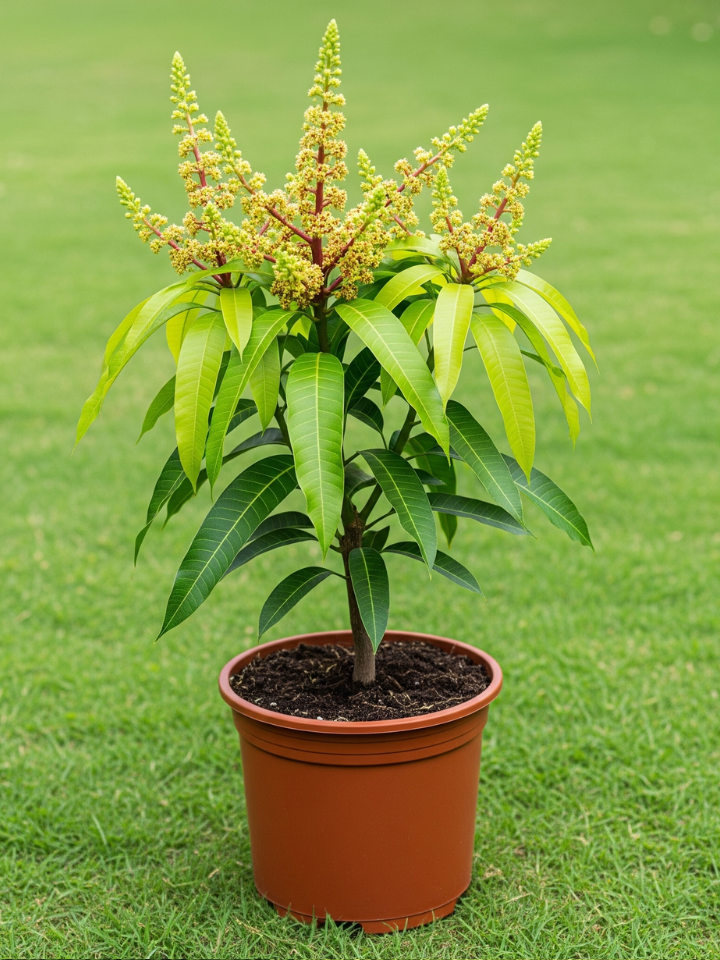
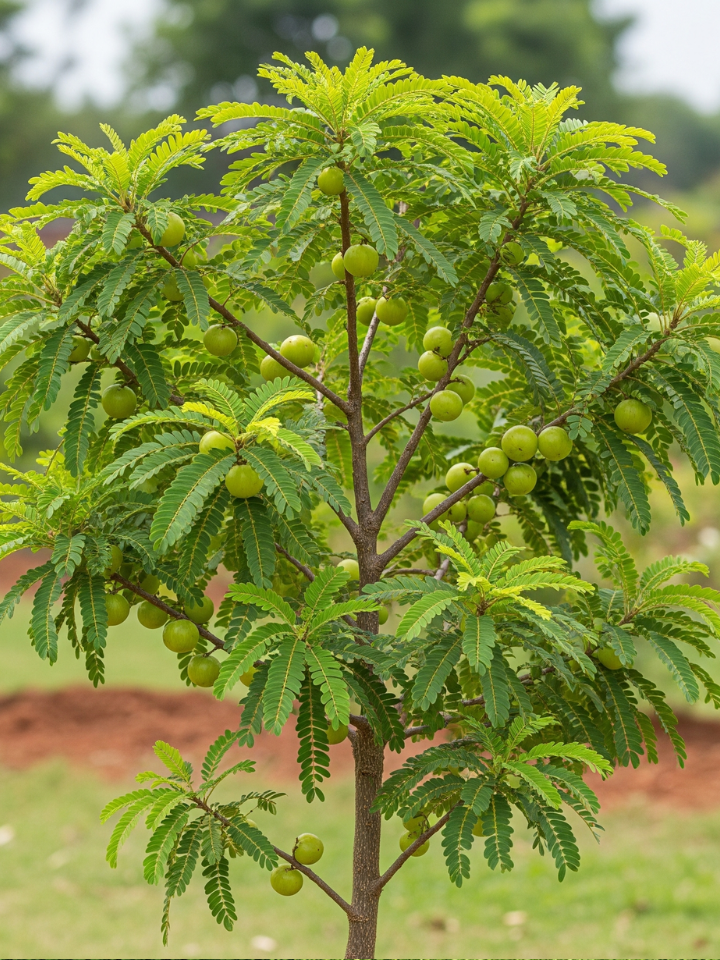
It fits naturally into a home fruit garden of sun-loving trees. Add an aam sapling to fill the fruit basket in May, a jamrul tree that fruits just before the jamun ripens, a guava plant that keeps fruiting after the jamun season ends, and amla, a hardy native that crops in the cool months. For more choice, browse our native Indian fruit trees for a home orchard.
Plant a tree for many summers of jamun
Every jamun sapling is raised and packed at a West Bengal nursery that has raised fruit trees since 2014. Give it full sun, room to spread and a steady hand with water in its early years, and it will repay you with purple fruit every summer for a lifetime.






















There are no reviews yet.