Bhringraj is Eclipta prostrata (L.) L., a small herb from the daisy family, Asteraceae, the same family as marigold and sunflower. It grows wild on damp ground across India and the warmer parts of Asia, usually beside ponds, drains and paddy fields, and it springs up wherever water collects in the rainy season. In Hindi it is also called bhangra or keshraj, in Bengali kesuti or keshuti, in Tamil karisalankanni and in Marathi maka. Botanists and gardeners abroad know it as false daisy or eclipta.
What you will notice:
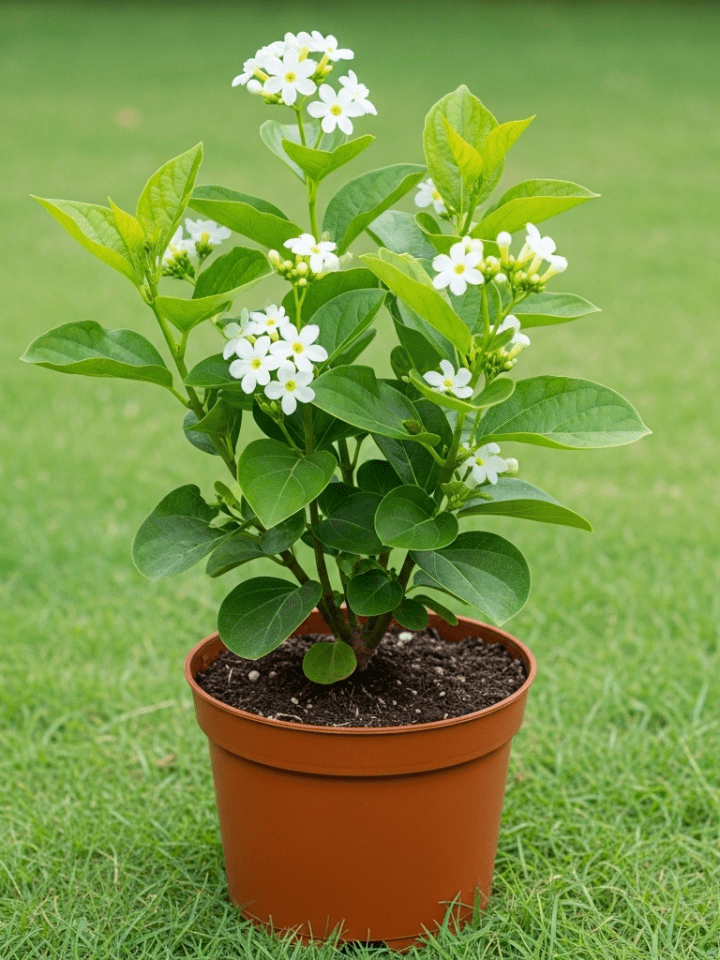
- Leaves. Narrow and lance-shaped, 2.5–7.5 cm long, set in opposite pairs straight onto the stem. The edges are finely toothed, and short stiff hairs make both sides feel rough, like fine sandpaper.
- Stems. Soft, branching and often purplish. They grow upright at first, then lean and sprawl, and they can root wherever a joint touches wet soil.
- Flowers. Small white heads about 1 cm across, a ring of tiny rays around a pale centre, held singly where the leaves meet the stem. They appear through most of the warm months.
- Seed heads. As the flowers fade, the centres turn into green buttons that ripen to small, dark, flattened seeds.
- Height. Usually 20–50 cm in a pot, spreading 30–60 cm. In rich, wet ground it can grow a little larger.
One curious detail gives it a third English name. When a stem or leaf is crushed, the sap slowly darkens towards black, which is why the plant is also called the ink plant.
White or yellow bhringraj: which one is this?
Two quite different plants share the name, and it helps to know which one you are buying.
- White bhringraj (Eclipta prostrata, this plant). Upright to sprawling, with narrow, rough, unlobed leaves and small white flowers. This is the herb most Ayurvedic texts and hair-oil makers mean by the name.
- Yellow bhringraj (Sphagneticola, formerly Wedelia). A low, mat-forming creeper with fleshier, glossier leaves and bright yellow daisy flowers about 2–3 cm across. One species, the Singapore daisy, spreads so aggressively that it is listed among the world's worst invasive plants.
If the plant in a photo has yellow flowers, it is not the herb supplied here.
Where should you keep a Bhringraj plant at home?
Choose a bright spot where the pot can stay damp. Good choices include:
- A balcony that gets morning sun. It is one of the plants for a damp, half-shaded balcony that actually enjoy the humidity, and a saucer underneath keeps the roots wet between waterings.
- A courtyard or the edge of a garden bed. In the ground it fills out quickly and seeds itself. It sits well among garden plants that welcome the rains, especially in a low corner where water lingers.
- Beside a tub, pond or rain barrel. Few herbs cope as happily with wet feet, so the margin of a small water feature suits it perfectly.
- Not indoors. Away from direct sun the stems stretch, the leaves turn pale and it soon looks thin. Keep it outside.
Product Specifications
- Plant name: Bhringraj Plant (False Daisy)
- Botanical name: Eclipta prostrata (L.) L.; syn. Eclipta alba (L.) Hassk.
- Common names: Bhringraj, bhringaraj, bhangra, keshraj, kesuti, keshuti, karisalankanni, maka, false daisy, eclipta, ink plant
- Plant family: Asteraceae (daisy family)
- Origin: Damp ground across tropical and subtropical Asia, including all of India
- Plant type: Annual or short-lived perennial herb
- Leaves: Narrow, lance-shaped, opposite, 2.5–7.5 cm long, finely toothed and rough with short hairs
- Stems: Soft, branching, often purplish; can root at the joints
- Flowers: Small white daisy-like heads about 1 cm across, through most warm months
- Seeds: Small, dark, flattened; the plant self-seeds readily
- Growth habit: Upright at first, then spreading and sprawling
- Height: About 20–50 cm in a pot, spreading 30–60 cm
- Suitable placement: Bright balcony, courtyard, garden bed, pond or tub margin; outdoors only
- Light requirement: Full sun to part shade, four hours or more of direct light
- Water requirement: High; keep the soil evenly moist and never let it dry out
- Soil requirement: Rich, loamy, moisture-holding soil with plenty of organic matter
- Temperature: Grows best at about 25–35 °C; slows in cool winter nights; not frost-hardy
- Fertiliser: Compost or vermicompost every four to six weeks during active growth
- Maintenance: Low, apart from regular watering and trimming
- Common pests and problems: Wilting from dry soil, legginess in shade, aphids, whitefly, mildew or leaf spot in crowded conditions
- Difficulty level: Easy
- Suitable environment: Warm, humid regions of India; thrives through the monsoon
- Safety: Low-severity poison if eaten (NC State Extension); may irritate skin. Not listed by the ASPCA and not classed as pet-safe. Not for home remedies without medical advice
Why is my Bhringraj plant wilting or dying?
- Leaves drooping suddenly. The soil has dried out. Water deeply and stand the pot in a saucer of water for an hour; it usually recovers within a day.
- Long, thin stems with few leaves. Too little sun, or it needs trimming. Move it to brighter light and pinch back the tips.
- Lower leaves turning yellow. Natural ageing, hunger or cold nights. Remove them and add a little compost if the plant is still growing.
- White powder or brown spots on the leaves. Mildew or leaf spot, often in crowded, still air. Thin out the stems, remove marked leaves and water the soil rather than the foliage.
- Sticky leaves or tiny insects. Aphids or whitefly. Hose them off, or spray diluted neem oil every seven to ten days.
- The whole plant browning after heavy flowering. It has finished its cycle. Keep the seedlings that come up around it, or start again from a cutting.
Bhringraj in Ayurveda and Indian homes
The herb has a long place in Ayurveda, and its Hindi name keshraj, the "king of hair", tells you why. The leaves are traditionally boiled in coconut or sesame oil to make bhringraj hair oil, and in some Bengali homes the fresh juice is part of family hair-care rituals. This is tradition, not medical advice. Most of the research on the herb comes from animal studies, and there is little reliable human evidence for any health or hair claim. Oils and pastes made from it can irritate the skin, so try a small patch first. People who are pregnant or breastfeeding, have liver problems or take regular medicines should speak to a doctor before using any part of the plant.
Is the Bhringraj plant safe around children and pets?
Use common sense. NC State Extension lists Eclipta prostrata as a low-severity poison that can cause skin irritation, vomiting and diarrhoea if handled roughly or eaten. The ASPCA has no entry for it, so we do not class it as pet-safe. Keep it where pets and small children will not chew it, and wear gloves if your skin is sensitive.
What to plant with Bhringraj
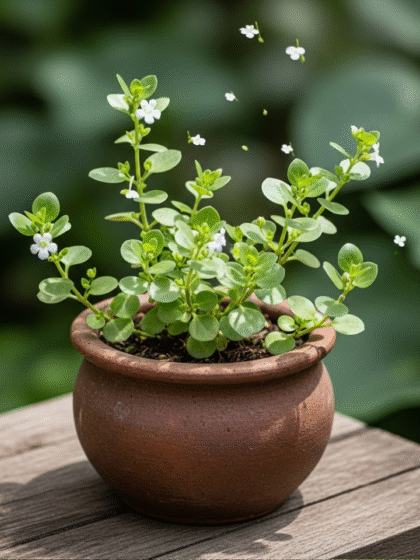
Bhringraj belongs with the other moisture-loving herbs. Thankuni, a pennywort that shares the same wet tray grows happily alongside it, and so does brahmi, another herb that never wants to dry out. Keep the sunniest, driest pot on the ledge for ashwagandha, which needs the dry end of the terrace, and water the two plants on very different schedules. To build a full shelf of Ayurvedic herbs you can grow in a pot, group the wet-soil herbs on one shared tray and the dry-soil herbs on another.
Start your bhringraj plant while the weather is warm
Order now and it has several mild, humid weeks to settle in before winter. Every pot is raised and packed by an online garden store that grows its own herbs, and it arrives ready for a bright spot and a full watering can. Keep the soil damp, snip the tips often, and this easy-going herb will keep giving you fresh green growth season after season.































There are no reviews yet.