Haldi is Curcuma longa, a perennial herb in the ginger family, Zingiberaceae. Like ginger, it grows from a thick underground stem called a rhizome, and that rhizome is the turmeric you grate, dry and grind. It is haldi in Hindi, holud in Bengali, halad in Marathi, haldar in Gujarati, manjal in Tamil and Malayalam, pasupu in Telugu, arishina in Kannada and haridra in Sanskrit.
What you will notice:
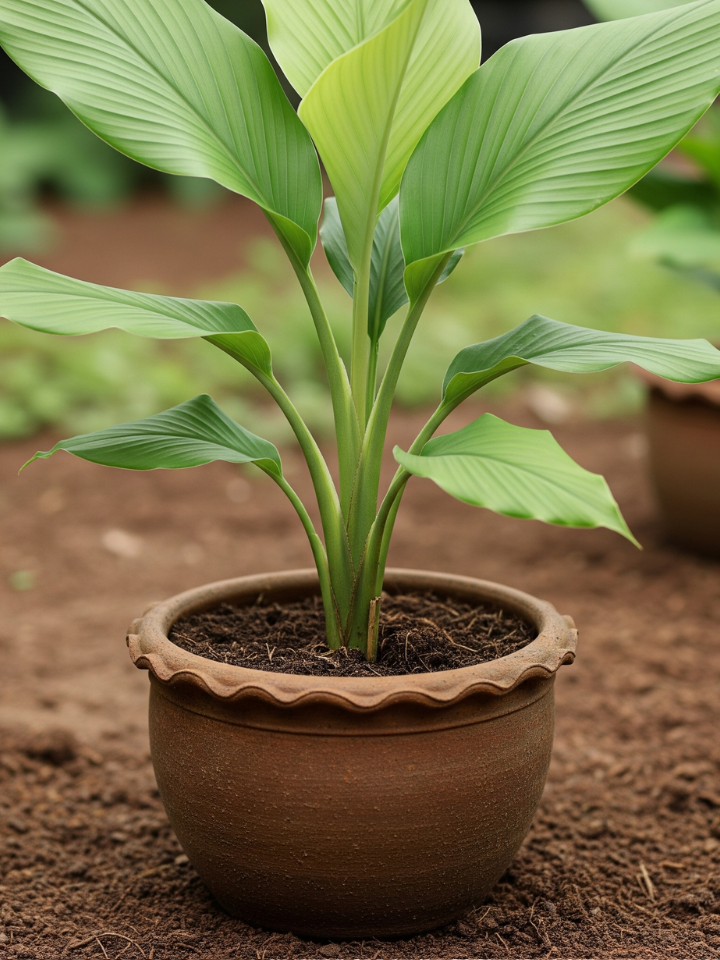
- Leaves. Long, broad, lance-shaped leaves about 12 cm wide, deep green and glossy, rising in a neat clump. Crush one and it smells faintly of fresh turmeric and ginger.
- Stems. What looks like a stem is a bundle of tightly wrapped leaf bases, soft and green.
- Height. Usually 60–90 cm in a pot during the growing season.
- Flowers. Mature plants can send up a cone-shaped spike of pale green bracts, often tipped white or pink, with small yellow-white flowers. Potted plants do not always flower, and the spike is a bonus rather than the point.
- Rhizomes. Below the soil, fingers of rhizome spread out from a central "mother" piece. Cut one open and it is bright orange inside.
Why grow turmeric at home?
- Fresh rhizomes from your own pot. Kancha holud (raw turmeric) is sharper and juicier than the dried powder, and hard to find fresh in many cities.
- A tropical look for little effort. The big, glossy leaves make a lush green corner through the summer and the rains.
- It forgives some shade. Turmeric is grown under coconut and arecanut palms on farms, so a balcony that gets half a day of sun suits it.
- It replants itself. Keep a few pieces of rhizome from each harvest and you will never need to buy another plant.
Where should you keep a turmeric plant?
Turmeric likes warmth, bright light and humidity, but not a scorching, dry wind. Good spots include:
- A balcony with morning sun. An east-facing ledge, or any spot with three to five hours of sun and bright shade for the rest of the day, is ideal. It sits happily among balcony plants that cope with half a day's shade.
- A terrace in a deep grow bag. Turmeric does well as part of a terrace garden planted in deep grow bags, with some afternoon shade from May to June.
- A garden bed. In open ground it grows fastest of all. Choose a spot that never stays waterlogged after rain.
- Not indoors for long. In a dim room it grows thin and weak. It can come inside for a day or two for a puja or a ceremony, then go back out.
Product Specifications
- Plant name: Turmeric Plant / Haldi Plant / Kancha Holud Plant
- Botanical name: Curcuma longa
- Common names: Turmeric; haldi (Hindi), holud (Bengali), halad (Marathi), haldar (Gujarati), manjal (Tamil, Malayalam), pasupu (Telugu), arishina (Kannada), haridra (Sanskrit)
- Plant family: Zingiberaceae (ginger family)
- Plant type: Perennial rhizomatous herb; spice plant
- Leaves: Broad, lance-shaped, glossy green, about 12 cm wide; lightly aromatic
- Flowers: Occasional cone-shaped spike of pale green bracts, often tipped white or pink, with small yellow-white flowers
- Edible part: Bright orange rhizome (fresh or dried)
- Growth habit: Upright, clump-forming; spreads by underground rhizomes
- Growth rate: Fast in warm, wet weather
- Mature size: About 60–90 cm tall in a pot
- Life cycle: Grows from spring to late autumn; dies back above ground and rests from about December to March; regrows from the rhizome
- Harvest: Rhizomes ready about 7–9 months after planting, usually January to March, when the leaves dry
- Suitable placement: Balcony, terrace, courtyard or garden bed; outdoors or a very bright spot only
- Light requirement: Bright light with three to five hours of sun; morning sun and afternoon shade ideal; tolerates partial shade
- Water requirement: Moderate to high while in leaf; very little during winter rest
- Soil requirement: Loose, rich, well-drained loam with compost; pH about 4.5–7.5
- Climate: Warm and humid; grows best at about 20–35 °C; not frost-hardy
- Fertiliser: Compost or vermicompost every 4–6 weeks from April to October
- Maintenance: Low; regular watering in season, mulching, a drier rest in winter
- Common pests and problems: Rhizome rot in wet soil, shoot borer, leaf spot and leaf blotch, thrips, rhizome scale
- Difficulty level: Easy
- Suitable environment: Plains and coastal regions across India; needs frost protection in the north during rest
- Safety: Not listed by the ASPCA; not classed as pet-safe
How do you care for a turmeric plant in a pot?
- Pot. Use a wide pot or grow bag at least 12 inches deep, with good drainage. The rhizomes need room to spread sideways.
- Soil. A loose, rich mix: two parts garden soil, one part compost or well-rotted cow dung manure, and one part cocopeat or coarse sand. The Spices Board recommends well-drained loamy soil with a pH between 4.5 and 7.5, so most garden soils suit it.
- Watering. While the leaves are green, keep the soil evenly moist but never soggy. In summer that may mean watering every day or two; in the monsoon, check before you water.
- Mulch. Cover the soil with a layer of dry leaves. Farmers mulch turmeric heavily; in a pot it keeps the soil cool and moist.
- Feeding. Add a handful of compost or vermicompost every four to six weeks from April to October. Stop feeding once the leaves start to yellow.
- Earthing up. If rhizomes push up to the surface, cover them with a little extra soil.
Why do turmeric leaves turn yellow in winter?
This is the question almost every new grower asks, so here is the answer up front: turmeric goes dormant in the cool, dry months, and yellowing leaves usually mean the plant is ready to rest, not that it is dying.
Turmeric grows through the warm, wet months and reaches maturity in roughly seven to nine months. As the days cool, the leaves turn yellow, then light brown, and fall over. Farmers read this as the signal that the crop is ready to dig, usually between January and March. In a pot, the same thing happens:
- Reduce watering as soon as the leaves start yellowing. Keep the soil only barely damp.
- Cut the dry leaves off at soil level once they have browned.
- Leave the pot in a warm, sheltered spot and do not water heavily. Wet, cold soil is what rots a resting rhizome.
- Wait for new shoots in spring, usually with the first warm weather or pre-monsoon showers. Then start watering and feeding again.
If the leaves yellow in the middle of summer or the rains, the cause is different: see the problems section below.
When and how do you harvest turmeric?
Dig up the rhizomes once the leaves have dried, usually from January to March. Tip the pot out, or loosen the soil with a hand fork, and lift the clump. Shake off the soil, break off the fingers you want to use, and keep a few healthy pieces, each with at least one bud, to replant in April or May. Fresh rhizomes keep for a couple of weeks in a cool, dry place, or longer in the fridge.
If you prefer, you can also leave the plant in its pot through the rest and let it regrow for a second year. You will get more leaves and a bigger clump, though the pot will need refreshing with compost.
Turmeric through the Bengal year
Our plants grow in the warm, humid Kolkata climate, and these timings suit most of the eastern and southern plains.
April to June: planting time. The pre-monsoon showers are the traditional start. New shoots appear within a few weeks.
July to September: fastest growth. The rains and warmth push out leaf after leaf. Turmeric is one of the rainy-season plants that thrive while most others sulk. Just make sure the pot drains.
October to November: full and green. In Bengal, turmeric is one of the nine plants of the Navapatrika (kola bou), bathed and installed at dawn on Maha Saptami during Durga Puja. The plant is at its leafiest now.
December to March: rest and harvest. Leaves yellow and dry. Dig the rhizomes, or let the pot rest, and keep it drier until spring. In north India, protect resting pots from frost.
What pests and problems affect turmeric?
- Yellow, wilting leaves with wet, smelly soil in summer. Rhizome rot from waterlogging. Let the pot drain fully, stop watering until the top few centimetres dry, and improve drainage when you next repot.
- A dead central shoot with a small hole in the stem. Shoot borer, the most serious turmeric pest. Cut the affected shoot off at the base and remove it.
- Brown spots or blotches on the leaves. Leaf spot or leaf blotch, common in humid weather. Remove badly marked leaves and avoid wetting the foliage.
- Pale, streaky, curling leaves. Thrips. Spray neem oil every seven days until they clear.
- Small grey-brown scales on stored rhizomes. Rhizome scale. Discard affected pieces and replant only clean ones.
How is kancha holud used in Indian homes?
Fresh turmeric is grated into dal, fish curries and sabzi, pickled with lemon and green chilli, and added raw to winter chutneys. Ground, dried turmeric is the base of almost every Indian masala. In Bengal, turmeric paste is the heart of the gaye holud ceremony before a wedding, and the plant itself takes its place in the Navapatrika at Durga Puja. On the west coast, the large, fragrant leaves wrap patoleo and patoli, rice-and-jaggery parcels steamed for festivals. We sell turmeric as a kitchen and garden plant; nothing here is medical advice.
Is a turmeric plant safe around children and pets?
The rhizome is an everyday food, and the plant has no thorns or irritating sap. Turmeric does not appear on the ASPCA's list of plants, so it has not been confirmed as safe for cats and dogs. A pet that chews leaves or digs up rhizomes may get an upset stomach, so keep the pot out of easy reach.
What grows well beside turmeric?
Turmeric looks best in a spice corner with other kitchen plants. Mint, another kitchen herb that tolerates some shade, suits the same balcony ledge; keep it in its own pot so its runners stay put. Curry leaves, which take the full sun turmeric avoids, fill the brighter end of the row, and the holy basil that shares the courtyard at puja time completes a traditional set. You can browse more herbal plants with a place in Indian kitchens and rituals and other spice plants you can grow for your own masala box.
Plant your own haldi this season
Every plant is raised and packed at our own nursery in West Bengal, and you can order it from an online nursery that grows its own stock for delivery anywhere in India. Give it a deep pot, steady water and a little patience through the winter rest, and you will be digging up your own bright orange turmeric by spring.




























There are no reviews yet.