Dhania is Coriandrum sativum, a leafy annual in the carrot and parsley family, Apiaceae. One plant gives two kitchen staples: the fresh leaves, called cilantro in American English, and the dried round seeds sold as dhania or coriander seed. It is hara dhania in Hindi, dhone pata in Bengali, kothimbir in Marathi, kothmir in Gujarati, kothamalli in Tamil, kothimeera in Telugu and kothambari soppu in Kannada.
What you will notice:
- Leaves. Bright green, broad, lobed leaves with softly toothed edges near the base. They carry the strong, fresh aroma every Indian cook knows.
- Stems. Slender, hollow, tender stems. Bengali kitchens use them too, chopped into chutney and dal.
- New growth. As the plant matures, the upper leaves turn fine and feathery, a sign that it is getting ready to flower.
- Flowers and seeds. Small white to pale pink flowers in flat, umbrella-like clusters, followed by round, ridged seeds that dry to the familiar spice.
- Size. A leafy clump about 20–30 cm tall; the flowering stalk can reach about 50–60 cm.
Why grow hara dhania at home?
- Fresher than the market bunch. Shop coriander wilts within a day or two. A pot keeps it alive until the moment it goes on the plate.
- Leaves and spice from one plant. Pick the leaves through the season, then let the flowers set seed for your masala box or the next sowing.
- Fast and small. It fits a balcony box or a sunny sill and gives a harvest in weeks, not months.
- A winter favourite. It is one of the most rewarding plants that grow in winter across the plains.
Where should you keep a coriander plant?
Coriander likes bright light but not scorching heat. The best spots:
- A sunny balcony. An east- or south-facing ledge with morning sun suits it well, alongside other herbs for a balcony that catches the winter sun.
- A bright kitchen window. With at least four hours of direct sun, it earns its place among plants that earn a spot on a sunny kitchen sill, right where you chop. Turn the pot every few days so it grows straight.
- A terrace or garden bed. Full winter sun is ideal. From March, move pots into afternoon shade to slow flowering.
- Not in a dim room. In low light the stems stretch, flop over and lose their aroma.
Product Specifications
- Plant name: Coriander Leaves Plant / Dhania Plant / Cilantro Plant
- Botanical name: Coriandrum sativum
- Common names: Coriander, cilantro, Chinese parsley; hara dhania (Hindi), dhone pata (Bengali), kothimbir (Marathi), kothmir (Gujarati), kothamalli (Tamil), kothimeera (Telugu), kothambari soppu (Kannada)
- Plant family: Apiaceae (carrot and parsley family)
- Plant type: Annual culinary herb; leaves and seeds both used
- Leaves: Bright green, lobed and softly toothed at the base; finer and feathery on flowering stems; strongly aromatic
- Flowers and seeds: Small white to pale pink flowers in flat clusters; round, ridged seeds used as the spice dhania
- Growth habit: Upright, leafy clump with a single taproot
- Growth rate: Fast
- Mature size: About 20–30 cm in leaf; flowering stalk to about 50–60 cm
- Lifespan: One season; flowers and sets seed as days get warmer
- Harvest: Light picking about a week after arrival; several weeks of cut-and-come-again harvest in cool weather
- Best season: October to February on the Indian plains
- Suitable placement: Sunny balcony, bright kitchen windowsill with direct sun, terrace or garden bed
- Light requirement: Four to six hours of direct sun; afternoon shade as temperatures rise
- Water requirement: Moderate; keep soil lightly moist, never waterlogged
- Soil requirement: Loose, well-drained loam with compost; slightly acidic to neutral
- Climate: Cool, dry, frost-free weather; grows best at about 20–25 °C
- Fertiliser: Light; compost or vermicompost every two to three weeks
- Maintenance: Low; regular light picking and steady watering
- Common pests and problems: Aphids, powdery mildew, wilt and root rot in wet soil, early flowering (bolting) in heat
- Difficulty level: Easy in the cool season; harder in summer
- Suitable environment: Plains across India in winter; hills and the south in milder months
- Safety: Listed by the ASPCA as non-toxic to dogs, cats and horses
How do you care for a coriander plant in a pot?
- Pot and roots. Coriander has a single taproot and dislikes being disturbed. Keep it in its nursery pot, or move it once to a pot at least 6–8 inches deep without breaking up the root ball.
- Soil. A loose, well-drained mix: two parts garden soil, one part compost or vermicompost and one part cocopeat or coarse sand. Slightly acidic to neutral soil suits it.
- Watering. Keep the soil lightly and evenly moist. Dry pots make the plant bolt; waterlogged pots rot the roots. Empty the saucer every time.
- Feeding. A little compost or vermicompost every two to three weeks is plenty. Heavy feeding gives soft, weak growth.
- Spacing. If the clump looks crowded, snip out the weakest stems at soil level rather than pulling them, so the remaining roots are not disturbed.
How do you harvest coriander so it keeps growing?
Give a new plant about a week to settle. Then:
- Cut the outer stems first, close to the base, and let the young centre keep growing.
- Take no more than a third of the leaves at a time.
- Pick little and often. Regular light cuts keep the plant leafy for longer.
- Pinch out early flower stalks if you want more leaves. This buys some extra time, but not forever.
In the cool months a healthy pot gives several weeks of picking. Field growers harvest whole plants at 30–40 days, so think of a potted plant as a season's supply, not a permanent fixture.
Why does coriander flower so quickly?
Flowering, called bolting, is how coriander ends its life cycle. Heat, long days, dry soil and root disturbance all speed it up. Once a tall central stalk with feathery leaves appears, leaf growth slows and the flavour changes. You can slow it with steady watering and afternoon shade, but you cannot stop it. The good news: the flowers draw bees and other pollinators, and they turn into seed.
How do you save coriander seeds and sow again?
Let the flowers set seed and leave them on the plant until the round seeds turn brown and dry. Cut the heads, dry them in shade for a few days, and store the seeds in a jar. Use them in the kitchen as dhania, or sow them:
- Split each seed gently into its two halves by pressing it on a hard surface.
- Soak the halves for about 12 hours, as the TNAU guide advises, then sow them 1 cm deep.
- Expect shoots in one to two weeks.
- Sow a fresh pot every two to three weeks from October to January for a steady supply.
Coriander through the Bengal year
Our plants grow in the mild Kolkata winter, and these timings suit most of the eastern and northern plains. For a wider view of what to grow in an Indian winter garden, see our seasonal guide.
October to November: the start of the season. The best time to buy and sow. Cool nights and bright days give the lushest, most fragrant leaves.
December to January: peak harvest. Pick freely. In north India, move pots against a warm wall on frosty nights.
February to March: flowering begins. Rising heat triggers seed stalks. Shade the pot in the afternoon and let the last plants go to seed.
April to September: the off season. Summer heat and monsoon rain make coriander bolt or rot. In the south and in the hills, a June–July sowing can work; in Bengal, wait for October.
What pests and problems affect coriander?
- Clusters of tiny green or black insects on tips. Aphids. Rinse them off and spray neem oil every seven days until they clear.
- White powder on the leaves. Powdery mildew, common late in the season. Remove affected stems and water the soil, not the leaves.
- Sudden wilting with moist soil. Root rot or wilt from waterlogging. Let the pot drain and do not overwater.
- Yellow lower leaves. Usually old age, a hungry pot or too much water. Snip them off and feed lightly.
- Long, pale, floppy stems. Too little light. Move the pot to a sunnier spot.
How is dhone pata used in Indian kitchens?
Fresh coriander finishes almost every Indian dish: dal, sabzi, fish curry, chaat, raita and biryani. In Bengal it goes into dhone pata bata, a green paste with green chilli and mustard oil, and over a bowl of masoor dal. Blend it with mint and green chilli for the classic green chutney. The dried seeds, roasted and ground, are a base spice in most masalas. We sell coriander for cooking and growing; nothing here is medical advice.
Is coriander safe around children and pets?
Yes, the leaves are everyday food and the plant has no thorns or irritating sap. The ASPCA lists coriander (cilantro) as non-toxic to dogs, cats and horses. A pet that chews through a whole pot may still get an upset stomach, so keep it out of easy reach.
What grows well beside coriander?
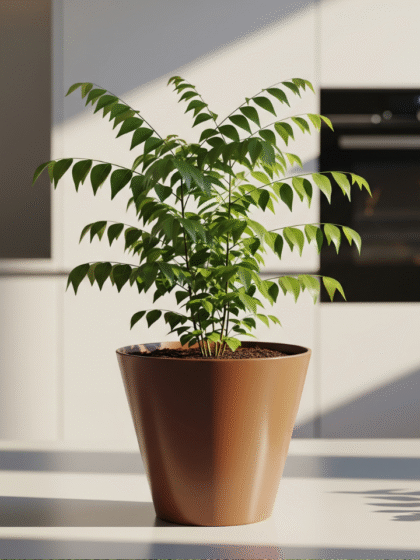
Herb pairs make sense on a kitchen ledge. A separate pot of pudina for the green chutney is the obvious partner; keep it in its own pot, as mint runners crowd everything else. A long-lived kari pata shrub for the same sunny ledge keeps the herb corner going after the coriander has gone to seed, and a tulsi plant that takes over in the summer heat thrives in exactly the months coriander dislikes. You can browse more aromatic leafy herbs for everyday cooking and other spice plants that give you both leaf and seed to build a full kitchen garden.
Start your winter herb pot this week
Every plant is raised at our own nursery and packed to travel, and we send it to the towns and cities our herb parcels reach across India in 2–7 business days. Give it sun, steady water and a gentle hand when you pick, and you will have fresh dhania for the whole cool season, plus seeds for the next one.





































There are no reviews yet.