The plant is Cinnamomum tamala, a member of the laurel family, Lauraceae, and a close relative of cinnamon. It grows wild in the forests of the eastern Himalaya, the north-east and Bangladesh, which is why it feels at home in the warm, humid air of Bengal. It is called tej patta in Hindi, tejpata in Bengali, tamalpatra in Sanskrit, and Indian bay leaf or Malabar leaf in English.
What you will notice:
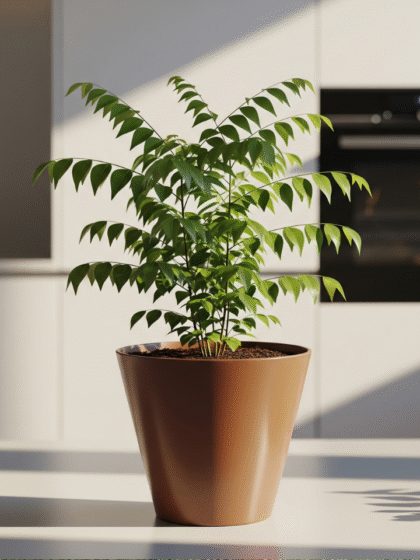
- Leaves. Long, oval, leathery leaves with a pointed tip and three strong veins running from base to tip. That three-vein pattern is the quickest way to tell Indian bay leaf from bay laurel.
- New growth. Fresh flushes come up pinkish or coppery and turn olive to deep green as they harden.
- Aroma. A warm, cinnamon-and-clove scent, strongest when a mature leaf is torn or dried.
- Stems and bark. Smooth green shoots that turn brown and woody with age.
- Habit. An upright, slow, evergreen tree. In a pot it can be kept at about 1.5–3 m; in open ground it grows into a tree several metres tall.
Older trees bear small creamy flowers in clusters, followed by small dark berries. A young potted plant may take several years to flower, which makes no difference to the leaves.
Is tejpata the same as the bay leaf in Western recipes?
No. They are two different trees. Bay laurel, from the Mediterranean, has shorter leaves with a single central vein and a pine-and-lemon scent. Indian bay leaf is larger, carries three veins and smells of cinnamon and cassia. The two are not exact swaps in cooking, so if your recipes are Indian, tejpata is the plant you want.
Why grow your own tej patta?
- Fresher leaves. A leaf picked and dried at home holds more aroma than one that has sat in a shop packet for months.
- One tree, decades of use. Tejpata trees are long-lived and keep producing for many years.
- A real spice tree in a pot. Few spices that Indian kitchens use daily can be grown this easily on a terrace.
- Low fuss. It has no thorns, needs little pruning and handles heat and humidity well.
Where should you keep a bay leaf plant?
Give it open light and room to grow:
- A terrace or rooftop. In a big container it becomes one of the most useful long-lived trees for a terrace drum. Raise the pot on bricks so it drains after rain.
- A garden bed or courtyard. Planted in the ground, it grows into a handsome shade tree. Leave 3–4 m between it and walls or other trees.
- A balcony with morning sun. East- or south-facing works well. On a hot west-facing ledge, give young plants some afternoon shade.
- Not as a houseplant. Indoors it drops leaves and stops growing. A very bright window will do for a few days, not for good.
It sits comfortably among evergreen outdoor plants that suit a big container, and its leaves stay green through every season.
Product Specifications
- Plant name: Bay Leaf Plant / Tejpata Plant / Tej Patta Plant
- Botanical name: Cinnamomum tamala
- Common names: Indian bay leaf, Malabar leaf; tej patta (Hindi), tejpata (Bengali), tamalpatra (Sanskrit)
- Plant family: Lauraceae (laurel family)
- Origin: Eastern Himalaya, north-east India, Bangladesh and neighbouring South and South-East Asia
- Plant type: Evergreen aromatic tree; perennial spice plant
- Leaves: Oval to lance-shaped, leathery, glossy, with three prominent veins from the base; new flush pinkish
- Aroma: Warm, cinnamon- and clove-like, strongest in mature and dried leaves
- Flowers and fruit: Small creamy flowers and small dark berries on older trees; potted plants may not flower for years
- Growth habit: Upright, branching evergreen tree
- Growth rate: Slow
- Mature size: About 1.5–3 m in a large container with pruning; a tree several metres tall in open ground
- Lifespan: Long-lived; productive for decades
- Harvest: A few mature leaves at a time once established; never more than about a fifth of the canopy at once
- Suitable placement: Terrace, rooftop, courtyard, garden bed, balcony with morning sun; outdoors
- Light requirement: Bright light with at least four hours of direct sun; afternoon shade for young plants
- Water requirement: Moderate; water when the top 3–4 cm is dry; no waterlogging
- Soil requirement: Rich, well-drained loam, slightly acidic to neutral, with compost
- Climate: Warm, humid weather; tolerates cool winters but frost damages young plants
- Fertiliser: Vermicompost or rotted manure every 6–8 weeks, February to October
- Maintenance: Low; occasional pruning, light feeding, pest checks
- Common pests and problems: Psyllid leaf galls, leaf spot, mealybug, scale, caterpillars; root rot in waterlogged soil
- Difficulty level: Easy, but slow-growing
- Suitable environment: Tropical and subtropical plains and mid-hills across India; humid regions suit it best; needs frost protection in the north
- Safety: Not listed by the ASPCA; not classed as pet-safe; whole leaves should not be swallowed
How do you care for a bay leaf plant in a pot?
- Soil. A rich, loose, well-drained mix: two parts garden soil, one part compost or old cow dung manure and one part coarse sand or cocopeat. It likes soil that is slightly acidic to neutral.
- Watering. Water deeply, then let the top 3–4 cm dry before watering again. In April and May that may mean every day or two; in the rains and winter, far less. Empty the saucer each time.
- Light. Young plants grow best with morning sun and bright shade in the afternoon. Once established, they handle more sun if watered well.
- Feeding. A handful of vermicompost or well-rotted manure every six to eight weeks from February to October. Skip feeding in the cool months.
- Pruning. Pinch the growing tip once the plant reaches the height you want, so it branches out. Trim in late winter or early spring.
- Repotting. Move up one pot size every year or two, in February–March or at the start of the monsoon.
- Mulch. A layer of dry leaves or cocopeat on top keeps the roots cool in summer.
When can you start picking leaves?
Slowly. Once your plant is growing strongly and has plenty of leaves, usually from its second year in your care, you can take a few mature leaves at a time. Pick the dark, leathery leaves from the middle of the branches, not the soft pink new flush. Never take more than about a fifth of the leaves in one go. Commercial tejpata growers wait many years before a full harvest, so a potted tree is about steady, small pickings rather than large ones.
To dry leaves at home: spread them in a single layer in shade for five to seven days until they snap, then store them in an airtight jar. Fresh leaves can go straight into the pot too, with a stronger, greener flavour.
Tejpata through the Bengal year
Our plants grow in the warm, humid Kolkata climate, and these timings suit most of the eastern plains.
February to April: new flush. Pink-tinged new leaves appear. Repot, feed and prune now.
May to June: peak heat. Water early in the day and mulch the pot. Shade young plants on an open roof in the afternoon.
July to September: the monsoon. The best time to plant out, as tejpata is one of the trees and shrubs worth planting when the rains begin. Keep the pot raised and watch for soggy soil.
October to January: the dry, cool months. Growth slows and the leaves are at their most aromatic. This is the traditional season for picking and drying. Cut watering back, and in north India keep the pot against a warm wall on frosty nights, as frost damages young plants.
What pests and problems affect bay leaf plants?
- Small raised bumps or galls on the leaves. Caused by tiny sap-sucking insects called psyllids, and common on tejpata. Pick off badly affected leaves and spray neem oil on new growth.
- Brown or black spots. Usually fungal leaf spot in wet, crowded conditions. Remove spotted leaves and improve airflow.
- White, cottony tufts or brown bumps on stems. Mealybugs or scale. Wipe them off and follow with neem oil every week until they clear.
- Chewed new leaves. Caterpillars. Remove them by hand.
- Yellowing and leaf drop. Usually waterlogged roots or too little light. Let the soil dry a little and move the pot to a brighter spot.
How is tej patta used in Indian kitchens?
In Bengal, a tejpata leaf goes into the hot oil with whole spices for dal, khichuri, pulao and alur dom, and into the milk for payesh. Across India it flavours biryani, garam masala and rich curries. The leaf is used for aroma and removed before serving, as whole leaves are tough and should not be swallowed. Tejpata also has a long place in Ayurveda. That is tradition, not medical advice; please consult a doctor before using any plant as a remedy.
Is a bay leaf plant safe around children and pets?
It has no thorns or irritating sap, and children can safely help water it. Indian bay leaf has no entry on the ASPCA lists, while the ASPCA lists bay laurel as toxic to dogs and cats. We do not class tejpata as pet-safe, so keep pets from chewing the leaves.
What grows well beside a bay leaf plant?
A spice corner on the terrace suits it well. Add a kari pata shrub for the sunnier pot beside it and a lemon plant for the other end of the spice corner; both like the same rich, free-draining soil. For something that rewards you within weeks rather than years, a pudina pot for quick, weekly pickings fills the gap while the tree grows. You can browse more spice plants that grow into trees and other aromatic plants for the kitchen garden to complete the set.
Plant a tejpata tree this season
Every plant comes from the tejpata saplings at our Kolkata nursery packed by the same family that grows them. When you buy plants online from the people who grow them, you get care advice written for the plant that actually arrives. Give it a big pot, a bright spot and a little patience, and it will flavour your cooking for years.



















There are no reviews yet.