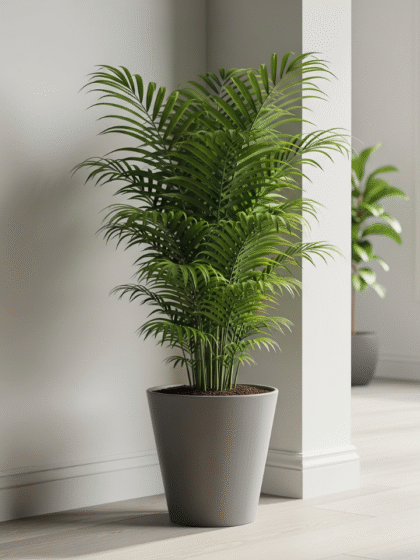
The bamboo palm is Chamaedorea seifrizii, a small, clustering palm from the forests of southern Mexico and Central America. It belongs to the palm family, Arecaceae, and is also sold as the reed palm. The common name comes from its stems: thin, upright canes ringed at each joint, which look very like bamboo. It is not a true bamboo, though, which is a grass.
What you will notice when it arrives:
- Canes. Slender, upright and usually under 2.5 cm thick, ringed at intervals. Several rise together from the base, so the plant looks full rather than single-trunked.
- Fronds. Feather-shaped, with 5 to 15 narrow, pointed leaflets on each side of the stalk, in a deep green that stays fresh indoors all year.
- Shape. An upright, vase-like clump that is taller than it is wide, so it slips neatly into a narrow corner.
- Growth. Slow and steady. New canes appear from the base over time, and the clump fills out gradually instead of shooting up.
- Mature size. Indoors, usually about 1–2 m over several years. Outdoors in the tropics it can reach about 2.3 m.
- Flowers. Mature plants can carry small yellow flower sprays and dark berries, but this is rare indoors.
Bamboo palm vs areca palm: what is the difference?
They are different plants, even though nurseries often sell them side by side. The feathery areca palm, its sun-loving, golden-caned cousin, has thicker yellow-green canes and wider, arching fronds, and it needs bright light to stay full. Chamaedorea seifrizii has thinner, darker stems and a narrower, more upright habit, and it copes far better with a room that gets little sun. The ASPCA lists both as non-toxic to pets.
It is also easy to mix up with lucky bamboo, the water-grown dracaena sold for good fortune. That plant is neither a bamboo nor a palm, and unlike this one it is toxic to cats and dogs.
Where should you keep a bamboo palm at home?
Anywhere with steady, indirect light and no hot afternoon sun. Good spots include:
- A living room corner. Its upright shape makes it one of the best floor-standing plants for filling a bare living room corner without taking over the room.
- An office cabin or reception. It holds up well under tube lights and in rooms with few windows, which puts it among the leafy plants that freshen a workplace cabin or front desk.
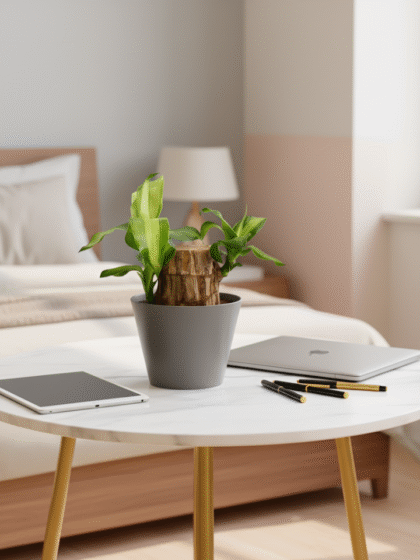
- A bedroom or study. Calm, green and quiet, it suits a bright bedroom where a fussy flowering plant would sulk.
- A bathroom with a window. It enjoys the extra humidity, provided there is natural daylight.
- A shaded verandah or balcony. In much of India it grows happily outdoors in shade, away from midday and afternoon sun.
Avoid direct afternoon sun through glass, the blast of an AC vent, a spot right beside a heater, and a saucer that stays full of water.
Can a bamboo palm grow in low light?
Yes, better than most palms. It tolerates a room several metres from the window, which is why it sits naturally among plants that make do with a north-facing room. In very dim light, growth slows and the clump may thin out. For the fullest plant, give it bright, indirect light near an east- or north-facing window, or a metre or two back from a sunnier one.
Product Specifications
- Plant name: Bamboo Palm
- Other common names: Reed palm
- Botanical name: Chamaedorea seifrizii
- Plant family: Arecaceae (palm family)
- Native range: Southern Mexico to Honduras
- Plant type: Evergreen, clump-forming indoor palm
- Planter supplied: Grow pot in brown or light brown
- Growing medium supplied: Coco peat, coco chips and soil
- Canes: Slender, upright, ringed like bamboo, usually under 2.5 cm thick
- Fronds: Feather-shaped, 5–15 narrow leaflets on each side, deep green
- Growth habit: Upright, vase-shaped clump; new canes rise from the base
- Growth rate: Slow
- Mature size indoors: About 1–2 m over several years
- Suitable placement: Living room corner, office cabin or reception, bright bedroom or study, bathroom with a window, shaded verandah or balcony
- Not suitable for: Direct afternoon sun, spots beside AC vents or heaters, waterlogged pots
- Light requirement: Bright, indirect light; tolerates low light with slower growth
- Water requirement: Moderate; water when the top 2–3 cm of soil is dry
- Soil requirement: Light, free-draining potting mix
- Humidity: Medium to high preferred
- Fertiliser: Mild liquid feed at half strength, monthly from March to September
- Temperature: About 18–30 °C ideal; keep above about 10 °C
- Propagation: Division of large clumps; seed is slow
- Common problems: Brown tips, root rot from overwatering, spider mites, mealybugs, scale
- Maintenance: Low
- Difficulty level: Easy
- Suitable environment: Indoors across India; outdoors in shade in warm, humid regions
How do you care for a bamboo palm?
The short answer: indirect light, water only when the top of the soil dries, and a pot that drains freely.
- Light. Bright, indirect light for most of the day. Gentle early-morning sun is fine; hot afternoon sun scorches the leaflets.
- Watering. Water thoroughly until it runs out of the drainage hole, then wait until the top 2–3 cm of soil feels dry. In a typical home that is about once or twice a week in summer and every 10–14 days in winter. More potted palms are lost to soggy roots than to dry soil.
- Water quality. It is sensitive to salts and fluoride in hard tap water, which cause brown tips. Use filtered water or rainwater, or let tap water stand overnight, and flush the pot with plain water every few months.
- Soil. A light, free-draining mix. The supplied blend of coco peat, coco chips and soil works well; add a little compost when you repot.
- Humidity. It likes moist air, which Bengal provides for much of the year. In air-conditioned rooms, group it with other plants or stand it on a tray of wet pebbles.
- Feeding. A mild liquid fertiliser at half strength once a month from March to September. Skip it in winter.
- Cleaning. Wipe or rinse the fronds every few weeks. Clean leaves look better and are less attractive to spider mites.
- Temperature. Happiest at about 18–30 °C. Keep it away from cold draughts and above about 10 °C.
- Repotting. Every two or three years, in spring, into a pot just one size larger with a drainage hole. It likes being slightly snug.
How do you propagate a bamboo palm?
The easiest method is division. In spring or early summer, ease the clump out of its pot and separate a section that has several canes and its own healthy roots. Pot it in fresh mix, keep it in shade and water lightly until new growth appears. Palms do not like root disturbance, so divide only large, crowded clumps. Growing from seed is possible but slow, and seedlings take years to look like a finished plant.
Bamboo palm through the Indian year
These notes come from growing it in West Bengal and suit most of eastern and southern India. They follow the same rhythm as our notes on how leafy houseplants get through a Bengal summer, monsoon and winter.
March to June: active growth. Water more often as the soil dries faster, feed monthly and keep it out of harsh sun. Watch for dry air in rooms with the AC running.
June to September: monsoon care. Humidity is ideal, but the soil stays wet much longer. Check with a finger before every watering and never let the pot stand in water. Fungus gnats are a sign the mix is too damp.
October to February: slower growth. Water less often and stop feeding. In north India, move it away from cold windows on winter nights.
Why are my bamboo palm leaves turning brown or yellow?
- Brown leaf tips. Usually dry air, AC, salts in tap water or uneven watering. Trim the dry tips with clean scissors, following the leaf's natural shape.
- One or two yellow lower fronds. Natural ageing. Cut them off at the base.
- Many yellow fronds at once. Overwatering or a lack of magnesium or potassium. Let the soil dry slightly between waterings and feed in the growing season.
- Pale, bleached patches. Too much direct sun. Move it further from the window.
- Soft, dark canes at the base. Root rot from waterlogged soil. Stop watering, improve drainage and remove the affected canes.
- Fine webbing and speckled fronds. Spider mites, common in dry, air-conditioned rooms. Rinse the plant and spray with diluted neem oil.
- White cottony clusters or small brown bumps. Mealybugs or scale. Dab them off with a cotton bud dipped in rubbing alcohol and repeat weekly.
Is a bamboo palm safe for cats and dogs?
Yes. The ASPCA lists the bamboo palm, also called the reed palm, as non-toxic to dogs, cats and horses. That makes it one of the few large leafy plants among houseplants you can leave within reach of a curious cat. A pet that chews a lot of fronds may still get a mild stomach upset, and the berries of mature plants can irritate sensitive skin, so it is best to discourage nibbling.
For a second pet-safe plant in the same humid, shaded spot, try a striped calathea that shares its love of moist air and its non-toxic ASPCA listing.
Does a bamboo palm purify indoor air?
Only slightly. It was one of the plants tested in NASA's 1989 clean-air study, which is why it is so often called an air-purifying plant. Those tests used small sealed chambers, though. A 2019 review by Cummings and Waring found that a real room would need somewhere between 10 and 1,000 plants per square metre to match the effect of ordinary ventilation. Our guide to what the clean-air research says about palms in a real room explains the findings. Grow it for its looks, its easy nature and the calm a green corner brings.
Is a bamboo palm good for the home as per Vastu?
Many people who follow Vastu see leafy palms as plants that bring fresh, positive energy, and they often place them in the north, east or north-east of a room. A living room corner is a popular choice. This is a matter of belief rather than horticulture, but if it matters to you, it fits well among palms and other plants chosen for good fortune as per Vastu.
A pet-safe palm for the corners the sun forgets
Each Bamboo Palm is raised and potted at our own nurseries in West Bengal, then packed and sent out by an online nursery that grows its indoor palms itself. Give it gentle light and a light hand with the watering can, and it will reward you with fresh green fronds for years.

































Soumi S –
⭐⭐⭐⭐⭐ “Beautiful and Healthy Plant!”
“I bought a medium Bamboo Palm from Plantaeroot, and it arrived in perfect condition. The leaves are lush and green, and it looks amazing in my living room. Very happy with the purchase!”
Neha R –
⭐⭐⭐⭐⭐ “Worth Every Penny”
“The Bamboo Palm Plant is healthy, sturdy, and perfect for my home décor. It’s easy to care for and adds a tropical vibe to my living room. Excellent quality from Plantaeroot!”
Anindita Chatterjee –
I received my Bamboo Palm in good condition. It looked slightly dull after delivery, but within a few days of proper care, it revived beautifully. It really freshens up my balcony area. I appreciate the careful packaging and timely delivery. Plantaeroot truly focuses on bringing nature closer to our daily life.