The Areca Palm (Dypsis lutescens) comes from Madagascar and is among the most widely grown indoor palms in the world. Its other names describe it well. People call it the butterfly palm because each frond arches up and out like a pair of wings. It is also the golden cane palm, after its smooth stems with their yellow tinge. Botanists have recently restored its older name, Chrysalidocarpus lutescens. Nurseries and the ASPCA still list it as Dypsis, so you will see both.
What arrives in the pot is rarely one plant. Growers sow several seedlings together, so the clump looks full of day one, and fresh canes keep rising from the base as it matures. Each cane carries long; feather-like fronds made of dozens of narrow, glossy leaflets. The effect is light and airy rather than heavy, which is why it sits so easily in modern interiors.
Growth is steady rather than quick. In good light, expect roughly 15–25 cm of new height a year. It takes several years to reach its full indoor height of about 1.8–2.4 m. If you want that height straight away, the Areca Palm Plant (XL) arrives as a mature specimen.
Where it looks and grows best
Give it the brightest spot you have that stays out of direct midday and afternoon sun. A corner a metre or two from an east- or north-facing window is ideal. It makes a natural focal point in the living room, softens a reception area or cabin among plants for office spaces, and enjoys the humidity of a bathroom with a window. A covered verandah or a shaded balcony works well too.
Keep it away from the direct blast of an air-conditioner, which dries the fronds and browns the tips. Give the pot a quarter turn every couple of weeks so it grows evenly rather than leaning towards the light.
Indoor or outdoor?
Both. In India it grows happily outdoors in semi-shade and indoors in a well-lit room. What it will not tolerate for long is a dim corner. In low light it survives, but it thins out, stretches and yellows. For a darker room, the Bamboo Palm is the better choice.
Areca palm, bamboo palm or areca nut palm: which is which?
| Sold as | Botanical name | What it looks like | Light it wants |
| Areca Palm Plant (this plant) | Dypsis lutescens | A clump of golden-green canes with arching, feathery fronds. Bright, fresh green | Bright indirect |
| Areca Palm Plant (XL) | Dypsis lutescens | The same plant as a mature specimen, for instant height | Bright indirect |
| Bamboo Palm | Chamaedorea seifrizii | Slimmer, darker green stems that look like bamboo, with deeper green fronds | Copes with lower light |
| Areca nut (supari) palm | Areca catechu | A tall, single-trunked plantation tree grown for betel nut. Its fallen leaf sheaths are pressed into areca leaf plates | Full sun. Not a houseplant |
The confusion comes from the names. This houseplant is sometimes sold as "bamboo palm", and it shares the word "areca" with the supari tree, but it produces neither betel nut nor leaf plates.
Product Specifications
| Specification | Detail |
| Plant name | Areca Palm Plant |
| Botanical name | Dypsis lutescens (now also listed as Chrysalidocarpus lutescens) |
| Plant family | Arecaceae (palm family) |
| Also known as | Butterfly palm, golden cane palm, yellow palm |
| Native to | Madagascar |
| Plant type | Evergreen, clump-forming indoor palm |
| Foliage | Arching, feather-like fronds of narrow, glossy green leaflets on slender golden-green canes |
| Suitable placement | Living room corner, office or reception, bathroom with a window, bright bedroom, covered verandah, shaded balcony |
| Light requirement | Bright indirect light. Tolerates gentle morning sun. Avoid direct afternoon sun and dim corners |
| Water requirement | Moderate. Water when the top 2–3 cm of soil is dry. Prefers filtered or rested tap water |
| Soil requirement | Light, well-draining potting mix. Supplied in a premium potting soil mix |
| Growth habit | Upright clump of multiple canes with fronds arching outward. Moderate growth rate |
| Mature indoor height | About 1.8–2.4 m over several years, in good light |
| Humidity | Average to high. Brown tips appear in very dry air |
| Temperature | Most comfortable between 18 and 30 °C. Protect from temperatures below about 10 °C |
| Difficulty level | Easy to moderate |
| Suitable environment | Indoors in a bright room, or outdoors in semi-shade in warm climates |
| Pet safety | Pet-safe. Listed by the ASPCA as non-toxic to cats, dogs and horses |
| Propagation | Division of the clump at repotting |
| Lifespan | Many years indoors with good care |
Care guide
| Care | What to do |
| Light | Bright, indirect light for most of the day. One or two hours of soft morning sun is welcome. Hot afternoon sun through glass bleaches and scorches the leaflets |
| Water | Water thoroughly until it drains from the base, then wait until the top 2–3 cm of soil feels dry. Palms dislike drying out completely and dislike soggy roots even more. Never let the pot stand in a saucer of water |
| Water quality | It is sensitive to fluoride and salts in hard tap water, which cause brown tips. Use filtered water or rainwater, or let tap water stand overnight. Flush the pot with plain water every two to three months |
| Soil | A light, free-draining mix. Cocopeat with perlite or coarse sand and a little compost works well. Heavy garden soil holds too much water |
| Humidity | It prefers humid air, which comes naturally in Bengal for much of the year. In air-conditioned rooms, group it with other plants or stand it on a tray of wet pebbles |
| Feeding | A balanced liquid fertiliser at half strength once a month from March to September. A palm feed with magnesium helps keep the fronds green. No feeding in winter |
| Repotting | Every two to three years, one size up. It likes a snug pot. Keep the plant at the same depth, because burying the canes deeper invites rot |
| Pruning | Cut fronds off at the base only once they are fully brown. A frond that is still yellowing is feeding the plant. Never cut the top off a cane, because it will not regrow from there |
| Propagation | Divide a crowded clump when you repot, keeping roots on each section. It does not grow from cuttings, and seed is slow |
Growing an Areca Palm through the Bengal year
Monsoon (June to September). The humid air suits it perfectly, but this is when most potted palms are lost. The soil stays wet far longer than it looks, and roots rot while the fronds still seem fine. Water by feel, not by the calendar. On a balcony, keep the pot out of driving rain and make sure the drainage hole is clear.
Summer (March to May). This is the thirsty season. The dry heat before the rains and long hours of air-conditioning bring brown tips. Check the soil every few days and water more often. Pull the pot back from any west-facing window, because a May afternoon behind glass scorches the leaflets within days.
Winter (late November to February). Growth slows. Water roughly every 10–14 days and stop feeding. Our winters are mild enough that no protection is needed. Just keep it off a cold window ledge or out of an open, draughty verandah on the chilliest January nights.
Common problems and quick fixes
| Symptom | Likely cause | What to do |
| One or two lower fronds turning yellow | Natural ageing. Old fronds fade as new ones open | Nothing. Remove each frond once it is fully brown |
| Many fronds yellowing at once | Overwatering, or a shortage of potassium or magnesium | Let the top soil dry before watering again. Check the pot drains. Feed with a palm fertiliser in the growing season |
| Brown, crispy leaf tips | Dry air, AC, hard tap water or uneven watering | Water evenly with filtered or rested water. Raise the humidity. Trim the tips at an angle with clean scissors |
| Pale, bleached or scorched patches | Direct afternoon sun | Move it into bright but indirect light |
| Soft, dark bases on the canes | Root rot from waterlogged soil | Remove the affected canes, repot into fresh, free-draining mix and water sparingly |
| Fine webbing and speckled leaflets | Spider mites, common in dry, hot weather | Rinse the fronds in the shower, then spray diluted neem oil weekly for three weeks |
| White, cottony spots where leaflets meet the stem | Mealybugs | Dab with cotton dipped in neem solution and repeat weekly |
| Fronds droop or a few tips brown in the first week | Transit stress | Normal. Keep it bright, water only when needed, and it settles in two to three weeks |
Is the Areca Palm safe for pets?
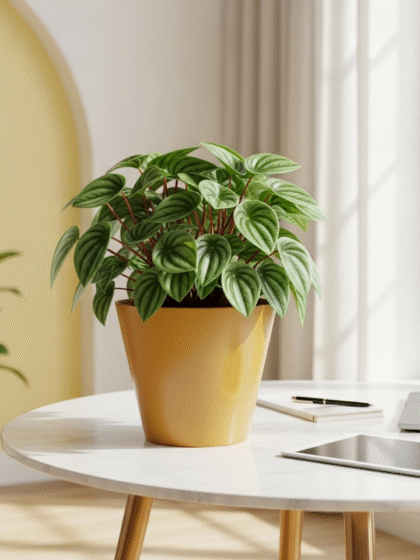
Yes. The ASPCA lists Dypsis lutescens as non-toxic to cats, dogs and horses, which is why it is our first suggestion for homes with animals. Non-toxic does not mean edible, though. A pet that chews a lot of fronds may still get a mild upset stomach, and cats love shredding the leaflets. For more safe options, browse our pet-friendly plants. The Peperomia Green and Boston Compacta Fern are also on the ASPCA's non-toxic list.
About the air-purifying claim
The Areca Palm sits in our air purifier plants collection, so here is what that means. It was not in NASA's 1989 sealed-chamber study. It became famous through Dr B.C. Wolverton's later book, which rated it highly in small test chambers for removing indoor chemical vapours and for releasing moisture into the air. A real room is very different from a sealed chamber, and later research found you would need an impractical number of plants to match an open window. What it does offer is a little extra humidity in a dry AC room, and a greener space to live in. Our guide to which indoor plants actually purify the air goes through the evidence.
Areca Palm and Vastu
In Vastu practice, palms like this one are usually kept in the north or east of the home, or in a bright living-room corner, and are linked with fresh energy and prosperity. These placements are cultural tradition rather than something that can be shown to work. We note them because they matter to many households. Browse our Buy Vastu Plants if that is what you are shopping for.



































There are no reviews yet.