Kunda is a true jasmine from the olive family, Oleaceae, found wild across India, Nepal, Bhutan and South-East Asia. In Bengal it is kunda or kundo phool, in Hindi and Marathi kund or kunda, and in Manipur kundo, where brides and grooms exchange garlands made from its flowers. Gardeners elsewhere know it as downy jasmine, for the soft hairs on its leaves and stems, or as star jasmine, for the shape of its blooms.
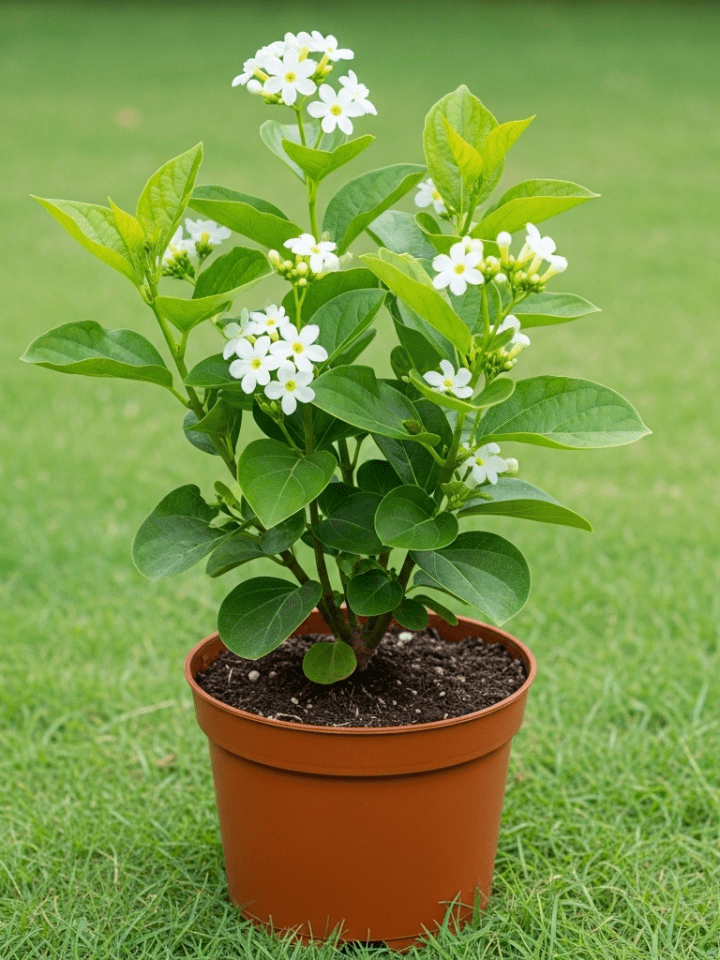
It grows as a bushy, arching shrub with long, flexible stems. Left free it forms a mounded fountain of green; given a trellis or railing, it scrambles upwards like a loose climber. The leaves are small, oval and opposite, 3–6 cm long, and covered in fine down, which gives the whole plant a silvery, velvet look even out of flower.
The flowers are its signature. Each one is about 2.5 cm across, with six to nine slim, pure white petals spread flat like a star, opening from tight clusters of buds at the stem tips. A healthy plant in full flush looks dusted with snow. The fragrance is gentle and clean rather than heady, strongest in the morning, and much lighter than mogra or jui. Some plants are barely scented, so choose kunda for the sheer number of flowers and their timing, with the scent as a bonus.
That whiteness gave the flower its place in Indian poetry. The Saraswati Vandana opens by comparing the goddess to the kunda flower, the moon and snow, and in Bengal the plant is often in bloom around Saraswati Puja.
What it is not: the glossy-leaved Trachelospermum sold abroad as star jasmine, and not a houseplant. It needs outdoor light to flower.
Where does a star jasmine grow best?
Anywhere bright and open. Because it flowers through the cool months, it is one of the most rewarding flowering plants for winter season displays on a sunny ledge, when the summer bloomers have stopped.
On a balcony, one plant in a 12-inch pot fills a corner with green all year and white all winter, which makes it among the best plants for balcony pots in a flat that gets morning or afternoon sun. Tie its longer stems to the grille and it becomes one of the easier climbing plants for balcony railings, covering bare iron without the heavy weight of a woody vine.
On a rooftop, it is one of the plants suitable for terrace garden beds that tolerate wind, heat and some drought. In the ground, it makes a soft informal hedge, a screen along a boundary wall or a mound beside the gate, where it sits well among other outdoor flowering plants chosen for year-round cover.
It is not suited to a dim room or a north-facing window with no direct sun. There it grows leggy and sets few buds.
Product Specifications
- Plant name: Kunda (Star Jasmine) Plant
- Botanical name: Jasminum multiflorum
- Also known as: Kunda, kund, kundo, star jasmine, downy jasmine, winter jasmine of India
- Plant family: Oleaceae (olive family)
- Origin: India, Nepal, Bhutan and South-East Asia
- Plant type: Evergreen flowering shrub; scrambling climber when supported
- Foliage: Small, oval, opposite leaves, 3–6 cm, covered in soft down; grey-green
- Flowers: Pure white, star-shaped, about 2.5 cm across, six to nine petals, in clusters at stem tips
- Fragrance: Light and fresh; milder than mogra or jui, and faint on some plants
- Flowering season in India: Mainly November to March, peaking in December to February; occasional flowers at other times
- Growth habit: Bushy, arching and mounding; climbs a trellis or grille if tied in
- Growth rate: Moderate to fast in the warm, wet months; slow in winter
- Suitable placement: Sunny balcony, terrace, railing, boundary wall, gate, hedge or garden bed; outdoors only
- Light requirement: Full sun to part sun; four to six hours of direct sun for good flowering
- Water requirement: Moderate; water when the top inch dries; less in winter and during the rains
- Soil requirement: Fertile, free-draining loam with compost and sand or cocopeat
- Fertiliser: Monthly compost February to October; potash- and phosphorus-rich feed from September
- Pruning: Once, after flowering in March; no pruning after August
- Propagation: Semi-hardwood cuttings or layering, best in the monsoon
- Temperature: Loves warmth; flowers through the mild Indian winter; not frost-hardy
- Difficulty level: Easy
- Suitable environment: Warm, sunny climates; well suited to Bengal and most of the Indian plains and coasts
- Attracts: Bees and other pollinators
- Pet and child safety: ASPCA lists Jasminum species as non-toxic to dogs, cats and horses
How do you care for a Kunda plant in a pot?
- Light. Four to six hours of direct sun a day for good flowering. It tolerates light afternoon shade, but flowers less.
- Water. Water deeply when the top inch of mix is dry. In summer that may be daily for a small pot; in winter, every three to four days; in the monsoon, only after the pot has dried. Never let it stand in a saucer of water.
- Soil. A loose, fertile, free-draining mix: two parts garden soil, one part compost or vermicompost, and one part coarse sand or cocopeat.
- Pot and support. Start in a 10–12 inch pot with a drainage hole and move up to 14–16 inches as it grows. Add a trellis or tie stems to a grille if you want it to climb; otherwise let it arch as a shrub.
- Feeding. Compost or vermicompost every month from February to October. From September, as buds begin to form, switch to a potash- and phosphorus-rich feed, such as bone meal with a little wood ash, every two to three weeks. Heavy nitrogen gives leaves instead of flowers.
- Pruning. Prune once, straight after the winter flush ends in March. Thin out old, crossing stems and shorten the rest by a third. Stop pruning by August, or you will cut off the season's buds.
- Propagation. Semi-hardwood cuttings root easily in the monsoon. Stems that touch the soil also root on their own and can be layered.
When does Kunda flower? A year with it in Bengal
These notes come from growing the kunda bushes at our Kolkata nursery.
Spring, March to April. The last flowers fade. Prune, top the pot with fresh compost and repot if the roots are crowded. New shoots appear within weeks.
Summer, May to June. Steady leafy growth. Water freely through the heat and keep up the monthly compost. A few scattered flowers may appear.
Monsoon, July to September. Growth continues fast. Keep drainage clear, empty saucers after heavy rain and watch for leaf-rolling caterpillars. Take cuttings now if you want more plants.
Autumn, October to November. Buds form at the stem tips as nights cool. Switch to the potash feed and give it the sunniest spot you have.
Winter, December to February. Peak season. The plant is covered in white stars, often through Saraswati Puja. Water a little less, but do not let the pot dry out completely while it is flowering. If you are planning the rest of the garden around it, this guide to what to plant in an Indian garden before winter pairs well with it.
Why is my Kunda plant not flowering? Common problems and fixes
- Healthy leaves, no buds. Too little sun, too much nitrogen or late pruning. Move it into more sun, feed potash from September and never prune after August.
- Buds turning brown or dropping. Often jasmine budworm, a tiny caterpillar that bores into buds. Remove damaged buds and spray neem oil weekly while the plant is budding. A pot that dries out hard also drops buds.
- Leaves rolled or webbed together. Leaf rollers or leaf webbers. Pick off the affected tips and follow with neem oil.
- Yellowing all over. Overwatering or poor drainage, usually in the rains. Let the mix dry a little and check the drainage hole.
- Yellow leaves with green veins. Iron shortage, common in alkaline soil. Add compost and a chelated iron or micronutrient feed.
- Orange spots under the leaves. Rust in humid weather. Remove affected leaves and improve airflow.
- White fluff, sticky leaves or fine webbing. Mealybugs, whitefly or mites. Spray neem oil weekly for three weeks.
Kunda, mogra or jui: which jasmine do you need?
Kunda (Jasminum multiflorum) is the winter jasmine of the three, with downy leaves, star-shaped single flowers and a light scent. Mogra (Jasminum sambac) is a compact shrub with waxy, often double flowers and the strongest perfume, at its best in the summer heat. Jui (Jasminum auriculatum) is a slender twining climber whose small, dainty blooms peak in the rains. Grow all three and you have jasmine flowers for most of the year.
Is the Kunda plant safe for pets?
Yes, as far as current evidence goes. The ASPCA lists jasmine (Jasminum species) as non-toxic to dogs, cats and horses. That entry covers the genus rather than kunda by name. A pet that chews a lot of leaves may still get a mild stomach upset, and neem or fertiliser on the foliage is best kept away from curious mouths.
Not every plant called jasmine is safe. Raat ki rani (Cestrum nocturnum) and yellow jessamine (Gelsemium sempervirens) are considered toxic, so the note above applies only to true jasmines.
Companions for a year of white flowers
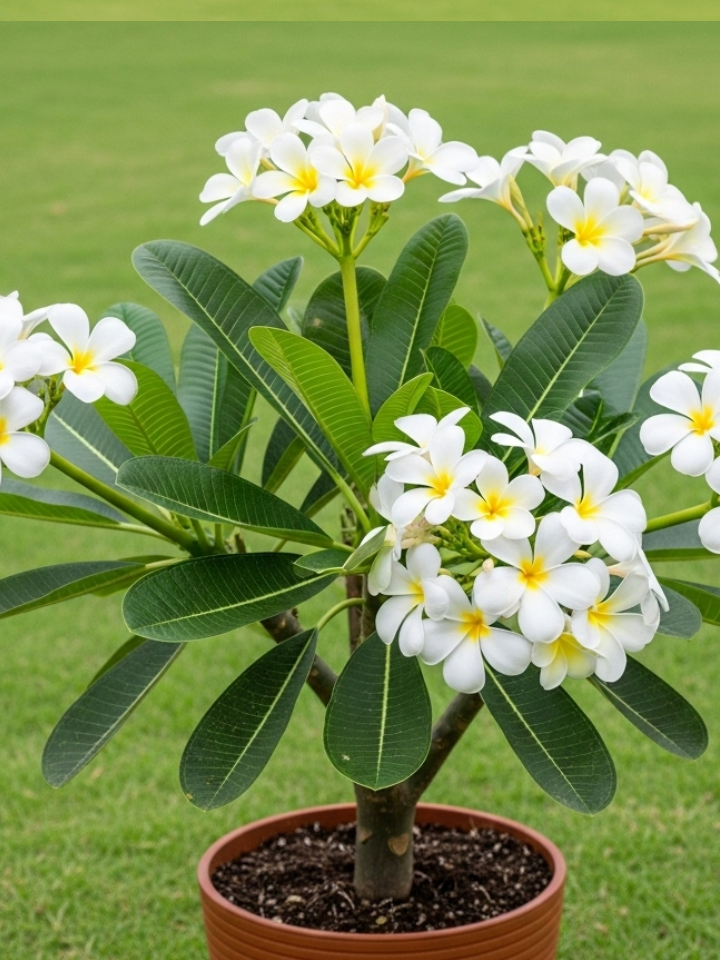
Kunda rests when the summer flowers take over, so plan around it. The summer-flowering mogra with its double white blooms carries the scent through April to July. For the rains, add jui, the rainy-season jasmine that twines up a grille. Where you have ground space, a champa tree for summer scent stands bare in winter just as kunda comes into flower, and the two share a sunny bed well.
Bring home the winter jasmine
Order a Kunda plant now and it has the autumn to settle in and set buds before its season starts. For a wider mix of blooms, browse our white flower plants in India and colourful bloomers for every month.



































There are no reviews yet.