Tulsi is Ocimum tenuiflorum, still widely listed under its older name Ocimum sanctum. It belongs to the mint family, Lamiaceae, and is a close cousin of the sweet basil used in Italian cooking. It is native to the Indian subcontinent and South-East Asia, and it has been grown beside Indian homes and temples for thousands of years.
What you will notice:
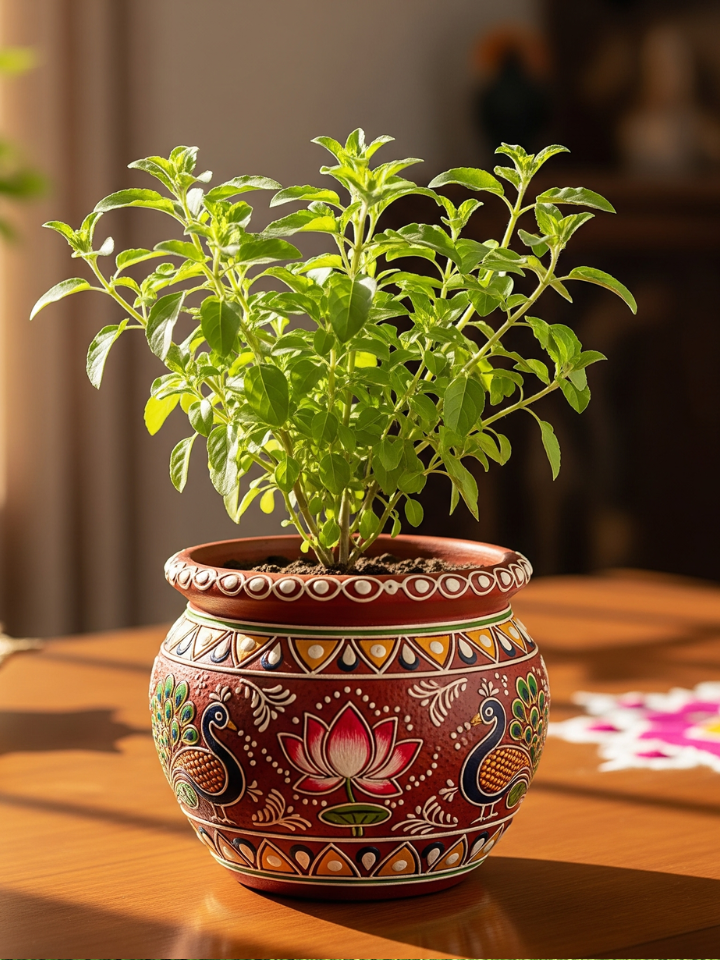
- Leaves. Oval, soft and slightly fuzzy, up to about 5 cm long, with gently toothed edges. Rub one and it releases a warm, peppery scent with hints of clove.
- Stems. Green and tender at first, turning woody at the base as the plant ages.
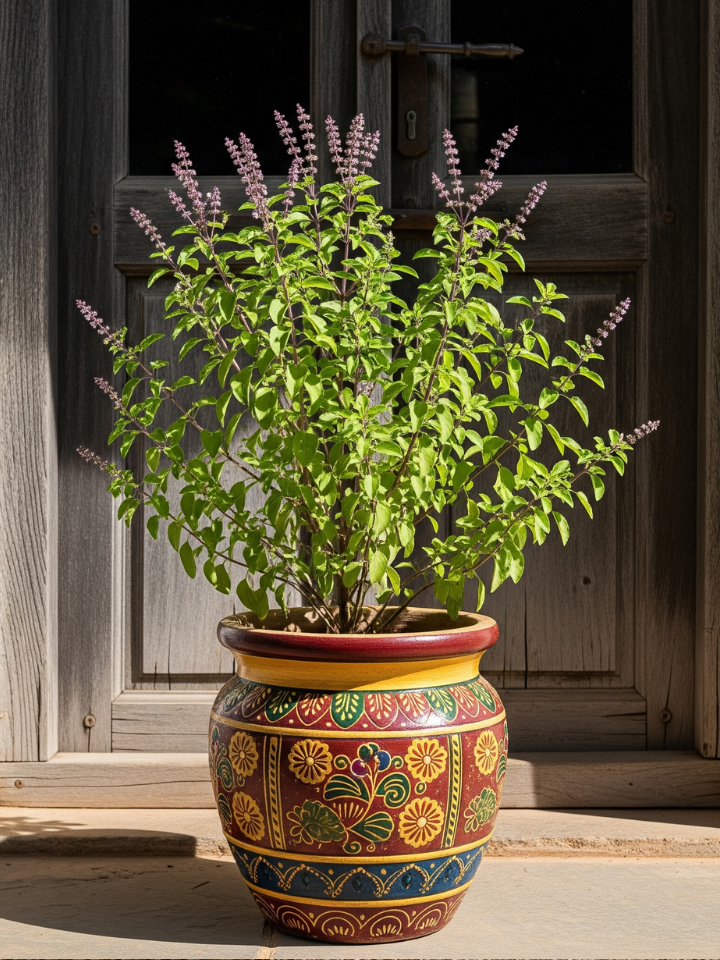
- Flowers. Small, pale purple flowers in slim spikes at the tips of the branches. In Bengal these spikes are called manjari.
- Habit. An upright, branching shrublet, usually 30–60 cm tall in a pot.
Rama tulsi, Krishna tulsi and Vana tulsi: which one is this?
Three types are commonly grown in India:
- Rama tulsi. Bright green leaves and green stems with a mild, slightly sweet aroma. This is the most common tulsi in Indian homes, and the plant supplied here.
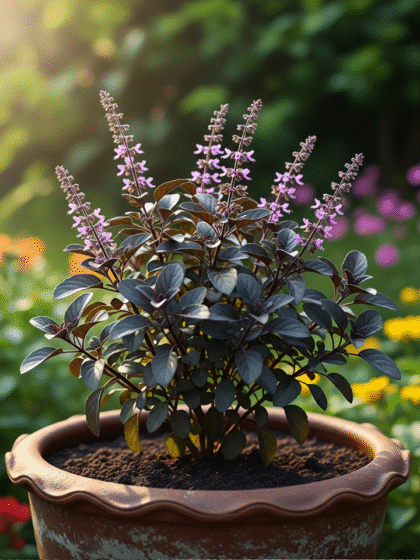
- Krishna or Shyama tulsi. Purple-tinged leaves and dark stems, with a sharper, more peppery scent. If that is the look you want, choose Krishna tulsi with its purple-tinged leaves instead.
- Vana tulsi. A wilder, taller type with a strong, lemony scent, less often kept in pots.
All three need the same care. Many families keep a green and a purple plant side by side.
Where should you keep a tulsi plant at home?
The best place is simply the sunniest spot you have. Good choices include:
- A courtyard or tulsi mancha. The traditional home for holy basil in Bengal. A raised brick or cement stand keeps the roots above rainwater and the plant in full view.
- A south- or east-facing balcony. It is one of the easiest herbs among plants for a sunny balcony as long as it gets at least four hours of direct light.
- A terrace or rooftop. Excellent, but give young plants some afternoon shade in May and June.
- Near the main door or in the north-east, if you follow Vastu. See the tradition section below.
- Not deep indoors. In a dim room tulsi turns leggy, drops leaves and usually dies within weeks.
Can tulsi grow indoors?
Only on a very bright windowsill that gets direct sun for at least four hours a day, and even then it grows more slowly than outdoors. A room lit only through curtains, or a puja room without a window, is too dark. If you want tulsi inside for a puja or festival, bring it in for the day and return it to the sun by evening.
Product Specifications
- Plant name: Tulsi (Holy Basil) Plant
- Botanical name: Ocimum tenuiflorum (syn. Ocimum sanctum)
- Common names: Tulsi, tulasi, holy basil; Rama tulsi for the green type
- Plant family: Lamiaceae (mint family)
- Origin: Indian subcontinent and South-East Asia
- Plant type: Aromatic herb; short-lived perennial shrublet
- Variety: Rama tulsi (green leaves)
- Propagation of supplied plant: Seedling
- Leaves: Oval, soft, slightly hairy, up to about 5 cm long, strongly aromatic
- Flowers: Small, pale purple, on slender spikes (manjari)
- Growth habit: Upright, branching and bushy when pinched
- Growth rate: Fast in warm weather; slow in winter
- Mature size: About 30–60 cm in a pot; up to about 1 m in open ground
- Lifespan: Usually 2–3 productive years; self-seeds readily
- Suitable placement: Courtyard, tulsi mancha, sunny balcony, terrace, garden bed, main entrance; outdoors or a very sunny windowsill only
- Light requirement: Full sun; at least four hours of direct sun daily, ideally six
- Water requirement: Moderate; water when the top 2–3 cm is dry; no waterlogging
- Soil requirement: Light, well-drained loam with compost; sand or cocopeat for drainage
- Temperature: Thrives in warm weather; suffers below about 10 °C; not frost-hardy
- Fertiliser: Compost or vermicompost every 4–6 weeks from March to October
- Maintenance: Low; regular pinching of flower spikes and tips
- Common pests and problems: Aphids, whitefly, lace bug, mealybug, caterpillars, root rot in waterlogged soil, winter leaf drop
- Difficulty level: Easy, with enough sun
- Suitable environment: Warm plains, coast and hills across India; needs winter protection in the north
- Safety: Holy basil is not listed by the ASPCA; not classed as pet-safe
How do you care for a tulsi plant in a pot?
- Soil. Use a light, free-draining mix: two parts garden soil, one part compost or well-rotted cow dung manure and one part coarse sand or cocopeat. Tulsi hates heavy clay that stays wet.
- Watering. Water when the top 2–3 cm dries out. In April and May that may be daily; in the monsoon, perhaps once a week or less. Always empty the saucer.
- Pinching. Pinch out the manjari as they appear, and nip the tip of each stem just above a pair of leaves. This keeps the plant bushy and stops it from putting its energy into seed. Many families offer the pinched manjari at the puja.
- Harvesting. Pick leaves from the top rather than stripping the lower stems bare. A healthy plant regrows fast in warm weather.
- Feeding. A handful of compost or vermicompost every four to six weeks from March to October is plenty. Avoid strong chemical fertilisers; they bring soft, pest-prone growth.
- Repotting. Move it to a pot one size larger each year, ideally in February–March or at the start of the monsoon. Tulsi sits comfortably among medicinal plants in pots that share a sunny ledge.
How long does a tulsi plant live?
Tulsi is a short-lived perennial. With pinching and good light, a potted plant usually stays productive for about two to three years before its stems turn thick and woody and it yields fewer leaves. Let one or two manjari ripen and dry on the plant. The seeds fall into the pot and sprout as new seedlings, so an old tulsi can be replaced by its own offspring. You can also root 10–15 cm cuttings in moist soil during the monsoon.
A year with tulsi in Bengal
Our holy basil grows in the warm, humid Kolkata climate, and these timings suit most of the eastern plains.
February to April: fresh growth. New shoots appear as the days warm. Repot, add compost and start pinching. In Boishakh, many Bengali households hang a small earthen pot (jhara) with a hole in its base above the tulsi mancha so that water drips onto the plant through the hottest weeks.
May to June: heat. Water deeply in the morning. Young plants on an open roof appreciate light afternoon shade.
July to September: monsoon. The riskiest season. Water sparingly, raise the pot on bricks and never let it sit in rainwater. Cut back any leggy stems by a third.
October to November: Kartik and Tulsi Vivah. The plant is at its fullest. Many homes light an evening lamp beside it through Kartik, and the month closes with Tulsi Vivah.
December to January: the cool season. Growth slows and some leaves may darken. In north India, move the pot to the warmest sunny wall, cover it on frosty nights and water far less.
Why is my tulsi plant drying, turning black or dying?
- Leaves drying and dropping in winter. Cold, wet soil. Water only when the soil is dry, give it the sunniest spot and shelter it from cold wind at night. It usually recovers in spring.
- Black stems at the base, wilting in the rains. Root or stem rot from waterlogging. Cut out soft stems, repot into drier, sandier soil and water much less.
- Yellow lower leaves. Usually overwatering; sometimes a hungry plant. Check drainage first, then add compost.
- Tall, thin stems with few leaves. Too little sun, or the flower spikes were left on. Move it into brighter light and pinch back.
- Curled, sticky or speckled leaves. Aphids, whitefly or lace bugs, which feed under the leaves. Spray neem oil every seven to ten days until they clear.
- White, cottony clusters. Mealybugs. Dab with neem oil or wipe them off, and check where leaves meet the stem.
- Holes and rolled leaves. Caterpillars or leaf rollers. Pick them off by hand.
Does tulsi give oxygen 24 hours a day?
No. This is a popular belief, but like almost every garden plant, tulsi releases oxygen in daylight and takes in a little oxygen at night. A single pot also makes no measurable difference to the air in a room: a 2019 review by Cummings and Waring found that it would take hundreds of plants per square metre to match ordinary ventilation. Grow tulsi for its fragrance, its place in the home and its leaves, not as an air purifier.
Tulsi in tradition and Vastu
For many Hindu families, tulsi is the most sacred plant in the house. It is worshipped morning and evening, watered after the daily bath, and married to Lord Vishnu (as Shaligram) on Tulsi Vivah in Kartik. Its wood is carved into the beads of tulsi malas. Vastu tradition generally favours the north, north-east or east of a home, or the centre of the courtyard, and it is one of the most widely chosen plants for home as per vastu. A guide to where Vastu tradition places the tulsi in a home covers the common beliefs about direction. These are traditional beliefs, not claims about what the plant does.
The leaves are also added to tea and kadha in many homes and have a long history in Ayurveda. That is tradition, not medical advice. Please speak to a doctor before using any herb as a remedy, especially during pregnancy or alongside medication.
Is the tulsi plant safe around children and pets?
The plant has no thorns and no irritating sap, and its leaves are part of everyday Indian life, which makes it an easy family plant. The ASPCA lists sweet basil as non-toxic to dogs and cats, but it has no separate entry for holy basil, so we do not class tulsi as pet-safe. Keep pets from grazing on it, and wash your hands after pinching manjari if you have sensitive skin.
What to plant with tulsi
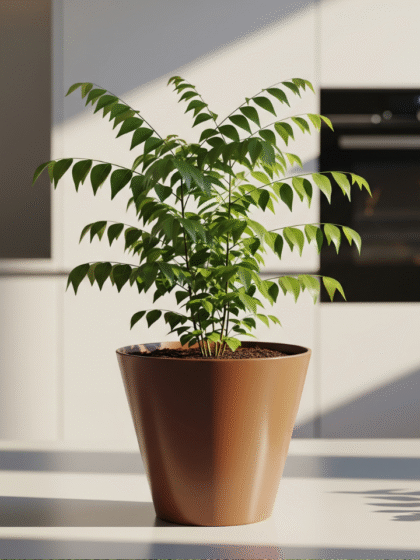
A kitchen-garden corner of herbs is the natural setting for holy basil. Add a kari pata plant for the tadka pan in full sun beside it, and keep a pot of pudina for the shadier sill, since mint prefers more moisture than tulsi. If you have room on the roof, plant Indian gooseberry for a terrace drum, a traditional companion for tulsi in Indian courtyards.
Bring home a healthy tulsi this season
Order now and your plant can settle in before Kartik and Tulsi Vivah. Every tulsi is raised and packed at our own nursery in West Bengal, and you can buy nursery plants online straight from the family that grows them. Give it your sunniest spot and a pot that drains, and you will be picking fresh leaves within weeks.

































There are no reviews yet.