It is a deciduous small tree from the dogbane family, Apocynaceae, native to Mexico, Central America and northern South America and grown across India for centuries. In Bengal it is golok champa or kath golap, the "wooden rose"; in Hindi it is champa or gulachin; and because it grows around shrines across South and South-East Asia, it is also called the temple tree.
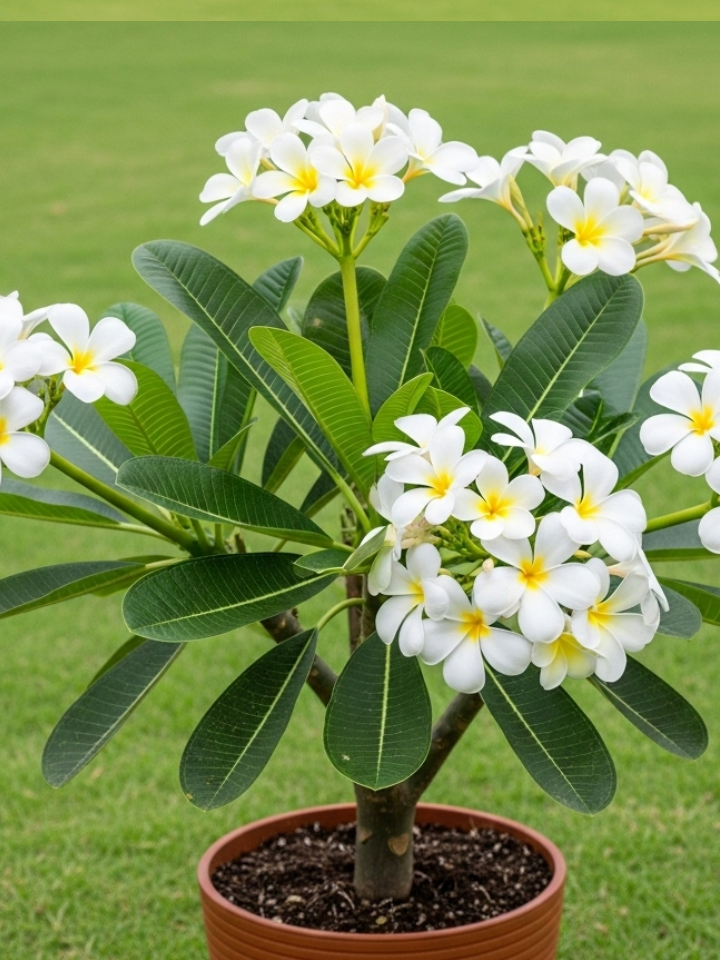
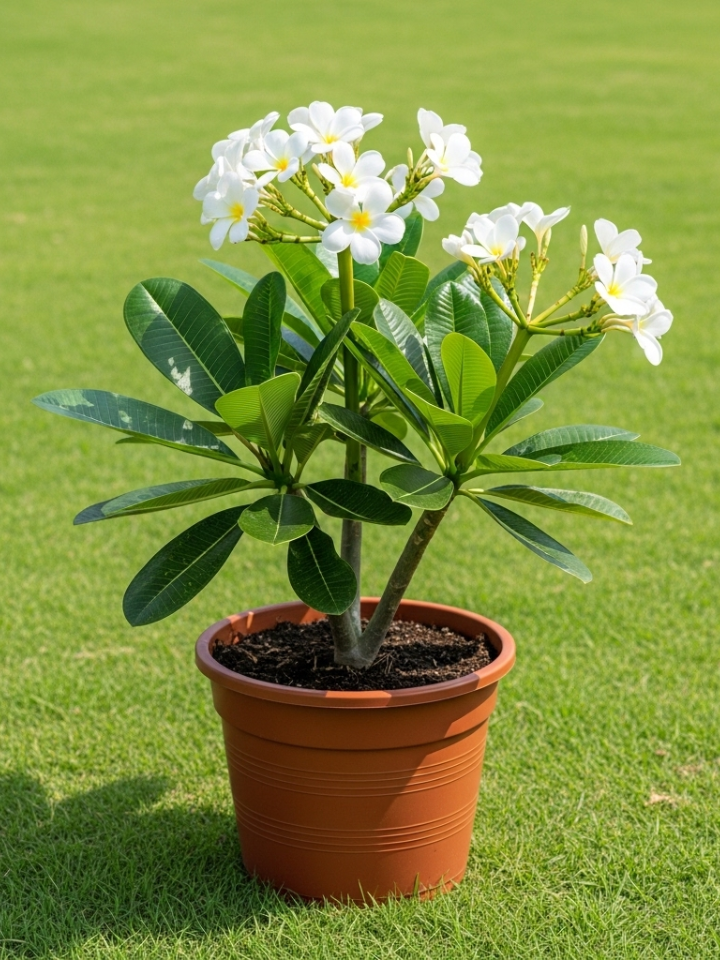
The branches are thick, grey and slightly succulent, forking into an open, umbrella-like crown. Long, leathery leaves, 20–40 cm, gather in whorls at the tips of each branch, so a young plant looks sculptural even before it flowers. Snap a leaf or twig and a white, milky latex runs out, which is normal for the family.
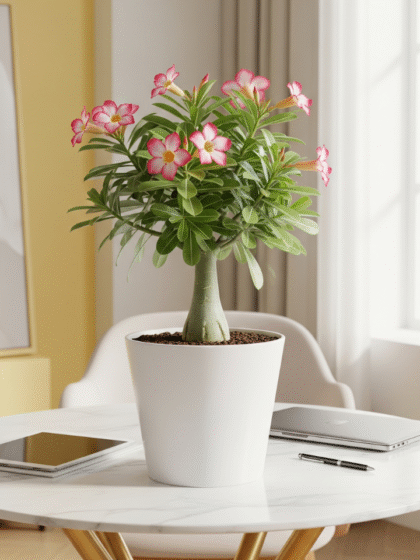
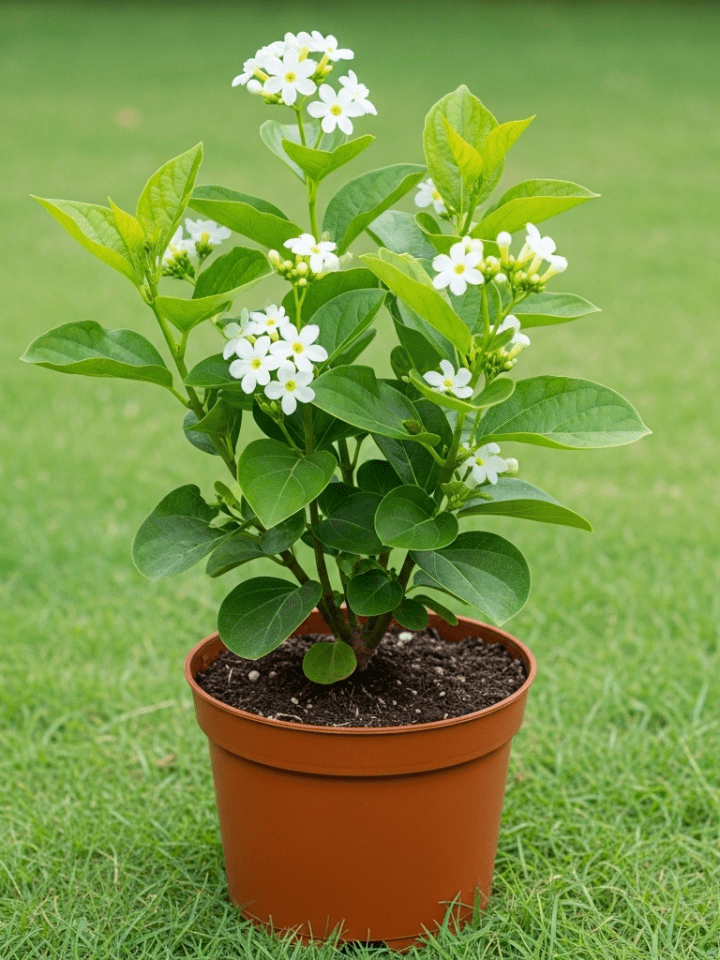
The flowers are the reason people buy it. Each one has five thick, waxy petals that overlap like a pinwheel, pure white with a warm yellow centre on the classic form, held in clusters of a dozen or more at the branch ends. The fragrance is rich and sweet, with notes of citrus and spice, and it is strongest in the early morning and evening. Fallen flowers stay fresh for hours, which is why they are gathered for puja, hair and floating bowls.
What it is not: an indoor plant or a climber. It needs outdoor sun, and its branches grow upright rather than twining.
Where does a champa plant grow best?
In full sun with room to spread. On a rooftop it is one of the best big plants for terrace corners, because a single tree in an 18-inch pot gives shape, shade and scent without taking over. In a garden it can go straight into the ground, where it slowly becomes a small tree, 3–6 m tall over many years.
Because it tolerates heat, dry spells and hard sunlight, it sits comfortably among large outdoor potted plants for a courtyard, gate or driveway. A pair on either side of an entrance is a common sight in Bengal. It is not suited to a shaded balcony or a north-facing window; with less than five hours of sun it grows leggy and rarely flowers.
Product Specifications
- Plant name: Plumeria (Champa) Plant
- Botanical name: Plumeria rubra type
- Also known as: Champa, golok champa, kath golap, gulachin, frangipani, temple tree
- Plant family: Apocynaceae (dogbane family)
- Plant type: Deciduous flowering small tree or large shrub
- Foliage: Long, leathery, oval leaves clustered at branch tips; shed in winter
- Flowers: Five waxy petals, white with a yellow centre, in clusters
- Fragrance: Strong and sweet, strongest in the morning and evening
- Flowering season in India: Spring to autumn, heaviest in summer; leafless and flowerless in winter
- Growth habit: Upright, branching, forming an umbrella-shaped crown; not a climber
- Growth rate: Slow to moderate
- Propagation: Stem cuttings or grafting
- Suitable placement: Sunny terrace, rooftop, courtyard, entrance, driveway or garden bed; outdoors only
- Light requirement: Full sun, six hours or more of direct sun
- Water requirement: Low to moderate; water when the top two inches dry; minimal in winter
- Soil requirement: Gritty, fast-draining mix with sand or brick chips; no waterlogging
- Fertiliser: Phosphorus-rich feed monthly from March to September
- Temperature: Loves heat; happiest above about 15 °C; rests in cool winters
- Difficulty level: Easy
- Suitable environment: Hot, sunny climates; well suited to Bengal and most of the Indian plains and coasts
- Pet and child safety: Not pet-safe; not listed by the ASPCA. Milky sap is an irritant if chewed and can irritate skin and eyes
How do you grow champa in a pot?
- Light. Six or more hours of direct sun. The more sun, the more flower clusters.
- Water. Water deeply, then wait until the top two inches are dry. In summer that may be every two or three days; in the rains, only when the soil dries; in winter, when the plant is leafless, a splash every two to three weeks is enough.
- Soil. A gritty, fast-draining mix: two parts garden soil, one-part coarse sand or brick chips and one part compost. Soggy roots are the main cause of champa losses.
- Pot. Start in a 12–14 inch pot with a large drainage hole and move up to 18–24 inches as it grows. Heavy terracotta or cement keeps a top-heavy plant from tipping.
- Feeding. Once a month from March to September, use a fertiliser higher in phosphorus than nitrogen, or bone meal with compost. Too much nitrogen gives leaves instead of flowers.
- Pruning. Prune in late winter, before new leaves appear. Each cut branch usually forks into two, giving a fuller crown with more flowering tips. Wear gloves, because the sap irritates skin and eyes.
- Propagation. Cuttings root easily. Let a 30 cm cutting dry in the shade for a week until the cut end seals, then plant it in dry, sandy mix and water only after new leaves appear.
When does champa flower? A year with it in Bengal
These notes come from raising these trees at our nursery in Kolkata.
Spring, March to April. New leaves push out from bare branch tips, often with the first flower clusters close behind. Resume regular watering and start feeding.
Summer, May to June. Flowering hits its stride. Champa is one of the most reliable summer flowering trees for pots, shrugging off 40 °C heat as long as the roots are not waterlogged.
Monsoon, July to September. Flowering continues, but this is the risky season. Keep the pot raised on feet, skip watering after heavy rain and watch for orange rust spots under the leaves.
Autumn and winter, October to February. Flowers thin out after the Puja season, leaves yellow and fall, and the plant stands bare until spring. This is natural dormancy, not dying. Keep it dry and sunny and do not feed.
Why is my champa plant not flowering or dropping leaves?
- No flowers. Usually too little sun, too much nitrogen or a young cutting. Move it into full sun and switch to a phosphorus-rich feed.
- Leaves yellowing and falling in winter. Normal dormancy for the deciduous type. New leaves return in spring.
- Leaves falling in summer or the rains. Overwatering or a pot that does not drain. Let the soil dry out and check the drainage hole.
- Orange powder under the leaves. Plumeria rust, common in humid weather. Remove affected leaves, clear fallen ones and improve airflow.
- Soft, black or shrivelled stem. Stem rot from wet soil. Cut back to firm, healthy wood and keep the plant dry.
- White cotton on stems, or sticky leaves. Mealybugs or whitefly. Spray diluted neem oil weekly for three weeks.
Champa in Vastu and tradition
In Vastu practice, a champa tree is usually placed in the east or north-east of a garden, or beside the main gate, and is linked with calm and good fortune. These placements are modern convention rather than classical text, and a round-up of vastu plants outside house gardens explains the reasoning by direction. The tree's place in worship is older: it grows in temple courtyards across India and South-East Asia, and its flowers are offered at temples and household shrines. If you want to see how it fits alongside other garden plants through the year, this guide to which outdoor plants suit each Indian season is a useful companion.
Is the champa plant safe for pets and children?
No, not fully. The ASPCA does not list plumeria either way, but its milky sap is a known irritant. A dog or cat that chews the leaves, bark or flowers may drool, vomit or have diarrhoea, and the effects are usually mild. The sap can also irritate skin and eyes. Keep it where pets and small children cannot chew it, and wear gloves when pruning.
Companions for a fragrant champa corner
The tree is bare in winter, so pair it with plants that flower when it rests. A compact kunda jasmine for winter flowers keeps the scent going from December to February. For autumn mornings, plant shiuli (parijat), whose orange-stemmed flowers carpet the ground just as its own flowering slows. Beneath a tree planted in the ground, rain lilies to fill the bare soil beneath flower every time the monsoon rains arrive.
Bring home the scent of a temple garden
Order a Plumeria (Champa) today and give it the sunniest spot you have. Our online garden store is run by the growers themselves, so your plant is raised, packed and shipped by the same family nursery and arrives rooted and ready for the season.
































There are no reviews yet.