The plant sold in India under this name is Gardenia jasminoides, an evergreen shrub from the coffee family, Rubiaceae. It is native to southern China, Japan and Vietnam, and has been grown in Indian gardens for generations. In English it is also called cape jasmine, although it is not a true jasmine. In Bengali it is gandharaj, which means "king of fragrance", and in Hindi it is often called gandhraj.
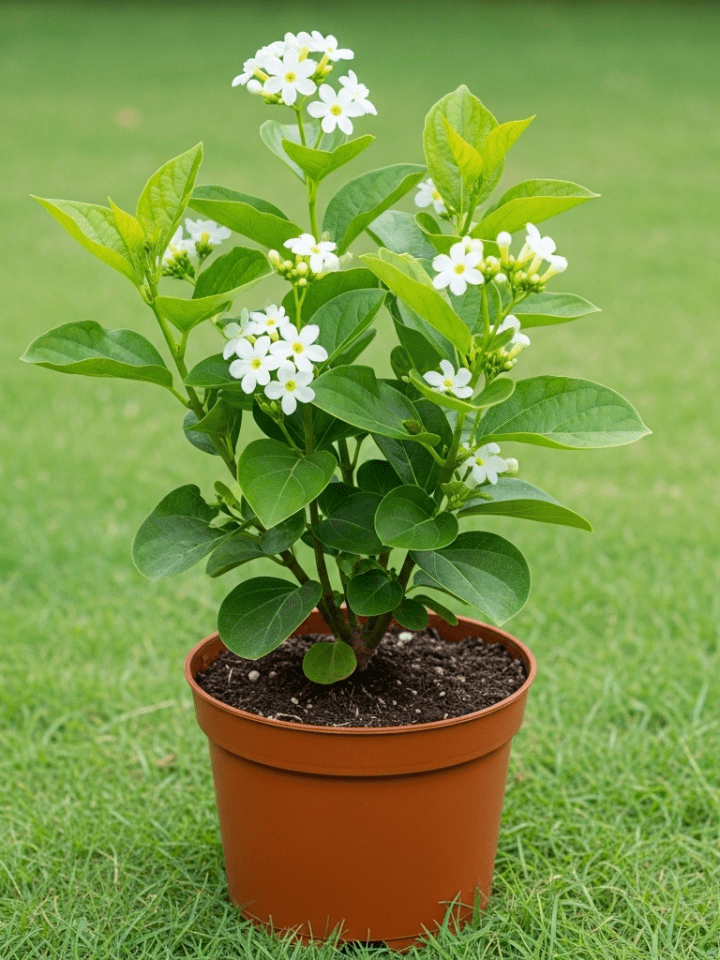
It forms a dense, rounded bush of thick, leathery leaves, 5–10 cm long, with a high gloss and clear veins. The flowers are 5–8 cm across, pure white and waxy, with petals that overlap like a small rose in the double form most Indian nurseries grow. Each bloom opens white, turns cream on the second day and pale yellow by the third. That colour change is normal and is part of the plant's charm.
The scent is the reason people buy it. It is sweet, heavy and slightly fruity, and a single open flower can perfume a room. Bengali homes have long picked these blooms for the puja plate and to float in a bowl of water. Its season falls with the summer blooming flowers of April and May, and it carries on into the first weeks of the rains.
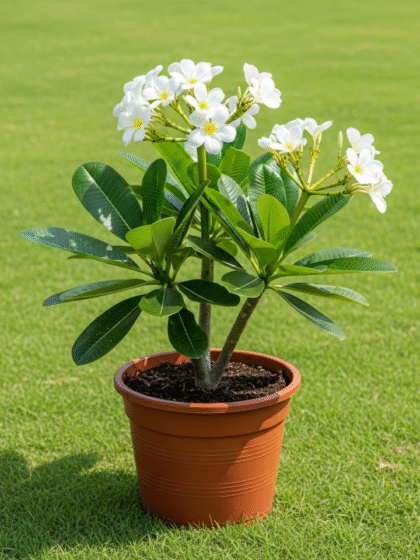
How to tell it from crape jasmine. Crape jasmine, sold as chandni or tagar (Tabernaemontana divaricata), is sometimes labelled "gardenia". Its flowers are thinner and pinwheel-shaped, its fragrance is faint, and a broken leaf oozes milky sap. True gandharaj has thick, layered petals, a strong perfume and no milky sap.
Where should you place a gardenia?
Somewhere bright and airy, where you will walk past the flowers. Gardenia is an outdoor shrub in India.
It is not an indoor plant here. Indoors it drops its buds and stops flowering within weeks. To enjoy the scent inside, cut an open flower and float it in a bowl of water. Because it is mildly toxic if eaten, keep it where pets cannot chew it.
Product Specifications
- Plant name: Gardenia (Gandharaj) Plant
- Botanical name: Gardenia jasminoides
- Common names: Gardenia, gandharaj (Bengali), gandhraj (Hindi), cape jasmine
- Plant family: Rubiaceae (coffee family)
- Origin: Southern China, Japan and Vietnam
- Plant type: Evergreen flowering shrub
- Foliage: Glossy, leathery, deep green leaves, 5–10 cm long
- Flower: White and waxy, 5–8 cm across, fading to cream and pale yellow ·
- Fragrance: Strong, sweet scent, most noticeable in the evening
- Flowering season in India: Mainly April to July; heaviest in May and June
- Growth habit: Upright, dense and rounded
- Suitable placement: Bright balcony, terrace, garden bed, entrance or large pot outdoors
- Light requirement: Four to six hours of direct sun, ideally morning; afternoon shade in peak summer
- Water requirement: Moderate to high; keep evenly moist, never waterlogged
- Soil requirement: Slightly acidic (pH about 5.0–6.5), rich and well-drained
- Temperature: Grows best between 18 °C and 32 °C; tolerates short spells of heat with shade and water; protect below about 5 °C
- Fertiliser: Feed for acid-loving plants, or a half-strength balanced feed, every 3–4 weeks from March to September
- Maintenance: Moderate; steady watering, acid feeding and light pruning after flowering
- Difficulty level: Moderate
- Suitable environment: Warm, humid Indian plains and coastal regions, with sun and some afternoon shade. Not suited to indoor rooms.
- Pet safety: Mildly toxic to dogs, cats and horses (ASPCA)
How do you care for a gardenia?
- Sunlight. Four to six hours of direct sun a day. Morning sun is ideal. In the plains from April to June, give it shade after about 1 pm, or the leaves scorch and the buds drop.
- Watering. Keep the mix evenly moist but never soggy. Water when the top 2 cm feels dry. In May that can mean daily watering for a pot; in winter, every three or four days. Rainwater, or tap water left to stand overnight, is best, because hard water slowly makes the mix alkaline.
- Soil. It needs a slightly acidic mix, around pH 5.0 to 6.5, that drains well. Mix equal parts garden soil, leaf mould or compost, and cocopeat, with a handful of coarse sand. Avoid lime, wood ash and heavy doses of eggshell.
- Feeding. Feed every three to four weeks from March to September with a fertiliser for acid-loving plants, or a balanced feed at half strength. A diluted, well-fermented mustard cake liquid feed also works well. Stop feeding in winter.
- Pruning. Trim lightly right after the main flowering ends, in July or August. Do not prune in autumn or winter, or you cut off next year's flowering shoots.
- Repotting. Move it to a pot one size larger every two years, in February or March. A 30–35 cm pot suits a mature plant.
When does gardenia flower in India?
Mainly from April to July. Buds form in late winter and early spring, the first flowers open in April, and the heaviest flush comes in May and June. In Bengal, flowering often continues into July, with an occasional late bloom in the rains. In cooler hill regions it flowers a little later, and in very hot, dry parts of north India the season is shorter.
A healthy plant carries dozens of flowers in a good season. Each bloom lasts two or three days on the bush, so new buds keep the show going for weeks.
A year with gandharaj in Bengal
These notes come from growing the gandharaj we raise in Kolkata, a short drive from Kolkata.
March to May: buds and first flowers. Buds swell as the days warm, and the first blooms open by April. Feed regularly and water often. In May, a pot on an open terrace may need water every day, and some afternoon shade.
June to September: the rains. Flowering peaks in June and tails off through July. The monsoon suits gardenia's love of humidity, but heavy rain washes nutrients out of the pot and can waterlog it. Make sure water drains freely, feed again after long spells of rain, and trim lightly once the flowers finish.
October to November: building next year's shoots. New growth firms up in the mild weather. Keep watering steadily and give a last light feed in October. Do not prune now.
December to February: rest. Growth slows. Water less, stop feeding and keep the plant in the sun. In Bengal it stays green all winter. In north India, move pots out of cold wind when nights fall below about 5 °C.
Why is my gardenia not doing well? Common problems and fixes
- Yellow leaves with green veins. The soil is too alkaline, so the plant cannot take up iron. Water with rainwater, add an iron chelate or ferrous sulphate as the label directs, and top-dress with leaf mould or compost.
- Buds turning brown and dropping before they open. Usually dry soil, a sudden move, a hot afternoon in full sun or too little light. Keep watering steady and leave the plant in one place while in bud.
- Older lower leaves turning yellow and falling. A few at a time is normal leaf renewal. Many at once points to overwatering or a pot without drainage.
- Black, sooty coating on leaves. Sooty mould growing on the honeydew left by aphids, mealybugs, whitefly or scale. Treat the pests with neem oil every week for three weeks, then wipe the leaves clean.
- White, cottony clusters in leaf joints. Mealybugs. Dab them with cotton dipped in rubbing alcohol, then spray neem oil.
- Healthy leaves but no flowers. Too much shade, pruning at the wrong time, or too much nitrogen fertiliser.
Is gardenia safe for pets and children?
No, though the risk is mild. The ASPCA lists gardenia as toxic to dogs, cats and horses because of geniposide and gardenoside. Eating the leaves or flowers can cause vomiting, diarrhoea and hives. Serious poisoning is rare but keep the plant where pets and small children cannot chew it, and call a vet or doctor if they eat any part of it. The plant is not for eating or home remedies.
If a cat or dog shares your balcony, mogra, which the ASPCA lists as safe for cats and dogs, gives white summer flowers and a strong scent without that risk.
What to grow with gardenia
This shrub fills early summer with perfume, so pair it with plants that flower in other seasons or add colour. An Indian red rose for colour beside the white blooms enjoys the same sun and the same rich soil. When its flowering ends, plant parijat to scent the autumn nights after gandharaj has finished.
Fragrance for your summer evenings
Order your Gardenia (Gandharaj) Plant now and it will settle in well before the next flowering season. We raise every plant at our own nursery and pack it upright to protect its buds and leaves. Looking for more colour and scent? Browse our range of beautiful flower plants for home gardens, balconies and terraces.



































There are no reviews yet.