Jackfruit is Artocarpus heterophyllus, a tropical evergreen tree of the mulberry and fig family, Moraceae. It is believed to have originated in the rainforests of India's Western Ghats and has been grown across South and South-East Asia for thousands of years. It is the national fruit of Bangladesh and the state fruit of Kerala and Tamil Nadu. In Bengali it is kanthal (কাঁঠাল), in Hindi kathal, in Marathi phanas, in Tamil pala, in Malayalam chakka and in Telugu panasa.
What you will notice first:
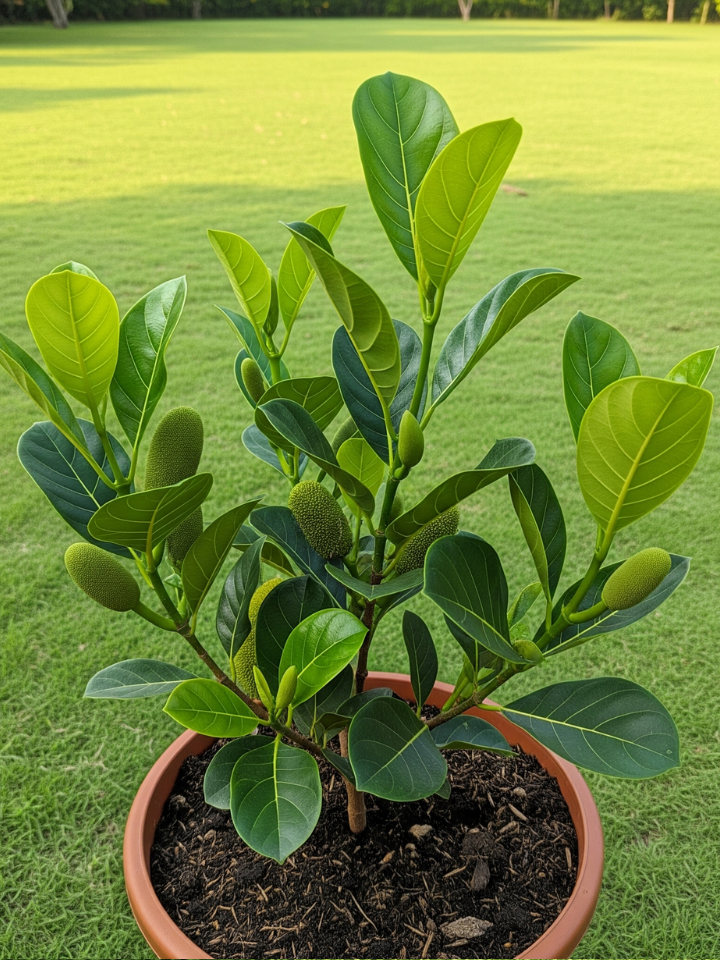
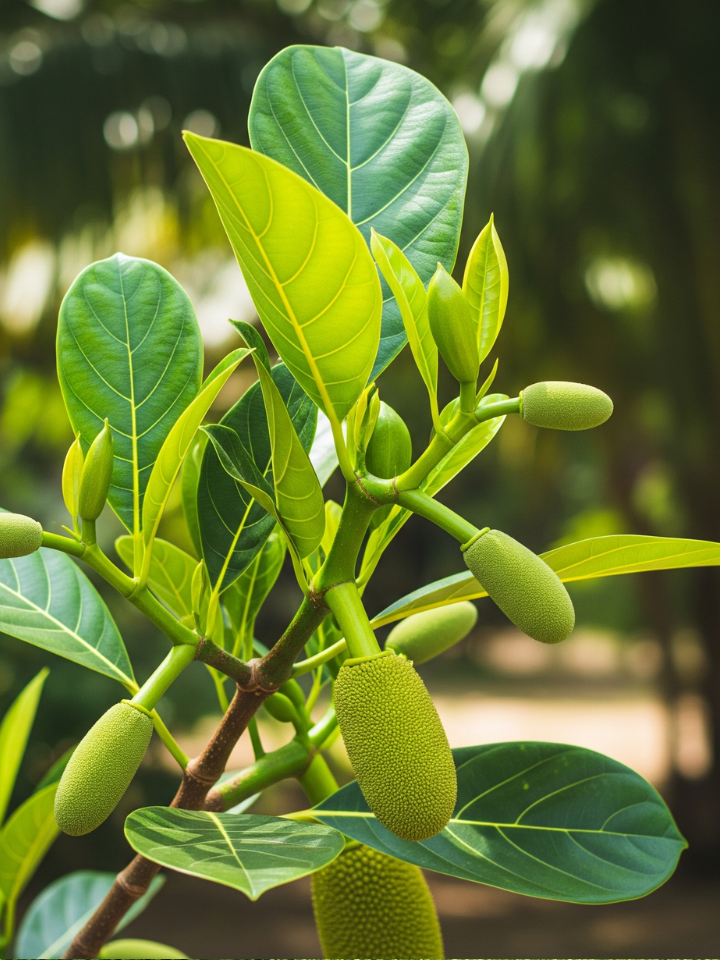
- Leaves. Dark green, glossy and leathery, about 10–20 cm long and oval. Leaves on young seedlings are sometimes lobed, which is where the name heterophyllus ("differently leaved") comes from.
- Trunk and bark. A straight, grey-brown trunk and a dense, rounded crown. Every part of the tree bleeds a sticky white latex when cut.
- Flowers. Small, club-shaped spikes, not petals. Male and female spikes grow on the same tree; the female ones are thicker, with a green ring at the base, and they grow straight out of the trunk and main branches.
- Fruit. Huge, oval and green to yellowish-brown, with a bumpy, spiky skin. A mature fruit often weighs 5–20 kg, and exceptional ones far more. Inside are dozens of sweet, golden bulbs (called koa in Bengali), each around a large brown seed.
Why grow a jackfruit tree at home?
- A summer harvest of your own. Ripe kathal for eating fresh, young green fruit (echor) for curry, and seeds for roasting or cooking.
- Food for every stage of the fruit. Very few trees give you a vegetable in spring and a sweet fruit in summer from the same branch.
- Generous shade. The dense evergreen crown cools a courtyard, a house wall or a cattle shed through the hottest months.
- Fast and long-lived. It grows quickly in warm, humid weather, and a healthy tree keeps bearing for decades.
- Deep roots in Bengali life. Kathal sits beside mango and lichi on the Jamai Sasthi plate, and a family jackfruit tree is often the pride of a village homestead.
Where should you plant a jackfruit tree?
Sun, space and drainage matter more than anything else. A jackfruit tree suits:
- A garden, courtyard, farmhouse or boundary. Open ground is its natural home. Leave 6–8 m from the house, the boundary wall and other large trees, because both the crown and the roots spread wide. If you are looking for the best tree for shade in India that also puts food on the table, few can match it.
- A sunny rooftop, in a half-drum. Only for an early-bearing grafted type, and only with pruning. Among plants good for terrace gardens in India, jackfruit is one of the heaviest, so use a half-drum at least 60 cm deep, stand it on bricks so it drains, and check that the roof can carry the weight of wet soil and fruit. Expect a smaller crop than a tree in the ground.
- Not on a balcony, and not indoors. The tree needs direct sun, open air and room for deep roots.
Can you grow a jackfruit plant in a pot?
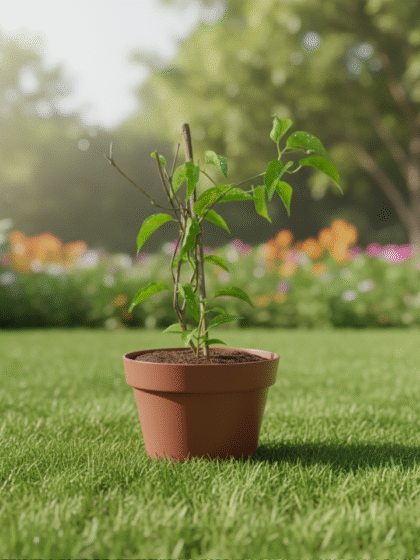
For a year or two, yes; for life, only in a very large container. A grafted sapling can be grown in a large pot while it settles, then moved to a half-drum or the ground.
- Container. Start in a 16–18 inch pot. Within a year move it to a half-drum or a 24-inch grow bag with drainage holes.
- Soil. Mix two parts garden loam, one part well-rotted cow dung manure or compost and one part coarse sand. Add a handful of neem cake. Heavy, sticky clay that stays wet is the most common cause of root rot.
- Watering. In April and May a container tree may need water every day. In the rains, water only when the soil dries and make sure the drum never holds water.
- Pruning. Pinch the tip at about 75–90 cm so the sapling forms three or four strong main branches. Keep the tree to about 3–4 m in a drum.
- Moving it later. Jackfruit dislikes root disturbance once it is large, so decide early whether it will stay in the drum or go into the ground.
Product Specifications
- Plant name: Jackfruit Plant (Kathal / Kanthal)
- Botanical name: Artocarpus heterophyllus
- Common names: Jackfruit, kathal (Hindi), kanthal (Bengali), phanas (Marathi), pala (Tamil), chakka (Malayalam), panasa (Telugu), halasu (Kannada)
- Variety: [CONFIRM: e.g. Vietnam Super Early, gumless, red-fleshed, or local khaja or gala]
- Plant family: Moraceae (mulberry and fig family)
- Origin: Western Ghats of India; grown across South and South-East Asia
- Plant type: Evergreen tropical fruit tree
- Foliage: Glossy, dark green, leathery oval leaves about 10–20 cm long; young seedling leaves sometimes lobed
- Flowers: Small club-shaped spikes, male and female on the same tree, borne on the trunk and main branches
- Flowering season in India: About December to February on the plains
- Fruiting season in India: Green fruit (echor) from about March; ripe fruit from about May to July
- Years to first fruit: About three to four years for grafted plants; seven years or more for seedlings
- Fruit: Large, oval, spiky green to yellowish-brown skin; sweet golden bulbs around large seeds; often 5–20 kg
- Growth habit: Upright tree with a straight trunk and a dense, rounded crown
- Growth rate: Fast in warm, humid weather
- Mature size: About 3–4 m in a half-drum with pruning; about 4–6 m in the ground with yearly pruning; 10–20 m if left to grow
- Suitable placement: Garden, courtyard, farmhouse, boundary, large sunny terrace in a half-drum (early-bearing grafted types only); outdoors only
- Light requirement: Full sun, at least six hours of direct sun a day
- Water requirement: Moderate; water deeply when the top 5 cm dries; does not tolerate waterlogging
- Soil requirement: Deep, well-drained loam or sandy loam, slightly acidic to neutral
- Temperature: Thrives in warm, humid weather; young plants are damaged by frost and long cold spells
- Fertiliser: Compost or cow dung manure at the start of the monsoon and after harvest; potash-rich feed as fruits swell
- Common pests and problems: Rhizopus fruit rot, shoot and fruit borer, bark-eating caterpillar, mealybug, root rot from waterlogging
- Maintenance: Low to moderate; seasonal feeding, yearly pruning, fruit thinning on young trees
- Difficulty level: Easy in the ground; moderate in a container
- Suitable environment: Warm, humid tropical and subtropical plains and low hills across India; frost-free areas
- Special notes: Sticky white latex in all parts; heavy fruit borne on the trunk and main branches
- Safety: Thornless; not listed by the ASPCA; not classed as pet-safe
How do you care for a kathal tree?
- Sunlight. Full sun all day gives the strongest growth and the best fruit set.
- Watering. Water young plants regularly through their first dry season. Once established, give a deep soak every week or two in summer and hold back in the rains. Never let water pool around the trunk.
- Feeding. Add compost or cow dung manure at the start of the monsoon and again after harvest, and increase the amount each year as the tree grows. A potash-rich feed as the fruits swell helps them fill out.
- Pruning. Prune lightly after harvest. Remove dead, crossing and weak branches, open the centre to light, and cut away any shoots from below the graft joint. Keep the lower trunk clear, because that is where much of the fruit forms.
- Mulch. A thick layer of dry leaves or straw keeps the shallow feeder roots cool and saves water.
- Supporting heavy fruit. On young trees, remove some of the small fruits so the rest can grow to a good size, and support heavy fruits with a cloth sling tied to the branch.
When does a jackfruit tree flower and fruit in India?
On the plains of eastern India, flower spikes appear from about December to February. Many of the male spikes blacken and drop, which is normal. Young fruit sets in February and March, can be picked green as echor in March and April, and ripens from about May to July, depending on the variety and the weather. A ripe fruit gives a dull, hollow sound when tapped, the spikes flatten and spread apart, and a strong sweet smell develops. A grafted sapling usually bears in about three to four years, while a seedling can take seven years or longer.
A year with kanthal in Bengal
Ripe kanthal fills the house with its scent, just in time for Jamai Sasthi in the month Our saplings are raised in the same humid Hooghly climate described here, so these timings hold for most of the eastern plains.
June to August: planting. The monsoon is the best time to plant. Warm, moist soil helps the roots settle quickly. Plant on a slight mound if your garden holds water after heavy rain.
September to November: steady growth. New flushes of glossy leaves appear after the rains. Feed with compost and keep weeds away from the base.
December to February: flowering. Flower spikes appear on the trunk and main branches. Water lightly and keep the soil just moist.
March to April: echor season. Young fruit swells quickly. In many Bengali kitchens this is the time for echorer dalna, a curry made from tender green jackfruit.
May to July: the harvestof Jaistha. Oil your hands and knife before cutting a fruit, because the latex is very sticky.
Why is my jackfruit turning black or dropping?
- Tiny fruits turning black and falling. Often fruit rot caused by the fungus Rhizopus, worse in damp weather. Remove affected fruit, clear fallen spikes from under the tree and improve airflow by pruning. Some drop of poorly pollinated fruit is also natural.
- Holes in shoots and young fruit. Shoot and fruit borer. Cut away damaged shoots and bag young fruits in cloth.
- Webbing and tunnels on the bark. Bark-eating caterpillar. Clear the webbing, clean the hole and seal it; seek local advice if it spreads.
- White fluff on stems and fruit stalks. Mealybugs. Wipe them off and spray neem oil every seven to ten days until clear.
- Yellow leaves and a sick tree after heavy rain. Waterlogging. Improve drainage straight away, because jackfruit roots cannot survive long in wet soil.
Is the jackfruit tree safe around children and pets?
The tree has no thorns and its fruit is everyday food across India. Two cautions matter. First, a ripe fruit can weigh many kilograms, so harvest fruit before it falls and keep play areas away from a fruiting tree. Second, the latex is sticky and can irritate sensitive skin. Jackfruit is not on the ASPCA lists of plants toxic or non-toxic to dogs and cats, so we do not class it as a pet-safe plant. Keep pets from chewing the bark, leaves and fallen fruit.
What to plant with a jackfruit tree
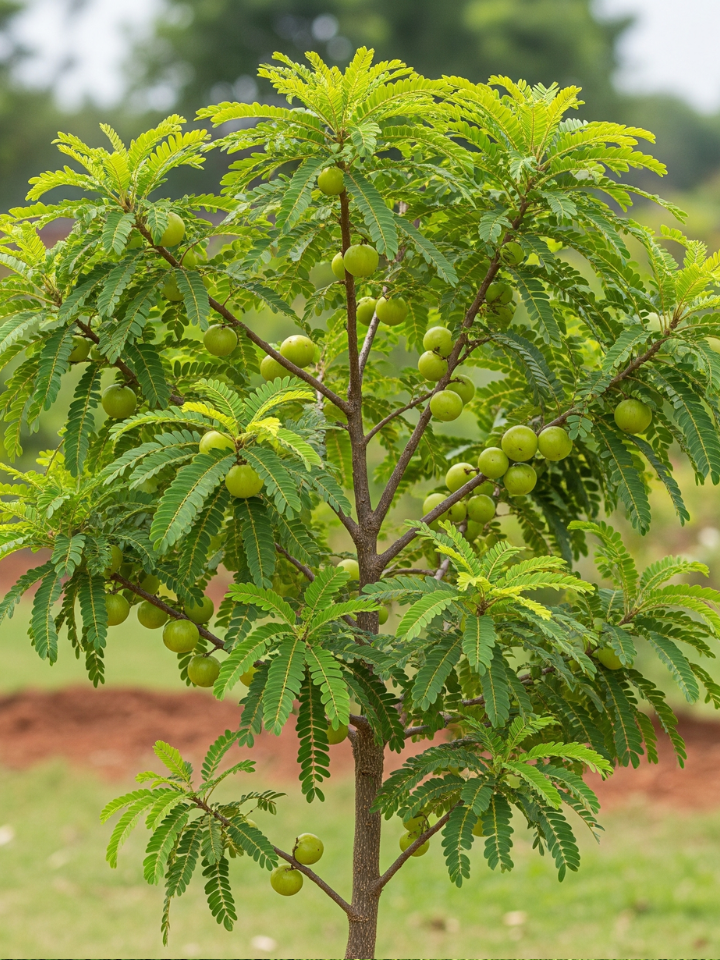
Jackfruit belongs to the classic Bengal homestead trio. Plant an aam tree to complete the Jamai Sasthi fruit plate and a lichi that ripens in the same June weeks for a full summer of fruit, and add an amloki tree that takes over with a winter harvest so the garden bears in the cool months too. For more ideas, browse our tropical fruit trees for Indian gardens or read a guide to the names of outdoor plants that suit Indian homes when you plan the rest of the garden.
Plant your own jackfruit tree this season
Order during the rains and your sapling has a full growing season to settle in before its first winter. Each plant is raised and packed at our own nursery in West Bengal and arrives ready to plant. Give it your sunniest open spot and soil that never stays waterlogged, and in a few summers you will be cutting ripe kanthal from your own tree.



























There are no reviews yet.