Jamrul is Syzygium samarangense, a tropical fruit tree of the myrtle family, Myrtaceae, the same family as jamun, guava and clove. It is native to the Malay Peninsula, the Greater Sunda Islands and India's own Andaman and Nicobar Islands, and has been grown in Bengal courtyards and pond-side gardens for generations. In English it goes by wax apple, Java apple and water apple; Hindi speakers often call it jambu, and Bengali homes simply call it jamrul.
What you will notice first:
- Leaves. Large, glossy and leathery, about 10–25 cm long, in opposite pairs. They give off a faint spicy scent when crushed, and new flushes open pinkish-bronze.
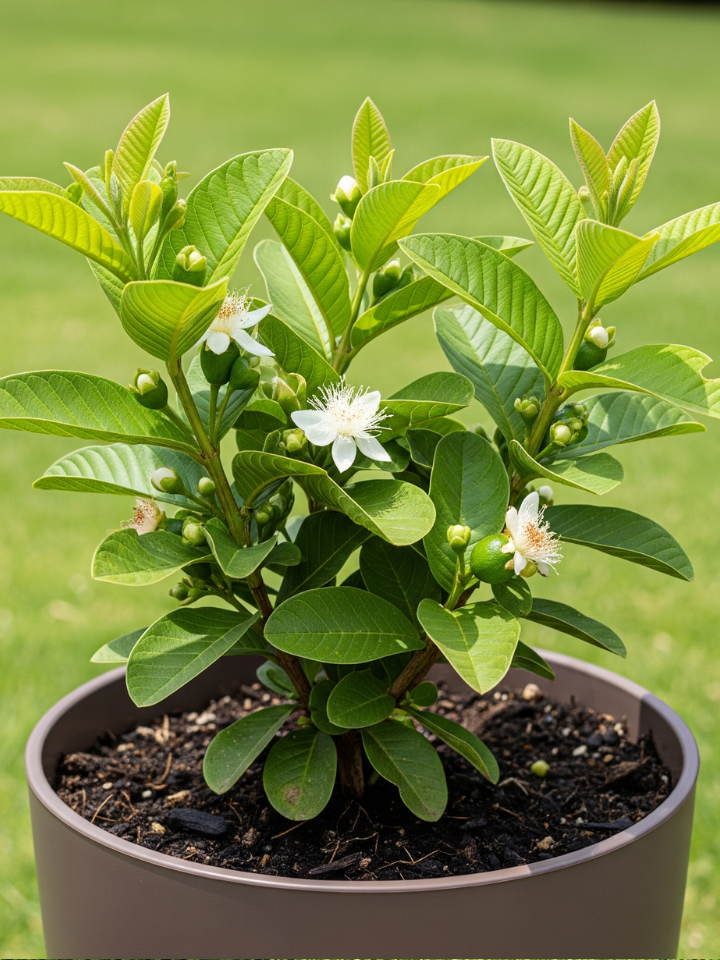
- Flowers. Fluffy, creamy-white blooms about 2.5 cm across, made mostly of long stamens, in clusters near the branch tips and along older wood. Bees love them.
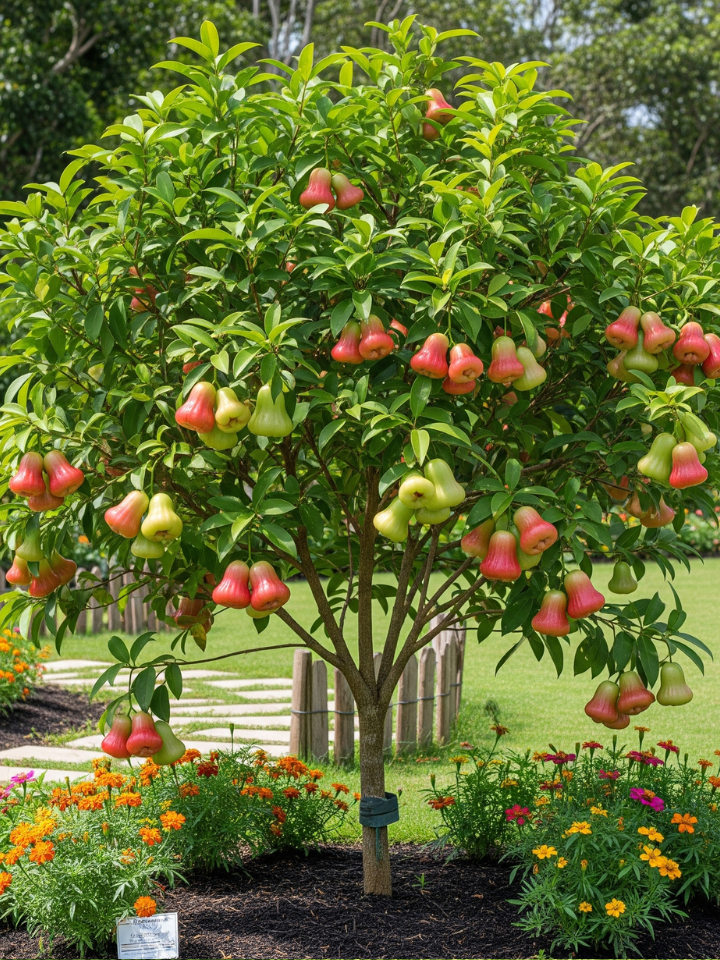
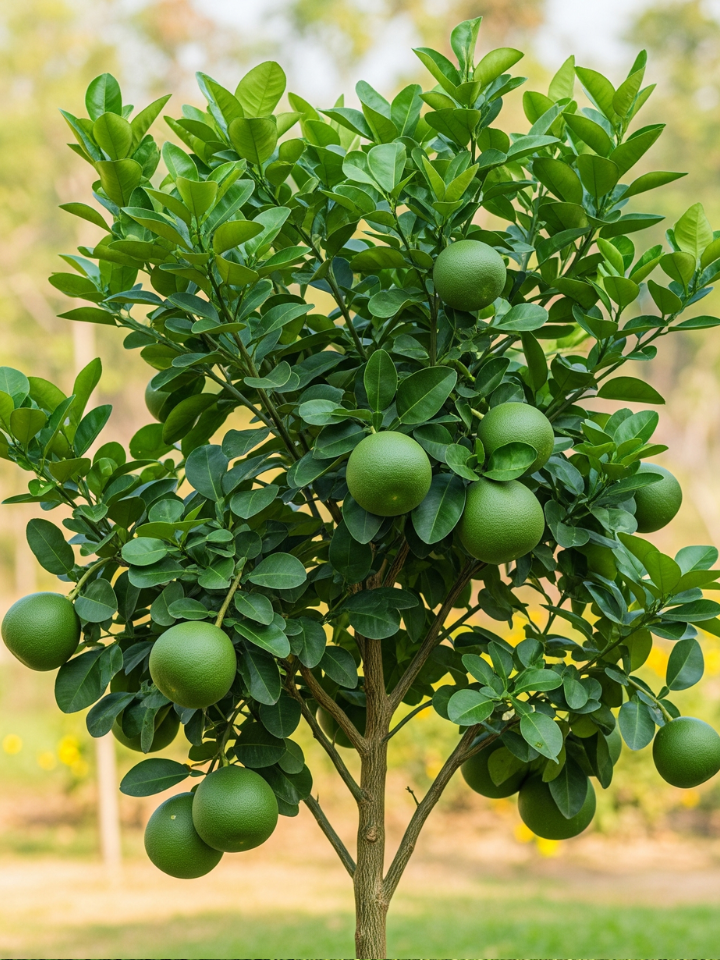
- Fruit. Bell- or pear-shaped, 4–6 cm long, with thin, waxy, shining skin. The flesh is white, spongy and full of water, with a mild sweetness often compared to a pear or a snow apple. Most fruits hold one or two small seeds, and some have none.
- Colour. Depending on the variety, ripe fruit is white, pale green, pink, red or deep crimson.
Why grow jamrul at home?
- A cooling summer fruit. The fruit is mostly water and is low in calories, with some vitamin C. Eaten fresh with a pinch of salt and chilli, it is one of the most refreshing fruits of an Indian summer.
- Heavy crops. A healthy mature tree can carry hundreds of fruits in one season.
- Fast and forgiving. It grows quickly, copes with Bengal's heat, humidity and heavy rain, and has few serious problems. Among easy-care fruit trees, it asks for little beyond water and sun.
- Shade and beauty. Its dense, glossy canopy makes a handsome shade tree, and the spring flowers bring bees into the garden.
- Rarely sold in shops. The fruit bruises easily and keeps only a few days, so a home tree is the best way to enjoy it fresh.
Where should you plant a water apple tree?
This tree needs sun, warmth and moisture. It suits:
- A garden, courtyard or pond-side plot. The ground is always its best home. Leave about 4–5 m from walls and other trees. It is one of the most rewarding tree plants for home gardens where there is room for a canopy, and it does especially well near a pond, tank or drain where the soil stays damp.
- A sunny rooftop, in a large drum. An air-layered or grafted sapling can fruit in a container, which makes it a good choice among plants for home terrace garden setups with full sun. Use a half-drum or a 20–24 inch grow bag, set it on bricks or a stand, and check that the roof can carry the weight of wet soil.
- Not indoors or on a small balcony. It needs direct sun, open air and room for roots. In shade it grows leaves but fruits poorly.
Product Specifications
- Plant name: Water Apple Plant (Jamrul)
- Botanical name: Syzygium samarangense
- Common names: Jamrul (Bengali), jambu (Hindi), wax apple, Java apple, water apple
- Plant family: Myrtaceae (myrtle family)
- Origin: Malay Peninsula, Greater Sunda Islands, and the Andaman and Nicobar Islands
- Plant type: Evergreen tropical fruit tree
- Foliage: Large, glossy, leathery leaves in opposite pairs, 10–25 cm long; new growth pinkish-bronze
- Flowers: Fluffy creamy-white flowers with many stamens, in clusters near branch tips
- Flowering season in India: About February to April on the plains
- Fruiting season in India: About April to June; May and early June in Bengal
- Years to first fruit: About three to four years for air-layered or grafted plants
- Fruit: Bell-shaped, 4–6 cm, thin waxy skin, crisp and watery flesh, mildly sweet; one or two small seeds or none
- Growth habit: Upright, spreading tree with a dense, rounded canopy
- Growth rate: Fast in warm, wet weather
- Mature size: About 2.5–3.5 m in a large container with pruning; 5–10 m or more in the ground
- Suitable placement: Garden, courtyard, pond-side plot, sunny rooftop terrace in a large drum; outdoors only
- Light requirement: Full sun, at least six hours of direct sun a day; tolerates light shade with a smaller crop
- Water requirement: High; keep evenly moist, especially from flowering to harvest
- Soil requirement: Fertile, moisture-holding loam rich in compost, with drainage in containers
- Temperature: Grows best above about 18 °C; damaged below about 7 °C and by frost
- Fertiliser: Compost or cow dung manure at the start of the rains and after harvest; potash-rich feed at flowering
- Common pests and problems: Fruit fly, birds, mealybug, scale insects and fruit cracking from uneven watering
- Maintenance: Low to moderate; regular watering, yearly pruning, seasonal feeding
- Difficulty level: Easy in the ground; moderate in a container
- Suitable environment: Warm, humid tropical and subtropical plains; frost-free areas
- Safety: Thornless; not listed by the ASPCA; not classed as pet-safe
Can you grow a water apple plant in a pot?
Yes, with a big enough container and regular watering. A pot keeps the tree smaller and the harvest lighter than a tree in the ground, but a well-kept container jamrul can fruit for years.
- Container. Start in a 14–16 inch pot, then move up within a year to a half-drum, a 20–24 inch grow bag or a pot at least 45–50 cm deep. Make sure there are plenty of drainage holes.
- Soil. Mix one part garden soil, one part well-rotted cow dung manure or compost and one part cocopeat or coarse sand, with a handful of bone meal. Jamrul likes moisture but still wants a soil that breathes.
- Watering. Containers dry out fast. In April and May a potted plant may need water every day, sometimes twice.
- Pruning. Pinch the tip at about 60–75 cm so the sapling forms three or four main branches, and keep it to a manageable height after each harvest.
- Repotting. Every two to three years, trim the outer roots lightly and refresh a third of the soil.
How do you care for a jamrul plant?
- Sunlight. Six or more hours of direct sun a day gives the heaviest flowering and the sweetest fruit.
- Watering. Keep the soil evenly moist. Water deeply whenever the top 2–3 cm feels dry, and never let a young plant dry out completely. Steady water is most important from flowering until harvest.
- Feeding. Add compost or cow dung manure at the start of the rains and again after harvest. A potash-rich feed, such as a fruiting fertiliser, as flower buds appear helps fruit set and size.
- Mulching. Spread dry leaves or straw over the soil to keep the roots cool and moist through the hot months.
- Pruning. After harvest, remove crossing, weak and inward-growing branches so light reaches the centre. Most good fruit forms on older wood, so avoid heavy cuts just before flowering.
- Thinning. When fruit clusters are crowded, remove a few small fruits from each bunch. The rest grow larger and juicier.
- Protection. Fruit flies and birds love the ripe fruit. Cover young clusters with paper or mesh bags, or hang fruit fly traps, as the fruits swell.
When does a jamrul tree flower and fruit in India?
On the Indian plains, the tree usually flowers from about February to April, and fruit ripens roughly two months after flowering, so the main harvest runs from about April to June. In Bengal, the fruit is a familiar sight in May and early June, often together with lichi and early mangoes. Some trees give a smaller second crop after the rains. Air-layered or grafted plants usually fruit for the first time in their third or fourth year, and crops grow larger every year after that.
A year with jamrul in Bengal
Our fruit plant nursery in Kolkata raises its saplings in the same humid Hooghly climate described here, so these timings hold for most of the eastern plains.
June to September: planting time. The monsoon is the best time to plant. Warm, moist soil helps a new sapling root fast, which makes jamrul one of the most dependable rainy season plants for a home garden. It handles heavy rain better than most fruit trees, but a drum or pot must still drain.
October to January: steady growth. Feed after the rains, prune lightly and keep watering whenever the soil dries. Growth slows in the cool months; a few yellow leaves are normal.
February to April: flowering. White, fluffy flowers cover the branches. Keep the soil moist and feed with potash. Avoid spraying while bees are working the flowers.
April to June: harvest. Water steadily as the fruit swells, bag the clusters against fruit flies and birds, and pick when the fruit is fully coloured, glossy and crisp. Ripe fruit keeps only two or three days, so eat it fresh or share it with neighbours.
Why is my jamrul fruit cracking or dropping?
- Fruit splitting. Usually caused by uneven watering: dry soil followed by a heavy soaking or sudden rain. Keep moisture steady and mulch the soil.
- Flowers or tiny fruits falling. Some drop is natural. Heavy drop means the soil dried out or the plant is short of nutrients.
- Small, sour fruit. Too little sun, poor soil or too many fruits in a cluster. Feed well, thin the bunches and give full sun.
- Maggots inside the fruit. Fruit fly. Bag young fruit, hang traps and clear fallen fruit every day.
- Sticky leaves or white fluff on stems. Mealybugs or scale insects. Wipe them off and spray neem oil every seven to ten days until clear.
- No flowers yet. The plant is still young, or it is not getting enough sun. Be patient and keep feeding.
Is the water apple plant safe around children and pets?
The fruit is widely eaten, and the tree has no thorns, making it a good family tree. Supervise small children with whole fruit, since it holds small seeds. Syzygium species are not listed by the ASPCA either as toxic or as non-toxic to dogs and cats, so we do not class jamrul as a pet-safe plant. Clear fallen fruit and keep pets from chewing the seeds.
What to plant with a jamrul tree
This tree crops at the start of summer, so pair it with fruit trees that fill the other seasons. A grafted mango that ripens in the same hot months makes the natural companion in a Bengal garden .A lichi tree that likes the same moist, rich soil crops at almost the same time. And a sapota tree that bears while the jamrul rests keeps fruit coming through the cooler months. For more ideas, browse our range of low maintenance fruit plants for gardens and terraces.
Grow your own jamrul this season
Plant during the rains and your sapling has months to settle in before its first flowering season. Each plant is raised and packed at our own nursery in West Bengal. Choose your sunniest, dampest spot, water it well, and within a few summers you will be picking crisp, juicy jamrul from your own tree.































There are no reviews yet.