Kalmegh is Andrographis paniculata, an annual herb from the acanthus family, Acanthaceae. It is native to India and Sri Lanka and grows wild across the plains, along field edges, roadsides and shaded scrub, through much of tropical Asia. Its names change from region to region: kalmegh in Bengali and Hindi, bhui neem ("ground neem") and bhunimba in Hindi and Sanskrit, nilavembu in Tamil, and green chiretta, creat or king of bitters in English.
What you will notice:
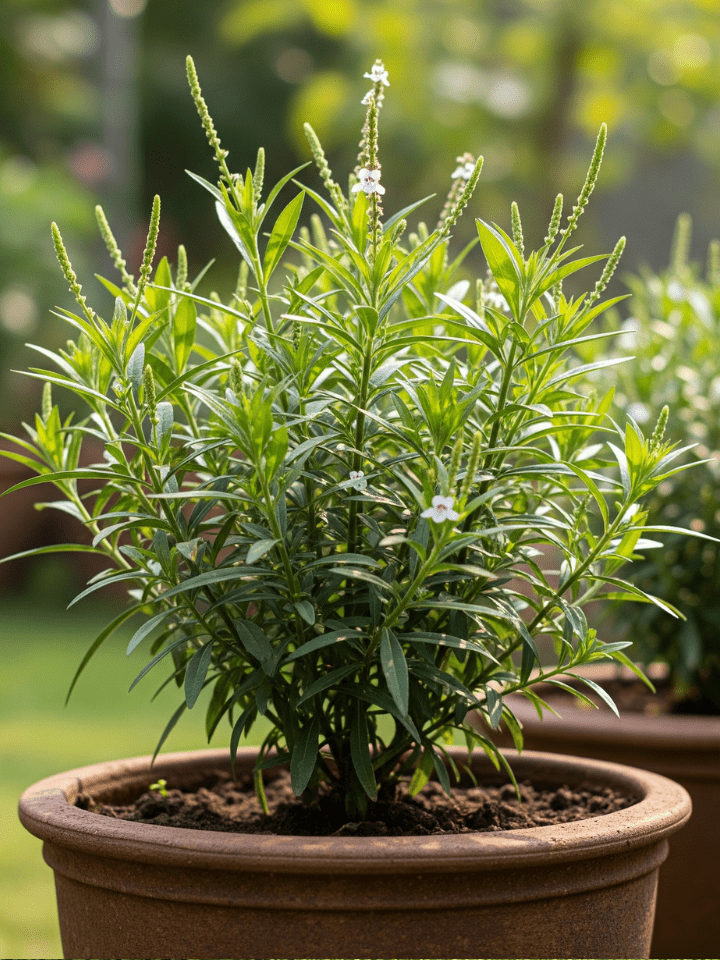
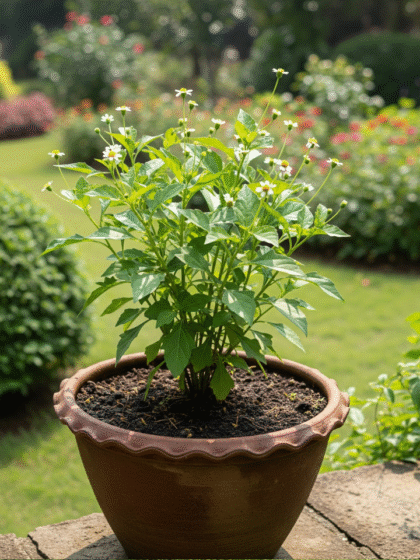
- Stem. Slender, dark green and distinctly square when you roll it between your fingers, with fine ridges along its length. It branches freely as it grows.
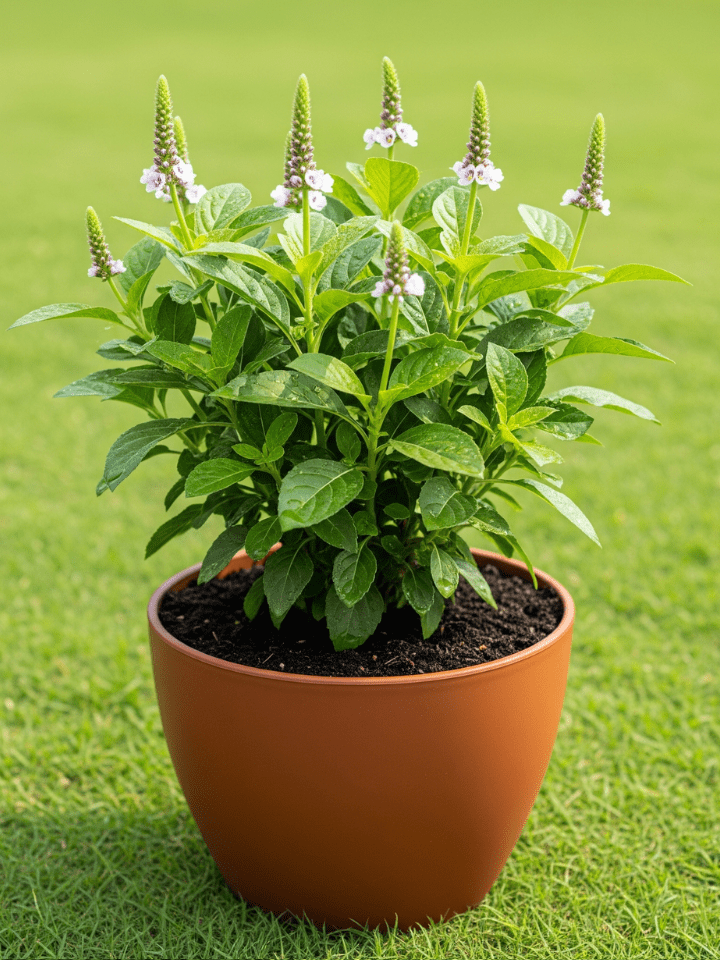
- Leaves. Smooth, lance-shaped and pointed, up to about 8 cm long, set in opposite pairs. Every part of the plant tastes intensely bitter, which is where the name "king of bitters" comes from.
- Flowers. Very small, two-lipped and white, marked with purple or pink, held in loose, airy sprays at the branch tips. In Bengal they open mainly from September to December.
- Seed pods. Slim, flattened capsules about 2 cm long that turn brown and split to scatter many tiny yellow-brown seeds.
- Height. Usually 30–60 cm in a pot, and up to about a metre in open ground.
Kalmegh, chirata or neem: how to tell them apart
These three bitter plants are often confused, and only one of them is in this pot.
- Kalmegh (this plant). A small annual herb with a square stem, narrow paired leaves and tiny white-and-purple flowers.
- Chirata (Swertia chirayita). A different herb from the gentian family that grows in the Himalaya. The English name "green chiretta" was given to kalmegh because both are bitter, not because they are related.
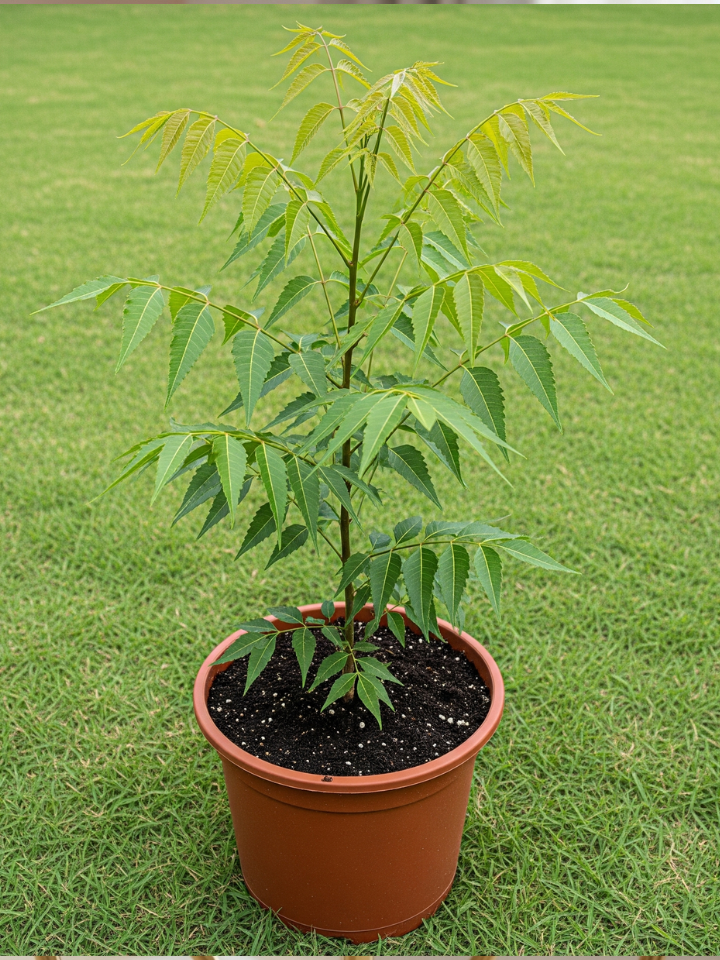
- Neem (Azadirachta indica). A large tree with feather-like compound leaves. Kalmegh is called bhui neem, or "neem of the ground", only for its bitterness.
Where should you keep a Kalmegh plant at home?
Pick a spot with several hours of direct sun and good air flow. Good choices include:
- A sunny balcony. A south- or east-facing ledge suits it well, and it is one of the more useful balcony pot plants for anyone building a small herb corner.
- A terrace or rooftop. It does well in a large pot or grow bag among other rooftop herbs that cope with Bengal's summer, with a little shade at midday in May and June.
- A garden bed or courtyard. In open ground it grows taller and bushier. It fits easily among garden plants that manage with half a day of sun, since it tolerates light shade from a tree or wall for part of the day.
- Not indoors. In a room, even beside a window, it stretches, flops and rarely flowers. Keep it outside.
Can Kalmegh grow in partial shade?
Yes, within limits. It grows best with four to six hours of direct sun, but it accepts light shade for part of the day, which is how it grows in the wild. In deep shade the stems become thin and pale, and flowering is poor.
Product Specifications
- Plant name: Green Chiretta Plant (Kalmegh)
- Botanical name: Andrographis paniculata (Burm.f.) Nees
- Common names: Kalmegh, kalomegh, bhui neem, bhunimba, nilavembu, green chiretta, creat, king of bitters
- Plant family: Acanthaceae (acanthus family)
- Origin: India and Sri Lanka; widespread across tropical Asia
- Plant type: Annual, upright medicinal herb
- Propagation of supplied plant: Seedling
- Stem: Slender, dark green, square in cross-section with fine ridges; branches freely
- Leaves: Smooth, lance-shaped, pointed, up to about 8 cm long, in opposite pairs; intensely bitter
- Flowers: Tiny, two-lipped, white with purple or pink markings, in loose sprays; mainly September to December in Bengal
- Fruit and seed: Slim, flattened capsules about 2 cm long holding many small yellow-brown seeds
- Growth habit: Erect and bushy when pinched
- Height: About 30–60 cm in a pot; up to about 1 m in open ground
- Life cycle: Annual; flowers, sets seed and dies back within about a year
- Suitable placement: Sunny balcony, terrace or rooftop, garden bed, courtyard; outdoors only
- Light requirement: Four to six hours of direct sun; tolerates light shade for part of the day
- Water requirement: Moderate; water when the top 2 cm of soil is dry, never waterlogged
- Soil requirement: Loose, well-drained garden soil with compost and some sand or cocopeat
- Temperature: Grows best in warm, humid weather; slows and declines in cold weather; not frost-hardy
- Fertiliser: Compost or vermicompost once a month in the growing season
- Maintenance: Low; occasional pinching and seed saving
- Common pests and problems: Aphids, whitefly, mealybugs, leaf spot in long wet spells; root rot if waterlogged
- Difficulty level: Easy
- Suitable environment: Warm plains and coasts across India; best sown with the monsoon
- Safety: Not listed by the ASPCA; not classed as pet-safe. Not for eating or home remedies without medical advice
How do you care for a Kalmegh plant in a pot?
- Soil. Use a loose, well-drained mix: two parts garden soil, one part compost or well-rotted cow dung manure and one part coarse sand or cocopeat. Kalmegh is not fussy about soil, but it dislikes heavy clay that stays wet.
- Watering. Water thoroughly when the top 2 cm of soil feels dry, roughly every two to three days in summer and less in the cool months. Empty the saucer after watering; standing water rots the roots.
- Light. Four to six hours of direct sun keeps the plant compact and helps it flower. Light shade at midday is fine, and helpful in peak summer.
- Feeding. A handful of compost or vermicompost once a month during the growing season is enough. Strong chemical fertilisers make soft, floppy growth.
- Pinching. Nip out the growing tips once or twice while the plant is young. Each cut produces two side shoots and a bushier plant.
- Saving seed. Once the flowers fade, leave a few pods on the plant until they turn brown, then pick them before they split and store the seed in a paper envelope in a dry place.
- Resowing. Soak the seed in water for a day and sow it thinly on the surface of moist potting mix in May or June. Seedlings usually appear within one to two weeks and can be moved to their own pots after about six weeks.
Why does my Kalmegh plant die after flowering?
Because it is an annual. Kalmegh is built to grow quickly through the warm, wet months, flower as the days shorten and set seed before winter. After that the leaves yellow and the plant dries out, even with perfect care. This is its natural cycle, not a sign that you have done something wrong. Save the seed and sow it again before the rains, and you will have fresh plants every year. Some plants also self-sow into nearby pots.
A year with Kalmegh in Bengal
Our plants grow in the warm, humid Kolkata climate, and these timings suit most of the eastern plains.
May to June: sowing. This is the best time to sow saved seed, just before or as the rains begin. Give seedlings some shade from the fierce afternoon sun.
July to September: fast growth. Kalmegh is one of the plants that take off once the monsoon sets in. Pinch the tips early and raise pots on bricks so that heavy rain drains away rather than pooling.
September to December: flowering. Sprays of tiny white flowers appear as the days shorten, followed by slim seed pods. This is the plant at its fullest, and the window in which a newly delivered plant settles in and flowers quickly.
January to March: seed and rest. Pods ripen and split, and the plant slowly yellows and dries. Collect the seed, then clear the pot ready for the next sowing.
Why are my Kalmegh leaves turning yellow?
- Yellow lower leaves and soft stems. Too much water or poor drainage. Let the soil dry a little between waterings and make sure the pot drains freely.
- Pale, thin, leaning stems. Too little sun. Move it somewhere with four or more hours of direct light.
- Yellowing all over in winter after flowering. The natural end of the plant's life cycle. Collect the seed.
- Sticky leaves, white fluff or tiny insects. Aphids, whitefly or mealybugs. Wash them off with a jet of water, or spray diluted neem oil every seven to ten days.
- Brown spots in long wet spells. Fungal leaf spot. Remove the affected leaves, water at the base and give the plant more air.
Kalmegh in Ayurveda and Bengali homes
Kalmegh has been used in Ayurveda for centuries and is one of the best known of all bitter herbs. Many people in Bengal remember its leaf juice or small bitter tablets from childhood, and in Tamil Nadu it is the main herb in nilavembu kudineer. That is tradition, not medical advice. Andrographis products can cause stomach upset, changes in taste and allergic reactions, their safety during pregnancy and breastfeeding is not known, and they may change how some medicines work. Please speak to a doctor before using the herb as a remedy, especially if you are pregnant, have kidney or liver problems, or take other medication.
Is the Kalmegh plant safe around children and pets?
The plant has no thorns, spines or irritant sap, and its bitterness puts most people off tasting it. The ASPCA has no entry for Andrographis paniculata, so we do not class it as pet-safe. Keep cats and dogs from chewing it, and keep young children from eating the leaves or seeds.
What to plant with Kalmegh
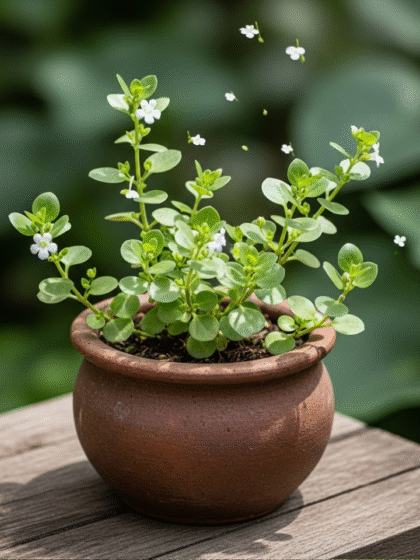
Kalmegh is an easy, upright herb, so pair it with plants that need different conditions rather than the same pot. Keep it apart from brahmi, a marsh herb that wants the opposite care and lives happily in a tray of water. Thankuni for the damp, half-shaded corner nearby completes a classic trio of Bengali courtyard herbs. Then add a black tulsi plant for the sunnier pot beside it. Browse more plants with medicinal value to fill out your herb corner.
Bring home a pot of Kalmegh this season
Order your green chiretta plant now and it can settle in while it is still flowering season. Every pot is raised and packed at our own nursery in West Bengal. Give it sun, steady moisture and a well-drained pot, then save the seed, and one plant will keep your herb corner going for years.


































There are no reviews yet.