It is a flowering perennial from the four o'clock family, Nyctaginaceae, native to the tropical Americas and grown in Indian gardens for generations. In Bengal it is sondhyamalati, the "evening malati", named for the hour its flowers open. Hindi-speaking homes call it gul abbas, Marathi gardeners know it as gulbakshi, and in English it goes by four o'clock flower or beauty of the night.
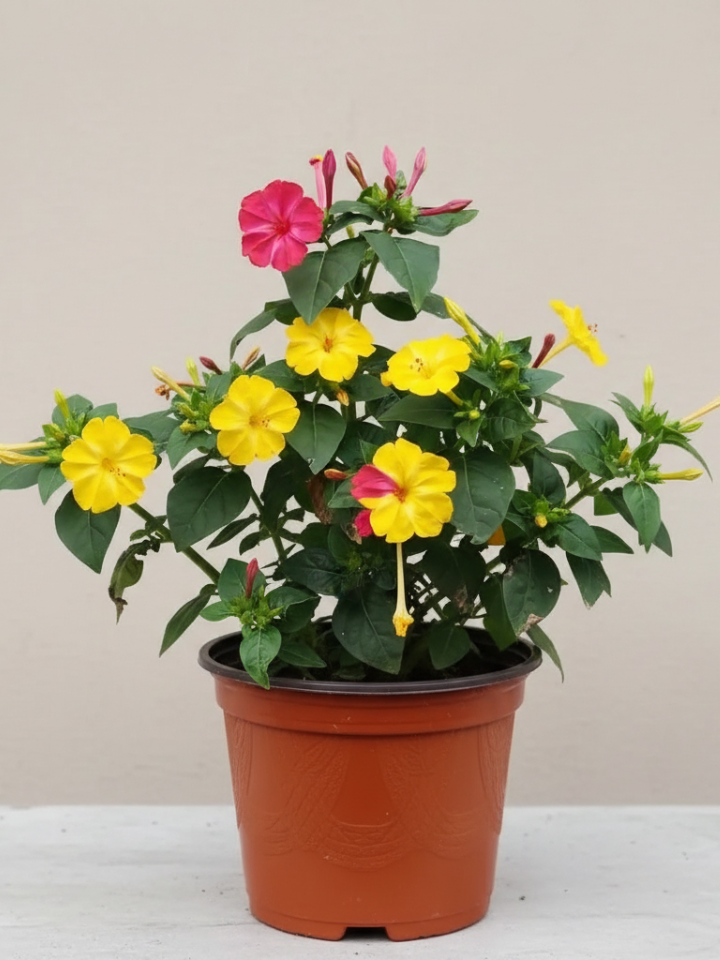
The plant grows as a dense, rounded bush with soft, jointed green stems and oval, pointed leaves arranged in pairs. Clusters of slim buds form at the branch tips. In the late afternoon they unfurl into flared trumpets about 3–5 cm across, each with a long, narrow tube and a spray of stamens. What looks like a ring of petals is in fact a coloured calyx; the plant has no true petals at all.
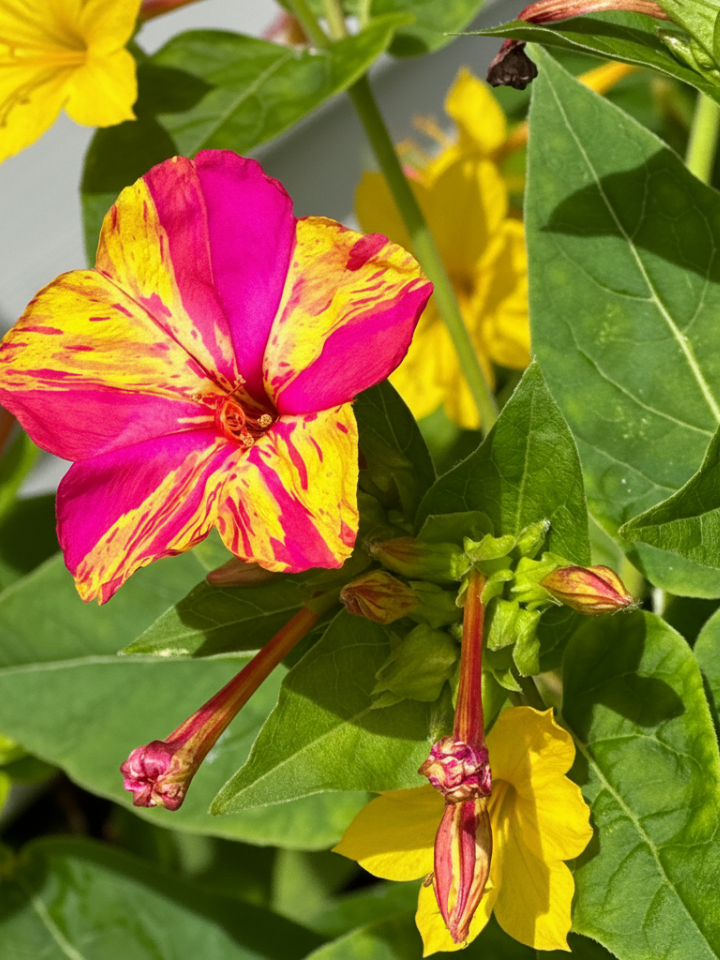
Colour is its party trick. A single bush can carry solid magenta, pink, red, yellow and white blooms, alongside flowers that are splashed, striped or half one shade and half another. The mix can change from one flush to the next, which is why no two plants look quite alike.
Each flower lasts one night. It opens towards dusk, releases a light, sweet scent that draws hawk moths, and closes by the next morning. Fresh buds replace it every day, so the display keeps going for months. After flowering, the plant sets small, black, wrinkled seeds that look like peppercorns, and below the soil it forms a tuberous root that lets it regrow after a hard winter.
What it is not: a houseplant or an air purifier. Kept indoors it stretches, flowers poorly and attracts pests. Buy it for evening colour and fragrance and grow it in the sun.
Where does Sondhyamalati grow best?
Sun decides how well it flowers. A south-, east- or west-facing balcony, an open terrace, a courtyard bed or the front of a garden border all suit it. The best position is one you pass in the evening, beside a doorway, a sit-out or a window you open after sunset, so you catch the flowers opening and the scent drifting in.
In a 10–12 inch pot it becomes one of the easiest flowering plants for a sunny balcony, filling out within a season. On a rooftop it sits well among other easy plants for a terrace garden, where a row of three pots makes a low, colourful screen. In the ground it grows larger and fuller, and it holds its own among hardy outdoor plants for full sun that are planted once and enjoyed for years.
It also fills the evening gap in a flowering scheme. Most garden flowers look their best by day. This one takes over as the light fades, which makes it a natural partner for the flower plants that bloom for months on a sunny ledge.
Product Specifications
- Plant name: Marvel of Peru (Sondhyamalati) Plant
- Botanical name: Mirabilis jalapa
- Also known as: Sondhyamalati, Sandhyamalati, four o'clock flower, beauty of the night, gul abbas, gulbakshi
- Plant family: Nyctaginaceae (four o'clock family)
- Origin: Tropical Americas
- Plant type: Tuberous-rooted flowering perennial, often grown as a seasonal bush
- Foliage: Oval, pointed, mid-green leaves in pairs on soft, jointed stems
- Flowers: Trumpet-shaped, about 3–5 cm across; magenta, pink, red, yellow, white or streaked, often several colours on one plant
- Flower timing: Open in the late afternoon, close the next morning; each flower lasts one night
- Fragrance: Light and sweet, strongest in the evening
- Flowering season in India: Roughly April to November, heaviest from summer through the monsoon
- Growth habit: Bushy, rounded and upright
- Growth rate: Fast in warm weather; may die back to the root in cold winters
- Suitable placement: Sunny balcony, terrace, courtyard, garden bed or border; outdoors
- Light requirement: Direct sun, four to six hours; tolerates light afternoon shade
- Water requirement: Moderate; water when the top inch dries, less in winter and during the rains
- Soil requirement: Any loose, free-draining garden mix with some compost
- Temperature: Roughly 20–38 °C; slows below about 12 °C
- Fertiliser: Monthly compost March to September; light potash feed while budding
- Difficulty level: Very easy
- Suitable environment: Warm, sunny climates; well suited to Bengal and most of the Indian plains
- Attracts: Hawk moths and other evening pollinators
- Propagation: Seeds, or division of the tuberous root in spring; self-seeds readily
- Pet and child safety: Not pet-safe. ASPCA lists it as toxic to dogs, cats and horses; seeds and roots are toxic to people
How do you care for a four o'clock plant in a pot?
- Four to six hours of direct sun a day. It manages with light afternoon shade, but in deep shade it grows leggy and sets few buds.
- Water when the top inch of mix feels dry. In peak summer that may be daily for a small pot; in winter, every five to seven days. The tuberous root rots in soggy soil, so let the pot drain fully.
- Any loose, free-draining mix: two parts garden soil, one part compost and one part cocopeat or coarse sand. It does not need rich soil.
- A 10–12 inch pot with a drainage hole for one plant. Terracotta helps keep roots cool in summer.
- A handful of compost or vermicompost once a month from March to September. A light potash feed while it is budding helps. Heavy nitrogen feeding gives more leaves and fewer flowers.
- Pinch the tips of young shoots to make the bush fuller. Trim straggly stems in late summer and cut the plant back to a few inches above the soil in winter if it looks tired; the tuber sends up fresh shoots in spring.
- Pick off ripe black seeds if you do not want seedlings popping up in nearby pots. Picking them also keeps them away from children and pets.
- Happiest at roughly 20–38 °C. It handles Indian summer heat well, slows below about 12 °C and may die back to the root in a cold North Indian winter.
When does Sondhyamalati flower? Growing it through the Bengal year
The plant is easy-going; the seasons set its pace. These notes come from the seasons at our nursery near Kolkata.
Spring, February to March. New shoots appear from the root. Trim away old dead stems, refresh the top of the pot with compost and increase watering as the days warm.
Summer, April to June. Flowering starts in earnest. Keep the pot watered through the heat and pinch young tips for a bushier plant. It is one of the flowers that keep going through an Indian summer when many others fade.
Monsoon, July to September. The plant grows fast and keeps flowering, which puts it among the easy flowers to grow this rainy season. Make sure water drains away after every downpour, empty saucers and pick off spotted leaves.
Autumn, October to November. Flowering continues but slows as the nights cool. Collect seeds if you want to sow more next year.
Winter, December to January. Growth slows and some leaves yellow. Water sparingly, skip feeding and cut back hard if the plant looks straggly.
Why is my Marvel of Peru not flowering? Common problems and fixes
- Plenty of leaves, few flowers. Usually, too little sun or too much nitrogen. Move it somewhere brighter and switch to compost with a little potash.
- Flowers closed during the day. Normal. The blooms open in the late afternoon and close by morning. On cloudy days they may open earlier.
- Tall, floppy stems. Too much shade or no pinching. Give more sun and pinch the tips of new shoots in spring.
- Yellowing lower leaves. Often overwatering or poor drainage, especially in the rains. Let the top inch dry out between waterings.
- White powder on leaves. Powdery mildew in humid, still weather. Remove affected leaves, improve air flow and spray diluted neem oil weekly.
- Sticky shoots or tiny insects under leaves. Aphids or whitefly. Wash them off and spray neem oil weekly for three weeks.
- Stems collapsing at soil level. Root or stem rot from waterlogging. Cut away soft parts, repot in drier mix and water less.
Is Marvel of Peru safe for pets and children?
No. The ASPCA lists Four O'Clock (Mirabilis jalapa) as toxic to dogs, cats and horses. Chewing the plant, and especially the seeds or roots, can cause vomiting and diarrhoea. The seeds and roots are also toxic to people, and the sap can irritate sensitive skin.
Because the black seeds look like peppercorns and children like to collect them, grow it where small hands and pets cannot reach it, pick ripe seeds off regularly and wear gloves when dividing the roots. If you need flowers for a home with a pet that chews plants, look at true jasmines instead, which the ASPCA lists as non-toxic.
Companions for an evening flower corner
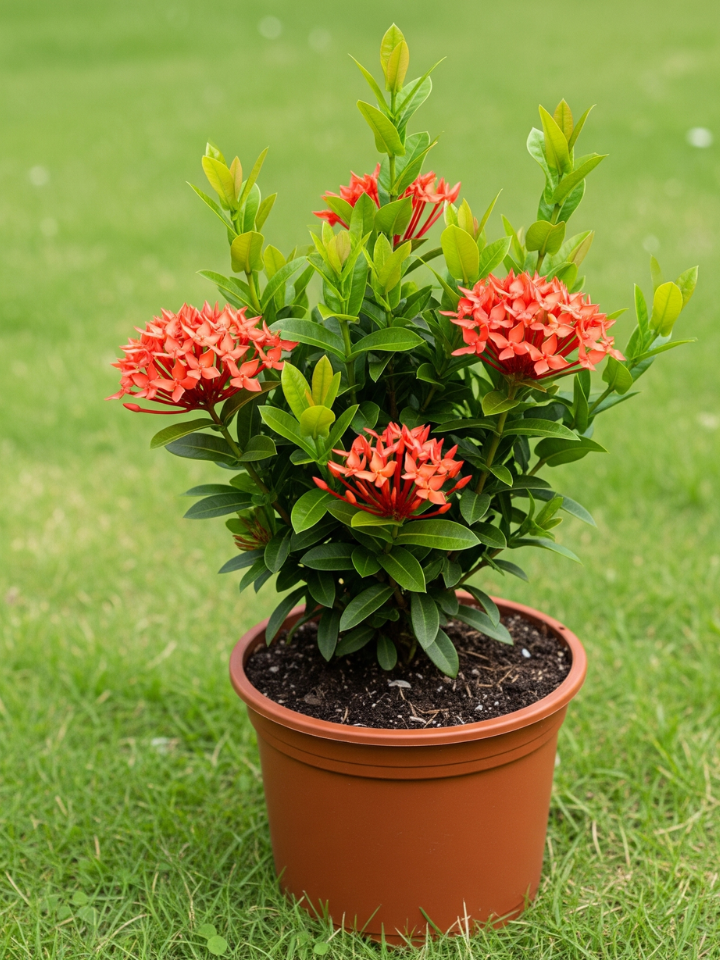
For scent that carries on after dark, pair it with evening-scented jui jasmine trained up a grille behind the pots; both are at their best in the rains. Add harsingar (parijat) nearby, and its orange-tubed flowers take over the night fragrance in autumn. For colour by day, a Rugmini ixora for a sunny entrance keeps the same spot bright while the four o'clocks are closed.
Readers building a full garden from scratch can compare more garden plants for Indian homes, listed by name.
Bring home a flower that opens every evening
Order a Sondhyamalati plant now and it has time to settle in and start blooming within weeks. Every plant is raised and packed at our own nursery.

































There are no reviews yet.