Rangan is the Bengali name for Ixora coccinea, a flowering shrub native to southern India, Bangladesh and Sri Lanka. In English it goes by Jungle Geranium or Flame of the Woods. Hindi speakers call it Rugmini, Tamil speakers Vedchi, and Malayalam speakers Chethi. It belongs to the coffee family, Rubiaceae, which explains the glossy, leathery leaves.
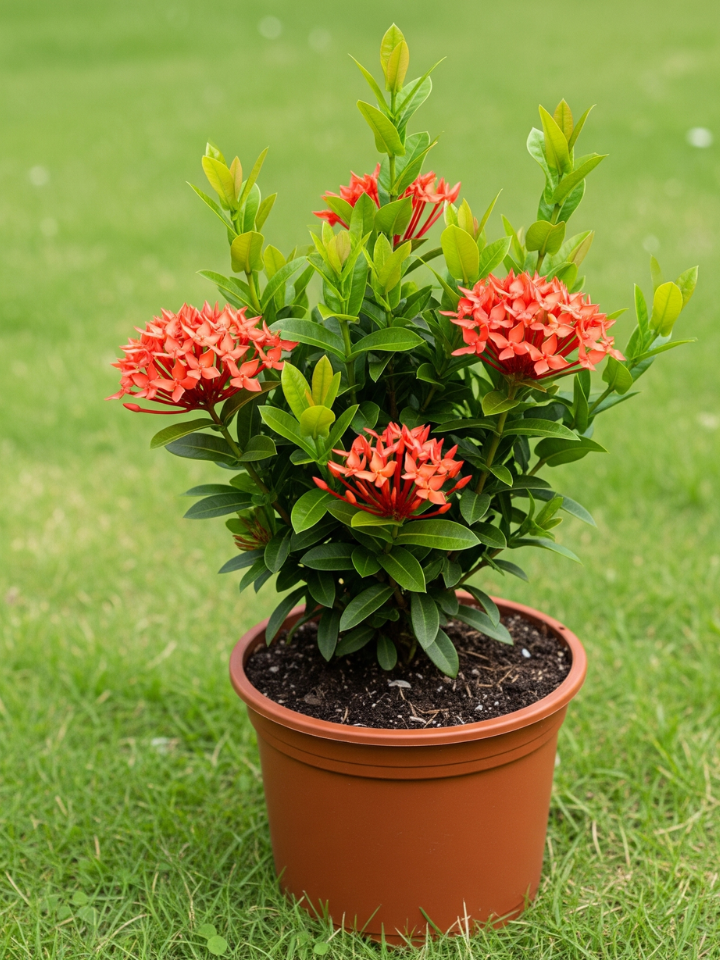
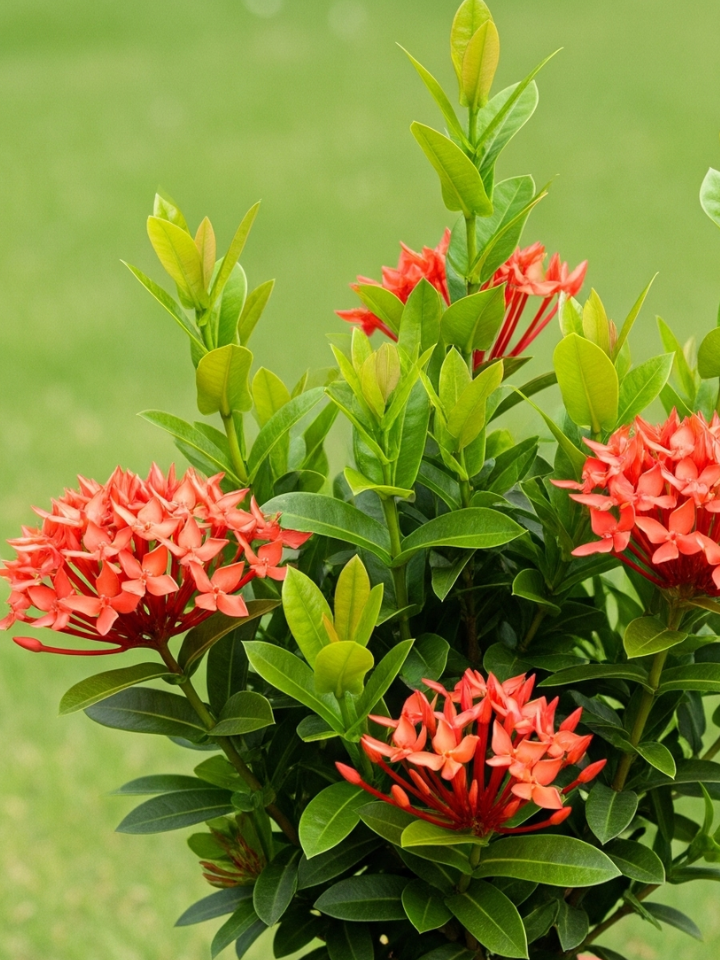
What sets it apart is the flower head. Each cluster, 5–12 cm across, is packed with dozens of slim, tubular florets. Each floret opens into four small, pointed petals, so a single head looks like a ball of scarlet stars. Clusters form at the tip of almost every branch, and one head lasts for weeks, so a healthy bush is rarely without colour.
The leaves are oblong, about 10 cm long, and set in opposite pairs along stiff, woody stems. The shrub branches heavily and stays compact, which is why it takes clipping so well. It has lined Bengal's courtyards, temple gardens and school boundaries for generations. Rangan flowers are a familiar part of daily puja, and butterflies and sunbirds visit the nectar on any warm morning.
Rangan is a garden shrub. It is not a houseplant, and a room without direct sun will stop it flowering within weeks.
Where does a Rangan plant grow best?
Plant it where it will get the most sun. This shrub is at its best in the ground, where the roots can spread and stay cool.
- Garden bed or border. A single plant makes a round, flowering mound. Three or five in a row along a path give colour for most of the year. Plant them 45–60 cm apart for a continuous edge.
- Low flowering hedge. Few Indian shrubs make a boundary that flowers. Rangan does, because it takes regular trimming and still flowers. It sits comfortably among outdoor shrubs for a hedge or boundary.
- Gateway and entrance. A pair of bushes on either side of a gate is a classic Bengal layout, and our guide to outdoor plants that frame a home entrance covers what else suits that spot.
- Large tub on a rooftop. No garden? Use a pot at least 14–16 inches wide and deep, filled with rich, acidic mix. It will stay smaller than in the ground but flower just as freely.
If a compact bush for a balcony pot is what you want, look at our other ixora, sold under its Hindi name Rugmini.
Product Specifications
- Plant name: Ixora (Rangan) Plant
- Botanical name: Ixora coccinea
- Also known as: Rangan (Bengali), Rugmini (Hindi), Vedchi (Tamil), Chethi (Malayalam), Jungle Geranium, Flame of the Woods
- Plant family: Rubiaceae (coffee family)
- Native range: Southern India, Bangladesh and Sri Lanka
- Plant type: Evergreen, woody flowering shrub
- Foliage: Glossy, leathery, oblong leaves about 10 cm long, in opposite pairs
- Flowers: Dense, rounded clusters 5–12 cm across of tubular, four-petalled florets
- Flower colour: Scarlet red
- Flowering season in India: Almost all year in warm regions; heaviest from March to October; slower in winter
- Growth habit: Dense, much-branched, upright to rounded; tolerates hard trimming
- Growth rate: Slow to moderate
- Suitable placement: Garden bed, border, low hedge, gateway, courtyard or large rooftop tub; outdoors
- Light requirement: Full sun, about six hours of direct light a day
- Water requirement: Moderate and even; deep watering, never waterlogged
- Soil requirement: Slightly acidic (pH about 5.5–6.5), rich in organic matter, well drained
- Temperature: 20–35 °C ideal; sheds leaves below about 10 °C; not frost-hardy
- Fertiliser: Compost mulch every two months and a monthly balanced feed from March to October; potash-rich in bud
- Pruning: Light trims after each flush; hedge clipping three or four times a year
- Common pests and diseases: Aphids, scale, mealybugs; leaf spot, root rot, sooty mould
- Propagation: Semi-hardwood cuttings in the monsoon; air layering
- Difficulty level: Easy to moderate
- Suitable environment: Warm, humid, sunny regions; well suited to Bengal, the east and the coasts
- Attracts: Butterflies and sunbirds
- Pet safety: ASPCA lists Ixora coccinea as non-toxic to dogs and cats
- Popular uses: Garden colour, flowering hedges and borders, puja flowers
How do you plant and care for Rangan?
- Planting in the ground. Dig a pit about 45 cm (1.5 ft) wide and deep. Mix the dug soil half and half with compost or leaf mould, add a handful of neem cake, and set the plant at the same depth it sat in the nursery pot. Water it in well.
- Soil. Rangan wants slightly acidic soil, pH about 5.5–6.5, rich in organic matter and quick to drain. Heavy clay needs compost and coarse sand worked in. Alkaline soil, or construction rubble near a wall, turns the leaves yellow.
- Water. Water deeply two or three times a week in the first two months while roots establish. After that, a plant in the ground needs water only in dry spells. Plants in tubs need watering whenever the top 2–3 cm dries.
- Feeding. Mulch with compost every two months from March to October. Add a balanced feed once a month in that period, and a potash-rich one when buds form. A fertiliser sold for acid-loving plants works well.
- Shaping. Trim after a flush of flowers, cutting just above a pair of leaves. For a hedge, clip the sides lightly three or four times a year and keep the base slightly wider than the top so the lower branches get light.
- Temperature. Grows best at 20–35 °C. It handles the Indian summer if watered well. Growth stops in cold weather, and it sheds leaves below about 10 °C.
Rangan through the Bengal year
These notes come from growing rangan in the beds at our Kolkata nursery, where the shrub goes through the full swing of Bengal's weather.
Summer, March to June. Peak season. Heat and long days give the heaviest flowering, and Rangan is one of the dependable summer flowers for a sunny garden bed. Water deeply rather than often and keep a thick mulch over the roots through May.
Monsoon, June to September. Rainwater is soft and slightly acidic, and the shrub often looks its greenest now. It holds its place among monsoon flowering plants for Bengal gardens. Watch for waterlogging in low beds, and take cuttings now, when they root most easily.
Winter, November to February. Flowering slows and a few older leaves may redden or drop. Stop feeding by December, water only when the soil is dry, and hold off on hard trimming until March.
With flushes in almost every season, it also belongs on any list of flowers that bloom 365 days a year in India.
Why is my Rangan not growing or flowering?
- Yellow leaves with green veins. Iron is locked up by alkaline soil or hard water. Apply chelated iron, mulch with leaf mould, and use rainwater when you can.
- Healthy leaves but no flower heads. Too much shade or too much nitrogen. Move a tub into full sun, or thin the branches overhead, and switch to a potash-rich feed.
- Small leaves and no new shoots. The roots are starved or cramped. Feed it, loosen compacted soil around the plant, or move a potted plant up a size.
- Brown spots on leaves in the rains. A fungal leaf spot. Remove affected leaves, stop wetting the foliage, and improve air flow by thinning crowded stems.
- Wilting even though the soil is wet. Root rot from standing water. Lift a pot onto bricks or raise a ground bed and mix in coarse sand.
- Sticky leaves, black film, white fluff. Aphids, scale or mealybugs, and the sooty mould that grows on their honeydew. Spray diluted neem oil weekly for three weeks, then wipe the leaves clean.
How do you propagate Rangan?
Take semi-hardwood cuttings 10–15 cm long during the monsoon. Strip the lower leaves, dip the cut end in rooting hormone, and set it in a moist mix of sand and cocopeat in bright shade. Roots usually form in six to eight weeks. Air layering works too and gives a larger plant sooner. Seed is rarely used, as garden plants set little of it.
Is Rangan safe for cats and dogs?
Yes. The ASPCA lists Ixora coccinea, under the names Iron Tree and Flame of the Woods, as non-toxic to dogs and cats. It suits a courtyard or garden shared with animals. Discourage chewing anyway, since eating a lot of any plant can upset a stomach, and keep fertilisers out of reach.
Good companions for a Rangan bed
This scarlet shrub sits well beside other puja flowers. Plant a red jaba hibiscus for the same puja basket behind it for height and edge the bed with vinca for a sunny border, which flowers through the same hot months. For more colour, browse our flowering plants for an Indian garden.
Bring Bengal's favourite red shrub home
Order now and plant it before the rains ease, and it will be established and flowering by next summer. Like all the garden shrubs grown and shipped by our own nursery, every Rangan is raised and packed by the team that tends it.



































There are no reviews yet.