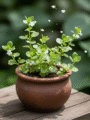
This herb is Bacopa monnieri, a perennial marsh herb from the plantain family, Plantaginaceae. It grows wild along pond edges, paddy bunds and wet ditches across India and much of the tropics, and it copes with fresh or slightly brackish water. Its names change from region to region: brahmi in Sanskrit and Bengali, jalanimba or jal brahmi in Hindi, neer brahmi in Tamil and Kannada, and water hyssop or herb of grace in English.
What you will notice:
- Leaves. Small, thick and juicy, about 1–2 cm long, oval to spoon-shaped, set in pairs directly on the stem with no stalk. They taste distinctly bitter.
- Stems. Soft, fleshy and green, creeping along the ground and rooting at each joint. In a pot they spill over the rim; in water they float and spread.
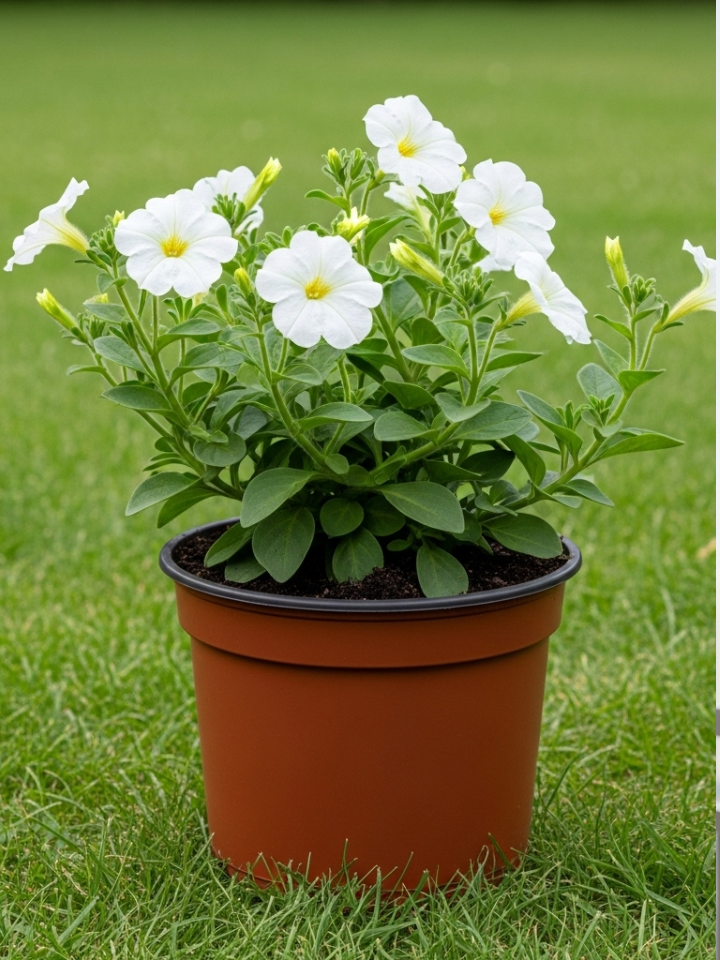
- Flowers. Tiny, five-petalled, white to very pale lilac, held singly where leaf meets stem. They appear on and off through the warm months.
- Height. A mat about 10–15 cm tall that spreads sideways rather than upwards.
Brahmi or Thankuni: how to tell them apart
They are two different plants that share a name in some markets. Bacopa has small, thick, oval leaves in pairs straight on the stem. Thankuni has round, coin-shaped leaves on long stalks. In north India, Centella is often sold as "brahmi booti", which is how the mix-up started. If the round-leaved herb is the one you are after, choose thankuni, the round-leaved pennywort often mistaken for brahmi instead. Both love wet soil, but bacopa wants more sun.
Where should you keep a Brahmi plant at home?
Pick a spot with several hours of direct sun and somewhere water can splash without harm. Good choices include:
- A sunny balcony or terrace edge. Morning sun with some afternoon shade suits it best. Grouped in a tray with other water-loving herbs, it is among the best plants for balcony pots where watering is a daily habit anyway.
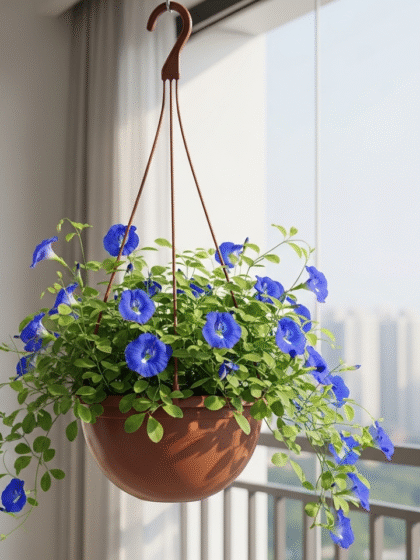
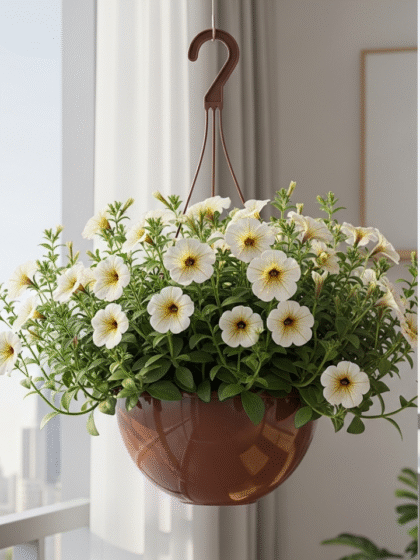
- A hanging basket. The fleshy stems trail over the edge in a soft green fringe. Brahmi makes a useful, edible choice among outdoor hanging plants for a verandah, as long as you line the basket to hold moisture.
- A kitchen window. A sill with at least four hours of direct sun works well, and it is one of the few plants to keep in kitchen windows that is happy with wet feet.
- A water bowl or small pond. Brahmi grows happily in a ceramic bowl or urli with a few centimetres of water over the soil, and along the margin of a garden pond.
- Not a shaded room. Without direct sun, the stems stretch, the leaves space out and the plant thins within weeks.
Can Brahmi grow in water?
Yes. Brahmi is a marsh plant, and it grows well in a pot of soil standing in a tray of water, or in a bowl with water just covering the soil. Cuttings even root in a plain glass of water within a week or two. In an open bowl, change or top up the water often and add a few guppies or a drop of neem oil if mosquito larvae appear.
Can Brahmi grow indoors?
Only on a bright windowsill that gets four hours or more of direct sun. A room lit through curtains is too dim, and indoor air dries the pot out faster than you expect. Check the soil every day and turn the pot each week so it fills out evenly.
Product Specifications
- Plant name: Bacopa Plant (Brahmi)
- Botanical name: Bacopa monnieri (L.) Wettst.
- Common names: Brahmi, brahmi shak, jalanimba, jal brahmi, neer brahmi, water hyssop, herb of grace, thyme-leaved gratiola
- Plant family: Plantaginaceae (plantain family; formerly placed in Scrophulariaceae)
- Origin: Wetlands of India and the wider tropics and subtropics
- Plant type: Creeping perennial marsh herb; edible leafy plant
- Propagation of supplied plant: Rooted stem cuttings
- Leaves: Thick, fleshy, oval to spoon-shaped, about 1–2 cm long, in stalkless pairs
- Flowers: Tiny white to pale lilac, five-petalled, single in the leaf joints; on and off through the warm months
- Growth habit: Low and creeping, rooting at the joints; trails over pot edges and floats in shallow water
- Height: About 10–15 cm
- Growth rate: Fast in warm, humid weather; slow in winter
- Suitable placement: Sunny balcony or terrace, hanging basket, sunny kitchen window, water bowl, pond margin
- Light requirement: Four to six hours of direct sun; light afternoon shade in peak summer
- Water requirement: Very high; keep the soil wet, or stand the pot in a shallow tray of water
- Soil requirement: Heavy, moisture-holding loam or clay with compost; no special drainage needed
- Temperature: Happiest between about 18 °C and 38 °C; slows in cool weather; not frost-hardy
- Fertiliser: Compost or vermicompost every four weeks from February to October
- Maintenance: Low to moderate; daily water check in summer and regular trimming
- Common pests and problems: Snails, slugs, aphids, whitefly, mealybugs; browning if dry; legginess in shade
- Difficulty level: Easy, with constant moisture
- Suitable environment: Warm, humid plains and coasts across India; needs winter protection in the north
- Edible use: Tender leaves and stem tips are cooked as brahmi shak in Bengal
- Safety: Not listed by the ASPCA; not classed as pet-safe
How do you care for a Brahmi plant in a pot?
- Soil. Use a heavy, moisture-holding mix: two parts garden soil or pond clay, one part compost or well-rotted cow dung manure and a little cocopeat. Fast-draining succulent mixes are the wrong choice here.
- Watering. Never let it dry out. The easiest method is to stand the pot in a saucer or tray that always holds 1–2 cm of water. In April and May, top up twice a day.
- Light. Four to six hours of direct sun keeps the leaves thick and the stems compact. In the fierce afternoon sun of a Bengal summer, light shade stops the tips from scorching.
- Feeding. A handful of compost or vermicompost every four weeks from February to October. Skip strong chemical fertilisers if you plan to eat the leaves.
- Trimming and harvesting. Pinch or snip the stem tips regularly. Each cut produces two new shoots, so regular picking makes the plant bushier. Leave at least a third of the plant in place.
- Spreading and repotting. When the pot is packed, lift rooted stems and pot them up separately, or move the clump into a wider container. Brahmi sits well among other medicinal plants and herbs that enjoy steady moisture, though most of them need far less water.
A year with Brahmi in Bengal
Our plants grow in the warm, humid Kolkata climate, and these timings suit most of the eastern plains.
February to April: fresh growth. New shoots appear as the days warm up. Top-dress with compost, divide crowded pots and begin regular picking.
May to June: heat. Keep the pot standing in water at all times and give it shade from about noon. A dry day in this season can undo weeks of growth.
July to September: monsoon. Brahmi is at its best now, spreading fast and flowering on and off. This is the time to take cuttings and share them. Watch for snails after heavy rain. Many of the trays at our medicinal plants nursery in Kolkata are propagated in these weeks.
October to November: steady picking. Soft sun and cool nights give tender, well-coloured leaves.
December to January: the cool season. Growth slows and some leaves may turn yellow or reddish. Water a little less, give it the sunniest spot you have and pick lightly. In north India, protect it from frost; it recovers in spring.
Why are my Brahmi leaves turning yellow or brown?
- Crisp, brown leaves and limp stems. The pot dried out. Stand it in water straight away and trim the damaged stems; it usually recovers.
- Pale, widely spaced leaves on long stems. Too little sun. Move it somewhere that gets four or more hours of direct light.
- Yellow leaves in a crowded container. Hungry or root-bound. Feed with compost, or divide the clump and repot.
- Soft, dark patches in winter. Cold, still conditions. Give it more sun, let the water level drop slightly and remove damaged stems.
- Holes and slime trails. Snails and slugs, mostly in the monsoon. Pick them off in the evening.
- Sticky, curled tips or white fluff. Aphids, whitefly or mealybugs. Wash them off with water, or spray diluted neem oil every seven to ten days. Rinse leaves well before eating.
Brahmi in Ayurveda and the Bengali kitchen
In Ayurveda, this herb has been valued for centuries and is often grouped with traditional herbs such as shankhpushpi. That is tradition, not medical advice. Bacopa supplements can cause stomach upset, and they may interact with thyroid medicines and some other drugs, so please speak to a doctor before using the herb regularly as a remedy, especially during pregnancy, while breastfeeding or alongside other medication.
In Bengal, it is better known as food. Tender sprigs of brahmi shak are fried lightly in mustard oil, sometimes with a little garlic, or dipped in batter for crisp bora, and eaten with rice at the start of a meal. The taste is strongly bitter, much like other bitter greens that start a Bengali lunch.
Is the Brahmi plant safe around children and pets?
The plant has no thorns, spines or irritant sap, and families in Bengal handle and cook it often. The ASPCA has no entry for Bacopa monnieri, so we do not class it as pet-safe. Keep cats and dogs from grazing on it, and wash leaves well before they go to the table.
What to plant with Brahmi
Brahmi is the thirstiest herb on most shelves, so pair it with plants that suit a different corner rather than the same tray. Set an ashwagandha plant for the drier, sunnier pot beside it, since ashwagandha hates wet soil. Train aparajita, the blue-flowered climber also sold as shankhpushpi up a grille behind the tray for colour. For more ideas, browse our guide to the best garden plants for Indian homes.
Bring home a pot of true Brahmi
Order your Bacopa plant now and it can settle in while the weather is still warm. Every pot is raised and packed at our own nursery in West Bengal and dispatched from our online plant shop to homes across India. Give it a tray of water and a few hours of sun, and you can start picking within a few weeks.






























There are no reviews yet.