Neem is Azadirachta indica, a member of the mahogany family, Meliaceae, native to India and its neighbours and now grown across the dry tropics. Its names travel with it: neem in Hindi, nim in Bengali, nimba in Sanskrit, kadunimb in Marathi, limdo in Gujarati, vembu in Tamil, vepa in Telugu, bevu in Kannada and veppu in Malayalam.
What you will notice:
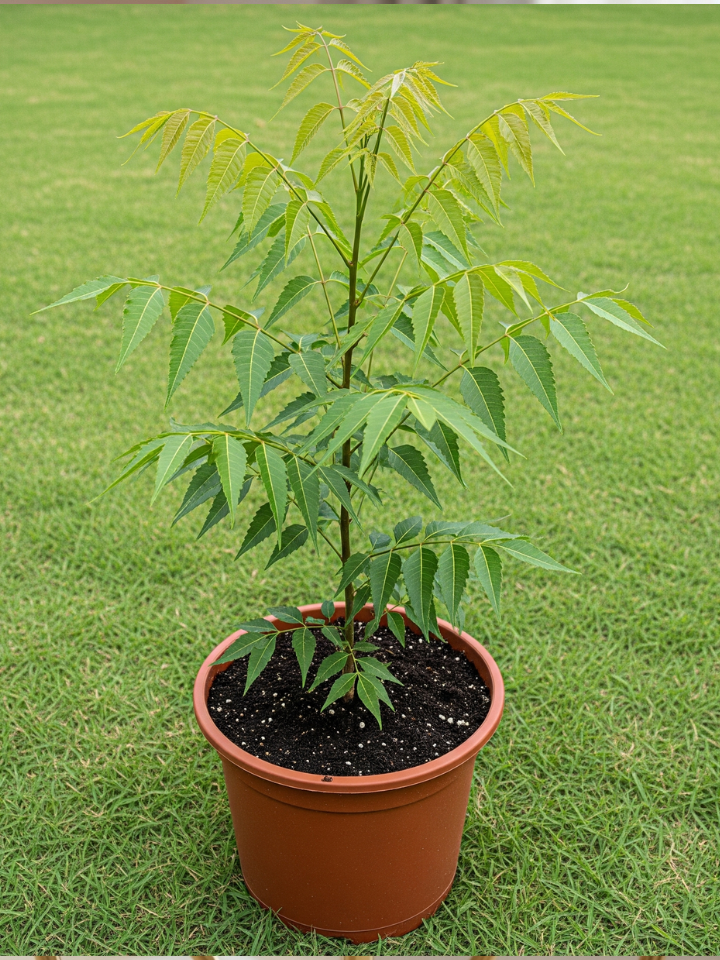
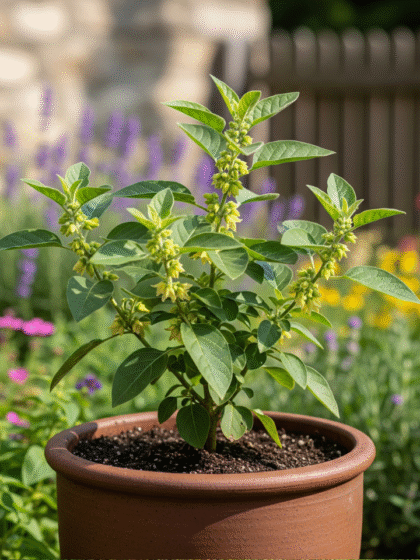
- Leaves. Long, feather-like compound leaves, 20–40 cm in length, made of many narrow, slightly curved leaflets with toothed edges. Fresh flushes open a soft copper-red before turning bright green. Every part tastes sharply bitter.
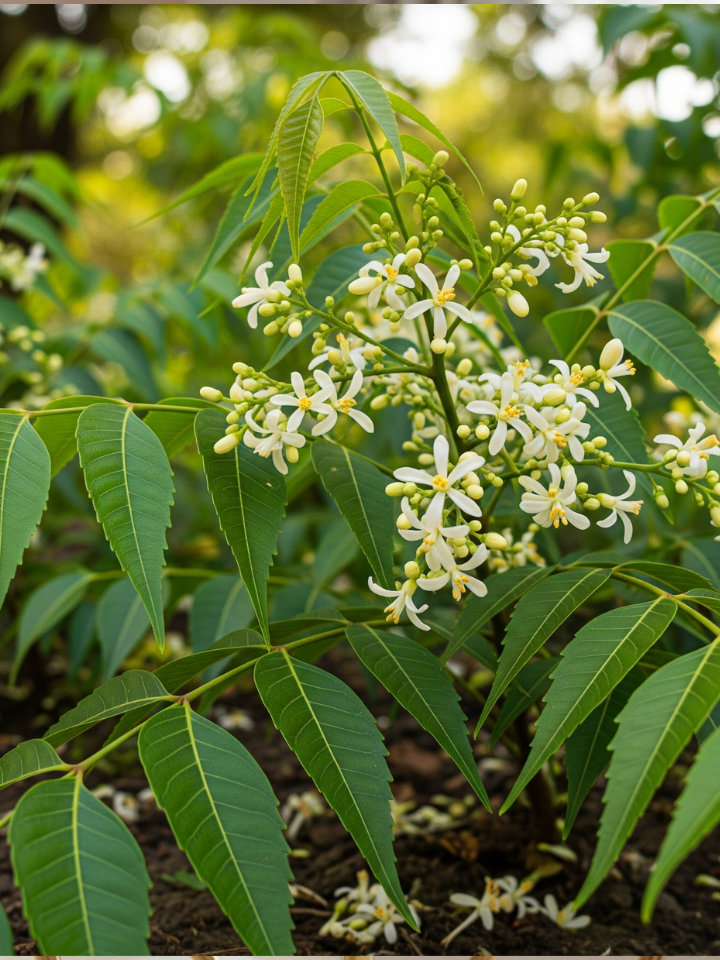
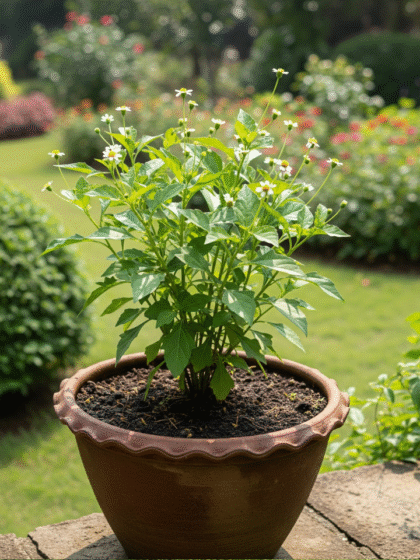
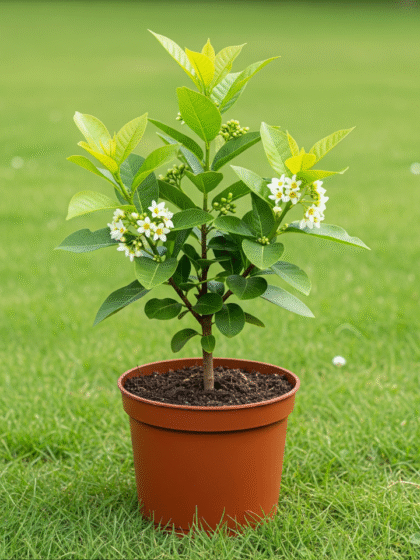
- Flowers. Tiny, star-shaped and creamy white, carried in loose drooping sprays from about March to May. On a warm evening the fragrance drifts surprisingly far, and bees love it.
- Fruit. Smooth, olive-like drupes that ripen from green to yellow in early summer and the monsoon. Birds eat them and scatter the seeds, which is why wild seedlings appear in gardens and cracks.
- Bark and form. Rough, grey-brown bark on a straight trunk, crowned with a dense, rounded canopy that casts cool, dappled shade.
- Roots. A deep taproot with spreading side roots, which is what makes the tree so drought-proof once settled.
Can you grow a neem plant in a pot?
Yes, for several years, and many people do. Here is how to make it work:
- Pick a big container. Begin with a 14–16 inch pot and move up to a 20–24 inch pot, grow bag or half-drum as it grows. It is one of the terrace plants that can live in a half-drum for years if you prune it.
- Give it the sunniest spot you have. A terrace, rooftop, courtyard or open balcony with direct sun. Indoors it weakens and drops leaves.
- Prune to shape. Cut back long shoots in late winter to keep a compact, bushy head. Regular pinching also gives you a steady supply of tender leaves.
- Try it as a bonsai. Its small leaflets, tough wood and quick recovery from cutting make neem a rewarding bonsai subject.
- Keep it off the slab. Stand the drum on bricks or a stand, never directly over a terrace drain, so roots cannot escape into cracks.
Where should you plant a neem tree?
Open ground is where it truly belongs. A neem in a garden, farm boundary, school ground, temple yard or roadside grows into one of the finest shade trees for a large garden or farm boundary in hot, dry India, tolerating poor soil, heat above 40 °C and long rainless spells.
Plant it well clear of the house. As a sensible minimum, keep it at least 5 metres from foundations, boundary walls, water pipes and septic tanks, and further for a long-term tree. Avoid frost-prone hill sites and permanently waterlogged ground, the two conditions it cannot handle.
Product Specifications
- Plant name: Neem Plant / Neem Tree / Nim / Margosa / Indian Lilac
- Botanical name: Azadirachta indica
- Common names: Neem (Hindi), nim (Bengali), nimba (Sanskrit), kadunimb (Marathi), limdo (Gujarati), vembu (Tamil), vepa (Telugu), bevu (Kannada), veppu (Malayalam)
- Plant family: Meliaceae (mahogany family)
- Origin: Indian subcontinent
- Plant type: Evergreen tree; may shed leaves briefly in late winter or drought; supplied as a young sapling
- Growing medium supplied: Premium potting soil mix
- Leaves: Feather-like compound leaves 20–40 cm long, with narrow, toothed leaflets; copper-red when new; bitter
- Flowers: Small, white, honey-scented, in drooping sprays; about March to May
- Fruit: Olive-like drupes ripening yellow in early summer and the monsoon; rarely produced on young potted plants
- Growth habit: Upright, fast-growing; dense, rounded crown; deep taproot
- Growth rate: Fast in warm weather
- Mature size: 15–20 m in open ground; can be held at about 1.5–2.5 m in a large drum with pruning, or smaller as a bonsai
- Lifespan: Very long-lived; well over a century in good conditions
- Suitable placement: Outdoors in full sun: terrace or courtyard in a large pot or drum, bonsai bench, or open ground at least 5 m from buildings, walls, pipes and septic tanks
- Not suitable for: Indoors, shaded balconies, waterlogged ground, frost-prone hill sites
- Light requirement: Full sun, six hours or more daily
- Water requirement: Low to moderate in a pot; very low once established in the ground
- Soil requirement: Any well-drained soil; garden soil with sand and compost works well; avoid heavy, wet clay
- Climate: Tropical and subtropical; tolerates heat above 40 °C and drought; sensitive to frost
- Fertiliser: Compost or vermicompost every two months, March to September
- Common pests and problems: Mealybugs, scale, tea mosquito bug, root rot in waterlogged soil
- Maintenance: Low; yearly pruning to keep it compact in a pot
- Difficulty level: Easy
- Suitable environment: Plains, plateau and coastal regions across India; protect young plants from frost in the north
- Safety: Not confirmed pet-safe; neem oil and seeds are not for pets or children to ingest
How do you care for a neem sapling?
- Soil. Any free-draining mix. Combine two parts garden soil, one part coarse sand and one part compost or well-rotted cow manure. Drainage matters far more than richness; heavy, wet clay rots the roots.
- Watering. Water deeply when the top 5 cm feels dry. A pot in May may need water every day or two; in the monsoon, usually none; in winter, once a week or less. Trees in the ground need help only in their first two summers.
- Feeding. A handful of compost or vermicompost every two months from March to September is enough. Heavy feeding gives soft, pest-prone growth.
- Pruning. Late winter, before the new flush. Wear gloves if your skin is sensitive.
- Repotting or planting out. The start of the monsoon, June to July, is ideal. Move it while young; that taproot makes older trees hard to shift.
Does a neem tree keep mosquitoes and insects away?
Not on its own. The pest-control reputation comes from neem oil and seed extracts, which contain azadirachtin and related compounds that put insects off feeding and disrupt their growth. A living tree in a pot does not release enough of these to repel mosquitoes or protect neighbouring plants. Diluted neem oil, used as a spray, is the form gardeners rely on for aphids and mealybugs.
Similarly, a neem sapling will not noticeably clean the air in a room. What a mature tree does offer is real: deep shade that cools the ground, food for bees and birds, and a hardiness few trees can match.
Why is neem so important in Indian homes?
Few plants are woven into daily life like nim. In Bengal, bitter nim leaves fried with brinjal, nim-begun, often open a meal in spring. Neem flowers go into Ugadi pachadi in the south, and neem leaves with jaggery mark Gudi Padwa in Maharashtra. Twigs were the traditional datun, and dried leaves are still tucked among stored clothes and grain.
The tree is also linked to the goddess Shitala and is planted near shrines across the country. That deep history is why it sits among herbs and trees with a long Ayurvedic history. These are traditional uses, not proven treatments, and we make no medical claim for this plant. Neem oil must never be swallowed or given to children.
Neem and Vastu: what the tradition says
Unlike some sacred trees, neem is generally welcomed near a home in Vastu. Many practitioners suggest planting it outside the house, often to the north-west or the south or west of the plot, where its shade falls well. If placement matters to your family, our guide to the directions Vastu favours for outdoor trees explains the reasoning. These are beliefs and conventions, not rules of science.
Neem through the Bengal year
These timings suit the Hooghly climate where our saplings grow, and most of the eastern and southern plains.
February to April: leaf change and flowering. Older leaves yellow and drop, a copper-red flush follows, and the first scented flowers open. Prune before the flush.
May to June: heat. Neem shrugs off the heat, but a pot dries quickly. Water deeply and mulch the surface.
July to September: fastest growth. The rains push out long new shoots. Plant out, repot or start a bonsai now, and check that pots drain freely.
October to January: steady and slow. Cut watering back, stop feeding by October, and in north India protect young pots from frost.
What problems affect a neem plant?
- Yellow leaves with soggy soil. Overwatering or poor drainage. Let the soil dry well between waterings.
- Leaf drop in late winter. Natural leaf change; new leaves follow within weeks.
- White, cottony clusters on stems. Mealybugs or scale. Wipe off and spray diluted neem oil weekly until clear.
- Tea mosquito bug or leaf browning in humid weather. Remove damaged shoots and improve air flow.
- Thin, leggy growth. Not enough sun. Move it into full light and prune back.
- Roots through the drainage holes. Time for a larger container, or for planting out.
Plants that pair well with neem
Grow it beside kalmegh, the small herb nicknamed bhui neem for its bitterness, or meetha neem, the curry leaf shrub for the kitchen, which shares only a name. For a traditional courtyard, add a tulsi to share the sunny courtyard with your neem, and if you have open land, a peepal sapling, the other great tree of the village square.
Plant a tree your grandchildren will sit under
Every sapling is grown, checked and packed by hand, including the neem saplings raised at our nursery near Kolkata, then sent across India. Give it sun, room and a little care in its first two summers, and your neem can shade your family for generations.































There are no reviews yet.